
Importe total (1 artículo artículos):
Destino del pedido:

form defining strategies (10 resultados)
Ir a los resultados principales
Filtros de búsqueda
Tipo de artículo
- Todos los tipos de productos
- Libros (10)
- Revistas y publicaciones (No hay ningún otro resultado que coincida con este filtro.)
- Cómics (No hay ningún otro resultado que coincida con este filtro.)
- Partituras (No hay ningún otro resultado que coincida con este filtro.)
- Arte, grabados y pósters (No hay ningún otro resultado que coincida con este filtro.)
- Fotografías (No hay ningún otro resultado que coincida con este filtro.)
- Mapas (No hay ningún otro resultado que coincida con este filtro.)
- Manuscritos y coleccionismo de papel (No hay ningún otro resultado que coincida con este filtro.)
Condición Más información
- Nuevo (2)
- Como nuevo, Excelente o Muy bueno (5)
- Bueno o Aceptable (2)
- Regular o Pobre (No hay ningún otro resultado que coincida con este filtro.)
- Tal como se indica (1)
Encuadernación
- Todas
- Tapa dura (No hay ningún otro resultado que coincida con este filtro.)
- Tapa blanda (10)
Más atributos
- Primera edición (1)
- Firmado (No hay ningún otro resultado que coincida con este filtro.)
- Sobrecubierta (No hay ningún otro resultado que coincida con este filtro.)
- Con imágenes (9)
- No impresión bajo demanda (10)
Idioma (2)
Gastos de envío gratis
Ubicación del vendedor
Valoración de los vendedores
-

Form Defining Strategies
Publicado por Ernst Wasmuth Verlag, DE, 2012
ISBN 10: 3803007461 ISBN 13: 9783803007469
Idioma: Inglés
Librería: Rarewaves USA, OSWEGO, IL, Estados Unidos de America
Calificación del vendedor: 5 de 5 estrellas

EUR 27,66
Gratis gastos de envío en Estados Unidos de AmericaCantidad disponible: Más de 20 disponibles
Añadir al carritoPaperback. Condición: New.
-

Form Defining Strategies: Experimental Architectural Design
Librería: Versandbuchhandlung Kisch & Co., Fürstenberg OT Blumenow, Alemania
Calificación del vendedor: 4 de 5 estrellas

EUR 6,71
EUR 26,00 gastos de envío desde Alemania a Estados Unidos de AmericaCantidad disponible: 1 disponibles
Añadir al carritoTaschenbuch. Condición: Sehr gut. Gebraucht - Sehr gut Ungelesen, vollständig, sehr guter Zustand, leichte Lagerspuren, Mängelexemplar -This book examines experimental design methodologies in the field of architecture and their implementation in academic settings. Theoretical considerations by guest essayists and numerous examples of conceptual designs compliment our holistic approach to the subject matter. The studies collected here emerged during a two day workshop in 2006 with architecture students at the Technical University of Darmstadt. Due to this short time frame, parameters such as functional specifications and local context were not considered. The models that emerged are organizational systems that have been developed through diagrammatic thinking and are therefore capable of representing processed data and strategies. The starting point of the teaching concept was a divergence from the usual methods and ways of thinking, allowing for new, innovative solutions to emerge during the design process. The development of novel spatial modules, in coherence with material and structural considerations, was actively encouraged. During the workshop various design techniques were applied that enabled the development of integrative spatial concepts. Geometry played an essential role here. Studies were later developed by following given rules, converting them into diagrams then finally and perhaps most importantly, through the use of physical models. Thereby the question of materiality becomes a crucial consideration: the characteristics of different materials that were used for the models did not just influence geometrical possibilities, but brought with them material specific effects, with which spatial qualities could be intensified, explored and organised. This methodology is based on our conviction that working with physical models is indispensable even in today's all-digital climate. Architects are able to explore unpredictable, unimagined, unexpected and exciting spatiality that can emerge organically during the design process. Novel, innovative spatial structures and systems are discovered and inform this process and subsequent decisions. It becomes clear that the design process in architecture has to be understood as a conscious, sensible yet ambitious process to investigate and apply innovative notions of space to construction. 126 pp. Deutsch.
-
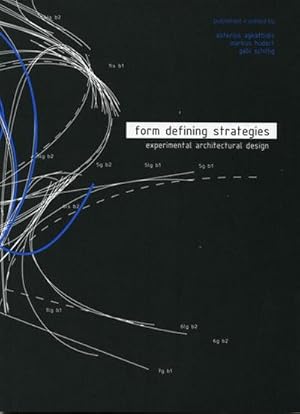
Form Defining Strategies: Experimental Architectural Design
Librería: Versandbuchhandlung Kisch & Co., Fürstenberg OT Blumenow, Alemania
Calificación del vendedor: 4 de 5 estrellas
EUR 8,62
EUR 26,00 gastos de envío desde Alemania a Estados Unidos de AmericaCantidad disponible: 1 disponibles
Añadir al carritoTaschenbuch. Condición: Wie neu. Gebraucht - Wie neu Ungelesen, vollständig, sehr guter Zustand, leichte Lagerspuren, als Mängelexemplar gekennzeichnet -This book examines experimental design methodologies in the field of architecture and their implementation in academic settings. Theoretical considerations by guest essayists and numerous examples of conceptual designs compliment our holistic approach to the subject matter. The studies collected here emerged during a two day workshop in 2006 with architecture students at the Technical University of Darmstadt. Due to this short time frame, parameters such as functional specifications and local context were not considered. The models that emerged are organizational systems that have been developed through diagrammatic thinking and are therefore capable of representing processed data and strategies. The starting point of the teaching concept was a divergence from the usual methods and ways of thinking, allowing for new, innovative solutions to emerge during the design process. The development of novel spatial modules, in coherence with material and structural considerations, was actively encouraged. During the workshop various design techniques were applied that enabled the development of integrative spatial concepts. Geometry played an essential role here. Studies were later developed by following given rules, converting them into diagrams, then finally and perhaps most importantly, through the use of physical models. Thereby the question of materiality becomes a crucial consideration: the characteristics of different materials that were used for the models did not just influence geometrical possibilities, but brought with them material specific effects, with which spatial qualities could be intensified, explored and organised. This methodology is based on our conviction that working with physical models is indispensable even in today's all-digital climate. Architects are able to explore unpredictable, unimagined, unexpected and exciting spatiality that can emerge organically during the design process. Novel, innovative spatial structures and systems are discovered and inform this process and subsequent decisions. It becomes clear that the design process in architecture has to be understood as a conscious, sensible yet ambitious process to investigate and apply innovative notions of space to construction. 119 pp. Englisch.
-

form defining strategies
Librería: SKULIMA Wiss. Versandbuchhandlung, Westhofen, Alemania
Calificación del vendedor: 5 de 5 estrellas
EUR 7,80
EUR 40,00 gastos de envío desde Alemania a Estados Unidos de AmericaCantidad disponible: 9 disponibles
Añadir al carritoCondición: Wie Neu. Zustandsbeschreibung: leichte Lagerspuren. experimental architectural design. Edited by Asterios Agkathidis, Markus Hudert and Gabi Schillig. This book examines experimental design methodologies in the field of architecture and their implementation in academic settings. Theoretical considerations by guest essayists and numerous examples of conceptual designs compliment our holistic approach to the subject matter. The studies collected here emerged during a workshop in 2007/08 with architecture students at the Technical University of Darmstadt and the Aristotle University of Thessaloniki. Usual designing parameters such as functional specifications and local context were not considered. The models that emerged are organizational systems that have been developed through diagrammatic thinking and are therefore capable of representing processed data and strategies. During the workshop various design techniques were applied that enabled the development of integrative spatial concepts. Geometry played an essential role here. Studies were later developed by following given rules, converting them into diagrams, then finally and perhaps most importantly, through the use of physical models. With contributions by Asterios Agkathidis, Johan Bettum, Maria Blaisse, Anja Bramkamp, Moritz Hauschild, Markus Hudert, George Katodrytis, Gabi Schillig, Michael Schwarz and Yves Weinand. 3., veränderte Auflage. 119 Seiten mit 355 Abb., broschiert (Wasmuth Verlag 2011). Früher EUR 16,80. Gewicht: 226 g - Softcover/Taschenbuch - Sprache: Englisch.
-

Form defining strategies : experimental architectural design. ed. by Asterios Agkathidis ; Markus Hudert ; Gabi Schillig.
Publicado por Tübingen ; Berlin : Wasmuth, 2011
ISBN 10: 3803007461 ISBN 13: 9783803007469
Idioma: Inglés
Librería: Fundus-Online GbR Borkert Schwarz Zerfaß, Berlin, Alemania
Miembro de asociación: BOEV GIAQ
Calificación del vendedor: 5 de 5 estrellas
EUR 11,50
EUR 40,00 gastos de envío desde Alemania a Estados Unidos de AmericaCantidad disponible: 1 disponibles
Añadir al carritokart. Condición: Gut. 119 S. : überw. Ill. ; 19 cm, Gutes Ex. - Texte: Asterios Agkathidis, Johan Bettum, Maria Blaisse, Anja Bramkamp, Moritz Hauschild, Markus Hudert, George Katodrytis, Gabi Schillig, Michael Schwarz, Yves Weinand. // This book examines experimental design methodologies in the field of architecture and their implementation in academic settings. Theoretical considerations by guest essayists and numerous examples of conceptual designs complement our holistic approach to the subject matter. The studies collected here emerged during weekly workshops during 2007 and 2008 with architecture students at the Technische Universitat Darmstadt and the Aristotele University of Thessaloniki. Usual design parameters such as functional specifications and local context were not considered. The models that emerged are organiza-tional systems that have been developed through diagrammatic thinking and are therefore capable of representing processed data and strategies. This methodology is based on our conviction that working with physical models is indispensable even in today's all-digital climate. Architects are able to explore unpredictable, unimagined, unexpected and exciting spatiality that can emerge organically during the design process. Novel, innovative spatial structures and systems are discovered and inform this process and subsequent decisions. It becomes clear that the design process in architecture has to be understood as a conscious, sensible yet ambitious process to investigate and apply innovative notions of space to construction. (Vorwort) ISBN 9783803007469 Sprache: Englisch Gewicht in Gramm: 221.
-

Form Defining Strategies: Experimental Architectural Design
Librería: Che & Chandler Versandbuchhandlung, Fürstenberg OT Blumenow, Alemania
Calificación del vendedor: 5 de 5 estrellas
EUR 8,95
EUR 45,00 gastos de envío desde Alemania a Estados Unidos de AmericaCantidad disponible: 1 disponibles
Añadir al carritoTaschenbuch. Condición: Sehr gut. Gebraucht - Sehr gut Ungelesen, vollständig, sehr guter Zustand, leichte Lagerspuren, Mängelexemplar -This book examines experimental design methodologies in the field of architecture and their implementation in academic settings. Theoretical considerations by guest essayists and numerous examples of conceptual designs compliment our holistic approach to the subject matter. The studies collected here emerged during a two day workshop in 2006 with architecture students at the Technical University of Darmstadt. Due to this short time frame, parameters such as functional specifications and local context were not considered. The models that emerged are organizational systems that have been developed through diagrammatic thinking and are therefore capable of representing processed data and strategies. The starting point of the teaching concept was a divergence from the usual methods and ways of thinking, allowing for new, innovative solutions to emerge during the design process. The development of novel spatial modules, in coherence with material and structural considerations, was actively encouraged. During the workshop various design techniques were applied that enabled the development of integrative spatial concepts. Geometry played an essential role here. Studies were later developed by following given rules, converting them into diagrams then finally and perhaps most importantly, through the use of physical models. Thereby the question of materiality becomes a crucial consideration: the characteristics of different materials that were used for the models did not just influence geometrical possibilities, but brought with them material specific effects, with which spatial qualities could be intensified, explored and organised. This methodology is based on our conviction that working with physical models is indispensable even in today's all-digital climate. Architects are able to explore unpredictable, unimagined, unexpected and exciting spatiality that can emerge organically during the design process. Novel, innovative spatial structures and systems are discovered and inform this process and subsequent decisions. It becomes clear that the design process in architecture has to be understood as a conscious, sensible yet ambitious process to investigate and apply innovative notions of space to construction. 126 pp. Deutsch.
-

Form Defining Strategies: Experimental Architectural Design
Librería: Che & Chandler Versandbuchhandlung, Fürstenberg OT Blumenow, Alemania
Calificación del vendedor: 5 de 5 estrellas
EUR 11,50
EUR 45,00 gastos de envío desde Alemania a Estados Unidos de AmericaCantidad disponible: 1 disponibles
Añadir al carritoTaschenbuch. Condición: Wie neu. Gebraucht - Wie neu Ungelesen, vollständig, sehr guter Zustand, leichte Lagerspuren, als Mängelexemplar gekennzeichnet -This book examines experimental design methodologies in the field of architecture and their implementation in academic settings. Theoretical considerations by guest essayists and numerous examples of conceptual designs compliment our holistic approach to the subject matter. The studies collected here emerged during a two day workshop in 2006 with architecture students at the Technical University of Darmstadt. Due to this short time frame, parameters such as functional specifications and local context were not considered. The models that emerged are organizational systems that have been developed through diagrammatic thinking and are therefore capable of representing processed data and strategies. The starting point of the teaching concept was a divergence from the usual methods and ways of thinking, allowing for new, innovative solutions to emerge during the design process. The development of novel spatial modules, in coherence with material and structural considerations, was actively encouraged. During the workshop various design techniques were applied that enabled the development of integrative spatial concepts. Geometry played an essential role here. Studies were later developed by following given rules, converting them into diagrams, then finally and perhaps most importantly, through the use of physical models. Thereby the question of materiality becomes a crucial consideration: the characteristics of different materials that were used for the models did not just influence geometrical possibilities, but brought with them material specific effects, with which spatial qualities could be intensified, explored and organised. This methodology is based on our conviction that working with physical models is indispensable even in today's all-digital climate. Architects are able to explore unpredictable, unimagined, unexpected and exciting spatiality that can emerge organically during the design process. Novel, innovative spatial structures and systems are discovered and inform this process and subsequent decisions. It becomes clear that the design process in architecture has to be understood as a conscious, sensible yet ambitious process to investigate and apply innovative notions of space to construction. 119 pp. Englisch.
-

Form Defining Strategies - Experimental Architectural Design
Librería: Dawn Reader Rare Books, London, LONDO, Reino Unido
Calificación del vendedor: 4 de 5 estrellas
Original o primera edición
EUR 56,45
EUR 14,96 gastos de envío desde Reino Unido a Estados Unidos de AmericaCantidad disponible: 1 disponibles
Añadir al carritoSoftcover. Condición: Very Good. First Edition. VG 1st ed 2008 Wasmuth Ernst paperback, many illustrations, end-flaps to cover, small front corner crease, text in English. Sent Airmail at no extra cost; Worldwide Shipping IMMEDIATE 1ST CLASS/AIRMAIL DISPATCH Quantity Available: 1. Shipped Weight: Under 1 kilogram. Category: Architecture; The book is available to view in-person at our Cambridge hub. The photos provided are of the actual book for sale, further condition-specific photos may be arranged upon request. Inventory No: 057638.
-

Form Defining Strategies
Publicado por Ernst Wasmuth Verlag, DE, 2012
ISBN 10: 3803007461 ISBN 13: 9783803007469
Idioma: Inglés
Librería: Rarewaves USA United, OSWEGO, IL, Estados Unidos de America
Calificación del vendedor: 5 de 5 estrellas
EUR 29,89
EUR 43,11 gastos de envío en Estados Unidos de AmericaCantidad disponible: Más de 20 disponibles
Añadir al carritoPaperback. Condición: New.
-

Form Defining Strategies: experimental architectural design.
Librería: Frans Melk Antiquariaat, HILVERSUM - NO SHIPPING TO THE U.S.A AT THE MOMENT, Holanda
Calificación del vendedor: 4 de 5 estrellas
EUR 15,00
EUR 35,00 gastos de envío desde Holanda a Estados Unidos de AmericaCantidad disponible: 1 disponibles
Añadir al carritoWasmuth, [introd. 2007]. 19 x 13,5 cm. Paperback / Softcover. Profusely illustrated in b/w. 119 pages. FINE COPY [Architecture / international [Algemene Architectuur] ].


