Importe total (1 artículo artículos):
Destino del pedido:

concent scripture de broughton (1 resultados)
Ir a los resultados principales
Filtros de búsqueda
Tipo de artículo
- Todos los tipos de productos
- Libros (1)
- Revistas y publicaciones (No hay ningún otro resultado que coincida con este filtro.)
- Cómics (No hay ningún otro resultado que coincida con este filtro.)
- Partituras (No hay ningún otro resultado que coincida con este filtro.)
- Arte, grabados y pósters (No hay ningún otro resultado que coincida con este filtro.)
- Fotografías (No hay ningún otro resultado que coincida con este filtro.)
- Mapas (No hay ningún otro resultado que coincida con este filtro.)
- Manuscritos y coleccionismo de papel (No hay ningún otro resultado que coincida con este filtro.)
Condición Más información
- Nuevo (No hay ningún otro resultado que coincida con este filtro.)
- Como nuevo, Excelente o Muy bueno (1)
- Bueno o Aceptable (No hay ningún otro resultado que coincida con este filtro.)
- Regular o Pobre (No hay ningún otro resultado que coincida con este filtro.)
- Tal como se indica (No hay ningún otro resultado que coincida con este filtro.)
Encuadernación
- Todas
- Tapa dura (1)
- Tapa blanda (No hay ningún otro resultado que coincida con este filtro.)
Más atributos
- Primera edición (No hay ningún otro resultado que coincida con este filtro.)
- Firmado (No hay ningún otro resultado que coincida con este filtro.)
- Sobrecubierta (No hay ningún otro resultado que coincida con este filtro.)
- Con imágenes (1)
- No impresión bajo demanda (1)
Idioma (1)
Precio
- Cualquier precio
- Menos de EUR 20 (No hay ningún otro resultado que coincida con este filtro.)
- EUR 20 a EUR 45 (No hay ningún otro resultado que coincida con este filtro.)
- Más de EUR 45
Gastos de envío gratis
Ubicación del vendedor
Valoración de los vendedores
-
A Concent of Scripture
Publicado por [For Gabriel Simson and William White], [London], 1590
Librería: Arader Books, New York, NY, Estados Unidos de America
Calificación del vendedor: 5 de 5 estrellas

EUR 6.210,99
Gastos de envío gratis
Se envía dentro de Estados Unidos de AmericaCantidad disponible: 1 disponibles
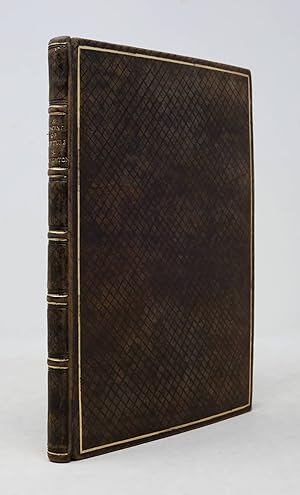
Añadir al carritoHardcover. Condición: Near fine. Second. Second edition, first state (eight-line historiated initial). [London: For Gabriel Simson and William White, 1590? (from ESTC)] Octavo (8 7/16" x 6 3/8", 215mm x 163mm): with a folding engraved map and four engraved plates by William Rogers. Collated complete with the ESTC copy. Bound in modern diced reversed grey calf. On the boards, a gilt fillet border. On the spine, five raised bands. In the panels, a gilt fillet surrounding double blind fillets top-and-bottom. Title gilt to the second panel. A little rubbed at the extremities. Title-page backed onto a modern leaf. The boards bowing a bit; else fine. Dedicated to Queen Elizabeth I, this is Broughton's first book, for which he "gained recognition as a learned, though controversial, expositor of the Bible. This 'little book of great pains', as he called it (Clarke, 3), is essentially a statement of his belief about the nature of the biblical record. Full of charts and tables, it states dogmatically that holy scripture contains all truth. Since each book agrees with the others on matters of chronology, the whole Bible must be regarded as authoritative. It is far superior to pagan sources, which are to be dismissed whenever they contradict the pure word of God. Its chronology is definitive and should be used to correct the theories of profane writers. Because of the views expressed in it about biblical chronology, the Concent was attacked in public lectures by John Rainolds, president of Corpus Christi College, Oxford, and by Edward Lively, regius professor of Hebrew at Cambridge. Broughton defended his standpoint in weekly lectures delivered in St Paul's Cathedral which attracted an audience of up to 100 scholars. Dissatisfied with the way in which his critics were conducting the debate, he wrote to Elizabeth I in 1591, requesting that points of dispute be settled by the ecclesiastical authorities and by the universities" (G. Lloyd Jones for DNB). ESTC S106758 (STC2 3851).