

Importe total (1 artículo artículos):
Destino del pedido:

chromolithographic cards (5 resultados)
Ir a los resultados principales
Filtros de búsqueda
Tipo de artículo
- Todos los tipos de productos
- Libros (5)
- Revistas y publicaciones (No hay ningún otro resultado que coincida con este filtro.)
- Cómics (No hay ningún otro resultado que coincida con este filtro.)
- Partituras (No hay ningún otro resultado que coincida con este filtro.)
- Arte, grabados y pósters (No hay ningún otro resultado que coincida con este filtro.)
- Fotografías (No hay ningún otro resultado que coincida con este filtro.)
- Mapas (No hay ningún otro resultado que coincida con este filtro.)
- Manuscritos y coleccionismo de papel (No hay ningún otro resultado que coincida con este filtro.)
Condición Más información
- Nuevo (No hay ningún otro resultado que coincida con este filtro.)
- Como nuevo, Excelente o Muy bueno (No hay ningún otro resultado que coincida con este filtro.)
- Bueno o Aceptable (2)
- Regular o Pobre (No hay ningún otro resultado que coincida con este filtro.)
- Tal como se indica (3)
Encuadernación
- Todas
- Tapa dura (2)
- Tapa blanda (No hay ningún otro resultado que coincida con este filtro.)
Más atributos
- Primera edición (No hay ningún otro resultado que coincida con este filtro.)
- Firmado (No hay ningún otro resultado que coincida con este filtro.)
- Sobrecubierta (No hay ningún otro resultado que coincida con este filtro.)
- Con imágenes (4)
- No impresión bajo demanda (5)
Idioma (1)
Precio
- Cualquier precio
- Menos de EUR 20 (No hay ningún otro resultado que coincida con este filtro.)
- EUR 20 a EUR 45 (No hay ningún otro resultado que coincida con este filtro.)
- Más de EUR 45
Gastos de envío gratis
- Envío gratis a Estados Unidos de America (No hay ningún otro resultado que coincida con este filtro.)
Ubicación del vendedor
Valoración de los vendedores
-

A small bundle of 5 cards, each with a circular chromolithographic scene, with panels moved by a tab, all the pictures showing children at play, each with a two-line rhyme at the foot. The cards all measure roughly 24 x 22 cms, with original paper tape around the edges and a moveable tab for changing the pictures.
Publicado por No dates publisher or place
Librería: Patrick Pollak Rare Books ABA ILAB, SOUTH BRENT, DEVON, Reino Unido
Miembro de asociación: ABA ILAB
Calificación del vendedor: 4 de 5 estrellas

EUR 714,49
Envío por EUR 28,90
Se envía de Reino Unido a Estados Unidos de AmericaCantidad disponible: 1 disponibles
Añadir al carritoOverall condition is excellent, no damage to the moving parts and only occasional wear to the tape around the edges.
-
Chromolithographic Cards
Publicado por 0
Librería: Banfield House Booksellers, Gympie, QLD, Australia
Calificación del vendedor: 5 de 5 estrellas

EUR 1.108,98
Envío por EUR 15,06
Se envía de Australia a Estados Unidos de AmericaCantidad disponible: 1 disponibles
Añadir al carritoHalf Morocco. Condición: Very Good. A collection of about 70 chromolithograph illustrations in a quarto, half-morocco leather scrap album with marbled endpapers c. 1880. A fine collection including a number in elaborate blind-stamped mounts. Leather rubbed at edges and spine. Size: Quarto.
-
Large Album of Chromolithographic Holiday and Sentiment Cards with Original and Elaborate Watercolored and Trompe d'Oeil Decoration
Librería: White Fox Rare Books and Antiques, ABAA/ILAB, New York, NY, Estados Unidos de America
Miembro de asociación: ABAA ESA ILAB PBFA
Calificación del vendedor: 4 de 5 estrellas
EUR 2.438,03
Envío por EUR 6,03
Se envía dentro de Estados Unidos de AmericaCantidad disponible: 1 disponibles
Añadir al carritoQuarter Morocco, Cloth Boards. Condición: Very Good. Folio-sized, 37 by 28 cm. 57 leaves, each of a card stock, with content exclusively on recto side. N.d., circa 1880s. The interest in this album lies in the ornamentation, which is done often quite cleverly, with floral elements in the cards being carried forward onto the large margins, or occasionally the watercolored decoration being added to and incorporated into the chromolithograph. Unfailingly the border decoration relates in some way to the chromos, and the assemblage of chromos on the page is done purposefully, with a theme or some unifying element. There can be one to five chromos on the page; sometimes most of the space is taken up with the watercolors, and other times, by the cards. It is the fusion of the two wherein lies the artistry, and to this it must be added that the botanical decoration is very well done in the tradition of the best Victorian albums. On a few leaves actual dried leaves are used. Botanical decoration is the most prevalent, but there is some abstract or geometric ornamentation employed, as well as other motives. One of the most striking backgrounds is surely the wood panel trompe d'oeil on one of the pages. The decoration tends to become more ambitious as one proceeds through the book, suggesting whoever did it became more confident and ablel The greatest number of cards are devoted to Christmas, but there are plenty for the New Year as well, and a good number with no holiday in particular. A few of the dried leaves have become loose. Newer endpapers and a leather rebacking. Wear to the boards.
-
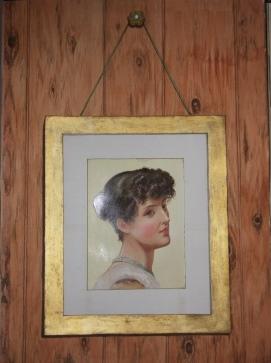
[SCRAPBOOK] CHROMOLITHOGRAPHIC EPHEMERA, ADVERTISING CARDS | INFANT MYSTICS, 1880
Librería: BLACK SWAN BOOKS, INC., ABAA, ILAB, Richmond, VA, Estados Unidos de America
Miembro de asociación: ABAA ESA ILAB
Calificación del vendedor: 5 de 5 estrellas
EUR 265,97
Envío por EUR 9,04
Se envía dentro de Estados Unidos de AmericaCantidad disponible: 1 disponibles
Añadir al carritoA substantial scrapbook from the late 19th century, packed with chromolithographed advertising cards, die-cuts, and other pretty Victorian items. There are about 26 leaves -- measuring 13 12 x 10 12" -- with each side covered with cards. There are many "lift the flap" friendship cards, with printed names underneath. One of the nicest of its kind we've seen, with many of the die-cuts filling the pages.
-
PHILADELPHIA TRADE CARDS. Album of 708 chromolithographic trade cards
Librería: G.S. MacManus Co., ABAA, Bryn Mawr, PA, Estados Unidos de America
Miembro de asociación: ABAA ILAB
Calificación del vendedor: 5 de 5 estrellas
EUR 7.314,10
Envío por EUR 4,30
Se envía dentro de Estados Unidos de AmericaCantidad disponible: 1 disponibles
Añadir al carritoPHILADELPHIA TRADE CARDS. Album of 708 chromolithographic trade cards from the 1870s to the 1890s for perfumers, ice cream parlors, shoes, coffees, soaps, dry goods, florists, glovers, clothiers, restaurants, patent medicines, milliners, pets, toys, umbrellas, among many others. A wide-ranging collection of Philadelphia area merchants and manufacturers, showing commercial lithography at its most exuberant. This wonderful period piece was formed by an unknown Philadelphia collector who carefully sorted and mounted them. By the development of color lithography in the 1830s, trade cards became popular among both the businesses that used them as commercial publicity and the general public that relied on then not only for comparing goods but also as a collector's item. With the opening of the 1876 Philadelphia Centennial Exhibition, printed ephemera met color lithography head on. Until then, color was used sparingly in trade card production. Philadelphia was the major center for American chromolithography, and it was natural for ambitious printers to promote these cards. Centennial exhibitors put thousands of these bright little pasteboard salesmen into the hands of a product hungry public. Grocers handed them out for every imaginable product, from soap to soup. In some cases cards were put right into packaging. They set off a collecting craze and people saved the cards with a passion right into the 1890s. Many an evening was spent pasting them into ornately covered scrapbooks. Wise admen of the era knew that a product or service would seldom be forgotten once a collection was started. It became a pastime to collect trade cards and organize them in scrapbooks such as this. Trade cards feature colorful illustrations, sayings, humor (sometimes bordering on the insensitive by today's standards), poems, and religious aphorisms. Between 1870 and 1900 the use of trade cards by business establishments was widespread and products advertised ranged from tobacco and medicines to clothes and restaurants. Cards were either customized to a specific business or trade, or they would have an illustration and a blank back so they could be personalized by the advertiser. Collectors today call the former "custom cards" and the latter "stock cards," examples of both sorts are present in this album.


![Imagen del vendedor de [SCRAPBOOK] CHROMOLITHOGRAPHIC EPHEMERA, ADVERTISING CARDS | INFANT MYSTICS, 1880 a la venta por BLACK SWAN BOOKS, INC., ABAA, ILAB](https://pictures.abebooks.com/inventory/md/md30600037498.jpg)
