

Importe total (1 artículo artículos):
Destino del pedido:

9789048166466 - Cereal Genomics (7 resultados)
Ir a los resultados principales
Filtros de búsqueda
Tipo de artículo
- Todos los tipos de productos
- Libros (7)
- Revistas y publicaciones (No hay ningún otro resultado que coincida con este filtro.)
- Cómics (No hay ningún otro resultado que coincida con este filtro.)
- Partituras (No hay ningún otro resultado que coincida con este filtro.)
- Arte, grabados y pósters (No hay ningún otro resultado que coincida con este filtro.)
- Fotografías (No hay ningún otro resultado que coincida con este filtro.)
- Mapas (No hay ningún otro resultado que coincida con este filtro.)
- Manuscritos y coleccionismo de papel (No hay ningún otro resultado que coincida con este filtro.)
Condición Más información
- Nuevo (7)
- Como nuevo, Excelente o Muy bueno (No hay ningún otro resultado que coincida con este filtro.)
- Bueno o Aceptable (No hay ningún otro resultado que coincida con este filtro.)
- Regular o Pobre (No hay ningún otro resultado que coincida con este filtro.)
- Tal como se indica (No hay ningún otro resultado que coincida con este filtro.)
Encuadernación
- Todas
- Tapa dura (No hay ningún otro resultado que coincida con este filtro.)
- Tapa blanda (7)
Más atributos
- Primera edición (No hay ningún otro resultado que coincida con este filtro.)
- Firmado (No hay ningún otro resultado que coincida con este filtro.)
- Sobrecubierta (No hay ningún otro resultado que coincida con este filtro.)
- Con imágenes (5)
- No impresión bajo demanda (4)
Idioma (1)
Precio
- Cualquier precio
- Menos de EUR 20 (No hay ningún otro resultado que coincida con este filtro.)
- EUR 20 a EUR 45 (No hay ningún otro resultado que coincida con este filtro.)
- Más de EUR 45
Gastos de envío gratis
- Envío gratis a Estados Unidos de America (No hay ningún otro resultado que coincida con este filtro.)
Ubicación del vendedor
Valoración de los vendedores
-

Cereal Genomics
Librería: Ria Christie Collections, Uxbridge, Reino Unido
Calificación del vendedor: 5 de 5 estrellas

EUR 280,02
Envío por EUR 13,88
Se envía de Reino Unido a Estados Unidos de AmericaCantidad disponible: Más de 20 disponibles
Añadir al carritoCondición: New. In.
-
EUR 228,80
Envío por EUR 70,00
Se envía de Alemania a Estados Unidos de AmericaCantidad disponible: 5 disponibles
Añadir al carritoTaschenbuch. Condición: Neu. Cereal Genomics | R. K. Varshney (u. a.) | Taschenbuch | Einband - flex.(Paperback) | Englisch | 2010 | Springer Netherland | EAN 9789048166466 | Verantwortliche Person für die EU: Springer Netherlands, Haberstr. 7, 69126 Heidelberg, buchhandel-buch[at]springer[dot]com | Anbieter: preigu.
-
Cereal Genomics
Idioma: Inglés
Publicado por Springer Netherlands, Springer Netherlands, 2010
ISBN 10: 9048166462 ISBN 13: 9789048166466
Librería: AHA-BUCH GmbH, Einbeck, Alemania
Calificación del vendedor: 5 de 5 estrellas
EUR 278,32
Envío por EUR 65,43
Se envía de Alemania a Estados Unidos de AmericaCantidad disponible: 1 disponibles
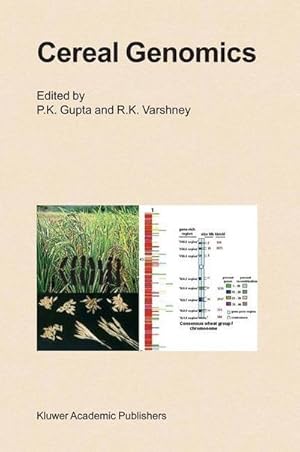
Añadir al carritoTaschenbuch. Condición: Neu. Druck auf Anfrage Neuware - Printed after ordering - Cereals make an important component of daily diet of a major section of human population, so that their survival mainly depends on the cereal grain production, which should match the burgeoning human population. Due to painstaking efforts of plant breeders and geneticists, at the global level, cereal production in the past witnessed a steady growth. However, the cereal production in the past has been achieved through the use of high yielding varieties, which have a heavy demand of inputs in the form of chemical fertilizers, herbicides and insecticides/pesticides, leading to environmental degradation. In view of this, while increasing cereal production, one also needs to keep in mind that agronomic practices used for realizing high productivity do not adversely affect the environment. Improvement in cereal production in the past was also achieved through the use of alien genetic variation available in the wild relatives of these cereals, so that conservation and sustainable use of genetic resources is another important area, which is currently receiving the attention of plant breeders. The work leading to increased cereal production in the past received strong support from basic research on understanding the cereal genomes, which need to be manipulated to yield more from low inputs without any adverse effects as above. Through these basic studies, it also became fairly apparent that the genomes of all cereals are related and were derived from the same lineage, million of years ago.
-
Cereal Genomics
Librería: Revaluation Books, Exeter, Reino Unido
Calificación del vendedor: 5 de 5 estrellas
EUR 474,05
Envío por EUR 14,48
Se envía de Reino Unido a Estados Unidos de AmericaCantidad disponible: 2 disponibles
Añadir al carritoPaperback. Condición: Brand New. 647 pages. 9.21x5.98x1.42 inches. In Stock.
-
Cereal Genomics
Librería: moluna, Greven, Alemania
Calificación del vendedor: 5 de 5 estrellas
EUR 223,09
Envío por EUR 48,99
Se envía de Alemania a Estados Unidos de AmericaCantidad disponible: Más de 20 disponibles
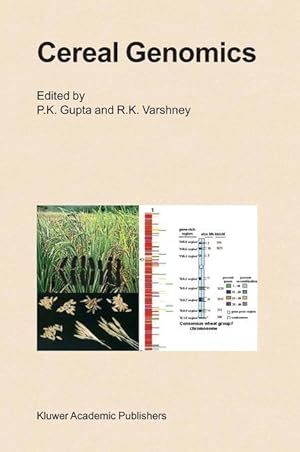
Añadir al carritoCondición: New. Dieser Artikel ist ein Print on Demand Artikel und wird nach Ihrer Bestellung fuer Sie gedruckt. This book is the first of its kind, where twenty chapters written by experts of international repute, cover all aspects of cereal genomics research. In recent years genomics has become a thrust area of research in life sciences, and cereals, being the mo.
-
Cereal Genomics
Idioma: Inglés
Publicado por Springer Netherlands Okt 2010, 2010
ISBN 10: 9048166462 ISBN 13: 9789048166466
Librería: BuchWeltWeit Ludwig Meier e.K., Bergisch Gladbach, Alemania
Calificación del vendedor: 5 de 5 estrellas
EUR 266,43
Envío por EUR 23,00
Se envía de Alemania a Estados Unidos de AmericaCantidad disponible: 2 disponibles
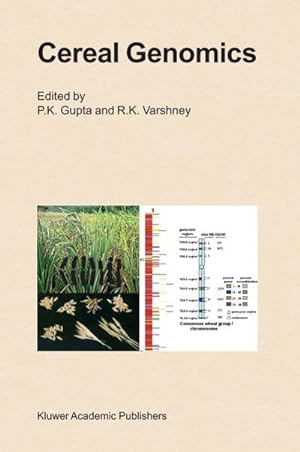
Añadir al carritoTaschenbuch. Condición: Neu. This item is printed on demand - it takes 3-4 days longer - Neuware -Cereals make an important component of daily diet of a major section of human population, so that their survival mainly depends on the cereal grain production, which should match the burgeoning human population. Due to painstaking efforts of plant breeders and geneticists, at the global level, cereal production in the past witnessed a steady growth. However, the cereal production in the past has been achieved through the use of high yielding varieties, which have a heavy demand of inputs in the form of chemical fertilizers, herbicides and insecticides/pesticides, leading to environmental degradation. In view of this, while increasing cereal production, one also needs to keep in mind that agronomic practices used for realizing high productivity do not adversely affect the environment. Improvement in cereal production in the past was also achieved through the use of alien genetic variation available in the wild relatives of these cereals, so that conservation and sustainable use of genetic resources is another important area, which is currently receiving the attention of plant breeders. The work leading to increased cereal production in the past received strong support from basic research on understanding the cereal genomes, which need to be manipulated to yield more from low inputs without any adverse effects as above. Through these basic studies, it also became fairly apparent that the genomes of all cereals are related and were derived from the same lineage, million of years ago. 648 pp. Englisch.
-

Cereal Genomics
Idioma: Inglés
Publicado por Springer Netherlands, Springer Netherlands Okt 2010, 2010
ISBN 10: 9048166462 ISBN 13: 9789048166466
Librería: buchversandmimpf2000, Emtmannsberg, BAYE, Alemania
Calificación del vendedor: 5 de 5 estrellas
EUR 266,43
Envío por EUR 60,00
Se envía de Alemania a Estados Unidos de AmericaCantidad disponible: 1 disponibles
Añadir al carritoTaschenbuch. Condición: Neu. This item is printed on demand - Print on Demand Titel. Neuware -Cereals make an important component of daily diet of a major section of human population, so that their survival mainly depends on the cereal grain production, which should match the burgeoning human population. Due to painstaking efforts of plant breeders and geneticists, at the global level, cereal production in the past witnessed a steady growth. However, the cereal production in the past has been achieved through the use of high yielding varieties, which have a heavy demand of inputs in the form of chemical fertilizers, herbicides and insecticides/pesticides, leading to environmental degradation. In view of this, while increasing cereal production, one also needs to keep in mind that agronomic practices used for realizing high productivity do not adversely affect the environment. Improvement in cereal production in the past was also achieved through the use of alien genetic variation available in the wild relatives of these cereals, so that conservation and sustainable use of genetic resources is another important area, which is currently receiving the attention of plant breeders. The work leading to increased cereal production in the past received strong support from basic research on understanding the cereal genomes, which need to be manipulated to yield more from low inputs without any adverse effects as above. Through these basic studies, it also became fairly apparent that the genomes of all cereals are related and were derived from the same lineage, million of years ago. 648 pp. Englisch.

