

Importe total (1 artículo artículos):
Destino del pedido:

9781963809947 - Our Next 250 Years: Incentives and Jobs de Patton, Charles (11 resultados)
Ir a los resultados principales
Filtros de búsqueda
Tipo de artículo
- Todos los tipos de productos
- Libros (11)
- Revistas y publicaciones (No hay ningún otro resultado que coincida con este filtro.)
- Cómics (No hay ningún otro resultado que coincida con este filtro.)
- Partituras (No hay ningún otro resultado que coincida con este filtro.)
- Arte, grabados y pósters (No hay ningún otro resultado que coincida con este filtro.)
- Fotografías (No hay ningún otro resultado que coincida con este filtro.)
- Mapas (No hay ningún otro resultado que coincida con este filtro.)
- Manuscritos y coleccionismo de papel (No hay ningún otro resultado que coincida con este filtro.)
Condición Más información
- Nuevo (11)
- Como nuevo, Excelente o Muy bueno (No hay ningún otro resultado que coincida con este filtro.)
- Bueno o Aceptable (No hay ningún otro resultado que coincida con este filtro.)
- Regular o Pobre (No hay ningún otro resultado que coincida con este filtro.)
- Tal como se indica (No hay ningún otro resultado que coincida con este filtro.)
Encuadernación
- Todas
- Tapa dura (11)
- Tapa blanda (No hay ningún otro resultado que coincida con este filtro.)
Más atributos
- Primera edición (No hay ningún otro resultado que coincida con este filtro.)
- Firmado (No hay ningún otro resultado que coincida con este filtro.)
- Sobrecubierta (No hay ningún otro resultado que coincida con este filtro.)
- Con imágenes (2)
- No impresión bajo demanda (2)
Idioma (1)
Precio
- Cualquier precio
- Menos de EUR 20 (No hay ningún otro resultado que coincida con este filtro.)
- EUR 20 a EUR 45
- Más de EUR 45
Gastos de envío gratis
Ubicación del vendedor
Valoración de los vendedores
-

Our Next 250 Years: Incentives and Jobs
Libro 3 de 3: Our Next 250 YearsLibrería: CreativeCenters, Peoria, IL, Estados Unidos de America
Calificación del vendedor: 5 de 5 estrellas

EUR 22,87
Envío por EUR 4,83
Se envía dentro de Estados Unidos de AmericaCantidad disponible: 1 disponibles
Añadir al carritohardcover. Condición: New. D Design Company, Diogo Leite Of Ilustrador.
-
Our Next 250 Years: Incentives and Jobs
Libro 3 de 3: Our Next 250 YearsLibrería: Books Puddle, New York, NY, Estados Unidos de America
Calificación del vendedor: 4 de 5 estrellas

EUR 55,84
Envío por EUR 3,50
Se envía dentro de Estados Unidos de AmericaCantidad disponible: 4 disponibles
Añadir al carritoCondición: New. D Design Company, Diogo Leite Of Ilustrador.
-
Our Next 250 Years
Libro 3 de 3: Our Next 250 YearsLibrería: PBShop.store US, Wood Dale, IL, Estados Unidos de America
Calificación del vendedor: 5 de 5 estrellas
EUR 36,34
Gastos de envío gratis
Se envía dentro de Estados Unidos de AmericaCantidad disponible: Más de 20 disponibles
Añadir al carritoHRD. Condición: New. D Design Company, Diogo Leite Of Ilustrador. New Book. Shipped from UK. THIS BOOK IS PRINTED ON DEMAND. Established seller since 2000.
-
Our Next 250 Years
Libro 3 de 3: Our Next 250 YearsLibrería: PBShop.store UK, Fairford, GLOS, Reino Unido
Calificación del vendedor: 5 de 5 estrellas
EUR 31,85
Envío por EUR 5,82
Se envía de Reino Unido a Estados Unidos de AmericaCantidad disponible: Más de 20 disponibles
Añadir al carritoHRD. Condición: New. D Design Company, Diogo Leite Of Ilustrador. New Book. Delivered from our UK warehouse in 4 to 14 business days. THIS BOOK IS PRINTED ON DEMAND. Established seller since 2000.
-
Our Next 250 Years: Incentives and Jobs
Libro 3 de 3: Our Next 250 YearsLibrería: THE SAINT BOOKSTORE, Southport, Reino Unido
Calificación del vendedor: 5 de 5 estrellas
EUR 34,15
Envío por EUR 18,55
Se envía de Reino Unido a Estados Unidos de AmericaCantidad disponible: Más de 20 disponibles
Añadir al carritoCondición: New. D Design Company, Diogo Leite Of Ilustrador. This item is printed on demand. New copy - Usually dispatched within 5-9 working days.
-
Our Next 250 Years: Incentives and Jobs
Libro 3 de 3: Our Next 250 YearsLibrería: Majestic Books, Hounslow, Reino Unido
Calificación del vendedor: 4 de 5 estrellas
EUR 53,61
Envío por EUR 7,53
Se envía de Reino Unido a Estados Unidos de AmericaCantidad disponible: 4 disponibles
Añadir al carritoCondición: New. D Design Company, Diogo Leite Of Ilustrador. Print on Demand.
-
Our Next 250 Years: Incentives and Jobs
Libro 3 de 3: Our Next 250 YearsLibrería: Biblios, Frankfurt am main, HESSE, Alemania
Calificación del vendedor: 4 de 5 estrellas
EUR 51,93
Envío por EUR 9,95
Se envía de Alemania a Estados Unidos de AmericaCantidad disponible: 4 disponibles
Añadir al carritoCondición: New. D Design Company, Diogo Leite Of Ilustrador. PRINT ON DEMAND.
-
Our Next 250 Years (Hardcover)
Libro 3 de 3: Our Next 250 YearsLibrería: AussieBookSeller, Truganina, VIC, Australia
Calificación del vendedor: 5 de 5 estrellas
EUR 35,95
Envío por EUR 32,48
Se envía de Australia a Estados Unidos de AmericaCantidad disponible: 1 disponibles
Añadir al carritoHardcover. Condición: new. D Design Company, Diogo Leite Of Ilustrador. Hardcover. Economic outcomes are not determined by intentions alone. They are shaped by the incentives embedded in public policy and the systems that guide investment, production, and work. Over time, these incentives influence how capital is allocated, how businesses operate, and the availability and quality of jobs. They determine whether resources are directed toward productive growth or diverted into less efficient uses, and whether opportunities expand or contract across the economy. In Our Next 250 Years: Incentives and Jobs, Charles Patton examines how policy decisions shape economic behavior at every level. Taxes, regulation, education, trade, and technological change all establish the incentives that drive decision-making across the economy. These forces influence where capital flows, how businesses organize production, and how labor is valued and deployed. Employment outcomes, including job availability, stability, and wages, are not isolated results. They are the direct consequence of the system created by policy choices. When incentives are aligned with long-term growth, investment supports innovation, productivity, and expanding opportunity. Businesses respond by competing, improving efficiency, and creating jobs that offer greater stability and upward mobility. When incentives are misaligned, capital shifts toward short-term or less productive activities, productivity weakens, and employment becomes more uncertain. These outcomes are not accidental or unpredictable. They follow from the structure of the system and the signals it sends to participants. This book explores how incentive design affects not only economic performance, but also resilience, adaptability, and the distribution of risk and reward. It examines how policies can unintentionally undermine their own objectives and how different approaches to taxation, regulation, and investment shape long-term economic direction. By tracing the connection between policy decisions and real-world outcomes, it provides a framework for understanding why some systems sustain growth and opportunity while others do not. Drawing on economic history and institutional analysis, Incentives and Jobs shows how incentives operate across sectors and over time, and why thoughtful policy design is essential to long-term stability and prosperity. Incentives and Jobs is the third volume in the Our Next 250 Years series. In Our Next 250 Years: Incentives and Jobs, Charles Patton shows how public policy shapes incentives, driving capital, business decisions, and the availability and quality of jobs. This item is printed on demand. Shipping may be from our Sydney, NSW warehouse or from our UK or US warehouse, depending on stock availability.
-
Our Next 250 Years (Hardcover)
Libro 3 de 3: Our Next 250 YearsLibrería: CitiRetail, Stevenage, Reino Unido
Calificación del vendedor: 5 de 5 estrellas
EUR 35,79
Envío por EUR 42,87
Se envía de Reino Unido a Estados Unidos de AmericaCantidad disponible: 1 disponibles
Añadir al carritoHardcover. Condición: new. D Design Company, Diogo Leite Of Ilustrador. Hardcover. Economic outcomes are not determined by intentions alone. They are shaped by the incentives embedded in public policy and the systems that guide investment, production, and work. Over time, these incentives influence how capital is allocated, how businesses operate, and the availability and quality of jobs. They determine whether resources are directed toward productive growth or diverted into less efficient uses, and whether opportunities expand or contract across the economy. In Our Next 250 Years: Incentives and Jobs, Charles Patton examines how policy decisions shape economic behavior at every level. Taxes, regulation, education, trade, and technological change all establish the incentives that drive decision-making across the economy. These forces influence where capital flows, how businesses organize production, and how labor is valued and deployed. Employment outcomes, including job availability, stability, and wages, are not isolated results. They are the direct consequence of the system created by policy choices. When incentives are aligned with long-term growth, investment supports innovation, productivity, and expanding opportunity. Businesses respond by competing, improving efficiency, and creating jobs that offer greater stability and upward mobility. When incentives are misaligned, capital shifts toward short-term or less productive activities, productivity weakens, and employment becomes more uncertain. These outcomes are not accidental or unpredictable. They follow from the structure of the system and the signals it sends to participants. This book explores how incentive design affects not only economic performance, but also resilience, adaptability, and the distribution of risk and reward. It examines how policies can unintentionally undermine their own objectives and how different approaches to taxation, regulation, and investment shape long-term economic direction. By tracing the connection between policy decisions and real-world outcomes, it provides a framework for understanding why some systems sustain growth and opportunity while others do not. Drawing on economic history and institutional analysis, Incentives and Jobs shows how incentives operate across sectors and over time, and why thoughtful policy design is essential to long-term stability and prosperity. Incentives and Jobs is the third volume in the Our Next 250 Years series. In Our Next 250 Years: Incentives and Jobs, Charles Patton shows how public policy shapes incentives, driving capital, business decisions, and the availability and quality of jobs. This item is printed on demand. Shipping may be from our UK warehouse or from our Australian or US warehouses, depending on stock availability.
-
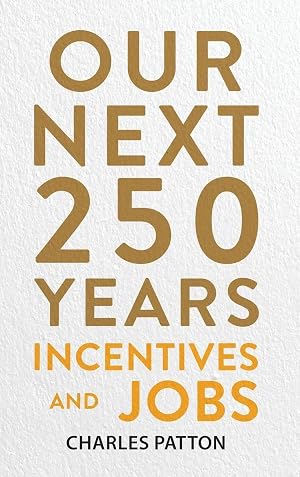
Our Next 250 Years | Incentives and Jobs
Libro 3 de 3: Our Next 250 YearsLibrería: preigu, Osnabrück, Alemania
Calificación del vendedor: 5 de 5 estrellas
EUR 34,50
Envío por EUR 70,00
Se envía de Alemania a Estados Unidos de AmericaCantidad disponible: 5 disponibles
Añadir al carritoBuch. Condición: Neu. D Design Company, Diogo Leite Of Ilustrador. Our Next 250 Years | Incentives and Jobs | Charles Patton | Buch | Englisch | 2026 | Short Mystery Press | EAN 9781963809947 | Verantwortliche Person für die EU: Libri GmbH, Europaallee 1, 36244 Bad Hersfeld, gpsr[at]libri[dot]de | Anbieter: preigu Print on Demand.
-

Our Next 250 Years : Incentives and Jobs
Libro 3 de 3: Our Next 250 YearsLibrería: AHA-BUCH GmbH, Einbeck, Alemania
Calificación del vendedor: 5 de 5 estrellas
EUR 41,14
Envío por EUR 63,40
Se envía de Alemania a Estados Unidos de AmericaCantidad disponible: 2 disponibles
Añadir al carritoBuch. Condición: Neu. D Design Company, Diogo Leite Of Ilustrador. nach der Bestellung gedruckt Neuware - Printed after ordering - Economic outcomes are not determined by intentions alone. They are shaped by the incentives embedded in public policy and the systems that guide investment, production, and work. Over time, these incentives influence how capital is allocated, how businesses operate, and the availability and quality of jobs. They determine whether resources are directed toward productive growth or diverted into less efficient uses, and whether opportunities expand or contract across the economy.

