

Importe total (1 artículo artículos):
Destino del pedido:

9781787071032 - The State of Welfare: Comparative Studies of the Welfare State at the End of the Long Boom, 1965-1980 (7 resultados)
Ir a los resultados principales
Filtros de búsqueda
Tipo de artículo
- Todos los tipos de productos
- Libros (7)
- Revistas y publicaciones (No hay ningún otro resultado que coincida con este filtro.)
- Cómics (No hay ningún otro resultado que coincida con este filtro.)
- Partituras (No hay ningún otro resultado que coincida con este filtro.)
- Arte, grabados y pósters (No hay ningún otro resultado que coincida con este filtro.)
- Fotografías (No hay ningún otro resultado que coincida con este filtro.)
- Mapas (No hay ningún otro resultado que coincida con este filtro.)
- Manuscritos y coleccionismo de papel (No hay ningún otro resultado que coincida con este filtro.)
Condición Más información
- Nuevo (5)
- Como nuevo, Excelente o Muy bueno (1)
- Bueno o Aceptable (1)
- Regular o Pobre (No hay ningún otro resultado que coincida con este filtro.)
- Tal como se indica (No hay ningún otro resultado que coincida con este filtro.)
Encuadernación
- Todas
- Tapa dura (No hay ningún otro resultado que coincida con este filtro.)
- Tapa blanda (7)
Más atributos
- Primera edición (No hay ningún otro resultado que coincida con este filtro.)
- Firmado (No hay ningún otro resultado que coincida con este filtro.)
- Sobrecubierta (No hay ningún otro resultado que coincida con este filtro.)
- Con imágenes (6)
- No impresión bajo demanda (4)
Idioma (1)
Precio
- Cualquier precio
- Menos de EUR 20 (No hay ningún otro resultado que coincida con este filtro.)
- EUR 20 a EUR 45
- Más de EUR 45
Gastos de envío gratis
- Envío gratis a Estados Unidos de America (No hay ningún otro resultado que coincida con este filtro.)
Ubicación del vendedor
Valoración de los vendedores
-
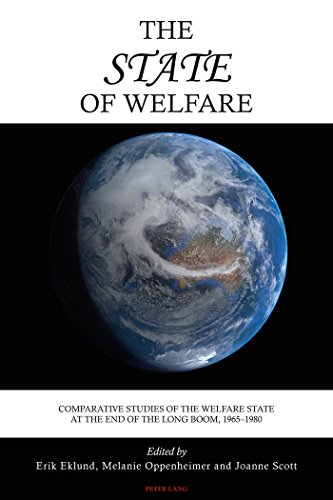
The State of Welfare: Comparative Studies of the Welfare State at the End of the Long Boom, 1965â"1980
Idioma: Inglés
Publicado por Peter Lang Ltd, International Ac, 2017
ISBN 10: 1787071030 ISBN 13: 9781787071032
Librería: suffolkbooks, Center moriches, NY, Estados Unidos de America
Calificación del vendedor: 5 de 5 estrellas

EUR 24,49
Envío por EUR 3,44
Se envía dentro de Estados Unidos de AmericaCantidad disponible: 4 disponibles
Añadir al carritopaperback. Condición: Very Good. Fast Shipping - Safe and Secure 7 days a week!
-

The State of Welfare: Comparative Studies of the Welfare State at the End of the Long Boom, 19651980 : Comparative Studies of the Welfare State at the End of the Long Boom, 1965¿1980
Librería: AHA-BUCH GmbH, Einbeck, Alemania
Calificación del vendedor: 5 de 5 estrellas
EUR 56,41
Envío por EUR 61,72
Se envía de Alemania a Estados Unidos de AmericaCantidad disponible: 1 disponibles
Añadir al carritoTaschenbuch. Condición: Sehr gut. Gebraucht - Sehr gut SG - Ungelesenes Mängelexemplar, gestempelt, mit leichten Lagerspuren - The period after 1945 saw a rapid growth in social welfare, with the state taking on increasing responsibility for pensions, health care, unemployment relief and income support. In Western democracies economic growth underpinned state investment and was reinforced by demands from the new social movements of the 1960s. Just as the clamour for reformism reached a crescendo in the late 1960s, the global economy began to falter, culminating in the oil crisis of 1973-1974. This volume explores the factors that shaped the trajectories of welfare state change over this crucial period. A close analysis of countries such as Australia, Canada, New Zealand and the United Kingdom reveals signs of a broader shift towards the decline of government spending and the first tentative moves towards a nascent neoliberalism. Other countries, such as Sweden and West Germany, remained comparatively untouched by the economic crisis and even sought to reinforce their welfare state in response to it. Ireland and Northern Ireland also showed little evidence of these changes, isolated as they were by complex political and religious factors. This book brings together a range of case studies at both country and provincial level in order to build up a more complex and nuanced picture of the welfare state in the 1960s and 1970s.
-

The State of Welfare : Comparative Studies of the Welfare State at the End of the Long Boom, 1965¿1980
Librería: AHA-BUCH GmbH, Einbeck, Alemania
Calificación del vendedor: 5 de 5 estrellas
EUR 70,50
Envío por EUR 61,72
Se envía de Alemania a Estados Unidos de AmericaCantidad disponible: 1 disponibles
Añadir al carritoTaschenbuch. Condición: Neu. Druck auf Anfrage Neuware - Printed after ordering - The period after 1945 saw a rapid growth in social welfare, with the state taking on increasing responsibility for pensions, health care, unemployment relief and income support. In Western democracies economic growth underpinned state investment and was reinforced by demands from the new social movements of the 1960s. Just as the clamour for reformism reached a crescendo in the late 1960s, the global economy began to falter, culminating in the oil crisis of 1973-1974. This volume explores the factors that shaped the trajectories of welfare state change over this crucial period. A close analysis of countries such as Australia, Canada, New Zealand and the United Kingdom reveals signs of a broader shift towards the decline of government spending and the first tentative moves towards a nascent neoliberalism. Other countries, such as Sweden and West Germany, remained comparatively untouched by the economic crisis and even sought to reinforce their welfare state in response to it. Ireland and Northern Ireland also showed little evidence of these changes, isolated as they were by complex political and religious factors. This book brings together a range of case studies at both country and provincial level in order to build up a more complex and nuanced picture of the welfare state in the 1960s and 1970s.
-

The State of Welfare | Comparative Studies of the Welfare State at the End of the Long Boom, 1965-1980
Librería: preigu, Osnabrück, Alemania
Calificación del vendedor: 5 de 5 estrellas
EUR 70,50
Envío por EUR 70,00
Se envía de Alemania a Estados Unidos de AmericaCantidad disponible: 5 disponibles
Añadir al carritoTaschenbuch. Condición: Neu. The State of Welfare | Comparative Studies of the Welfare State at the End of the Long Boom, 1965-1980 | Erik Eklund (u. a.) | Taschenbuch | Englisch | 2017 | Peter Lang | EAN 9781787071032 | Verantwortliche Person für die EU: Lang, Peter GmbH, Gontardstr. 11, 10178 Berlin, r[dot]boehm-korff[at]peterlang[dot]com | Anbieter: preigu.
-

The State of Welfare
Librería: BuchWeltWeit Ludwig Meier e.K., Bergisch Gladbach, Alemania
Calificación del vendedor: 5 de 5 estrellas
EUR 70,50
Envío por EUR 23,00
Se envía de Alemania a Estados Unidos de AmericaCantidad disponible: 2 disponibles
Añadir al carritoTaschenbuch. Condición: Neu. This item is printed on demand - it takes 3-4 days longer - Neuware -The period after 1945 saw a rapid growth in social welfare, with the state taking on increasing responsibility for pensions, health care, unemployment relief and income support. In Western democracies economic growth underpinned state investment and was reinforced by demands from the new social movements of the 1960s. Just as the clamour for reformism reached a crescendo in the late 1960s, the global economy began to falter, culminating in the oil crisis of 1973-1974. This volume explores the factors that shaped the trajectories of welfare state change over this crucial period. A close analysis of countries such as Australia, Canada, New Zealand and the United Kingdom reveals signs of a broader shift towards the decline of government spending and the first tentative moves towards a nascent neoliberalism. Other countries, such as Sweden and West Germany, remained comparatively untouched by the economic crisis and even sought to reinforce their welfare state in response to it. Ireland and Northern Ireland also showed little evidence of these changes, isolated as they were by complex political and religious factors. This book brings together a range of case studies at both country and provincial level in order to build up a more complex and nuanced picture of the welfare state in the 1960s and 1970s. 240 pp. Englisch.
-

The State of Welfare
Librería: moluna, Greven, Alemania
Calificación del vendedor: 4 de 5 estrellas

EUR 70,50
Envío por EUR 48,99
Se envía de Alemania a Estados Unidos de AmericaCantidad disponible: Más de 20 disponibles
Añadir al carritoCondición: New. Dieser Artikel ist ein Print on Demand Artikel und wird nach Ihrer Bestellung fuer Sie gedruckt. The period after 1945 saw the rapid growth of social welfare in western democracies, but in the late 1960s the global economy began to falter, followed by the oil crisis of 1973-1974. This book explores the trajectories of welfare state change over this .
-

The State of Welfare
Idioma: Inglés
Publicado por Peter Lang, Peter Lang Nov 2017, 2017
ISBN 10: 1787071030 ISBN 13: 9781787071032
Librería: buchversandmimpf2000, Emtmannsberg, BAYE, Alemania
Calificación del vendedor: 5 de 5 estrellas
EUR 70,50
Envío por EUR 60,00
Se envía de Alemania a Estados Unidos de AmericaCantidad disponible: 1 disponibles
Añadir al carritoTaschenbuch. Condición: Neu. This item is printed on demand - Print on Demand Titel. Neuware -The period after 1945 saw a rapid growth in social welfare, with the state taking on increasing responsibility for pensions, health care, unemployment relief and income support. In Western democracies economic growth underpinned state investment and was reinforced by demands from the new social movements of the 1960s. Just as the clamour for reformism reached a crescendo in the late 1960s, the global economy began to falter, culminating in the oil crisis of 1973¿1974. This volume explores the factors that shaped the trajectories of welfare state change over this crucial period. A close analysis of countries such as Australia, Canada, New Zealand and the United Kingdom reveals signs of a broader shift towards the decline of government spending and the first tentative moves towards a nascent neoliberalism. Other countries, such as Sweden and West Germany, remained comparatively untouched by the economic crisis and even sought to reinforce their welfare state in response to it. Ireland and Northern Ireland also showed little evidence of these changes, isolated as they were by complex political and religious factors. This book brings together a range of case studies at both country and provincial level in order to build up a more complex and nuanced picture of the welfare state in the 1960s and 1970s. 240 pp. Englisch.

