

Importe total (1 artículo artículos):
Destino del pedido:

9781683594055 - Sinless Flesh: A Critique of Karl Barth's Fallen Christ (Studies in Historical and Systematic Theology) de Bello, Rafael Nogueira (24 resultados)
Ir a los resultados principales
Filtros de búsqueda
Tipo de artículo
- Todos los tipos de productos
- Libros (24)
- Revistas y publicaciones (No hay ningún otro resultado que coincida con este filtro.)
- Cómics (No hay ningún otro resultado que coincida con este filtro.)
- Partituras (No hay ningún otro resultado que coincida con este filtro.)
- Arte, grabados y pósters (No hay ningún otro resultado que coincida con este filtro.)
- Fotografías (No hay ningún otro resultado que coincida con este filtro.)
- Mapas (No hay ningún otro resultado que coincida con este filtro.)
- Manuscritos y coleccionismo de papel (No hay ningún otro resultado que coincida con este filtro.)
Condición Más información
- Nuevo (21)
- Como nuevo, Excelente o Muy bueno (1)
- Bueno o Aceptable (2)
- Regular o Pobre (No hay ningún otro resultado que coincida con este filtro.)
- Tal como se indica (No hay ningún otro resultado que coincida con este filtro.)
Encuadernación
- Todas
- Tapa dura (No hay ningún otro resultado que coincida con este filtro.)
- Tapa blanda (24)
Más atributos
- Primera edición (No hay ningún otro resultado que coincida con este filtro.)
- Firmado (No hay ningún otro resultado que coincida con este filtro.)
- Sobrecubierta (No hay ningún otro resultado que coincida con este filtro.)
- Con imágenes (9)
- No impresión bajo demanda (24)
Idioma (2)
Precio
- Cualquier precio
- Menos de EUR 20
- EUR 20 a EUR 45
- Más de EUR 45 (No hay ningún otro resultado que coincida con este filtro.)
Gastos de envío gratis
Ubicación del vendedor
Valoración de los vendedores
-

Sinless Flesh: A Critique of Karl Barth's Fallen Christ (Studies in Historical and Systematic Theology)
Libro 15 de 34: Studies in Historical and Systematic TheologyLibrería: HPB-Red, Dallas, TX, Estados Unidos de America
Calificación del vendedor: 5 de 5 estrellas

EUR 9,56
Envío por EUR 3,25
Se envía dentro de Estados Unidos de AmericaCantidad disponible: 1 disponibles
Añadir al carritopaperback. Condición: Good. Connecting readers with great books since 1972! Used textbooks may not include companion materials such as access codes, etc. May have some wear or writing/highlighting. We ship orders daily and Customer Service is our top priority!
-
Sinless Flesh: A Critique of Karl Barth's Fallen Christ (Studies in Historical and Systematic Theology)
Libro 15 de 34: Studies in Historical and Systematic TheologyLibrería: World of Books (was SecondSale), Montgomery, IL, Estados Unidos de America
Calificación del vendedor: 5 de 5 estrellas
EUR 17,08
Gastos de envío gratis
Se envía dentro de Estados Unidos de AmericaCantidad disponible: 1 disponibles
Añadir al carritoCondición: Good. Item in good condition. Textbooks may not include supplemental items i.e. CDs, access codes etc.
-
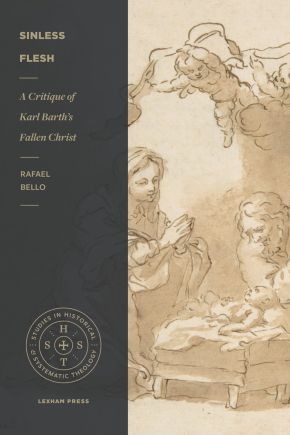
Sinless Flesh: A Critique of Karl Barth's Fallen Christ (Studies in Historical and Systematic Theology)
Libro 15 de 34: Studies in Historical and Systematic TheologyLibrería: ChristianBookbag / Beans Books, Inc., Westlake, OH, Estados Unidos de America
Calificación del vendedor: 5 de 5 estrellas
EUR 15,89
Envío por EUR 3,43
Se envía dentro de Estados Unidos de AmericaCantidad disponible: 3 disponibles
Añadir al carritoPaperback. Condición: New. New and unread. Buy multiples from our store to save on shipping.
-

Sinless Flesh: A Critique of Karl Barth's Fallen Christ (Studies in Historical and Systematic Theology)
Libro 15 de 34: Studies in Historical and Systematic TheologyLibrería: ChristianBookbag / Beans Books, Inc., Westlake, OH, Estados Unidos de America
Calificación del vendedor: 5 de 5 estrellas
EUR 16,73
Envío por EUR 3,43
Se envía dentro de Estados Unidos de AmericaCantidad disponible: 1 disponibles
Añadir al carritoPaperback. Condición: As New. New and unread. Buy multiples from our store to save on shipping.
-
Sinless Flesh (Paperback)
Libro 15 de 34: Studies in Historical and Systematic TheologyIdioma: Inglés
Publicado por Faithlife Corporation, Bellingham, 2020
ISBN 10: 1683594053 ISBN 13: 9781683594055
Librería: Grand Eagle Retail, Bensenville, IL, Estados Unidos de America
Calificación del vendedor: 5 de 5 estrellas
EUR 22,34
Gastos de envío gratis
Se envía dentro de Estados Unidos de AmericaCantidad disponible: 1 disponibles
Añadir al carritoPaperback. Condición: new. Paperback. Did Christ assume a fallen human nature?"What is not assumed is not healed." So goes the Chalcedonian maxim articulated by Gregory of Nazianzus regarding the nature and extent of Christ's work in assuming a human nature. But what is the nature of that assumption? If Christ is to stand in solidarity with us, must he have assumed not merely a human nature, but specifically a fallen human nature?In Sinless Flesh: A Critique of Karl Barth's Fallen Christ, Rafael Bello argues against the assertion made by Karl Barth, T. F. Torrance, and those who follow them that Christ assumed a fallen nature. Through retrieval of patristic, medieval, and Reformed orthodox theologians, Bello argues that a proper understanding of human nature, trinitarian inseparable operations, and the habitual grace-grace of union distinction leads to the conclusion that the assertion that Christ assumed a fallen human nature is at odds with faithful theological and historical understandings of the incarnation.Readers interested in theological retrieval for issues in contemporary theology will find a faithful model and way forward for a thorny issue in modern dogmatics. This book argues against the assertion made by Karl Barth, T. F. Torrance, and those who follow them that Christ assumed a fallen nature. Through retrieval of patristic, medieval, and Reformed orthodox theologians, the author shows that this assertion is at odds with faithful theological and historical understandings of the incarnation. Shipping may be from multiple locations in the US or from the UK, depending on stock availability.
-
Sinless Flesh: A Critique of Karl Barth's Fallen Christ (Studies in Historical and Systematic Theology)
Libro 15 de 34: Studies in Historical and Systematic TheologyLibrería: Pennywisestore, Pound, WI, Estados Unidos de America
Calificación del vendedor: 3 de 5 estrellas

EUR 16,98
Envío por EUR 5,97
Se envía dentro de Estados Unidos de AmericaCantidad disponible: 1 disponibles
Añadir al carritoCondición: New.
-

Sinless Flesh
Libro 15 de 34: Studies in Historical and Systematic TheologyIdioma: Inglés
Publicado por Faithlife Corporation, US, 2020
ISBN 10: 1683594053 ISBN 13: 9781683594055
Librería: Rarewaves.com USA, London, LONDO, Reino Unido
Calificación del vendedor: 5 de 5 estrellas
EUR 30,94
Gastos de envío gratis
Se envía de Reino Unido a Estados Unidos de AmericaCantidad disponible: 1 disponibles
Añadir al carritoPaperback. Condición: New. Did Christ assume a fallen human nature?"What is not assumed is not healed." So goes the Chalcedonian maxim articulated by Gregory of Nazianzus regarding the nature and extent of Christ's work in assuming a human nature. But what is the nature of that assumption? If Christ is to stand in solidarity with us, must he have assumed not merely a human nature, but specifically a fallen human nature? In Sinless Flesh: A Critique of Karl Barth's Fallen Christ, Rafael Bello argues against the assertion made by Karl Barth, T. F. Torrance, and those who follow them that Christ assumed a fallen nature. Through retrieval of patristic, medieval, and Reformed orthodox theologians, Bello argues that a proper understanding of human nature, trinitarian inseparable operations, and the habitual grace-grace of union distinction leads to the conclusion that the assertion that Christ assumed a fallen human nature is at odds with faithful theological and historical understandings of the incarnation. Readers interested in theological retrieval for issues in contemporary theology will find a faithful model and way forward for a thorny issue in modern dogmatics.
-
Sinless Flesh
Libro 15 de 34: Studies in Historical and Systematic TheologyLibrería: PBShop.store UK, Fairford, GLOS, Reino Unido
Calificación del vendedor: 5 de 5 estrellas
EUR 27,09
Envío por EUR 4,82
Se envía de Reino Unido a Estados Unidos de AmericaCantidad disponible: 3 disponibles
Añadir al carritoPAP. Condición: New. New Book. Shipped from UK. Established seller since 2000.
-

Sinless Flesh
Libro 15 de 34: Studies in Historical and Systematic TheologyIdioma: Inglés
Publicado por Faithlife Corporation, US, 2020
ISBN 10: 1683594053 ISBN 13: 9781683594055
Librería: Rarewaves USA, OSWEGO, IL, Estados Unidos de America
Calificación del vendedor: 5 de 5 estrellas
EUR 34,52
Gastos de envío gratis
Se envía dentro de Estados Unidos de AmericaCantidad disponible: 1 disponibles
Añadir al carritoPaperback. Condición: New. Did Christ assume a fallen human nature?"What is not assumed is not healed." So goes the Chalcedonian maxim articulated by Gregory of Nazianzus regarding the nature and extent of Christ's work in assuming a human nature. But what is the nature of that assumption? If Christ is to stand in solidarity with us, must he have assumed not merely a human nature, but specifically a fallen human nature? In Sinless Flesh: A Critique of Karl Barth's Fallen Christ, Rafael Bello argues against the assertion made by Karl Barth, T. F. Torrance, and those who follow them that Christ assumed a fallen nature. Through retrieval of patristic, medieval, and Reformed orthodox theologians, Bello argues that a proper understanding of human nature, trinitarian inseparable operations, and the habitual grace-grace of union distinction leads to the conclusion that the assertion that Christ assumed a fallen human nature is at odds with faithful theological and historical understandings of the incarnation. Readers interested in theological retrieval for issues in contemporary theology will find a faithful model and way forward for a thorny issue in modern dogmatics.
-
Sinless Flesh: A Critique of Karl Barth's Fallen Christ
Libro 15 de 34: Studies in Historical and Systematic TheologyLibrería: Revaluation Books, Exeter, Reino Unido
Calificación del vendedor: 5 de 5 estrellas
EUR 24,01
Envío por EUR 11,58
Se envía de Reino Unido a Estados Unidos de AmericaCantidad disponible: 1 disponibles
Añadir al carritoPaperback. Condición: Brand New. 166 pages. 8.75x5.75x0.50 inches. In Stock.
-

Sinless Flesh: A Critique of Karl Barth's Fallen Christ. Studies in Historical and Systematic Theology Series
Publicado por Lexham Press, 2020
ISBN 10: 1683594053 ISBN 13: 9781683594055
Librería: Aldersgate Books Inc., Niagara Falls, NY, Estados Unidos de America
Calificación del vendedor: 4 de 5 estrellas

EUR 17,88
Envío por EUR 6,90
Se envía dentro de Estados Unidos de AmericaCantidad disponible: 1 disponibles
Añadir al carritoCondición: NEW. 2020. Trade paperback. 166pp. Index. NEW.
-
Sinless Flesh
Libro 15 de 34: Studies in Historical and Systematic TheologyLibrería: Kennys Bookshop and Art Galleries Ltd., Galway, GY, Irlanda
Calificación del vendedor: 5 de 5 estrellas
EUR 27,45
Envío por EUR 10,50
Se envía de Irlanda a Estados Unidos de AmericaCantidad disponible: 1 disponibles
Añadir al carritoCondición: New. 2020. Paperback. . . . . .
-
Sinless Flesh
Libro 15 de 34: Studies in Historical and Systematic TheologyLibrería: THE SAINT BOOKSTORE, Southport, Reino Unido
Calificación del vendedor: 5 de 5 estrellas
EUR 25,11
Envío por EUR 14,24
Se envía de Reino Unido a Estados Unidos de AmericaCantidad disponible: 1 disponibles
Añadir al carritoPaperback / softback. Condición: New. New copy - Usually dispatched within 4 working days.
-
Sinless Flesh
Libro 15 de 34: Studies in Historical and Systematic TheologyLibrería: Kennys Bookstore, Olney, MD, Estados Unidos de America
Calificación del vendedor: 5 de 5 estrellas
EUR 33,61
Envío por EUR 9,11
Se envía dentro de Estados Unidos de AmericaCantidad disponible: 1 disponibles
Añadir al carritoCondición: New. 2020. Paperback. . . . . . Books ship from the US and Ireland.
-
Sinless Flesh: A Critique of Karl Barth's Fallen Christ (Studies in Historical and Systematic Theology)
Libro 15 de 34: Studies in Historical and Systematic TheologyIdioma: Inglés
Publicado por Lexham Press 2020-09-30, 2020
ISBN 10: 1683594053 ISBN 13: 9781683594055
Librería: Chiron Media, Wallingford, Reino Unido
Calificación del vendedor: 5 de 5 estrellas
EUR 25,47
Envío por EUR 17,93
Se envía de Reino Unido a Estados Unidos de AmericaCantidad disponible: 2 disponibles
Añadir al carritoPaperback. Condición: New.
-
Sinless Flesh: A Critique of Karl Barth's Fallen Christ (Studies in Historical and Systematic Theology)
Libro 15 de 34: Studies in Historical and Systematic TheologyLibrería: Ria Christie Collections, Uxbridge, Reino Unido
Calificación del vendedor: 5 de 5 estrellas
EUR 29,98
Envío por EUR 13,87
Se envía de Reino Unido a Estados Unidos de AmericaCantidad disponible: 2 disponibles
Añadir al carritoCondición: New. In.
-
Sinless Flesh (Paperback)
Libro 15 de 34: Studies in Historical and Systematic TheologyIdioma: Inglés
Publicado por Faithlife Corporation, Bellingham, 2020
ISBN 10: 1683594053 ISBN 13: 9781683594055
Librería: AussieBookSeller, Truganina, VIC, Australia
Calificación del vendedor: 5 de 5 estrellas
EUR 30,07
Envío por EUR 32,11
Se envía de Australia a Estados Unidos de AmericaCantidad disponible: 1 disponibles
Añadir al carritoPaperback. Condición: new. Paperback. Did Christ assume a fallen human nature?"What is not assumed is not healed." So goes the Chalcedonian maxim articulated by Gregory of Nazianzus regarding the nature and extent of Christ's work in assuming a human nature. But what is the nature of that assumption? If Christ is to stand in solidarity with us, must he have assumed not merely a human nature, but specifically a fallen human nature?In Sinless Flesh: A Critique of Karl Barth's Fallen Christ, Rafael Bello argues against the assertion made by Karl Barth, T. F. Torrance, and those who follow them that Christ assumed a fallen nature. Through retrieval of patristic, medieval, and Reformed orthodox theologians, Bello argues that a proper understanding of human nature, trinitarian inseparable operations, and the habitual grace-grace of union distinction leads to the conclusion that the assertion that Christ assumed a fallen human nature is at odds with faithful theological and historical understandings of the incarnation.Readers interested in theological retrieval for issues in contemporary theology will find a faithful model and way forward for a thorny issue in modern dogmatics. This book argues against the assertion made by Karl Barth, T. F. Torrance, and those who follow them that Christ assumed a fallen nature. Through retrieval of patristic, medieval, and Reformed orthodox theologians, the author shows that this assertion is at odds with faithful theological and historical understandings of the incarnation. Shipping may be from our Sydney, NSW warehouse or from our UK or US warehouse, depending on stock availability.
-
Sinless Flesh (Paperback)
Libro 15 de 34: Studies in Historical and Systematic TheologyIdioma: Inglés
Publicado por Faithlife Corporation, Bellingham, 2020
ISBN 10: 1683594053 ISBN 13: 9781683594055
Librería: CitiRetail, Stevenage, Reino Unido
Calificación del vendedor: 5 de 5 estrellas
EUR 29,20
Envío por EUR 42,84
Se envía de Reino Unido a Estados Unidos de AmericaCantidad disponible: 1 disponibles
Añadir al carritoPaperback. Condición: new. Paperback. Did Christ assume a fallen human nature?"What is not assumed is not healed." So goes the Chalcedonian maxim articulated by Gregory of Nazianzus regarding the nature and extent of Christ's work in assuming a human nature. But what is the nature of that assumption? If Christ is to stand in solidarity with us, must he have assumed not merely a human nature, but specifically a fallen human nature?In Sinless Flesh: A Critique of Karl Barth's Fallen Christ, Rafael Bello argues against the assertion made by Karl Barth, T. F. Torrance, and those who follow them that Christ assumed a fallen nature. Through retrieval of patristic, medieval, and Reformed orthodox theologians, Bello argues that a proper understanding of human nature, trinitarian inseparable operations, and the habitual grace-grace of union distinction leads to the conclusion that the assertion that Christ assumed a fallen human nature is at odds with faithful theological and historical understandings of the incarnation.Readers interested in theological retrieval for issues in contemporary theology will find a faithful model and way forward for a thorny issue in modern dogmatics. This book argues against the assertion made by Karl Barth, T. F. Torrance, and those who follow them that Christ assumed a fallen nature. Through retrieval of patristic, medieval, and Reformed orthodox theologians, the author shows that this assertion is at odds with faithful theological and historical understandings of the incarnation. Shipping may be from our UK warehouse or from our Australian or US warehouses, depending on stock availability.
-
SINLESS FLESH
Libro 15 de 34: Studies in Historical and Systematic TheologyLibrería: Speedyhen, Hertfordshire, Reino Unido
Calificación del vendedor: 5 de 5 estrellas
EUR 25,11
Envío por EUR 47,47
Se envía de Reino Unido a Estados Unidos de AmericaCantidad disponible: 2 disponibles
Añadir al carritoCondición: NEW.
-

Sinless Flesh
Libro 15 de 34: Studies in Historical and Systematic TheologyIdioma: Inglés
Publicado por Faithlife Corporation, US, 2020
ISBN 10: 1683594053 ISBN 13: 9781683594055
Librería: Rarewaves USA United, OSWEGO, IL, Estados Unidos de America
Calificación del vendedor: 5 de 5 estrellas
EUR 36,14
Envío por EUR 43,39
Se envía dentro de Estados Unidos de AmericaCantidad disponible: 1 disponibles
Añadir al carritoPaperback. Condición: New. Did Christ assume a fallen human nature?"What is not assumed is not healed." So goes the Chalcedonian maxim articulated by Gregory of Nazianzus regarding the nature and extent of Christ's work in assuming a human nature. But what is the nature of that assumption? If Christ is to stand in solidarity with us, must he have assumed not merely a human nature, but specifically a fallen human nature? In Sinless Flesh: A Critique of Karl Barth's Fallen Christ, Rafael Bello argues against the assertion made by Karl Barth, T. F. Torrance, and those who follow them that Christ assumed a fallen nature. Through retrieval of patristic, medieval, and Reformed orthodox theologians, Bello argues that a proper understanding of human nature, trinitarian inseparable operations, and the habitual grace-grace of union distinction leads to the conclusion that the assertion that Christ assumed a fallen human nature is at odds with faithful theological and historical understandings of the incarnation. Readers interested in theological retrieval for issues in contemporary theology will find a faithful model and way forward for a thorny issue in modern dogmatics.
-

Sinless Flesh: A Critique of Karl Barth\ s Fallen Christ
Libro 15 de 34: Studies in Historical and Systematic TheologyLibrería: moluna, Greven, Alemania
Calificación del vendedor: 5 de 5 estrellas
EUR 34,60
Envío por EUR 48,99
Se envía de Alemania a Estados Unidos de AmericaCantidad disponible: 2 disponibles
Añadir al carritoCondición: New. Über den AutorRafael Bello (PhD, The Southern Baptist Theological Seminary) is Academic Editor at Editora Fiel (Brazil) and Professor of Theology at Martin Bucer Seminary. He has previously served as a Research Expert in Theo.
-

Sinless Flesh : A Critique of Karl Barth's Fallen Christ
Libro 15 de 34: Studies in Historical and Systematic TheologyIdioma: Inglés
Publicado por Baker Publishing Group Aug 2020, 2020
ISBN 10: 1683594053 ISBN 13: 9781683594055
Librería: AHA-BUCH GmbH, Einbeck, Alemania
Calificación del vendedor: 5 de 5 estrellas
EUR 36,67
Envío por EUR 61,59
Se envía de Alemania a Estados Unidos de AmericaCantidad disponible: 2 disponibles
Añadir al carritoTaschenbuch. Condición: Neu. Neuware - Did Christ assume a fallen human nature.
-

Sinless Flesh
Libro 15 de 34: Studies in Historical and Systematic TheologyIdioma: Inglés
Publicado por Faithlife Corporation, US, 2020
ISBN 10: 1683594053 ISBN 13: 9781683594055
Librería: Rarewaves.com UK, London, Reino Unido
Calificación del vendedor: 5 de 5 estrellas
EUR 27,90
Envío por EUR 75,26
Se envía de Reino Unido a Estados Unidos de AmericaCantidad disponible: 1 disponibles
Añadir al carritoPaperback. Condición: New. "Did Christ assume a fallen human nature? "What is not assumed is not healed." So goes the Chalcedonian maxim articulated by Gregory of Nazianzus regarding the nature and extent of Christ's work in assuming a human nature. But what is the nature of that assumption? If Christ is to stand in solidarity with us, must he have assumed not merely a human nature, but specifically a fallen human nature? In Sinless Flesh: A Critique of Karl Barth's Fallen Christ, Rafael Bello argues against the assertion made by Karl Barth, T. F. Torrance, and those who follow them that Christ assumed a fallen nature. Through retrieval of patristic, medieval, and Reformed orthodox theologians, Bello argues that a proper understanding of human nature, trinitarian inseparable operations, and the habitual grace-grace of union distinction leads to the conclusion that the assertion that Christ assumed a fallen human nature is at odds with faithful theological and historical understandings of the incarnation. Readers interested in theological retrieval for issues in contemporary theology will find a faithful model and way forward for a thorny issue in modern dogmatics"--.
-

Sinless Flesh
Libro 15 de 34: Studies in Historical and Systematic TheologyLibrería: preigu, Osnabrück, Alemania
Calificación del vendedor: 5 de 5 estrellas
EUR 39,55
Envío por EUR 70,00
Se envía de Alemania a Estados Unidos de AmericaCantidad disponible: 1 disponibles
Añadir al carritoTaschenbuch. Condición: Neu. Sinless Flesh | Rafael Nogueira Bello | Taschenbuch | Einband - flex.(Paperback) | Englisch | 2020 | Faithlife Corporation | EAN 9781683594055 | Verantwortliche Person für die EU: Libri GmbH, Europaallee 1, 36244 Bad Hersfeld, gpsr[at]libri[dot]de | Anbieter: preigu.


