

Importe total (1 artículo artículos):
Destino del pedido:

9781591433286 - Our Cosmic Ancestry in the Stars: The Panspermia Revolution and the Origins of Humanity de Wickramasinghe Ph.D., Chandra; Wickramasinghe, Kamala; Tokoro, Gensuke (32 resultados)
Ir a los resultados principales
Filtros de búsqueda
Tipo de artículo
- Todos los tipos de productos
- Libros (32)
- Revistas y publicaciones (No hay ningún otro resultado que coincida con este filtro.)
- Cómics (No hay ningún otro resultado que coincida con este filtro.)
- Partituras (No hay ningún otro resultado que coincida con este filtro.)
- Arte, grabados y pósters (No hay ningún otro resultado que coincida con este filtro.)
- Fotografías (No hay ningún otro resultado que coincida con este filtro.)
- Mapas (No hay ningún otro resultado que coincida con este filtro.)
- Manuscritos y coleccionismo de papel (No hay ningún otro resultado que coincida con este filtro.)
Condición Más información
- Nuevo (24)
- Como nuevo, Excelente o Muy bueno (3)
- Bueno o Aceptable (4)
- Regular o Pobre (1)
- Tal como se indica (No hay ningún otro resultado que coincida con este filtro.)
Encuadernación
- Todas
- Tapa dura (No hay ningún otro resultado que coincida con este filtro.)
- Tapa blanda (32)
Más atributos
- Primera edición (No hay ningún otro resultado que coincida con este filtro.)
- Firmado (No hay ningún otro resultado que coincida con este filtro.)
- Sobrecubierta (No hay ningún otro resultado que coincida con este filtro.)
- Con imágenes (13)
- No impresión bajo demanda (32)
Idioma (1)
Gastos de envío gratis
Ubicación del vendedor
Valoración de los vendedores
-

Our Cosmic Ancestry in the Stars: The Panspermia Revolution and the Origins of Humanity
Idioma: Inglés
Publicado por Bear & Company (edition Illustrated), 2019
ISBN 10: 1591433282 ISBN 13: 9781591433286
Librería: BooksRun, Philadelphia, PA, Estados Unidos de America
Calificación del vendedor: 5 de 5 estrellas

EUR 4,74
Gastos de envío gratis
Se envía dentro de Estados Unidos de AmericaCantidad disponible: 1 disponibles
Añadir al carritoPaperback. Condición: Fair. Illustrated. The item might be beaten up but readable. May contain markings or highlighting, as well as stains, bent corners, or any other major defect, but the text is not obscured in any way.
-

Our Cosmic Ancestry in the Stars : The Panspermia Revolution and the Origins of Humanity
Librería: GreatBookPrices, Columbia, MD, Estados Unidos de America
Calificación del vendedor: 5 de 5 estrellas
EUR 9,63
Envío por EUR 2,31
Se envía dentro de Estados Unidos de AmericaCantidad disponible: Más de 20 disponibles
Añadir al carritoCondición: New.
-

Our Cosmic Ancestry in the Stars
Idioma: Inglés
Publicado por Inner Traditions Bear and Company, US, 2019
ISBN 10: 1591433282 ISBN 13: 9781591433286
Librería: Rarewaves USA, OSWEGO, IL, Estados Unidos de America
Calificación del vendedor: 5 de 5 estrellas
EUR 12,02
Gastos de envío gratis
Se envía dentro de Estados Unidos de AmericaCantidad disponible: 10 disponibles
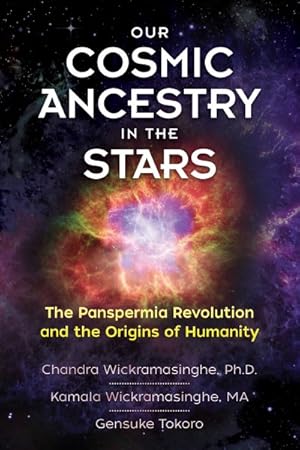
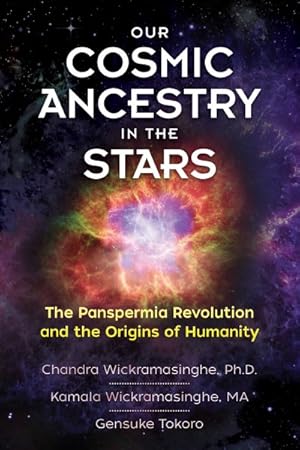
Añadir al carritoPaperback. Condición: New. An exploration of how acceptance of panspermia will soon change history Mainstream consensus is that life arose on Earth spontaneously out of "primordial soup." Yet this theory, as well as the Darwinian "survival of the fittest" concept as it relates to major steps in evolution, has no scientific basis or proof. Where, then, did life come from? As the authors show, with conclusive scientific evidence, life came from space--a concept known as "panspermia." We humans, and all other life on Earth, evolved over millennia in response to viruses that arrived via comets, and we continue to do so. Exploring the philosophical, psychological, cultural, and environmental ramifications of the acceptance of panspermia, the authors show how the shift will be on par with the Copernican Revolution--when it was finally accepted that the Earth was not the center of the Universe. Explaining the origins of the panspermia theory in the work of the late Sir Fred Hoyle, the authors reveal the vast body of evidence that has accumulated over the past 4 decades in favor of the cosmic origins of life, including viral inserts found in DNA that have shaped our human genome over millions of years. They show how the tiniest of viruses, microscopic animals (tardigrades), and even seeds have been found to be natural cosmonauts. The authors also show how space-borne viruses play a crucial role in the positive evolution of life and that our entire existence on this planet is contingent on the continuing ingress of cosmic viruses. Revealing how panspermia offers answers to some of humanity's longstanding questions about the origins of life, the authors discuss the impact this shift in understanding will have on our relationship with the Earth and on culture, history, and religion. And perhaps the most dramatic ramification of all is that acceptance of panspermia means acceptance that Earth is not unique--that other life-filled planets exist and intelligent life is common in the Universe. Not only did we come from space, but we are not alone.
-
Our Cosmic Ancestry in the Stars: The Panspermia Revolution and the Origins of Humanity
Librería: Magers and Quinn Booksellers, Minneapolis, MN, Estados Unidos de America
Calificación del vendedor: 5 de 5 estrellas
EUR 8,93
Envío por EUR 3,49
Se envía dentro de Estados Unidos de AmericaCantidad disponible: 4 disponibles
Añadir al carritopaperback. Condición: New. Brand New.
-

Our Cosmic Ancestry in the Stars
Idioma: Inglés
Publicado por Inner Traditions Bear and Company, US, 2019
ISBN 10: 1591433282 ISBN 13: 9781591433286
Librería: Rarewaves.com USA, London, LONDO, Reino Unido
Calificación del vendedor: 5 de 5 estrellas
EUR 12,66
Gastos de envío gratis
Se envía de Reino Unido a Estados Unidos de AmericaCantidad disponible: Más de 20 disponibles
Añadir al carritoPaperback. Condición: New. An exploration of how acceptance of panspermia will soon change history Mainstream consensus is that life arose on Earth spontaneously out of "primordial soup." Yet this theory, as well as the Darwinian "survival of the fittest" concept as it relates to major steps in evolution, has no scientific basis or proof. Where, then, did life come from? As the authors show, with conclusive scientific evidence, life came from space--a concept known as "panspermia." We humans, and all other life on Earth, evolved over millennia in response to viruses that arrived via comets, and we continue to do so. Exploring the philosophical, psychological, cultural, and environmental ramifications of the acceptance of panspermia, the authors show how the shift will be on par with the Copernican Revolution--when it was finally accepted that the Earth was not the center of the Universe. Explaining the origins of the panspermia theory in the work of the late Sir Fred Hoyle, the authors reveal the vast body of evidence that has accumulated over the past 4 decades in favor of the cosmic origins of life, including viral inserts found in DNA that have shaped our human genome over millions of years. They show how the tiniest of viruses, microscopic animals (tardigrades), and even seeds have been found to be natural cosmonauts. The authors also show how space-borne viruses play a crucial role in the positive evolution of life and that our entire existence on this planet is contingent on the continuing ingress of cosmic viruses. Revealing how panspermia offers answers to some of humanity's longstanding questions about the origins of life, the authors discuss the impact this shift in understanding will have on our relationship with the Earth and on culture, history, and religion. And perhaps the most dramatic ramification of all is that acceptance of panspermia means acceptance that Earth is not unique--that other life-filled planets exist and intelligent life is common in the Universe. Not only did we come from space, but we are not alone.
-
Our Cosmic Ancestry in the Stars : The Panspermia Revolution and the Origins of Humanity
Librería: GreatBookPrices, Columbia, MD, Estados Unidos de America
Calificación del vendedor: 5 de 5 estrellas
EUR 10,94
Envío por EUR 2,31
Se envía dentro de Estados Unidos de AmericaCantidad disponible: Más de 20 disponibles
Añadir al carritoCondición: As New. Unread book in perfect condition.
-
Our Cosmic Ancestry in the Stars Format: Paperback
Librería: INDOO, Avenel, NJ, Estados Unidos de America
Calificación del vendedor: 5 de 5 estrellas
EUR 13,32
Gastos de envío gratis
Se envía dentro de Estados Unidos de AmericaCantidad disponible: Más de 20 disponibles
Añadir al carritoCondición: As New. Unread copy in mint condition.
-
Our Cosmic Ancestry in the Stars Format: Paperback
Librería: INDOO, Avenel, NJ, Estados Unidos de America
Calificación del vendedor: 5 de 5 estrellas
EUR 13,42
Gastos de envío gratis
Se envía dentro de Estados Unidos de AmericaCantidad disponible: Más de 20 disponibles
Añadir al carritoCondición: New. Brand New.
-
Our Cosmic Ancestry in the Stars: The Panspermia Revolution and the Origins of Humanity
Librería: MusicMagpie, Stockport, Reino Unido
Calificación del vendedor: 5 de 5 estrellas
EUR 6,90
Envío por EUR 6,41
Se envía de Reino Unido a Estados Unidos de AmericaCantidad disponible: 1 disponibles
Añadir al carritoCondición: Very Good. 1783236723. 7/5/2026 7:32:03 AM.
-
Our Cosmic Ancestry in the Stars
Librería: visionarybook, Denver, CO, Estados Unidos de America
Calificación del vendedor: 5 de 5 estrellas
EUR 11,62
Envío por EUR 3,49
Se envía dentro de Estados Unidos de AmericaCantidad disponible: 1 disponibles
Añadir al carritoSoft cover. Condición: New. Brand New. Has not had use.
-
Our Cosmic Ancestry in the Stars: The Panspermia Revolution and the Origins of Humanity
Librería: Strand Book Store, ABAA, New York, NY, Estados Unidos de America
Miembro de asociación: ABAA ILAB
Calificación del vendedor: 4 de 5 estrellas

EUR 8,06
Envío por EUR 7,85
Se envía dentro de Estados Unidos de AmericaCantidad disponible: 1 disponibles
Añadir al carritoPaperback. Condición: Very Good.
-

Our Cosmic Ancestry in the Stars (Paperback)
Idioma: Inglés
Publicado por Inner Traditions Bear and Company, Rochester, 2019
ISBN 10: 1591433282 ISBN 13: 9781591433286
Librería: Grand Eagle Retail, Bensenville, IL, Estados Unidos de America
Calificación del vendedor: 5 de 5 estrellas
EUR 16,21
Gastos de envío gratis
Se envía dentro de Estados Unidos de AmericaCantidad disponible: 1 disponibles
Añadir al carritoPaperback. Condición: new. Paperback. An exploration of how acceptance of panspermia will soon change history Offers extensive scientific proof of panspermia--that life arose on Earth via comets and that evolution is seeded by viruses arriving via comets and interstellar dust Explores the major philosophical, psychological, cultural, religious, and environmental ramifications of the acceptance of this new scientific worldview Mainstream consensus is that life arose on Earth spontaneously out of primordial soup. Yet this theory, as well as the Darwinian survival of the fittest concept as it relates to major steps in evolution, has no scientific basis or proof. Where, then, did life come from? As the authors show, with conclusive scientific evidence, life came from space--a concept known as panspermia. We humans, and all other life on Earth, evolved over millennia in response to viruses that arrived via comets, and we continue to do so. Exploring the philosophical, psychological, cultural, and environmental ramifications of the acceptance of panspermia, the authors show how the shift will be on par with the Copernican Revolution--when it was finally accepted that the Earth was not the center of the Universe. Explaining the origins of the panspermia theory in the work of the late Sir Fred Hoyle, the authors reveal the vast body of evidence that has accumulated over the past 4 decades in favor of the cosmic origins of life, including viral inserts found in DNA that have shaped our human genome over millions of years. They show how the tiniest of viruses, microscopic animals (tardigrades), and even seeds have been found to be natural cosmonauts. The authors also show how space-borne viruses play a crucial role in the positive evolution of life and that our entire existence on this planet is contingent on the continuing ingress of cosmic viruses. Revealing how panspermia offers answers to some of humanitys longstanding questions about the origins of life, the authors discuss the impact this shift in understanding will have on our relationship with the Earth and on culture, history, and religion. And perhaps the most dramatic ramification of all is that acceptance of panspermia means acceptance that Earth is not unique--that other life-filled planets exist and intelligent life is common in the Universe. Not only did we come from space, but we are not alone. An exploration of how acceptance of panspermia will soon change history Shipping may be from multiple locations in the US or from the UK, depending on stock availability.
-
Our Cosmic Ancestry in the Stars: The Panspermia Revolution and the Origins of Humanity
Librería: WorldofBooks, Goring-By-Sea, WS, Reino Unido
Calificación del vendedor: 5 de 5 estrellas
EUR 9,86
Envío por EUR 6,54
Se envía de Reino Unido a Estados Unidos de AmericaCantidad disponible: 1 disponibles
Añadir al carritoPaperback. Condición: Very Good. The book has been read, but is in excellent condition. Pages are intact and not marred by notes or highlighting. The spine remains undamaged.
-
Our Cosmic Ancestry in the Stars: The Panspermia Revolution and the Origins of Humanity
Librería: Book House in Dinkytown, IOBA, Minneapolis, MN, Estados Unidos de America
Miembro de asociación: IOBA
Calificación del vendedor: 5 de 5 estrellas
EUR 10,81
Envío por EUR 5,68
Se envía dentro de Estados Unidos de AmericaCantidad disponible: 1 disponibles
Añadir al carritopaperback. Condición: Very Good. Very good paperback copy (NOT ex-library). Spine is uncreased, binding tight and sturdy; text also very good. Exterior looks great, shelfwear is very minor. An excellent copy. Ships same or next business day from Dinkytown in Minneapolis, Minnesota.
-
Our Cosmic Ancestry in the Stars: The Panspermia Revolution and the Origins of Humanity
Librería: Majestic Books, Hounslow, Reino Unido
Calificación del vendedor: 4 de 5 estrellas
EUR 9,24
Envío por EUR 7,59
Se envía de Reino Unido a Estados Unidos de AmericaCantidad disponible: 10 disponibles
Añadir al carritoCondición: New.
-
Our Cosmic Ancestry in the Stars: The Panspermia Revolution and the Origins of Humanity
Librería: Books Puddle, New York, NY, Estados Unidos de America
Calificación del vendedor: 4 de 5 estrellas
EUR 15,03
Envío por EUR 3,49
Se envía dentro de Estados Unidos de AmericaCantidad disponible: 10 disponibles
Añadir al carritoCondición: New.
-
Our Cosmic Ancestry in the Stars: The Panspermia Revolution and the Origins of Humanity
Librería: Biblios, Frankfurt am main, HESSE, Alemania
Calificación del vendedor: 4 de 5 estrellas
EUR 9,29
Envío por EUR 9,95
Se envía de Alemania a Estados Unidos de AmericaCantidad disponible: 10 disponibles
Añadir al carritoCondición: New.
-
Our Cosmic Ancestry in the Stars: The Panspermia Revolution and the Origins of Humanity
Librería: Revaluation Books, Exeter, Reino Unido
Calificación del vendedor: 5 de 5 estrellas
EUR 11,96
Envío por EUR 11,67
Se envía de Reino Unido a Estados Unidos de AmericaCantidad disponible: 2 disponibles
Añadir al carritoPaperback. Condición: Brand New. 144 pages. 9.00x7.00x1.00 inches. In Stock.
-
Our Cosmic Ancestry in the Stars: The Panspermia Revolution and the Origins of Humanity
Idioma: Inglés
Publicado por Inner Traditions Bear and Company, 2019
ISBN 10: 1591433282 ISBN 13: 9781591433286
Librería: Kennys Bookshop and Art Galleries Ltd., Galway, GY, Irlanda
Calificación del vendedor: 5 de 5 estrellas
EUR 14,01
Envío por EUR 10,50
Se envía de Irlanda a Estados Unidos de AmericaCantidad disponible: Más de 20 disponibles
Añadir al carritoCondición: New. 2019. Paperback. . . . . .
-
Our Cosmic Ancestry in the Stars: The Panspermia Revolution and the Origins of Humanity
Idioma: Inglés
Publicado por Inner Traditions Bear and Company, 2019
ISBN 10: 1591433282 ISBN 13: 9781591433286
Librería: Kennys Bookstore, Olney, MD, Estados Unidos de America
Calificación del vendedor: 5 de 5 estrellas
EUR 16,56
Envío por EUR 9,18
Se envía dentro de Estados Unidos de AmericaCantidad disponible: Más de 20 disponibles
Añadir al carritoCondición: New. 2019. Paperback. . . . . . Books ship from the US and Ireland.
-
Our Cosmic Ancestry in the Stars: The Panspermia Revolution and the Origins of Humanity
Idioma: Inglés
Publicado por Bear & Company 2019-06-13, 2019
ISBN 10: 1591433282 ISBN 13: 9781591433286
Librería: Chiron Media, Wallingford, Reino Unido
Calificación del vendedor: 5 de 5 estrellas
EUR 7,98
Envío por EUR 18,08
Se envía de Reino Unido a Estados Unidos de AmericaCantidad disponible: Más de 20 disponibles
Añadir al carritoPaperback. Condición: New.
-
Our Cosmic Ancestry In The Stars
Librería: SMASS Sellers, IRVING, TX, Estados Unidos de America
Calificación del vendedor: 4 de 5 estrellas
EUR 27,21
Gastos de envío gratis
Se envía dentro de Estados Unidos de AmericaCantidad disponible: 2 disponibles
Añadir al carritoCondición: New. Brand New Original US Edition. Customer service! Satisfaction Guaranteed.
-
Our Cosmic Ancestry in the Stars: The Panspermia Revolution and the Origins of Humanity
Idioma: Inglés
Publicado por Inner Traditions Bear and Company, 2019
ISBN 10: 1591433282 ISBN 13: 9781591433286
Librería: THE SAINT BOOKSTORE, Southport, Reino Unido
Calificación del vendedor: 5 de 5 estrellas
EUR 13,91
Envío por EUR 15,45
Se envía de Reino Unido a Estados Unidos de AmericaCantidad disponible: Más de 20 disponibles
Añadir al carritoPaperback / softback. Condición: New. New copy - Usually dispatched within 4 working days.
-

Our Cosmic Ancestry in the Stars : The Panspermia Revolution and the Origins of Humanity
Librería: GreatBookPricesUK, Woodford Green, Reino Unido
Calificación del vendedor: 5 de 5 estrellas
EUR 13,43
Envío por EUR 17,51
Se envía de Reino Unido a Estados Unidos de AmericaCantidad disponible: Más de 20 disponibles
Añadir al carritoCondición: As New. Unread book in perfect condition.
-
Our Cosmic Ancestry in the Stars : The Panspermia Revolution and the Origins of Humanity
Librería: GreatBookPricesUK, Woodford Green, Reino Unido
Calificación del vendedor: 5 de 5 estrellas
EUR 13,52
Envío por EUR 17,51
Se envía de Reino Unido a Estados Unidos de AmericaCantidad disponible: Más de 20 disponibles
Añadir al carritoCondición: New.
-
 Edición internacional
OUR COSMIC ANCESTRY IN THE STARS
Librería: UK BOOKS STORE, London, LONDO, Reino Unido
Calificación del vendedor: 5 de 5 estrellas
EUR 31,77
Gastos de envío gratis
Se envía de Reino Unido a Estados Unidos de AmericaCantidad disponible: 8 disponibles
Añadir al carritoCondición: New. Brand New! Fast Delivery This is an International Edition and ship within 24-48 hours. Deliver by FedEx and Dhl, & Aramex, UPS, & USPS and we do accept APO and PO BOX Addresses. Order can be delivered worldwide within 6-10 days and we do have flat rate for up to 2LB. Extra shipping charges will be requested if the Book weight is more than 5 LB. This Item May be shipped from India, United states & United Kingdom. Depending on your location and availability.
-

Our Cosmic Ancestry in the Stars (Paperback)
Idioma: Inglés
Publicado por Inner Traditions Bear and Company, Rochester, 2019
ISBN 10: 1591433282 ISBN 13: 9781591433286
Librería: AussieBookSeller, Truganina, VIC, Australia
Calificación del vendedor: 5 de 5 estrellas
EUR 22,94
Envío por EUR 32,35
Se envía de Australia a Estados Unidos de AmericaCantidad disponible: 1 disponibles
Añadir al carritoPaperback. Condición: new. Paperback. An exploration of how acceptance of panspermia will soon change history Offers extensive scientific proof of panspermia--that life arose on Earth via comets and that evolution is seeded by viruses arriving via comets and interstellar dust Explores the major philosophical, psychological, cultural, religious, and environmental ramifications of the acceptance of this new scientific worldview Mainstream consensus is that life arose on Earth spontaneously out of primordial soup. Yet this theory, as well as the Darwinian survival of the fittest concept as it relates to major steps in evolution, has no scientific basis or proof. Where, then, did life come from? As the authors show, with conclusive scientific evidence, life came from space--a concept known as panspermia. We humans, and all other life on Earth, evolved over millennia in response to viruses that arrived via comets, and we continue to do so. Exploring the philosophical, psychological, cultural, and environmental ramifications of the acceptance of panspermia, the authors show how the shift will be on par with the Copernican Revolution--when it was finally accepted that the Earth was not the center of the Universe. Explaining the origins of the panspermia theory in the work of the late Sir Fred Hoyle, the authors reveal the vast body of evidence that has accumulated over the past 4 decades in favor of the cosmic origins of life, including viral inserts found in DNA that have shaped our human genome over millions of years. They show how the tiniest of viruses, microscopic animals (tardigrades), and even seeds have been found to be natural cosmonauts. The authors also show how space-borne viruses play a crucial role in the positive evolution of life and that our entire existence on this planet is contingent on the continuing ingress of cosmic viruses. Revealing how panspermia offers answers to some of humanitys longstanding questions about the origins of life, the authors discuss the impact this shift in understanding will have on our relationship with the Earth and on culture, history, and religion. And perhaps the most dramatic ramification of all is that acceptance of panspermia means acceptance that Earth is not unique--that other life-filled planets exist and intelligent life is common in the Universe. Not only did we come from space, but we are not alone. An exploration of how acceptance of panspermia will soon change history Shipping may be from our Sydney, NSW warehouse or from our UK or US warehouse, depending on stock availability.
-

Our Cosmic Ancestry in the Stars
Idioma: Inglés
Publicado por Inner Traditions Bear and Company, US, 2019
ISBN 10: 1591433282 ISBN 13: 9781591433286
Librería: Rarewaves USA United, OSWEGO, IL, Estados Unidos de America
Calificación del vendedor: 5 de 5 estrellas
EUR 13,53
Envío por EUR 43,71
Se envía dentro de Estados Unidos de AmericaCantidad disponible: 10 disponibles
Añadir al carritoPaperback. Condición: New. An exploration of how acceptance of panspermia will soon change history Mainstream consensus is that life arose on Earth spontaneously out of "primordial soup." Yet this theory, as well as the Darwinian "survival of the fittest" concept as it relates to major steps in evolution, has no scientific basis or proof. Where, then, did life come from? As the authors show, with conclusive scientific evidence, life came from space--a concept known as "panspermia." We humans, and all other life on Earth, evolved over millennia in response to viruses that arrived via comets, and we continue to do so. Exploring the philosophical, psychological, cultural, and environmental ramifications of the acceptance of panspermia, the authors show how the shift will be on par with the Copernican Revolution--when it was finally accepted that the Earth was not the center of the Universe. Explaining the origins of the panspermia theory in the work of the late Sir Fred Hoyle, the authors reveal the vast body of evidence that has accumulated over the past 4 decades in favor of the cosmic origins of life, including viral inserts found in DNA that have shaped our human genome over millions of years. They show how the tiniest of viruses, microscopic animals (tardigrades), and even seeds have been found to be natural cosmonauts. The authors also show how space-borne viruses play a crucial role in the positive evolution of life and that our entire existence on this planet is contingent on the continuing ingress of cosmic viruses. Revealing how panspermia offers answers to some of humanity's longstanding questions about the origins of life, the authors discuss the impact this shift in understanding will have on our relationship with the Earth and on culture, history, and religion. And perhaps the most dramatic ramification of all is that acceptance of panspermia means acceptance that Earth is not unique--that other life-filled planets exist and intelligent life is common in the Universe. Not only did we come from space, but we are not alone.
-

Our Cosmic Ancestry in the Stars (Paperback)
Idioma: Inglés
Publicado por Inner Traditions Bear and Company, Rochester, 2019
ISBN 10: 1591433282 ISBN 13: 9781591433286
Librería: CitiRetail, Stevenage, Reino Unido
Calificación del vendedor: 5 de 5 estrellas
EUR 16,82
Envío por EUR 43,19
Se envía de Reino Unido a Estados Unidos de AmericaCantidad disponible: 1 disponibles
Añadir al carritoPaperback. Condición: new. Paperback. An exploration of how acceptance of panspermia will soon change history Offers extensive scientific proof of panspermia--that life arose on Earth via comets and that evolution is seeded by viruses arriving via comets and interstellar dust Explores the major philosophical, psychological, cultural, religious, and environmental ramifications of the acceptance of this new scientific worldview Mainstream consensus is that life arose on Earth spontaneously out of primordial soup. Yet this theory, as well as the Darwinian survival of the fittest concept as it relates to major steps in evolution, has no scientific basis or proof. Where, then, did life come from? As the authors show, with conclusive scientific evidence, life came from space--a concept known as panspermia. We humans, and all other life on Earth, evolved over millennia in response to viruses that arrived via comets, and we continue to do so. Exploring the philosophical, psychological, cultural, and environmental ramifications of the acceptance of panspermia, the authors show how the shift will be on par with the Copernican Revolution--when it was finally accepted that the Earth was not the center of the Universe. Explaining the origins of the panspermia theory in the work of the late Sir Fred Hoyle, the authors reveal the vast body of evidence that has accumulated over the past 4 decades in favor of the cosmic origins of life, including viral inserts found in DNA that have shaped our human genome over millions of years. They show how the tiniest of viruses, microscopic animals (tardigrades), and even seeds have been found to be natural cosmonauts. The authors also show how space-borne viruses play a crucial role in the positive evolution of life and that our entire existence on this planet is contingent on the continuing ingress of cosmic viruses. Revealing how panspermia offers answers to some of humanitys longstanding questions about the origins of life, the authors discuss the impact this shift in understanding will have on our relationship with the Earth and on culture, history, and religion. And perhaps the most dramatic ramification of all is that acceptance of panspermia means acceptance that Earth is not unique--that other life-filled planets exist and intelligent life is common in the Universe. Not only did we come from space, but we are not alone. An exploration of how acceptance of panspermia will soon change history Shipping may be from our UK warehouse or from our Australian or US warehouses, depending on stock availability.
-

Our Cosmic Ancestry in the Stars: The Panspermia Revolution and the Origins of Humanity
Librería: moluna, Greven, Alemania
Calificación del vendedor: 5 de 5 estrellas
EUR 16,76
Envío por EUR 48,99
Se envía de Alemania a Estados Unidos de AmericaCantidad disponible: Más de 20 disponibles
Añadir al carritoKartoniert / Broschiert. Condición: New. Über den AutorChandra Wickramasinghe, Ph.D., is the director of the Centre for Astrobiology at the University of Buckingham. A professor of applied mathematics and astronomy, he is the editor-in-chief of the Journal of Astrobiolo.


