

Importe total (1 artículo artículos):
Destino del pedido:

9781498503549 - Paul Ricoeur and the Task of Political Philosophy (Studies in the Thought of Paul Ricoeur) (9 resultados)
Ir a los resultados principales
Filtros de búsqueda
Tipo de artículo
- Todos los tipos de productos
- Libros (9)
- Revistas y publicaciones (No hay ningún otro resultado que coincida con este filtro.)
- Cómics (No hay ningún otro resultado que coincida con este filtro.)
- Partituras (No hay ningún otro resultado que coincida con este filtro.)
- Arte, grabados y pósters (No hay ningún otro resultado que coincida con este filtro.)
- Fotografías (No hay ningún otro resultado que coincida con este filtro.)
- Mapas (No hay ningún otro resultado que coincida con este filtro.)
- Manuscritos y coleccionismo de papel (No hay ningún otro resultado que coincida con este filtro.)
Condición Más información
- Nuevo (9)
- Como nuevo, Excelente o Muy bueno (No hay ningún otro resultado que coincida con este filtro.)
- Bueno o Aceptable (No hay ningún otro resultado que coincida con este filtro.)
- Regular o Pobre (No hay ningún otro resultado que coincida con este filtro.)
- Tal como se indica (No hay ningún otro resultado que coincida con este filtro.)
Encuadernación
- Todas
- Tapa dura (No hay ningún otro resultado que coincida con este filtro.)
- Tapa blanda (9)
Más atributos
- Primera edición (No hay ningún otro resultado que coincida con este filtro.)
- Firmado (No hay ningún otro resultado que coincida con este filtro.)
- Sobrecubierta (No hay ningún otro resultado que coincida con este filtro.)
- Con imágenes (4)
- No impresión bajo demanda (5)
Idioma (1)
Precio
- Cualquier precio
- Menos de EUR 20 (No hay ningún otro resultado que coincida con este filtro.)
- EUR 20 a EUR 45 (No hay ningún otro resultado que coincida con este filtro.)
- Más de EUR 45
Gastos de envío gratis
Ubicación del vendedor
Valoración de los vendedores
-
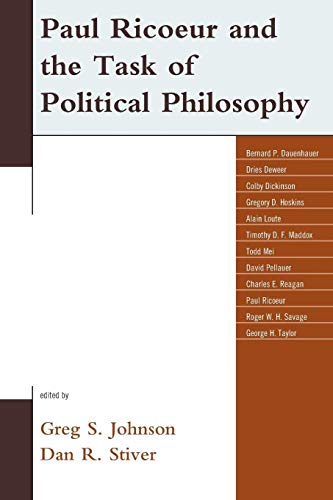
Paul Ricoeur and the Task of Political Philosophy (Studies in the Thought of Paul Ricoeur)
Libro 1 de 26: Studies in the Thought of Paul RicoeurLibrería: California Books, Miami, FL, Estados Unidos de America
Calificación del vendedor: 5 de 5 estrellas

EUR 63,83
Gastos de envío gratis
Se envía dentro de Estados Unidos de AmericaCantidad disponible: Más de 20 disponibles
Añadir al carritoCondición: New.
-

Paul Ricoeur and the Task of Political Philosophy
Libro 1 de 26: Studies in the Thought of Paul RicoeurIdioma: Inglés
Publicado por Bloomsbury Publishing Plc, US, 2014
ISBN 10: 1498503543 ISBN 13: 9781498503549
Librería: Rarewaves.com USA, London, LONDO, Reino Unido
Calificación del vendedor: 5 de 5 estrellas
EUR 71,14
Gastos de envío gratis
Se envía de Reino Unido a Estados Unidos de AmericaCantidad disponible: Más de 20 disponibles
Añadir al carritoPaperback. Condición: New. This book discusses the political philosophy of Paul Ricoeur. More precisely, it offers a sustained engagement with Ricoeur's political thought in a way that demonstrates both the significance of the political in his own thinking throughout his career, and how Ricoeur's understanding of the political offers something valuable to current discussions in political philosophy. A second goal is to begin to fill a gap in Ricoeur studies and situate his work on political ethics more fully in contemporary discussions about political thought. In this way, Ricoeur can be seen as a figure pertinent to recent trends in political philosophy that make political thinking more realistic to the conditions for political life. The various essays in the book move along intersecting but different trajectories. First, as some of these essays attest, the concept of the political is a pervasive theme that runs throughout Ricoeur's corpus. In this way a theme throughout the book examines this notion of the political, as well as how it relates to his more well-known work in other areas. Second, and related, the historical understanding of perennial issues in political philosophy are most often updated by those standing in the lineage of those who have come before. As such, Ricoeur's hermeneutical orientation has moved him to engage contemporaries who attempt to "think forward" in various ways this tradition for current situations. Unlike most who engage in political thought, Ricoeur goes where others dare not, namely, to those who appear to be opponents but, as he shows, offer perspectives worth more consideration in the name of the best of political thinking. In this light, Ricoeur's hermeneutical orientation is again a unique framework for understanding the nature of political engagement, an orientation in what follows that highlights the ways that Ricoeur and a Ricoeurian perspective cross philosophical orientations to develop a unique understanding of political thought that is different.
-
Paul Ricoeur and the Task of Political Philosophy (Studies in the Thought of Paul Ricoeur)
Libro 1 de 26: Studies in the Thought of Paul RicoeurLibrería: Ria Christie Collections, Uxbridge, Reino Unido
Calificación del vendedor: 5 de 5 estrellas
EUR 64,89
Envío por EUR 13,82
Se envía de Reino Unido a Estados Unidos de AmericaCantidad disponible: Más de 20 disponibles
Añadir al carritoCondición: New. In.
-
Paul Ricoeur and the Task of Political Philosophy
Libro 1 de 26: Studies in the Thought of Paul RicoeurLibrería: Revaluation Books, Exeter, Reino Unido
Calificación del vendedor: 5 de 5 estrellas
EUR 94,07
Envío por EUR 11,54
Se envía de Reino Unido a Estados Unidos de AmericaCantidad disponible: 2 disponibles
Añadir al carritoPaperback. Condición: Brand New. reprint edition. 232 pages. 9.00x6.00x0.75 inches. In Stock.
-

Paul Ricoeur and the Task of Political Philosophy
Libro 1 de 26: Studies in the Thought of Paul RicoeurIdioma: Inglés
Publicado por Bloomsbury Publishing Plc, US, 2014
ISBN 10: 1498503543 ISBN 13: 9781498503549
Librería: Rarewaves.com UK, London, Reino Unido
Calificación del vendedor: 5 de 5 estrellas
EUR 66,63
Envío por EUR 75,00
Se envía de Reino Unido a Estados Unidos de AmericaCantidad disponible: Más de 20 disponibles
Añadir al carritoPaperback. Condición: New. This book discusses the political philosophy of Paul Ricoeur. More precisely, it offers a sustained engagement with Ricoeur's political thought in a way that demonstrates both the significance of the political in his own thinking throughout his career, and how Ricoeur's understanding of the political offers something valuable to current discussions in political philosophy. A second goal is to begin to fill a gap in Ricoeur studies and situate his work on political ethics more fully in contemporary discussions about political thought. In this way, Ricoeur can be seen as a figure pertinent to recent trends in political philosophy that make political thinking more realistic to the conditions for political life. The various essays in the book move along intersecting but different trajectories. First, as some of these essays attest, the concept of the political is a pervasive theme that runs throughout Ricoeur's corpus. In this way a theme throughout the book examines this notion of the political, as well as how it relates to his more well-known work in other areas. Second, and related, the historical understanding of perennial issues in political philosophy are most often updated by those standing in the lineage of those who have come before. As such, Ricoeur's hermeneutical orientation has moved him to engage contemporaries who attempt to "think forward" in various ways this tradition for current situations. Unlike most who engage in political thought, Ricoeur goes where others dare not, namely, to those who appear to be opponents but, as he shows, offer perspectives worth more consideration in the name of the best of political thinking. In this light, Ricoeur's hermeneutical orientation is again a unique framework for understanding the nature of political engagement, an orientation in what follows that highlights the ways that Ricoeur and a Ricoeurian perspective cross philosophical orientations to develop a unique understanding of political thought that is different.
-
Paul Ricoeur and the Task of Political Philosophy (Paperback)
Libro 1 de 26: Studies in the Thought of Paul RicoeurIdioma: Inglés
Publicado por Bloomsbury Publishing Plc, Lanham, MD, 2014
ISBN 10: 1498503543 ISBN 13: 9781498503549
Librería: Grand Eagle Retail, Bensenville, IL, Estados Unidos de America
Calificación del vendedor: 5 de 5 estrellas
EUR 77,36
Gastos de envío gratis
Se envía dentro de Estados Unidos de AmericaCantidad disponible: 1 disponibles
Añadir al carritoPaperback. Condición: new. Paperback. This book discusses the political philosophy of Paul Ricoeur. More precisely, it offers a sustained engagement with Ricoeurs political thought in a way that demonstrates both the significance of the political in his own thinking throughout his career, and how Ricoeurs understanding of the political offers something valuable to current discussions in political philosophy. A second goal is to begin to fill a gap in Ricoeur studies and situate his work on political ethics more fully in contemporary discussions about political thought. In this way, Ricoeur can be seen as a figure pertinent to recent trends in political philosophy that make political thinking more realistic to the conditions for political life. The various essays in the book move along intersecting but different trajectories. First, as some of these essays attest, the concept of the political is a pervasive theme that runs throughout Ricoeurs corpus. In this way a theme throughout the book examines this notion of the political, as well as how it relates to his more well-known work in other areas. Second, and related, the historical understanding of perennial issues in political philosophy are most often updated by those standing in the lineage of those who have come before. As such, Ricoeurs hermeneutical orientation has moved him to engage contemporaries who attempt to think forward in various ways this tradition for current situations. Unlike most who engage in political thought, Ricoeur goes where others dare not, namely, to those who appear to be opponents but, as he shows, offer perspectives worth more consideration in the name of the best of political thinking. In this light, Ricoeurs hermeneutical orientation is again a unique framework for understanding the nature of political engagement, an orientation in what follows that highlights the ways that Ricoeur and a Ricoeurian perspective cross philosophical orientations to develop a unique understanding of political thought that is different. This book offers a sustained engagement with the political philosophy of Paul Ricoeur and demonstrates both the significance of the political in his own thinking throughout his career, and how his understanding of the political offers something valuable to current discussions of issues in political philosophy. This item is printed on demand. Shipping may be from multiple locations in the US or from the UK, depending on stock availability.
-
Paul Ricoeur and the Task of Political Philosophy (Paperback)
Libro 1 de 26: Studies in the Thought of Paul RicoeurIdioma: Inglés
Publicado por Bloomsbury Publishing Plc, Lanham, MD, 2014
ISBN 10: 1498503543 ISBN 13: 9781498503549
Librería: CitiRetail, Stevenage, Reino Unido
Calificación del vendedor: 5 de 5 estrellas
EUR 72,48
Envío por EUR 42,69
Se envía de Reino Unido a Estados Unidos de AmericaCantidad disponible: 1 disponibles
Añadir al carritoPaperback. Condición: new. Paperback. This book discusses the political philosophy of Paul Ricoeur. More precisely, it offers a sustained engagement with Ricoeurs political thought in a way that demonstrates both the significance of the political in his own thinking throughout his career, and how Ricoeurs understanding of the political offers something valuable to current discussions in political philosophy. A second goal is to begin to fill a gap in Ricoeur studies and situate his work on political ethics more fully in contemporary discussions about political thought. In this way, Ricoeur can be seen as a figure pertinent to recent trends in political philosophy that make political thinking more realistic to the conditions for political life. The various essays in the book move along intersecting but different trajectories. First, as some of these essays attest, the concept of the political is a pervasive theme that runs throughout Ricoeurs corpus. In this way a theme throughout the book examines this notion of the political, as well as how it relates to his more well-known work in other areas. Second, and related, the historical understanding of perennial issues in political philosophy are most often updated by those standing in the lineage of those who have come before. As such, Ricoeurs hermeneutical orientation has moved him to engage contemporaries who attempt to think forward in various ways this tradition for current situations. Unlike most who engage in political thought, Ricoeur goes where others dare not, namely, to those who appear to be opponents but, as he shows, offer perspectives worth more consideration in the name of the best of political thinking. In this light, Ricoeurs hermeneutical orientation is again a unique framework for understanding the nature of political engagement, an orientation in what follows that highlights the ways that Ricoeur and a Ricoeurian perspective cross philosophical orientations to develop a unique understanding of political thought that is different. This book offers a sustained engagement with the political philosophy of Paul Ricoeur and demonstrates both the significance of the political in his own thinking throughout his career, and how his understanding of the political offers something valuable to current discussions of issues in political philosophy. This item is printed on demand. Shipping may be from our UK warehouse or from our Australian or US warehouses, depending on stock availability.
-

Paul Ricoeur and the Task of Political Philosophy
Libro 1 de 26: Studies in the Thought of Paul RicoeurLibrería: moluna, Greven, Alemania
Calificación del vendedor: 4 de 5 estrellas

EUR 72,83
Envío por EUR 48,99
Se envía de Alemania a Estados Unidos de AmericaCantidad disponible: Más de 20 disponibles
Añadir al carritoCondición: New. Dieser Artikel ist ein Print on Demand Artikel und wird nach Ihrer Bestellung fuer Sie gedruckt. This book offers a sustained engagement with the political philosophy of Paul Ricoeur and demonstrates both the significance of the political in his own thinking throughout his career, and how his understanding of the political offers something valuable to .
-

Paul Ricoeur and the Task of Political Philosophy
Libro 1 de 26: Studies in the Thought of Paul RicoeurLibrería: AHA-BUCH GmbH, Einbeck, Alemania
Calificación del vendedor: 5 de 5 estrellas
EUR 88,68
Envío por EUR 62,01
Se envía de Alemania a Estados Unidos de AmericaCantidad disponible: 1 disponibles
Añadir al carritoTaschenbuch. Condición: Neu. nach der Bestellung gedruckt Neuware - Printed after ordering - This book discusses the political philosophy of Paul Ricoeur. More precisely, it offers a sustained engagement with Ricoeur's political thought in a way that demonstrates both the significance of the political in his own thinking throughout his career, and how Ricoeur's understanding of the political offers something valuable to current discussions in political philosophy. A second goal is to begin to fill a gap in Ricoeur studies and situate his work on political ethics more fully in contemporary discussions about political thought. In this way, Ricoeur can be seen as a figure pertinent to recent trends in political philosophy that make political thinking more realistic to the conditions for political life. The various essays in the book move along intersecting but different trajectories. First, as some of these essays attest, the concept of the political is a pervasive theme that runs throughout Ricoeur's corpus. In this way a theme throughout the book examines this notion of the political, as well as how it relates to his more well-known work in other areas. Second, and related, the historical understanding of perennial issues in political philosophy are most often updated by those standing in the lineage of those who have come before. As such, Ricoeur's hermeneutical orientation has moved him to engage contemporaries who attempt to 'think forward' in various ways this tradition for current situations. Unlike most who engage in political thought, Ricoeur goes where others dare not, namely, to those who appear to be opponents but, as he shows, offer perspectives worth more consideration in the name of the best of political thinking. In this light, Ricoeur's hermeneutical orientation is again a unique framework for understanding the nature of political engagement, an orientation in what follows that highlights the ways that Ricoeur and a Ricoeurian perspective cross philosophical orientations to develop a unique understanding of political thought that is different.

