

Importe total (1 artículo artículos):
Destino del pedido:

9781439157336 - Primer on Decision Making: How Decisions Happen de March, James G. (34 resultados)
Ir a los resultados principales
Filtros de búsqueda
Tipo de artículo
- Todos los tipos de productos
- Libros (34)
- Revistas y publicaciones (No hay ningún otro resultado que coincida con este filtro.)
- Cómics (No hay ningún otro resultado que coincida con este filtro.)
- Partituras (No hay ningún otro resultado que coincida con este filtro.)
- Arte, grabados y pósters (No hay ningún otro resultado que coincida con este filtro.)
- Fotografías (No hay ningún otro resultado que coincida con este filtro.)
- Mapas (No hay ningún otro resultado que coincida con este filtro.)
- Manuscritos y coleccionismo de papel (No hay ningún otro resultado que coincida con este filtro.)
Condición Más información
- Nuevo (21)
- Como nuevo, Excelente o Muy bueno (3)
- Bueno o Aceptable (10)
- Regular o Pobre (No hay ningún otro resultado que coincida con este filtro.)
- Tal como se indica (No hay ningún otro resultado que coincida con este filtro.)
Encuadernación
- Todas
- Tapa dura (No hay ningún otro resultado que coincida con este filtro.)
- Tapa blanda (34)
Más atributos
- Primera edición (No hay ningún otro resultado que coincida con este filtro.)
- Firmado (No hay ningún otro resultado que coincida con este filtro.)
- Sobrecubierta (No hay ningún otro resultado que coincida con este filtro.)
- Con imágenes (14)
- No impresión bajo demanda (32)
Idioma (1)
Gastos de envío gratis
Ubicación del vendedor
Valoración de los vendedores
-

Primer on Decision Making: How Decisions Happen
Librería: World of Books (was SecondSale), Montgomery, IL, Estados Unidos de America
Calificación del vendedor: 5 de 5 estrellas

EUR 4,77
Gastos de envío gratis
Se envía dentro de Estados Unidos de AmericaCantidad disponible: 1 disponibles
Añadir al carritoCondición: Very Good. Item in very good condition! Textbooks may not include supplemental items i.e. CDs, access codes etc.
-
Primer on Decision Making : How Decisions Happen
Librería: Better World Books: West, Reno, NV, Estados Unidos de America
Calificación del vendedor: 5 de 5 estrellas
EUR 6,55
Gastos de envío gratis
Se envía dentro de Estados Unidos de AmericaCantidad disponible: 1 disponibles
Añadir al carritoCondición: Good. Pages intact with minimal writing/highlighting. The binding may be loose and creased. Dust jackets/supplements are not included. Stock photo provided. Product includes identifying sticker. Better World Books: Buy Books. Do Good.
-
Primer on Decision Making: How Decisions Happen
Librería: ThriftBooks-Dallas, Dallas, TX, Estados Unidos de America
Calificación del vendedor: 5 de 5 estrellas
EUR 8,31
Gastos de envío gratis
Se envía dentro de Estados Unidos de AmericaCantidad disponible: 1 disponibles
Añadir al carritoPaperback. Condición: Good. No Jacket. Former library book; Pages can have notes/highlighting. Spine may show signs of wear. ~ ThriftBooks: Read More, Spend Less.
-
Primer on Decision Making: How Decisions Happen
Librería: ThriftBooks-Dallas, Dallas, TX, Estados Unidos de America
Calificación del vendedor: 5 de 5 estrellas
EUR 8,31
Gastos de envío gratis
Se envía dentro de Estados Unidos de AmericaCantidad disponible: 1 disponibles
Añadir al carritoPaperback. Condición: Good. No Jacket. Pages can have notes/highlighting. Spine may show signs of wear. ~ ThriftBooks: Read More, Spend Less.
-
Primer on Decision Making: How Decisions Happen
Librería: ThriftBooks-Atlanta, AUSTELL, GA, Estados Unidos de America
Calificación del vendedor: 5 de 5 estrellas
EUR 8,31
Gastos de envío gratis
Se envía dentro de Estados Unidos de AmericaCantidad disponible: 1 disponibles
Añadir al carritoPaperback. Condición: Very Good. No Jacket. May have limited writing in cover pages. Pages are unmarked. ~ ThriftBooks: Read More, Spend Less.
-
Primer on Decision Making: How Decisions Happen
Librería: Weird Books, Napa, CA, Estados Unidos de America
Calificación del vendedor: 5 de 5 estrellas
EUR 5,36
Envío por EUR 5,19
Se envía dentro de Estados Unidos de AmericaCantidad disponible: 1 disponibles
Añadir al carritopaperback. Condición: Good. Previously read with typical light wear. Good text with minimal/minor marking, reading wear to cover and edges. "Used Book" labels to cover/spine and/or stamp inside cover. US orders shipped via US Mail. International orders shipped via DHL. Additional postage may be required on oversize books and sets. NO prison orders.
-
Primer on Decision Making : How Decisions Happen
Librería: Better World Books Ltd, Dunfermline, Reino Unido
Calificación del vendedor: 5 de 5 estrellas
EUR 5,45
Envío por EUR 5,77
Se envía de Reino Unido a Estados Unidos de AmericaCantidad disponible: 1 disponibles
Añadir al carritoCondición: Very Good. Former library copy. Pages intact with possible writing/highlighting. Binding strong with minor wear. Dust jackets/supplements may not be included. Includes library markings. Stock photo provided. Product includes identifying sticker. Better World Books: Buy Books. Do Good.
-
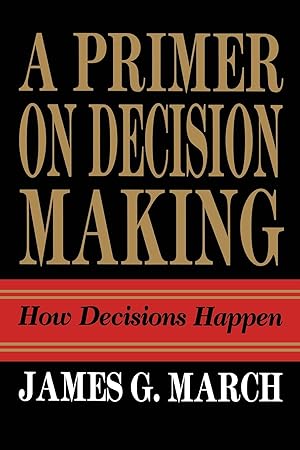
Primer on Decision Making: How Decisions Happen
Librería: Goodwill of Silicon Valley, SAN JOSE, CA, Estados Unidos de America
Calificación del vendedor: 4 de 5 estrellas

EUR 8,47
Envío por EUR 3,46
Se envía dentro de Estados Unidos de AmericaCantidad disponible: 1 disponibles
Añadir al carritoCondición: very_good. Supports Goodwill of Silicon Valley job training programs. The cover and pages are in very good condition! The cover and any other included accessories are also in very good condition showing some minor use. The spine is straight, there are no rips tears or creases on the cover or the pages.
-
Primer on Decision Making: How Decisions Happen
Librería: Textbooks_Source, Columbia, MO, Estados Unidos de America
Calificación del vendedor: 5 de 5 estrellas
EUR 10,61
Envío por EUR 3,46
Se envía dentro de Estados Unidos de AmericaCantidad disponible: 3 disponibles
Añadir al carritopaperback. Condición: Good. Ships in a BOX from Central Missouri! May not include working access code. Will not include dust jacket. Has used sticker(s) and some writing or highlighting. UPS shipping for most packages, (Priority Mail for AK/HI/APO/PO Boxes).
-

Primer on Decision Making : How Decisions Happen
Librería: GreatBookPrices, Columbia, MD, Estados Unidos de America
Calificación del vendedor: 5 de 5 estrellas
EUR 13,03
Envío por EUR 2,29
Se envía dentro de Estados Unidos de AmericaCantidad disponible: Más de 20 disponibles
Añadir al carritoCondición: As New. Unread book in perfect condition.
-

Primer on Decision Making : How Decisions Happen
Librería: GreatBookPrices, Columbia, MD, Estados Unidos de America
Calificación del vendedor: 5 de 5 estrellas
EUR 16,05
Envío por EUR 2,29
Se envía dentro de Estados Unidos de AmericaCantidad disponible: Más de 20 disponibles
Añadir al carritoCondición: New.
-
Primer on Decision Making: How Decisions Happen
Librería: Textbooks_Source, Columbia, MO, Estados Unidos de America
Calificación del vendedor: 5 de 5 estrellas
EUR 14,86
Envío por EUR 3,46
Se envía dentro de Estados Unidos de AmericaCantidad disponible: 1 disponibles
Añadir al carritopaperback. Condición: New. Ships in a BOX from Central Missouri! UPS shipping for most packages, (Priority Mail for AK/HI/APO/PO Boxes).
-

Primer on Decision Making: How Decisions Happen (Paperback or Softback)
Librería: BargainBookStores, Grand Rapids, MI, Estados Unidos de America
Calificación del vendedor: 5 de 5 estrellas
EUR 18,54
Gastos de envío gratis
Se envía dentro de Estados Unidos de AmericaCantidad disponible: 5 disponibles
Añadir al carritoPaperback or Softback. Condición: New. Primer on Decision Making: How Decisions Happen. Book.
-
Primer on Decision Making: How Decisions Happen
Librería: One Planet Books, Columbia, MO, Estados Unidos de America
Calificación del vendedor: 4 de 5 estrellas
EUR 14,98
Envío por EUR 3,46
Se envía dentro de Estados Unidos de AmericaCantidad disponible: 1 disponibles
Añadir al carritopaperback. Condición: Like New. Ships in a BOX from Central Missouri! Like Brand NEW. No tears, highlighting or writing because it's never been used! May have minor shelf wear. UPS shipping for most packages, (Priority Mail for AK/HI/APO/PO Boxes).
-
Primer on Decision Making: How Decisions Happen
Librería: California Books, Miami, FL, Estados Unidos de America
Calificación del vendedor: 5 de 5 estrellas
EUR 19,66
Gastos de envío gratis
Se envía dentro de Estados Unidos de AmericaCantidad disponible: Más de 20 disponibles
Añadir al carritoCondición: New.
-

Primer on Decision Making
Idioma: Inglés
Publicado por Simon and Schuster, US, 2009
ISBN 10: 1439157332 ISBN 13: 9781439157336
Librería: Rarewaves USA, OSWEGO, IL, Estados Unidos de America
Calificación del vendedor: 5 de 5 estrellas
EUR 20,90
Gastos de envío gratis
Se envía dentro de Estados Unidos de AmericaCantidad disponible: Más de 20 disponibles
Añadir al carritoPaperback. Condición: New. Building on lecture notes from his acclaimed course at Stanford University, James March provides a brilliant introduction to decision making, a central human activity fundamental to individual, group, organizational, and societal life. March draws on research from all the disciplines of social and behavioral science to show decision making in its broadest context. By emphasizing how decisions are actually made -- as opposed to how they should be made -- he enables those involved in the process to understand it both as observers and as participants.March sheds new light on the decision-making process by delineating four deep issues that persistently divide students of decision making: Are decisions based on rational choices involving preferences and expected consequences, or on rules that are appropriate to the identity of the decision maker and the situation? Is decision making a consistent, clear process or one characterized by ambiguity and inconsistency? Is decision making significant primarily for its outcomes, or for the individual and social meanings it creates and sustains? And finally, are the outcomes of decision processes attributable solely to the actions of individuals, or to the combined influence of interacting individuals, organizations, and societies? March's observations on how intelligence is -- or is not -- achieved through decision making, and possibilities for enhancing decision intelligence, are also provided.March explains key concepts of vital importance to students of decision making and decision makers, such as limited rationality, history-dependent rules, and ambiguity, and weaves these ideas into a full depiction of decision making.He includes a discussion of the modern aspects of several classic issues underlying these concepts, such as the relation between reason and ignorance, intentionality and fate, and meaning and interpretation.This valuable textbook by one of the seminal figures in the history of organizational decision making will be required reading for a new generation of scholars, managers, and other decision makers.
-

Primer on Decision Making (Paperback)
Idioma: Inglés
Publicado por Simon & Schuster, New York, 2009
ISBN 10: 1439157332 ISBN 13: 9781439157336
Librería: Grand Eagle Retail, Bensenville, IL, Estados Unidos de America
Calificación del vendedor: 5 de 5 estrellas
EUR 21,84
Gastos de envío gratis
Se envía dentro de Estados Unidos de AmericaCantidad disponible: 1 disponibles
Añadir al carritoPaperback. Condición: new. Paperback. Building on lecture notes from his acclaimed course at Stanford University, James March provides a brilliant introduction to decision making, a central human activity fundamental to individual, group, organizational, and societal life. March draws on research from all the disciplines of social and behavioral science to show decision making in its broadest context. By emphasizing how decisions are actually made -- as opposed to how they should be made -- he enables those involved in the process to understand it both as observers and as participants. March sheds new light on the decision-making process by delineating four deep issues that persistently divide students of decision making: Are decisions based on rational choices involving preferences and expected consequences, or on rules that are appropriate to the identity of the decision maker and the situation? Is decision making a consistent, clear process or one characterized by ambiguity and inconsistency? Is decision making significant primarily for its outcomes, or for the individual and social meanings it creates and sustains?And finally, are the outcomes of decision processes attributable solely to the actions of individuals, or to the combined influence of interacting individuals, organizations, and societies? March's observations on how intelligence is -- or is not -- achieved through decision making, and possibilities for enhancing decision intelligence, are also provided. March explains key concepts of vital importance to students of decision making and decision makers, such as limited rationality, history-dependent rules, and ambiguity, and weaves these ideas into a full depiction of decision making. He includes a discussion of the modern aspects of several classic issues underlying these concepts, such as the relation between reason and ignorance, intentionality and fate, and meaning and interpretation. This valuable textbook by one of the seminal figures in the history of organizational decision making will be required reading for a new generation of scholars, managers, and other decision makers. Building on lecture notes from his acclaimed course at Stanford University, James March provides a brilliant introduction to decision making, a central human activity fundamental to individual, group, organizational, and societal life. March draws on research from all the disciplines of social and behavioral science to show decision making in its broadest context. By emphasizing how decisions are actually made -- as opposed to how they should be made -- he enables those involved in the process to understand it both as observers and as participants. March sheds new light on the decision-making process by delineating four deep issues that persistently divide students of decision making: Are decisions based on rational choices involving preferences and expected consequences, or on rules that are appropriate to the identity of the decision maker and the situation? Is decision making a consistent, clear process or one characterized by ambiguity and inconsistency? Is decision making significant primarily for its outcomes, or for the individual and social meanings it creates and sustains? And finally, are the outcomes of decision processes attributable solely to the actions of individuals, or to the combined influence of interacting individuals, organizations, and societies? March's observations on how intelligence is -- or is not -- achieved through decision making, and possibilities for enhancing decision intelligence, are also provided. March explains key concepts of vital importance to students of decision making and decision makers, such as limited rationality, history-dependent rules, and ambiguity, and weaves these ideas into a full depiction of decision making. He includes a discussion of the modern aspects of several classic issues underlying these concepts, Shipping may be from multiple locations in the US or from the UK, depending on stock availability.
-

Primer on Decision Making
Idioma: Inglés
Publicado por Simon and Schuster, US, 2009
ISBN 10: 1439157332 ISBN 13: 9781439157336
Librería: Rarewaves.com USA, London, LONDO, Reino Unido
Calificación del vendedor: 5 de 5 estrellas
EUR 22,35
Gastos de envío gratis
Se envía de Reino Unido a Estados Unidos de AmericaCantidad disponible: Más de 20 disponibles
Añadir al carritoPaperback. Condición: New. Building on lecture notes from his acclaimed course at Stanford University, James March provides a brilliant introduction to decision making, a central human activity fundamental to individual, group, organizational, and societal life. March draws on research from all the disciplines of social and behavioral science to show decision making in its broadest context. By emphasizing how decisions are actually made -- as opposed to how they should be made -- he enables those involved in the process to understand it both as observers and as participants.March sheds new light on the decision-making process by delineating four deep issues that persistently divide students of decision making: Are decisions based on rational choices involving preferences and expected consequences, or on rules that are appropriate to the identity of the decision maker and the situation? Is decision making a consistent, clear process or one characterized by ambiguity and inconsistency? Is decision making significant primarily for its outcomes, or for the individual and social meanings it creates and sustains? And finally, are the outcomes of decision processes attributable solely to the actions of individuals, or to the combined influence of interacting individuals, organizations, and societies? March's observations on how intelligence is -- or is not -- achieved through decision making, and possibilities for enhancing decision intelligence, are also provided.March explains key concepts of vital importance to students of decision making and decision makers, such as limited rationality, history-dependent rules, and ambiguity, and weaves these ideas into a full depiction of decision making.He includes a discussion of the modern aspects of several classic issues underlying these concepts, such as the relation between reason and ignorance, intentionality and fate, and meaning and interpretation.This valuable textbook by one of the seminal figures in the history of organizational decision making will be required reading for a new generation of scholars, managers, and other decision makers.
-
Primer on Decision Making: How Decisions Happen
Librería: Booked Experiences Bookstore, Burlington, ON, Canada
Calificación del vendedor: 5 de 5 estrellas
EUR 10,68
Envío por EUR 12,15
Se envía de Canada a Estados Unidos de AmericaCantidad disponible: 1 disponibles
Añadir al carritoSoft cover. Condición: Very Good. pgs.289 with index clean tight copy with some corner creases and former owner name on frontpiece.
-
Primer on Decision Making
Librería: PBShop.store US, Wood Dale, IL, Estados Unidos de America
Calificación del vendedor: 5 de 5 estrellas
EUR 32,42
Gastos de envío gratis
Se envía dentro de Estados Unidos de AmericaCantidad disponible: 1 disponibles
Añadir al carritoPAP. Condición: New. New Book. Shipped from UK. Established seller since 2000.
-
Primer on Decision Making
Librería: PBShop.store UK, Fairford, GLOS, Reino Unido
Calificación del vendedor: 4 de 5 estrellas
EUR 28,65
Envío por EUR 4,80
Se envía de Reino Unido a Estados Unidos de AmericaCantidad disponible: 1 disponibles
Añadir al carritoPAP. Condición: New. New Book. Shipped from UK. Established seller since 2000.
-
Primer on Decision Making: How Decisions Happen
Librería: Ria Christie Collections, Uxbridge, Reino Unido
Calificación del vendedor: 5 de 5 estrellas
EUR 20,63
Envío por EUR 13,83
Se envía de Reino Unido a Estados Unidos de AmericaCantidad disponible: Más de 20 disponibles
Añadir al carritoCondición: New. In.
-

Primer on Decision Making : How Decisions Happen
Librería: GreatBookPricesUK, Woodford Green, Reino Unido
Calificación del vendedor: 5 de 5 estrellas
EUR 19,76
Envío por EUR 17,32
Se envía de Reino Unido a Estados Unidos de AmericaCantidad disponible: Más de 20 disponibles
Añadir al carritoCondición: New.
-

Primer on Decision Making : How Decisions Happen
Librería: GreatBookPricesUK, Woodford Green, Reino Unido
Calificación del vendedor: 5 de 5 estrellas
EUR 20,20
Envío por EUR 17,32
Se envía de Reino Unido a Estados Unidos de AmericaCantidad disponible: Más de 20 disponibles
Añadir al carritoCondición: As New. Unread book in perfect condition.
-
A Primer on Decision Making: How Decisions Happen
Librería: Revaluation Books, Exeter, Reino Unido
Calificación del vendedor: 5 de 5 estrellas
EUR 24,46
Envío por EUR 14,43
Se envía de Reino Unido a Estados Unidos de AmericaCantidad disponible: 2 disponibles
Añadir al carritoPaperback. Condición: Brand New. 308 pages. 9.00x6.00x0.70 inches. In Stock.
-

Primer on Decision Making
Idioma: Inglés
Publicado por Simon and Schuster, US, 2009
ISBN 10: 1439157332 ISBN 13: 9781439157336
Librería: Rarewaves USA United, OSWEGO, IL, Estados Unidos de America
Calificación del vendedor: 5 de 5 estrellas
EUR 22,45
Envío por EUR 43,39
Se envía dentro de Estados Unidos de AmericaCantidad disponible: Más de 20 disponibles
Añadir al carritoPaperback. Condición: New. Building on lecture notes from his acclaimed course at Stanford University, James March provides a brilliant introduction to decision making, a central human activity fundamental to individual, group, organizational, and societal life. March draws on research from all the disciplines of social and behavioral science to show decision making in its broadest context. By emphasizing how decisions are actually made -- as opposed to how they should be made -- he enables those involved in the process to understand it both as observers and as participants.March sheds new light on the decision-making process by delineating four deep issues that persistently divide students of decision making: Are decisions based on rational choices involving preferences and expected consequences, or on rules that are appropriate to the identity of the decision maker and the situation? Is decision making a consistent, clear process or one characterized by ambiguity and inconsistency? Is decision making significant primarily for its outcomes, or for the individual and social meanings it creates and sustains? And finally, are the outcomes of decision processes attributable solely to the actions of individuals, or to the combined influence of interacting individuals, organizations, and societies? March's observations on how intelligence is -- or is not -- achieved through decision making, and possibilities for enhancing decision intelligence, are also provided.March explains key concepts of vital importance to students of decision making and decision makers, such as limited rationality, history-dependent rules, and ambiguity, and weaves these ideas into a full depiction of decision making.He includes a discussion of the modern aspects of several classic issues underlying these concepts, such as the relation between reason and ignorance, intentionality and fate, and meaning and interpretation.This valuable textbook by one of the seminal figures in the history of organizational decision making will be required reading for a new generation of scholars, managers, and other decision makers.
-
Primer on Decision Making (Paperback)
Idioma: Inglés
Publicado por Simon & Schuster, New York, 2009
ISBN 10: 1439157332 ISBN 13: 9781439157336
Librería: CitiRetail, Stevenage, Reino Unido
Calificación del vendedor: 5 de 5 estrellas
EUR 24,96
Envío por EUR 42,72
Se envía de Reino Unido a Estados Unidos de AmericaCantidad disponible: 1 disponibles
Añadir al carritoPaperback. Condición: new. Paperback. Building on lecture notes from his acclaimed course at Stanford University, James March provides a brilliant introduction to decision making, a central human activity fundamental to individual, group, organizational, and societal life. March draws on research from all the disciplines of social and behavioral science to show decision making in its broadest context. By emphasizing how decisions are actually made -- as opposed to how they should be made -- he enables those involved in the process to understand it both as observers and as participants. March sheds new light on the decision-making process by delineating four deep issues that persistently divide students of decision making: Are decisions based on rational choices involving preferences and expected consequences, or on rules that are appropriate to the identity of the decision maker and the situation? Is decision making a consistent, clear process or one characterized by ambiguity and inconsistency? Is decision making significant primarily for its outcomes, or for the individual and social meanings it creates and sustains?And finally, are the outcomes of decision processes attributable solely to the actions of individuals, or to the combined influence of interacting individuals, organizations, and societies? March's observations on how intelligence is -- or is not -- achieved through decision making, and possibilities for enhancing decision intelligence, are also provided. March explains key concepts of vital importance to students of decision making and decision makers, such as limited rationality, history-dependent rules, and ambiguity, and weaves these ideas into a full depiction of decision making. He includes a discussion of the modern aspects of several classic issues underlying these concepts, such as the relation between reason and ignorance, intentionality and fate, and meaning and interpretation. This valuable textbook by one of the seminal figures in the history of organizational decision making will be required reading for a new generation of scholars, managers, and other decision makers. Building on lecture notes from his acclaimed course at Stanford University, James March provides a brilliant introduction to decision making, a central human activity fundamental to individual, group, organizational, and societal life. March draws on research from all the disciplines of social and behavioral science to show decision making in its broadest context. By emphasizing how decisions are actually made -- as opposed to how they should be made -- he enables those involved in the process to understand it both as observers and as participants. March sheds new light on the decision-making process by delineating four deep issues that persistently divide students of decision making: Are decisions based on rational choices involving preferences and expected consequences, or on rules that are appropriate to the identity of the decision maker and the situation? Is decision making a consistent, clear process or one characterized by ambiguity and inconsistency? Is decision making significant primarily for its outcomes, or for the individual and social meanings it creates and sustains? And finally, are the outcomes of decision processes attributable solely to the actions of individuals, or to the combined influence of interacting individuals, organizations, and societies? March's observations on how intelligence is -- or is not -- achieved through decision making, and possibilities for enhancing decision intelligence, are also provided. March explains key concepts of vital importance to students of decision making and decision makers, such as limited rationality, history-dependent rules, and ambiguity, and weaves these ideas into a full depiction of decision making. He includes a discussion of the modern aspects of several classic issues underlying the Shipping may be from our UK warehouse or from our Australian or US warehouses, depending on stock availability.
-
Primer on Decision Making: How Decisions Happen
Librería: BennettBooksLtd, Los Angeles, CA, Estados Unidos de America
Calificación del vendedor: 5 de 5 estrellas
EUR 68,88
Envío por EUR 6,03
Se envía dentro de Estados Unidos de AmericaCantidad disponible: 1 disponibles
Añadir al carritopaperback. Condición: New. In shrink wrap. Looks like an interesting title!
-

Primer on Decision Making : How Decisions Happen
Librería: AHA-BUCH GmbH, Einbeck, Alemania
Calificación del vendedor: 5 de 5 estrellas
EUR 31,41
Envío por EUR 62,56
Se envía de Alemania a Estados Unidos de AmericaCantidad disponible: 1 disponibles
Añadir al carritoTaschenbuch. Condición: Neu. Neuware - Building on lecture notes from his acclaimed course at Stanford University, James March provides a brilliant introduction to decision making, a central human activity fundamental to individual, group, organizational, and societal life. March draws on research from all the disciplines of social and behavioral science to show decision making in its broadest context. By emphasizing how decisions are actually made -- as opposed to how they should be made -- he enables those involved in the process to understand it both as observers and as participants.March sheds new light on the decision-making process by delineating four deep issues that persistently divide students of decision making: Are decisions based on rational choices involving preferences and expected consequences, or on rules that are appropriate to the identity of the decision maker and the situation Is decision making a consistent, clear process or one characterized by ambiguity and inconsistency Is decision making significant primarily for its outcomes, or for the individual and social meanings it creates and sustains And finally, are the outcomes of decision processes attributable solely to the actions of individuals, or to the combined influence of interacting individuals, organizations, and societies March's observations on how intelligence is -- or is not -- achieved through decision making, and possibilities for enhancing decision intelligence, are also provided.March explains key concepts of vital importance to students of decision making and decision makers, such as limited rationality, history-dependent rules, and ambiguity, and weaves these ideas into a full depiction of decision making.He includes a discussion of the modern aspects of several classic issues underlying these concepts, such as the relation between reason and ignorance, intentionality and fate, and meaning and interpretation.This valuable textbook by one of the seminal figures in the history of organizational decision making will be required reading for a new generation of scholars, managers, and other decision makers.
-

Primer on Decision Making
Idioma: Inglés
Publicado por Simon and Schuster, US, 2009
ISBN 10: 1439157332 ISBN 13: 9781439157336
Librería: Rarewaves.com UK, London, Reino Unido
Calificación del vendedor: 5 de 5 estrellas
EUR 19,78
Envío por EUR 75,04
Se envía de Reino Unido a Estados Unidos de AmericaCantidad disponible: Más de 20 disponibles
Añadir al carritoPaperback. Condición: New. Building on lecture notes from his acclaimed course at Stanford University, James March provides a brilliant introduction to decision making, a central human activity fundamental to individual, group, organizational, and societal life. March draws on research from all the disciplines of social and behavioral science to show decision making in its broadest context. By emphasizing how decisions are actually made -- as opposed to how they should be made -- he enables those involved in the process to understand it both as observers and as participants.March sheds new light on the decision-making process by delineating four deep issues that persistently divide students of decision making: Are decisions based on rational choices involving preferences and expected consequences, or on rules that are appropriate to the identity of the decision maker and the situation? Is decision making a consistent, clear process or one characterized by ambiguity and inconsistency? Is decision making significant primarily for its outcomes, or for the individual and social meanings it creates and sustains? And finally, are the outcomes of decision processes attributable solely to the actions of individuals, or to the combined influence of interacting individuals, organizations, and societies? March's observations on how intelligence is -- or is not -- achieved through decision making, and possibilities for enhancing decision intelligence, are also provided.March explains key concepts of vital importance to students of decision making and decision makers, such as limited rationality, history-dependent rules, and ambiguity, and weaves these ideas into a full depiction of decision making.He includes a discussion of the modern aspects of several classic issues underlying these concepts, such as the relation between reason and ignorance, intentionality and fate, and meaning and interpretation.This valuable textbook by one of the seminal figures in the history of organizational decision making will be required reading for a new generation of scholars, managers, and other decision makers.

