

Importe total (1 artículo artículos):
Destino del pedido:

9781421406435 - The Evolution of the Human Placenta de Power, Michael L.; Schulkin, Jay (10 resultados)
Ir a los resultados principales
Filtros de búsqueda
Tipo de artículo
- Todos los tipos de productos
- Libros (10)
- Revistas y publicaciones (No hay ningún otro resultado que coincida con este filtro.)
- Cómics (No hay ningún otro resultado que coincida con este filtro.)
- Partituras (No hay ningún otro resultado que coincida con este filtro.)
- Arte, grabados y pósters (No hay ningún otro resultado que coincida con este filtro.)
- Fotografías (No hay ningún otro resultado que coincida con este filtro.)
- Mapas (No hay ningún otro resultado que coincida con este filtro.)
- Manuscritos y coleccionismo de papel (No hay ningún otro resultado que coincida con este filtro.)
Condición Más información
- Nuevo (7)
- Como nuevo, Excelente o Muy bueno (1)
- Bueno o Aceptable (2)
- Regular o Pobre (No hay ningún otro resultado que coincida con este filtro.)
- Tal como se indica (No hay ningún otro resultado que coincida con este filtro.)
Encuadernación
- Todas
- Tapa dura (10)
- Tapa blanda (No hay ningún otro resultado que coincida con este filtro.)
Más atributos
- Primera edición (No hay ningún otro resultado que coincida con este filtro.)
- Firmado (No hay ningún otro resultado que coincida con este filtro.)
- Sobrecubierta (No hay ningún otro resultado que coincida con este filtro.)
- Con imágenes (4)
- No impresión bajo demanda (10)
Idioma (1)
Gastos de envío gratis
Ubicación del vendedor
Valoración de los vendedores
-

The Evolution of the Human Placenta
Idioma: Inglés
Publicado por Johns Hopkins University Press, 2012
ISBN 10: 1421406438 ISBN 13: 9781421406435
Librería: Bay State Book Company, North Smithfield, RI, Estados Unidos de America
Calificación del vendedor: 5 de 5 estrellas

EUR 8,72
Gastos de envío gratis
Se envía dentro de Estados Unidos de AmericaCantidad disponible: 1 disponibles
Añadir al carritoCondición: very_good.
-
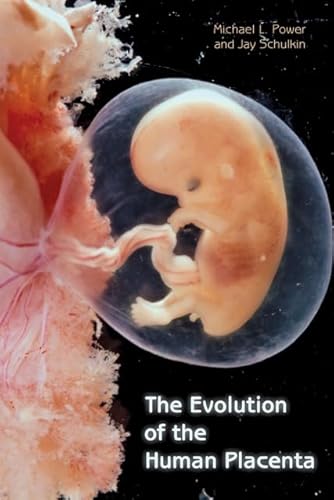
The Evolution of the Human Placenta
Idioma: Inglés
Publicado por Johns Hopkins University Press, 2012
ISBN 10: 1421406438 ISBN 13: 9781421406435
Librería: Better World Books, Mishawaka, IN, Estados Unidos de America
Calificación del vendedor: 5 de 5 estrellas
EUR 9,38
Gastos de envío gratis
Se envía dentro de Estados Unidos de AmericaCantidad disponible: 1 disponibles
Añadir al carritoCondición: Good. Pages intact with minimal writing/highlighting. The binding may be loose and creased. Dust jackets/supplements are not included. Stock photo provided. Product includes identifying sticker. Better World Books: Buy Books. Do Good.
-
The Evolution of the Human Placenta
Idioma: Inglés
Publicado por Johns Hopkins University Press, 2012
ISBN 10: 1421406438 ISBN 13: 9781421406435
Librería: Kennys Bookstore, Olney, MD, Estados Unidos de America
Calificación del vendedor: 5 de 5 estrellas
EUR 5,94
Envío por EUR 9,07
Se envía dentro de Estados Unidos de AmericaCantidad disponible: 1 disponibles
Añadir al carritoCondición: New. In the process, they reveal the vital importance of this organ-which is composed mostly of fetal cells-for us as individuals and as a species. Num Pages: 280 pages, 12, 10 black & white line drawings, 2 black & white halftones. BIC Classification: MFK; PSAJ; PSX. Category: (P) Professional & Vocational. Dimension: 233 x 153 x 22. Weight in Grams: 500. . 2012. hardcover. . . . . Books ship from the US and Ireland.
-
The Evolution of the Human Placenta
Idioma: Inglés
Publicado por Johns Hopkins University Press, 2012
ISBN 10: 1421406438 ISBN 13: 9781421406435
Librería: Kennys Bookshop and Art Galleries Ltd., Galway, GY, Irlanda
Calificación del vendedor: 5 de 5 estrellas
EUR 6,19
Envío por EUR 10,50
Se envía de Irlanda a Estados Unidos de AmericaCantidad disponible: 1 disponibles
Añadir al carritoCondición: New. In the process, they reveal the vital importance of this organ-which is composed mostly of fetal cells-for us as individuals and as a species. Num Pages: 280 pages, 12, 10 black & white line drawings, 2 black & white halftones. BIC Classification: MFK; PSAJ; PSX. Category: (P) Professional & Vocational. Dimension: 233 x 153 x 22. Weight in Grams: 500. . 2012. hardcover. . . . .
-

Evolution of the Human Placenta
Idioma: Inglés
Publicado por Johns Hopkins University Press, 2012
ISBN 10: 1421406438 ISBN 13: 9781421406435
Librería: GreatBookPrices, Columbia, MD, Estados Unidos de America
Calificación del vendedor: 5 de 5 estrellas
EUR 79,51
Envío por EUR 2,28
Se envía dentro de Estados Unidos de AmericaCantidad disponible: 3 disponibles
Añadir al carritoCondición: New.
-
The Evolution of the Human Placenta (Hardcover)
Idioma: Inglés
Publicado por Johns Hopkins University Press, Baltimore, MD, 2012
ISBN 10: 1421406438 ISBN 13: 9781421406435
Librería: Grand Eagle Retail, Bensenville, IL, Estados Unidos de America
Calificación del vendedor: 5 de 5 estrellas
EUR 81,87
Gastos de envío gratis
Se envía dentro de Estados Unidos de AmericaCantidad disponible: 1 disponibles
Añadir al carritoHardcover. Condición: new. Hardcover. As the active interface of the most biologically intimate connection between two living organisms, a mother and her fetus, the placenta is crucial to human evolution and survival. Michael L. Power and Jay Schulkin explore the more than 100 million years of evolution that led to the human placenta and, in so doing, they help unravel the mysteries of human life's first moments. Starting with some of the earliest events that have influenced the path of placental evolution in mammals and progressing to the specifics of the human placenta, this book examines modern gestation within an evolutionary framework. Human beings are a successful species and our numbers have increased dramatically since our earliest days on Earth. However, human fetal development is fraught with poor outcomes for both the mother and fetus that appear to be, if not unique, far more common in humans than in other mammals. High rates of early pregnancy loss, nausea and vomiting during pregnancy, preeclampsia and related maternal hypertension, and preterm birth are rare or absent in other mammals yet not unusual in humans.Power and Schulkin explain why this apparent contradiction exists and address such topics as how the placenta regulates and coordinates the metabolism, growth, and development of both mother and fetus, the placenta's role in protecting a fetus from the mother's immune system, and placental diseases. In the process, they reveal the vital importance of this organ-which is composed mostly of fetal cells-for us as individuals and as a species. In the process, they reveal the vital importance of this organ-which is composed mostly of fetal cells-for us as individuals and as a species. Shipping may be from multiple locations in the US or from the UK, depending on stock availability.
-

Evolution of the Human Placenta
Idioma: Inglés
Publicado por Johns Hopkins University Press, 2012
ISBN 10: 1421406438 ISBN 13: 9781421406435
Librería: GreatBookPrices, Columbia, MD, Estados Unidos de America
Calificación del vendedor: 5 de 5 estrellas
EUR 81,63
Envío por EUR 2,28
Se envía dentro de Estados Unidos de AmericaCantidad disponible: 3 disponibles
Añadir al carritoCondición: As New. Unread book in perfect condition.
-
The Evolution of the Human Placenta
Librería: Revaluation Books, Exeter, Reino Unido
Calificación del vendedor: 5 de 5 estrellas
EUR 106,53
Envío por EUR 11,58
Se envía de Reino Unido a Estados Unidos de AmericaCantidad disponible: 1 disponibles
Añadir al carritoHardcover. Condición: Brand New. 1st edition. 266 pages. 9.00x6.25x0.75 inches. In Stock.
-

The Evolution of the Human Placenta
Librería: moluna, Greven, Alemania
Calificación del vendedor: 5 de 5 estrellas
EUR 87,64
Envío por EUR 48,99
Se envía de Alemania a Estados Unidos de AmericaCantidad disponible: 3 disponibles
Añadir al carritoGebunden. Condición: New. In the process, they reveal the vital importance of this organ-which is composed mostly of fetal cells-for us as individuals and as a species.Über den AutorMichael L. Power and Jay Schulkin are researchers at the American Colleg.
-
The Evolution of the Human Placenta (Hardcover)
Idioma: Inglés
Publicado por Johns Hopkins University Press, Baltimore, MD, 2012
ISBN 10: 1421406438 ISBN 13: 9781421406435
Librería: AussieBookSeller, Truganina, VIC, Australia
Calificación del vendedor: 5 de 5 estrellas
EUR 131,84
Envío por EUR 31,97
Se envía de Australia a Estados Unidos de AmericaCantidad disponible: 1 disponibles
Añadir al carritoHardcover. Condición: new. Hardcover. As the active interface of the most biologically intimate connection between two living organisms, a mother and her fetus, the placenta is crucial to human evolution and survival. Michael L. Power and Jay Schulkin explore the more than 100 million years of evolution that led to the human placenta and, in so doing, they help unravel the mysteries of human life's first moments. Starting with some of the earliest events that have influenced the path of placental evolution in mammals and progressing to the specifics of the human placenta, this book examines modern gestation within an evolutionary framework. Human beings are a successful species and our numbers have increased dramatically since our earliest days on Earth. However, human fetal development is fraught with poor outcomes for both the mother and fetus that appear to be, if not unique, far more common in humans than in other mammals. High rates of early pregnancy loss, nausea and vomiting during pregnancy, preeclampsia and related maternal hypertension, and preterm birth are rare or absent in other mammals yet not unusual in humans.Power and Schulkin explain why this apparent contradiction exists and address such topics as how the placenta regulates and coordinates the metabolism, growth, and development of both mother and fetus, the placenta's role in protecting a fetus from the mother's immune system, and placental diseases. In the process, they reveal the vital importance of this organ-which is composed mostly of fetal cells-for us as individuals and as a species. In the process, they reveal the vital importance of this organ-which is composed mostly of fetal cells-for us as individuals and as a species. Shipping may be from our Sydney, NSW warehouse or from our UK or US warehouse, depending on stock availability.
