
9781316623619 - malarial subjects: empire, medicine and nonhumans in british india, 1820–1909 (science in history) de deb roy, rohan (17 resultados)
Idioma: Inglés
Editorial: Cambridge University Press (edition ), 2019
Serie: Science in History, Libro 3 de 13. Libro 3 de 13 - Science in History
- Tapa blanda
Librería: BooksRun, Philadelphia, PA, Estados Unidos de AmericaBooksRun
Contactar con el vendedorVendedor de 5 estrellasCondición: Usado - Bueno
EUR 24,65
Gastos de envío gratisSe envía dentro de Estados Unidos de AmericaCantidad disponible: 1 disponibles
Paperback. Condición: Very Good. It's a well-cared-for item that has seen limited use. The item may show minor signs of wear. All the text is legible, with all pages included. It may have slight markings and/or highlighting.
Idioma: Inglés
Editorial: Cambridge University Press, 2019
Serie: Science in History, Libro 3 de 13. Libro 3 de 13 - Science in History
- Tapa blanda
Librería: ThriftBooks-Atlanta, AUSTELL, GA, Estados Unidos de AmericaThriftBooks-Atlanta
Contactar con el vendedorVendedor de 5 estrellasCondición: Usado - Aceptable
EUR 26,84
Gastos de envío gratisSe envía dentro de Estados Unidos de AmericaCantidad disponible: 1 disponibles
Paperback. Condición: Good. No Jacket. Pages can have notes/highlighting. Spine may show signs of wear. ~ ThriftBooks: Read More, Spend Less.
Idioma: Inglés
Editorial: Cambridge University Press, 2019
Serie: Science in History, Libro 3 de 13. Libro 3 de 13 - Science in History
- Tapa blanda
Librería: Book Alley, Pasadena, CA, Estados Unidos de AmericaBook Alley
Contactar con el vendedorVendedor de 4 estrellasCondición: Usado - Aceptable
EUR 23,24
Envío por EUR 5,25Se envía dentro de Estados Unidos de AmericaCantidad disponible: 1 disponibles
paperback. Condición: Good. Good. Used with wear but is still in solid reading condition. NO markings to text. Pasadena's finest new and used bookstore since 1992.
Idioma: Inglés
Editorial: Cambridge University Press, 2019
Serie: Science in History, Libro 3 de 13. Libro 3 de 13 - Science in History
- Tapa blanda
Librería: California Books, Miami, FL, Estados Unidos de AmericaCalifornia Books
Contactar con el vendedorVendedor de 4 estrellasCondición: Nuevo
EUR 49,52
Gastos de envío gratisSe envía dentro de Estados Unidos de AmericaCantidad disponible: Más de 20 disponibles
Condición: New.
 Más imágenes
Idioma: Inglés
Editorial: Cambridge University Press, GB, 2019
Serie: Science in History, Libro 3 de 13. Libro 3 de 13 - Science in History
- Tapa blanda
Librería: Rarewaves.com USA, London, LONDO, Reino UnidoRarewaves.com USA
Contactar con el vendedorVendedor de 5 estrellasCondición: Nuevo
EUR 52,44
Gastos de envío gratisSe envía de Reino Unido a Estados Unidos de AmericaCantidad disponible: Más de 20 disponibles
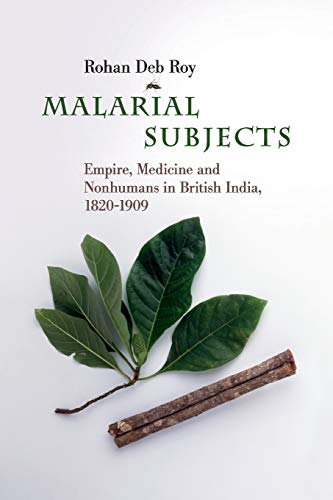
Paperback. Condición: New. Malaria was considered one of the most widespread disease-causing entities in the nineteenth century. It was associated with a variety of frailties far beyond fevers, ranging from idiocy to impotence. And yet, it was not a self-contained category. The reconsolidation of malaria as a diagnostic category… during this period happened within a wider context in which cinchona plants and their most valuable extract, quinine, were reinforced as objects of natural knowledge and social control. In India, the exigencies and apparatuses of British imperial rule occasioned the close interactions between these histories. In the process, British imperial rule became entangled with a network of nonhumans that included, apart from cinchona plants and the drug quinine, a range of objects described as malarial, as well as mosquitoes. Malarial Subjects explores this history of the co-constitution of a cure and disease, of British colonial rule and nonhumans, and of science, medicine and empire. This title is also available as Open Access.
Idioma: Inglés
Editorial: Cambridge University Press, 2019
Serie: Science in History, Libro 3 de 13. Libro 3 de 13 - Science in History
- Tapa blanda
Librería: Ria Christie Collections, Uxbridge, Reino UnidoRia Christie Collections
Contactar con el vendedorVendedor de 5 estrellasCondición: Nuevo
EUR 45,09
Envío por EUR 13,98Se envía de Reino Unido a Estados Unidos de AmericaCantidad disponible: Más de 20 disponibles
Condición: New. In.
Idioma: Inglés
Editorial: Cambridge University Press 2019-11-21, 2019
Serie: Science in History, Libro 3 de 13. Libro 3 de 13 - Science in History
- Tapa blanda
Librería: Chiron Media, Wallingford, Reino UnidoChiron Media
Contactar con el vendedorVendedor de 5 estrellasCondición: Nuevo
EUR 43,57
Envío por EUR 18,08Se envía de Reino Unido a Estados Unidos de AmericaCantidad disponible: Más de 20 disponibles
Paperback. Condición: New.
Idioma: Inglés
Editorial: Cambridge University Press, 2019
Serie: Science in History, Libro 3 de 13. Libro 3 de 13 - Science in History
- Tapa blanda
Librería: Kennys Bookshop and Art Galleries Ltd., Galway, GY, IrlandaKennys Bookshop and Art Galleries Ltd.
Contactar con el vendedorVendedor de 5 estrellasCondición: Nuevo
EUR 51,55
Envío por EUR 10,50Se envía de Irlanda a Estados Unidos de AmericaCantidad disponible: Más de 20 disponibles
Condición: New.
Idioma: Inglés
Editorial: Cambridge University Press CUP, 2019
Serie: Science in History, Libro 3 de 13. Libro 3 de 13 - Science in History
- Tapa blanda
Librería: Books Puddle, New York, NY, Estados Unidos de AmericaBooks Puddle
Contactar con el vendedorVendedor de 4 estrellasCondición: Nuevo
EUR 66,97
Envío por EUR 3,49Se envía dentro de Estados Unidos de AmericaCantidad disponible: 4 disponibles
Condición: New. pp. 348.
Idioma: Inglés
Editorial: Cambridge University Press, 2019
Serie: Science in History, Libro 3 de 13. Libro 3 de 13 - Science in History
- Tapa blanda
Librería: Kennys Bookstore, Olney, MD, Estados Unidos de AmericaKennys Bookstore
Contactar con el vendedorVendedor de 5 estrellasCondición: Nuevo
EUR 65,22
Envío por EUR 9,18Se envía dentro de Estados Unidos de AmericaCantidad disponible: Más de 20 disponibles
Condición: New.
 Más imágenes
Idioma: Inglés
Editorial: Cambridge University Press, GB, 2019
Serie: Science in History, Libro 3 de 13. Libro 3 de 13 - Science in History
- Tapa blanda
Librería: Rarewaves.com UK, London, Reino UnidoRarewaves.com UK
Contactar con el vendedorVendedor de 5 estrellasCondición: Nuevo
EUR 48,31
Envío por EUR 75,87Se envía de Reino Unido a Estados Unidos de AmericaCantidad disponible: Más de 20 disponibles
Paperback. Condición: New. Malaria was considered one of the most widespread disease-causing entities in the nineteenth century. It was associated with a variety of frailties far beyond fevers, ranging from idiocy to impotence. And yet, it was not a self-contained category. The reconsolidation of malaria as a diagnostic category… during this period happened within a wider context in which cinchona plants and their most valuable extract, quinine, were reinforced as objects of natural knowledge and social control. In India, the exigencies and apparatuses of British imperial rule occasioned the close interactions between these histories. In the process, British imperial rule became entangled with a network of nonhumans that included, apart from cinchona plants and the drug quinine, a range of objects described as malarial, as well as mosquitoes. Malarial Subjects explores this history of the co-constitution of a cure and disease, of British colonial rule and nonhumans, and of science, medicine and empire. This title is also available as Open Access.
Idioma: Inglés
Editorial: Cambridge University Press, 2019
Serie: Science in History, Libro 3 de 13. Libro 3 de 13 - Science in History
- Tapa blanda
- Impresión bajo demanda
Librería: Revaluation Books, Exeter, Reino UnidoRevaluation Books
Contactar con el vendedorVendedor de 5 estrellasCondición: Nuevo
EUR 45,21
Envío por EUR 14,59Se envía de Reino Unido a Estados Unidos de AmericaCantidad disponible: 1 disponibles
Paperback. Condición: Brand New. 1st edition. 332 pages. 8.75x5.75x0.75 inches. In Stock. This item is printed on demand.
Idioma: Inglés
Editorial: Cambridge University Press, 2019
Serie: Science in History, Libro 3 de 13. Libro 3 de 13 - Science in History
- Tapa blanda
- Impresión bajo demanda
Librería: THE SAINT BOOKSTORE, Southport, Reino UnidoTHE SAINT BOOKSTORE
Contactar con el vendedorVendedor de 5 estrellasCondición: Nuevo
EUR 49,11
Envío por EUR 18,59Se envía de Reino Unido a Estados Unidos de AmericaCantidad disponible: Más de 20 disponibles
Paperback / softback. Condición: New. This item is printed on demand. New copy - Usually dispatched within 5-9 working days.
Idioma: Inglés
Editorial: Cambridge University Press, 2019
Serie: Science in History, Libro 3 de 13. Libro 3 de 13 - Science in History
- Tapa blanda
- Impresión bajo demanda
Librería: Majestic Books, Hounslow, Reino UnidoMajestic Books
Contactar con el vendedorVendedor de 4 estrellasCondición: Nuevo
EUR 65,70
Envío por EUR 7,59Se envía de Reino Unido a Estados Unidos de AmericaCantidad disponible: 4 disponibles
Condición: New. Print on Demand pp. 348.
Idioma: Inglés
Editorial: Cambridge University Press, 2019
Serie: Science in History, Libro 3 de 13. Libro 3 de 13 - Science in History
- Tapa blanda
- Impresión bajo demanda
Librería: Biblios, frankfurt am main, HESSE, AlemaniaBiblios
Contactar con el vendedorVendedor de 4 estrellasCondición: Nuevo
EUR 65,78
Envío por EUR 9,95Se envía de Alemania a Estados Unidos de AmericaCantidad disponible: 4 disponibles
Condición: New. PRINT ON DEMAND pp. 348.
Idioma: Inglés
Editorial: Cambridge University Press, Cambridge, 2019
Serie: Science in History, Libro 3 de 13. Libro 3 de 13 - Science in History
- Tapa blanda
- Impresión bajo demanda
Librería: CitiRetail, Stevenage, Reino UnidoCitiRetail
Contactar con el vendedorVendedor de 5 estrellasCondición: Nuevo
EUR 52,89
Envío por EUR 43,19Se envía de Reino Unido a Estados Unidos de AmericaCantidad disponible: 1 disponibles
Paperback. Condición: new. Paperback. Malaria was considered one of the most widespread disease-causing entities in the nineteenth century. It was associated with a variety of frailties far beyond fevers, ranging from idiocy to impotence. And yet, it was not a self-contained category. The reconsolidation of malaria as a diagnost…ic category during this period happened within a wider context in which cinchona plants and their most valuable extract, quinine, were reinforced as objects of natural knowledge and social control. In India, the exigencies and apparatuses of British imperial rule occasioned the close interactions between these histories. In the process, British imperial rule became entangled with a network of nonhumans that included, apart from cinchona plants and the drug quinine, a range of objects described as malarial, as well as mosquitoes. Malarial Subjects explores this history of the co-constitution of a cure and disease, of British colonial rule and nonhumans, and of science, medicine and empire. This title is also available as Open Access. Rohan Deb Roy argues that British imperial rule occasioned the attribution of medical properties to a range of nonhuman entities including plants, quinine, and mosquitoes in nineteenth-century India. Malarial Subjects is a major new contribution to science studies and the histories of the British Empire, colonial medicine and South Asia. This title is also available as Open Access. This item is printed on demand. Shipping may be from our UK warehouse or from our Australian or US warehouses, depending on stock availability.

Idioma: Inglés
Editorial: CAMBRIDGE, 2019
Serie: Science in History, Libro 3 de 13. Libro 3 de 13 - Science in History
- Tapa blanda
- Impresión bajo demanda
Librería: moluna, Greven, Alemaniamoluna
Contactar con el vendedorVendedor de 5 estrellasCondición: Nuevo
EUR 49,64
Envío por EUR 48,99Se envía de Alemania a Estados Unidos de AmericaCantidad disponible: Más de 20 disponibles
Condición: New. Dieser Artikel ist ein Print on Demand Artikel und wird nach Ihrer Bestellung fuer Sie gedruckt. Rohan Deb Roy argues that British imperial rule occasioned the attribution of medical properties to a range of nonhuman entities including plants, quinine, and mosquitoes in nineteenth-century India. Malarial Subjects… is a major new contribution to science .


