

Importe total (1 artículo artículos):
Destino del pedido:

9781138548329 - Food and Knowledge in Renaissance Italy: Bartolomeo Scappi's Paper Kitchens (Visual Culture in Early Modernity) de Krohn, Deborah L (24 resultados)
Ir a los resultados principales
Filtros de búsqueda
Tipo de artículo
- Todos los tipos de productos
- Libros (24)
- Revistas y publicaciones (No hay ningún otro resultado que coincida con este filtro.)
- Cómics (No hay ningún otro resultado que coincida con este filtro.)
- Partituras (No hay ningún otro resultado que coincida con este filtro.)
- Arte, grabados y pósters (No hay ningún otro resultado que coincida con este filtro.)
- Fotografías (No hay ningún otro resultado que coincida con este filtro.)
- Mapas (No hay ningún otro resultado que coincida con este filtro.)
- Manuscritos y coleccionismo de papel (No hay ningún otro resultado que coincida con este filtro.)
Condición Más información
- Nuevo (22)
- Como nuevo, Excelente o Muy bueno (2)
- Bueno o Aceptable (No hay ningún otro resultado que coincida con este filtro.)
- Regular o Pobre (No hay ningún otro resultado que coincida con este filtro.)
- Tal como se indica (No hay ningún otro resultado que coincida con este filtro.)
Encuadernación
- Todas
- Tapa dura (No hay ningún otro resultado que coincida con este filtro.)
- Tapa blanda (24)
Más atributos
- Primera edición (1)
- Firmado (No hay ningún otro resultado que coincida con este filtro.)
- Sobrecubierta (No hay ningún otro resultado que coincida con este filtro.)
- Con imágenes (10)
- No impresión bajo demanda (22)
Idioma (1)
Precio
- Cualquier precio
- Menos de EUR 20 (No hay ningún otro resultado que coincida con este filtro.)
- EUR 20 a EUR 45 (No hay ningún otro resultado que coincida con este filtro.)
- Más de EUR 45
Gastos de envío gratis
Ubicación del vendedor
Valoración de los vendedores
-
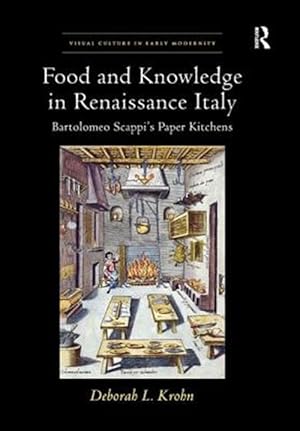
Food and Knowledge in Renaissance Italy : Bartolomeo Scappi's Paper Kitchens
Libro 43 de 77: Visual Culture in Early ModernityLibrería: GreatBookPrices, Columbia, MD, Estados Unidos de America
Calificación del vendedor: 5 de 5 estrellas

EUR 62,17
Envío por EUR 2,27
Se envía dentro de Estados Unidos de AmericaCantidad disponible: 1 disponibles
Añadir al carritoCondición: As New. Unread book in perfect condition.
-

Food and Knowledge in Renaissance Italy : Bartolomeo Scappi's Paper Kitchens
Libro 43 de 77: Visual Culture in Early ModernityLibrería: GreatBookPrices, Columbia, MD, Estados Unidos de America
Calificación del vendedor: 5 de 5 estrellas
EUR 63,45
Envío por EUR 2,27
Se envía dentro de Estados Unidos de AmericaCantidad disponible: 1 disponibles
Añadir al carritoCondición: New.
-

Food and Knowledge in Renaissance Italy
Libro 43 de 77: Visual Culture in Early ModernityLibrería: PBShop.store US, Wood Dale, IL, Estados Unidos de America
Calificación del vendedor: 5 de 5 estrellas
EUR 65,80
Gastos de envío gratis
Se envía dentro de Estados Unidos de AmericaCantidad disponible: 1 disponibles
Añadir al carritoPAP. Condición: New. New Book. Shipped from UK. Established seller since 2000.
-
Food and Knowledge in Renaissance Italy
Libro 43 de 77: Visual Culture in Early ModernityLibrería: PBShop.store UK, Fairford, GLOS, Reino Unido
Calificación del vendedor: 4 de 5 estrellas

EUR 60,84
Envío por EUR 5,79
Se envía de Reino Unido a Estados Unidos de AmericaCantidad disponible: 1 disponibles
Añadir al carritoPAP. Condición: New. New Book. Shipped from UK. Established seller since 2000.
-
FOOD & KNOWLEDGE IN RENAISSANCE ITALY
Libro 43 de 77: Visual Culture in Early ModernityLibrería: Speedyhen LLC, Hialeah, FL, Estados Unidos de America
Calificación del vendedor: 5 de 5 estrellas
EUR 72,13
Gastos de envío gratis
Se envía dentro de Estados Unidos de AmericaCantidad disponible: 2 disponibles
Añadir al carritoCondición: NEW.
-
Food and Knowledge in Renaissance Italy: Bartolomeo Scappi's Paper Kitchens
Libro 43 de 77: Visual Culture in Early ModernityLibrería: Majestic Books, Hounslow, Reino Unido
Calificación del vendedor: 4 de 5 estrellas
EUR 65,21
Envío por EUR 7,50
Se envía de Reino Unido a Estados Unidos de AmericaCantidad disponible: 3 disponibles
Añadir al carritoCondición: New. pp. 284.
-

Food and Knowledge in Renaissance Italy : Bartolomeo Scappi's Paper Kitchens
Libro 43 de 77: Visual Culture in Early ModernityLibrería: GreatBookPricesUK, Woodford Green, Reino Unido
Calificación del vendedor: 5 de 5 estrellas
EUR 56,74
Envío por EUR 17,31
Se envía de Reino Unido a Estados Unidos de AmericaCantidad disponible: 1 disponibles
Añadir al carritoCondición: New.
-
Food and Knowledge in Renaissance Italy (Visual Culture in Early Modernity)
Libro 43 de 77: Visual Culture in Early ModernityLibrería: Ria Christie Collections, Uxbridge, Reino Unido
Calificación del vendedor: 5 de 5 estrellas
EUR 60,96
Envío por EUR 13,82
Se envía de Reino Unido a Estados Unidos de AmericaCantidad disponible: 1 disponibles
Añadir al carritoCondición: New. In.
-

Food and Knowledge in Renaissance Italy
Libro 43 de 77: Visual Culture in Early ModernityIdioma: Inglés
Publicado por Taylor and Francis Ltd, GB, 2018
ISBN 10: 1138548324 ISBN 13: 9781138548329
Librería: Rarewaves.com USA, London, LONDO, Reino Unido
Calificación del vendedor: 5 de 5 estrellas
EUR 76,29
Gastos de envío gratis
Se envía de Reino Unido a Estados Unidos de AmericaCantidad disponible: 1 disponibles
Añadir al carritoPaperback. Condición: New. Though Bartolomeo Scappi's Opera (1570), the first illustrated cookbook, is well known to historians of food, up to now there has been no study of its illustrations, unique in printed books through the early seventeenth century. In Food and Knowledge in Renaissance Italy, Krohn both treats the illustrations in Scappi's cookbook as visual evidence for a lost material reality; and through the illustrations, including several newly-discovered hand-colored examples, connects Scappi's Opera with other types of late Renaissance illustrated books. What emerges from both of these approaches is a new way of thinking about the place of cookbooks in the history of knowledge. Krohn argues that with the increasing professionalization of many skills and trades, Scappi was at the vanguard of a new way of looking not just at the kitchen-as workshop or laboratory-but at the ways in which artisanal knowledge was visualized and disseminated by a range of craftsmen, from engineers to architects. The recipes in Scappi's Opera belong on the one hand to a genre of cookery books, household manuals, and courtesy books that was well established by the middle of the sixteenth century, but the illustrations suggest connections to an entirely different and emergent world of knowledge. It is through study of the illustrations that these connections are discerned, explained, and interpreted. As one of the most important cookbooks for early modern Europe, the time is ripe for a focused study of Scappi's Opera in the various contexts in which Krohn frames it: book history, antiquarianism, and visual studies.
-
Food and Knowledge in Renaissance Italy: Bartolomeo Scappi's Paper Kitchens
Libro 43 de 77: Visual Culture in Early ModernityLibrería: Books Puddle, New York, NY, Estados Unidos de America
Calificación del vendedor: 4 de 5 estrellas
EUR 77,10
Envío por EUR 3,43
Se envía dentro de Estados Unidos de AmericaCantidad disponible: 3 disponibles
Añadir al carritoCondición: New. pp. 284.
-

Food and Knowledge in Renaissance Italy : Bartolomeo Scappi's Paper Kitchens
Libro 43 de 77: Visual Culture in Early ModernityLibrería: GreatBookPricesUK, Woodford Green, Reino Unido
Calificación del vendedor: 5 de 5 estrellas
EUR 64,82
Envío por EUR 17,31
Se envía de Reino Unido a Estados Unidos de AmericaCantidad disponible: 1 disponibles
Añadir al carritoCondición: As New. Unread book in perfect condition.
-
Food and Knowledge in Renaissance Italy: Bartolomeo Scappi's Paper Kitchens
Libro 43 de 77: Visual Culture in Early ModernityLibrería: THE SAINT BOOKSTORE, Southport, Reino Unido
Calificación del vendedor: 5 de 5 estrellas
EUR 65,07
Envío por EUR 21,40
Se envía de Reino Unido a Estados Unidos de AmericaCantidad disponible: 1 disponibles
Añadir al carritoPaperback / softback. Condición: New. New copy - Usually dispatched within 4 working days.
-
Food and Knowledge in Renaissance Italy: Bartolomeo Scappi?s Paper Kitchens
Libro 43 de 77: Visual Culture in Early ModernityLibrería: Kennys Bookshop and Art Galleries Ltd., Galway, GY, Irlanda
Calificación del vendedor: 5 de 5 estrellas
Original o primera edición
EUR 72,86
Envío por EUR 10,50
Se envía de Irlanda a Estados Unidos de AmericaCantidad disponible: 1 disponibles
Añadir al carritoCondición: New. 2018. 1st Edition. Paperback. . . . . .
-
Food and Knowledge in Renaissance Italy: Bartolomeo Scappi's Paper Kitchens
Libro 43 de 77: Visual Culture in Early ModernityLibrería: Biblios, Frankfurt am main, HESSE, Alemania
Calificación del vendedor: 4 de 5 estrellas
EUR 75,23
Envío por EUR 9,95
Se envía de Alemania a Estados Unidos de AmericaCantidad disponible: 3 disponibles
Añadir al carritoCondición: New. pp. 284.
-
Food and Knowledge in Renaissance Italy: Bartolomeo Scappi's Paper Kitchens
Libro 43 de 77: Visual Culture in Early ModernityLibrería: Revaluation Books, Exeter, Reino Unido
Calificación del vendedor: 5 de 5 estrellas
EUR 75,73
Envío por EUR 14,42
Se envía de Reino Unido a Estados Unidos de AmericaCantidad disponible: 1 disponibles
Añadir al carritoPaperback. Condición: Brand New. 284 pages. 9.50x7.00x0.75 inches. In Stock.
-
Food and Knowledge in Renaissance Italy: Bartolomeo Scappi s Paper Kitchens
Libro 43 de 77: Visual Culture in Early ModernityLibrería: Kennys Bookstore, Olney, MD, Estados Unidos de America
Calificación del vendedor: 4 de 5 estrellas
EUR 90,96
Envío por EUR 9,03
Se envía dentro de Estados Unidos de AmericaCantidad disponible: 1 disponibles
Añadir al carritoCondición: New. 2018. 1st Edition. Paperback. . . . . . Books ship from the US and Ireland.
-
Food and Knowledge in Renaissance Italy: Bartolomeo Scappi's Paper Kitchens
Libro 43 de 77: Visual Culture in Early ModernityLibrería: Revaluation Books, Exeter, Reino Unido
Calificación del vendedor: 5 de 5 estrellas
EUR 84,42
Envío por EUR 14,42
Se envía de Reino Unido a Estados Unidos de AmericaCantidad disponible: 1 disponibles
Añadir al carritoPaperback. Condición: Brand New. 284 pages. 9.50x7.00x0.75 inches. In Stock.
-
FOOD & KNOWLEDGE IN RENAISSANCE ITALY
Libro 43 de 77: Visual Culture in Early ModernityLibrería: Speedyhen, Hertfordshire, Reino Unido
Calificación del vendedor: 5 de 5 estrellas
EUR 56,70
Envío por EUR 47,30
Se envía de Reino Unido a Estados Unidos de AmericaCantidad disponible: 1 disponibles
Añadir al carritoCondición: NEW.
-

Krohn, D: Food and Knowledge in Renaissance Italy
Libro 43 de 77: Visual Culture in Early ModernityLibrería: moluna, Greven, Alemania
Calificación del vendedor: 4 de 5 estrellas
EUR 69,86
Envío por EUR 48,99
Se envía de Alemania a Estados Unidos de AmericaCantidad disponible: 1 disponibles
Añadir al carritoCondición: New. Deborah L. Krohn is Associate Professor and Director of Masters Studies at Bard Graduate Center in New York City, USA.Though Bartolomeo Scappi s Opera (1570), the first illustrated cookbook, is well known to historians of food, up to now there has b.
-
Food and Knowledge in Renaissance Italy: Bartolomeo Scappi*s Paper Kitchens (Visual Culture in Early Modernity)
Libro 43 de 77: Visual Culture in Early ModernityLibrería: Mispah books, Redhill, SURRE, Reino Unido
Calificación del vendedor: 4 de 5 estrellas
EUR 105,77
Envío por EUR 28,84
Se envía de Reino Unido a Estados Unidos de AmericaCantidad disponible: 1 disponibles
Añadir al carritoPaperback. Condición: New. New. book.
-

Food and Knowledge in Renaissance Italy | Bartolomeo Scappi's Paper Kitchens
Libro 43 de 77: Visual Culture in Early ModernityLibrería: preigu, Osnabrück, Alemania
Calificación del vendedor: 5 de 5 estrellas
EUR 60,90
Envío por EUR 70,00
Se envía de Alemania a Estados Unidos de AmericaCantidad disponible: 5 disponibles
Añadir al carritoTaschenbuch. Condición: Neu. Food and Knowledge in Renaissance Italy | Bartolomeo Scappi's Paper Kitchens | Deborah L Krohn | Taschenbuch | Einband - flex.(Paperback) | Englisch | 2018 | Taylor & Francis Ltd | EAN 9781138548329 | Verantwortliche Person für die EU: Libri GmbH, Europaallee 1, 36244 Bad Hersfeld, gpsr[at]libri[dot]de | Anbieter: preigu.
-

Food and Knowledge in Renaissance Italy
Libro 43 de 77: Visual Culture in Early ModernityIdioma: Inglés
Publicado por Taylor and Francis Ltd, GB, 2018
ISBN 10: 1138548324 ISBN 13: 9781138548329
Librería: Rarewaves.com UK, London, Reino Unido
Calificación del vendedor: 5 de 5 estrellas
EUR 71,59
Envío por EUR 74,99
Se envía de Reino Unido a Estados Unidos de AmericaCantidad disponible: 1 disponibles
Añadir al carritoPaperback. Condición: New. Though Bartolomeo Scappi's Opera (1570), the first illustrated cookbook, is well known to historians of food, up to now there has been no study of its illustrations, unique in printed books through the early seventeenth century. In Food and Knowledge in Renaissance Italy, Krohn both treats the illustrations in Scappi's cookbook as visual evidence for a lost material reality; and through the illustrations, including several newly-discovered hand-colored examples, connects Scappi's Opera with other types of late Renaissance illustrated books. What emerges from both of these approaches is a new way of thinking about the place of cookbooks in the history of knowledge. Krohn argues that with the increasing professionalization of many skills and trades, Scappi was at the vanguard of a new way of looking not just at the kitchen-as workshop or laboratory-but at the ways in which artisanal knowledge was visualized and disseminated by a range of craftsmen, from engineers to architects. The recipes in Scappi's Opera belong on the one hand to a genre of cookery books, household manuals, and courtesy books that was well established by the middle of the sixteenth century, but the illustrations suggest connections to an entirely different and emergent world of knowledge. It is through study of the illustrations that these connections are discerned, explained, and interpreted. As one of the most important cookbooks for early modern Europe, the time is ripe for a focused study of Scappi's Opera in the various contexts in which Krohn frames it: book history, antiquarianism, and visual studies.
-

Food and Knowledge in Renaissance Italy
Libro 43 de 77: Visual Culture in Early ModernityIdioma: Inglés
Publicado por Taylor & Francis Ltd Apr 2018, 2018
ISBN 10: 1138548324 ISBN 13: 9781138548329
Librería: BuchWeltWeit Ludwig Meier e.K., Bergisch Gladbach, Alemania
Calificación del vendedor: 5 de 5 estrellas
EUR 61,20
Envío por EUR 23,00
Se envía de Alemania a Estados Unidos de AmericaCantidad disponible: 2 disponibles
Añadir al carritoTaschenbuch. Condición: Neu. This item is printed on demand - it takes 3-4 days longer - Neuware -Though Bartolomeo Scappi's Opera (1570), the first illustrated cookbook, is well known to historians of food, up to now there has been no study of its illustrations, unique in printed books through the early seventeenth century. In Food and Knowledge in Renaissance Italy, Krohn both treats the illustrations in Scappi's cookbook as visual evidence for a lost material reality; and through the illustrations, including several newly-discovered hand-colored examples, connects Scappi's Opera with other types of late Renaissance illustrated books. What emerges from both of these approaches is a new way of thinking about the place of cookbooks in the history of knowledge. Krohn argues that with the increasing professionalization of many skills and trades, Scappi was at the vanguard of a new way of looking not just at the kitchen-as workshop or laboratory-but at the ways in which artisanal knowledge was visualized and disseminated by a range of craftsmen, from engineers to architects. The recipes in Scappi's Opera belong on the one hand to a genre of cookery books, household manuals, and courtesy books that was well established by the middle of the sixteenth century, but the illustrations suggest connections to an entirely different and emergent world of knowledge. It is through study of the illustrations that these connections are discerned, explained, and interpreted. As one of the most important cookbooks for early modern Europe, the time is ripe for a focused study of Scappi's Opera in the various contexts in which Krohn frames it: book history, antiquarianism, and visual studies. 284 pp. Englisch.
-

Food and Knowledge in Renaissance Italy : Bartolomeo Scappi's Paper Kitchens
Libro 43 de 77: Visual Culture in Early ModernityLibrería: AHA-BUCH GmbH, Einbeck, Alemania
Calificación del vendedor: 5 de 5 estrellas
EUR 71,05
Envío por EUR 63,78
Se envía de Alemania a Estados Unidos de AmericaCantidad disponible: 1 disponibles
Añadir al carritoTaschenbuch. Condición: Neu. nach der Bestellung gedruckt Neuware - Printed after ordering - Though Bartolomeo Scappi's Opera (1570), the first illustrated cookbook, is well known to historians of food, up to now there has been no study of its illustrations, unique in printed books through the early seventeenth century. In Food and Knowledge in Renaissance Italy, Krohn both treats the illustrations in Scappi's cookbook as visual evidence for a lost material reality; and through the illustrations, including several newly-discovered hand-colored examples, connects Scappi's Opera with other types of late Renaissance illustrated books. What emerges from both of these approaches is a new way of thinking about the place of cookbooks in the history of knowledge. Krohn argues that with the increasing professionalization of many skills and trades, Scappi was at the vanguard of a new way of looking not just at the kitchen-as workshop or laboratory-but at the ways in which artisanal knowledge was visualized and disseminated by a range of craftsmen, from engineers to architects. The recipes in Scappi's Opera belong on the one hand to a genre of cookery books, household manuals, and courtesy books that was well established by the middle of the sixteenth century, but the illustrations suggest connections to an entirely different and emergent world of knowledge. It is through study of the illustrations that these connections are discerned, explained, and interpreted. As one of the most important cookbooks for early modern Europe, the time is ripe for a focused study of Scappi's Opera in the various contexts in which Krohn frames it: book history, antiquarianism, and visual studies.

