

Importe total (1 artículo artículos):
Destino del pedido:

9781107035560 - Gender and Timebound Commandments in Judaism Hardback de Alexander (16 resultados)
Ir a los resultados principales
Filtros de búsqueda
Tipo de artículo
- Todos los tipos de productos
- Libros (16)
- Revistas y publicaciones (No hay ningún otro resultado que coincida con este filtro.)
- Cómics (No hay ningún otro resultado que coincida con este filtro.)
- Partituras (No hay ningún otro resultado que coincida con este filtro.)
- Arte, grabados y pósters (No hay ningún otro resultado que coincida con este filtro.)
- Fotografías (No hay ningún otro resultado que coincida con este filtro.)
- Mapas (No hay ningún otro resultado que coincida con este filtro.)
- Manuscritos y coleccionismo de papel (No hay ningún otro resultado que coincida con este filtro.)
Condición Más información
- Nuevo (13)
- Como nuevo, Excelente o Muy bueno (2)
- Bueno o Aceptable (1)
- Regular o Pobre (No hay ningún otro resultado que coincida con este filtro.)
- Tal como se indica (No hay ningún otro resultado que coincida con este filtro.)
Encuadernación
- Todas
- Tapa dura (16)
- Tapa blanda (No hay ningún otro resultado que coincida con este filtro.)
Más atributos
- Primera edición (1)
- Firmado (No hay ningún otro resultado que coincida con este filtro.)
- Sobrecubierta (No hay ningún otro resultado que coincida con este filtro.)
- Con imágenes (2)
- No impresión bajo demanda (9)
Idioma (1)
Precio
- Cualquier precio
- Menos de EUR 20 (No hay ningún otro resultado que coincida con este filtro.)
- EUR 20 a EUR 45 (No hay ningún otro resultado que coincida con este filtro.)
- Más de EUR 45
Gastos de envío gratis
Ubicación del vendedor
Valoración de los vendedores
-
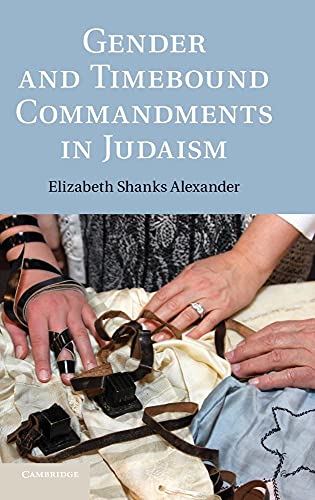
Gender and Timebound Commandments in Judaism
Idioma: Inglés
Publicado por Cambridge University Press, 2013
ISBN 10: 1107035562 ISBN 13: 9781107035560
Librería: Labyrinth Books, Princeton, NJ, Estados Unidos de America
Calificación del vendedor: 4 de 5 estrellas

EUR 49,55
Envío por EUR 3,87
Se envía dentro de Estados Unidos de AmericaCantidad disponible: 1 disponibles
Añadir al carritoCondición: Very Good.
-

Gender and Timebound Commandments in Judaism
Idioma: Inglés
Publicado por Cambridge University Press, Cambridge, 2013
ISBN 10: 1107035562 ISBN 13: 9781107035560
Librería: Leserstrahl (Preise inkl. MwSt.), Oldenbüttel, Alemania
Calificación del vendedor: 5 de 5 estrellas

EUR 46,95
Envío por EUR 70,00
Se envía de Alemania a Estados Unidos de AmericaCantidad disponible: 1 disponibles
Añadir al carritoHardcover. Condición: Fine. 1. minor wear---. nein.
-
Gender and Timebound Commandments in Judaism
Idioma: Inglés
Publicado por Cambridge University Press, 2013
ISBN 10: 1107035562 ISBN 13: 9781107035560
Librería: Ria Christie Collections, Uxbridge, Reino Unido
Calificación del vendedor: 5 de 5 estrellas
EUR 115,44
Envío por EUR 13,86
Se envía de Reino Unido a Estados Unidos de AmericaCantidad disponible: Más de 20 disponibles
Añadir al carritoCondición: New. In.
-
Gender and Timebound Commandments in Judaism
Idioma: Inglés
Publicado por Cambridge University Press, 2013
ISBN 10: 1107035562 ISBN 13: 9781107035560
Librería: Kennys Bookshop and Art Galleries Ltd., Galway, GY, Irlanda
Calificación del vendedor: 5 de 5 estrellas
Original o primera edición
EUR 131,02
Envío por EUR 10,50
Se envía de Irlanda a Estados Unidos de AmericaCantidad disponible: Más de 20 disponibles
Añadir al carritoCondición: New. This book examines a key tradition in Judaism - the rule that exempts women from 'timebound, positive commandments' - which has served for centuries. Num Pages: 300 pages, 2 tables. BIC Classification: HRJP; JFSJ1. Category: (P) Professional & Vocational; (U) Tertiary Education (US: College). Dimension: 235 x 158 x 22. Weight in Grams: 536. . 2013. 1st Edition. hardcover. . . . .
-
Gender and Timebound Commandments in Judaism
Idioma: Inglés
Publicado por Cambridge University Press CUP, 2013
ISBN 10: 1107035562 ISBN 13: 9781107035560
Librería: Books Puddle, New York, NY, Estados Unidos de America
Calificación del vendedor: 4 de 5 estrellas
EUR 161,66
Envío por EUR 3,43
Se envía dentro de Estados Unidos de AmericaCantidad disponible: 4 disponibles
Añadir al carritoCondición: New. pp. 300.
-
Gender and Timebound Commandments in Judaism
Idioma: Inglés
Publicado por Cambridge University Press, 2013
ISBN 10: 1107035562 ISBN 13: 9781107035560
Librería: Kennys Bookstore, Olney, MD, Estados Unidos de America
Calificación del vendedor: 5 de 5 estrellas
EUR 163,23
Envío por EUR 9,02
Se envía dentro de Estados Unidos de AmericaCantidad disponible: Más de 20 disponibles
Añadir al carritoCondición: New. This book examines a key tradition in Judaism - the rule that exempts women from 'timebound, positive commandments' - which has served for centuries. Num Pages: 300 pages, 2 tables. BIC Classification: HRJP; JFSJ1. Category: (P) Professional & Vocational; (U) Tertiary Education (US: College). Dimension: 235 x 158 x 22. Weight in Grams: 536. . 2013. 1st Edition. hardcover. . . . . Books ship from the US and Ireland.
-
Gender and Timebound Commandments in Judaism
Librería: Revaluation Books, Exeter, Reino Unido
Calificación del vendedor: 5 de 5 estrellas
EUR 158,01
Envío por EUR 14,46
Se envía de Reino Unido a Estados Unidos de AmericaCantidad disponible: 2 disponibles
Añadir al carritoHardcover. Condición: Brand New. 1st edition. 296 pages. 9.25x6.25x1.00 inches. In Stock.
-
Gender and Timebound Commandments in Judaism
Idioma: Inglés
Publicado por Cambridge University Press, 2013
ISBN 10: 1107035562 ISBN 13: 9781107035560
Librería: Mispah books, Redhill, SURRE, Reino Unido
Calificación del vendedor: 4 de 5 estrellas
EUR 179,91
Envío por EUR 28,92
Se envía de Reino Unido a Estados Unidos de AmericaCantidad disponible: 1 disponibles
Añadir al carritoHardcover. Condición: Like New. LIKE NEW. SHIPS FROM MULTIPLE LOCATIONS. book.
-

Gender and Timebound Commandments in Judaism
Idioma: Inglés
Publicado por Cambridge University Press, 2013
ISBN 10: 1107035562 ISBN 13: 9781107035560
Librería: AHA-BUCH GmbH, Einbeck, Alemania
Calificación del vendedor: 5 de 5 estrellas
EUR 163,94
Envío por EUR 63,20
Se envía de Alemania a Estados Unidos de AmericaCantidad disponible: 1 disponibles
Añadir al carritoBuch. Condición: Neu. Druck auf Anfrage Neuware - Printed after ordering - The rule that exempts women from rituals that need to be performed at specific times (so-called timebound, positive commandments) has served for centuries to stabilize Jewish gender. It has provided a rationale for women's centrality at home and their absence from the synagogue. Departing from dominant popular and scholarly views, Elizabeth Shanks Alexander argues that the rule was not conceived to structure women's religious lives, but rather became a tool for social engineering only after it underwent shifts in meaning during its transmission. Alexander narrates the rule's complicated history, establishing the purposes for which it was initially formulated and the shifts in interpretation that led to its being perceived as a key marker of Jewish gender. At the end of her study, Alexander points to women's exemption from particular rituals (Shema, tefillin and Torah study), which, she argues, are better places to look for insight into rabbinic gender.
-
Gender and Timebound Commandments in Judaism
Librería: Revaluation Books, Exeter, Reino Unido
Calificación del vendedor: 5 de 5 estrellas
EUR 112,51
Envío por EUR 14,46
Se envía de Reino Unido a Estados Unidos de AmericaCantidad disponible: 1 disponibles
Añadir al carritoHardcover. Condición: Brand New. 1st edition. 296 pages. 9.25x6.25x1.00 inches. In Stock. This item is printed on demand.
-
Gender and Timebound Commandments in Judaism (Hardcover)
Idioma: Inglés
Publicado por Cambridge University Press, Cambridge, 2013
ISBN 10: 1107035562 ISBN 13: 9781107035560
Librería: Grand Eagle Retail, Bensenville, IL, Estados Unidos de America
Calificación del vendedor: 5 de 5 estrellas
EUR 130,74
Gastos de envío gratis
Se envía dentro de Estados Unidos de AmericaCantidad disponible: 1 disponibles
Añadir al carritoHardcover. Condición: new. Hardcover. The rule that exempts women from rituals that need to be performed at specific times (so-called timebound, positive commandments) has served for centuries to stabilize Jewish gender. It has provided a rationale for women's centrality at home and their absence from the synagogue. Departing from dominant popular and scholarly views, Elizabeth Shanks Alexander argues that the rule was not conceived to structure women's religious lives, but rather became a tool for social engineering only after it underwent shifts in meaning during its transmission. Alexander narrates the rule's complicated history, establishing the purposes for which it was initially formulated and the shifts in interpretation that led to its being perceived as a key marker of Jewish gender. At the end of her study, Alexander points to women's exemption from particular rituals (Shema, tefillin and Torah study), which, she argues, are better places to look for insight into rabbinic gender. This book examines a key tradition in Judaism (the rule that exempts women from 'timebound, positive commandments'), which has served for centuries to stabilize women's roles. Elizabeth Shanks Alexander demonstrates that the rule was not intended to have such consequences. This item is printed on demand. Shipping may be from multiple locations in the US or from the UK, depending on stock availability.
-
Gender and Timebound Commandments in Judaism
Idioma: Inglés
Publicado por Cambridge University Press, 2013
ISBN 10: 1107035562 ISBN 13: 9781107035560
Librería: THE SAINT BOOKSTORE, Southport, Reino Unido
Calificación del vendedor: 5 de 5 estrellas
EUR 121,32
Envío por EUR 19,09
Se envía de Reino Unido a Estados Unidos de AmericaCantidad disponible: Más de 20 disponibles
Añadir al carritoHardback. Condición: New. This item is printed on demand. New copy - Usually dispatched within 5-9 working days.
-
Gender and Timebound Commandments in Judaism (Hardcover)
Idioma: Inglés
Publicado por Cambridge University Press, Cambridge, 2013
ISBN 10: 1107035562 ISBN 13: 9781107035560
Librería: CitiRetail, Stevenage, Reino Unido
Calificación del vendedor: 5 de 5 estrellas
EUR 124,49
Envío por EUR 42,80
Se envía de Reino Unido a Estados Unidos de AmericaCantidad disponible: 1 disponibles
Añadir al carritoHardcover. Condición: new. Hardcover. The rule that exempts women from rituals that need to be performed at specific times (so-called timebound, positive commandments) has served for centuries to stabilize Jewish gender. It has provided a rationale for women's centrality at home and their absence from the synagogue. Departing from dominant popular and scholarly views, Elizabeth Shanks Alexander argues that the rule was not conceived to structure women's religious lives, but rather became a tool for social engineering only after it underwent shifts in meaning during its transmission. Alexander narrates the rule's complicated history, establishing the purposes for which it was initially formulated and the shifts in interpretation that led to its being perceived as a key marker of Jewish gender. At the end of her study, Alexander points to women's exemption from particular rituals (Shema, tefillin and Torah study), which, she argues, are better places to look for insight into rabbinic gender. This book examines a key tradition in Judaism (the rule that exempts women from 'timebound, positive commandments'), which has served for centuries to stabilize women's roles. Elizabeth Shanks Alexander demonstrates that the rule was not intended to have such consequences. This item is printed on demand. Shipping may be from our UK warehouse or from our Australian or US warehouses, depending on stock availability.
-
Gender and Timebound Commandments in Judaism
Idioma: Inglés
Publicado por Cambridge University Press, 2013
ISBN 10: 1107035562 ISBN 13: 9781107035560
Librería: Majestic Books, Hounslow, Reino Unido
Calificación del vendedor: 4 de 5 estrellas
EUR 164,85
Envío por EUR 7,52
Se envía de Reino Unido a Estados Unidos de AmericaCantidad disponible: 4 disponibles
Añadir al carritoCondición: New. Print on Demand pp. 300 9:B&W 6 x 9 in or 229 x 152 mm Case Laminate on Creme w/Gloss Lam.
-
Gender and Timebound Commandments in Judaism
Idioma: Inglés
Publicado por Cambridge University Press, 2013
ISBN 10: 1107035562 ISBN 13: 9781107035560
Librería: Biblios, Frankfurt am main, HESSE, Alemania
Calificación del vendedor: 4 de 5 estrellas
EUR 167,11
Envío por EUR 9,95
Se envía de Alemania a Estados Unidos de AmericaCantidad disponible: 4 disponibles
Añadir al carritoCondición: New. PRINT ON DEMAND pp. 300.
-
Gender and Timebound Commandments in Judaism (Hardcover)
Idioma: Inglés
Publicado por Cambridge University Press, Cambridge, 2013
ISBN 10: 1107035562 ISBN 13: 9781107035560
Librería: AussieBookSeller, Truganina, VIC, Australia
Calificación del vendedor: 5 de 5 estrellas
EUR 177,39
Envío por EUR 31,80
Se envía de Australia a Estados Unidos de AmericaCantidad disponible: 1 disponibles
Añadir al carritoHardcover. Condición: new. Hardcover. The rule that exempts women from rituals that need to be performed at specific times (so-called timebound, positive commandments) has served for centuries to stabilize Jewish gender. It has provided a rationale for women's centrality at home and their absence from the synagogue. Departing from dominant popular and scholarly views, Elizabeth Shanks Alexander argues that the rule was not conceived to structure women's religious lives, but rather became a tool for social engineering only after it underwent shifts in meaning during its transmission. Alexander narrates the rule's complicated history, establishing the purposes for which it was initially formulated and the shifts in interpretation that led to its being perceived as a key marker of Jewish gender. At the end of her study, Alexander points to women's exemption from particular rituals (Shema, tefillin and Torah study), which, she argues, are better places to look for insight into rabbinic gender. This book examines a key tradition in Judaism (the rule that exempts women from 'timebound, positive commandments'), which has served for centuries to stabilize women's roles. Elizabeth Shanks Alexander demonstrates that the rule was not intended to have such consequences. This item is printed on demand. Shipping may be from our Sydney, NSW warehouse or from our UK or US warehouse, depending on stock availability.

