

Importe total (1 artículo artículos):
Destino del pedido:

9780935480177 - Mexican Masquerade (La Comparsa) (Discoveries) de Galindo, Sergio (2 resultados)
Ir a los resultados principales
Filtros de búsqueda
Tipo de artículo
- Todos los tipos de productos
- Libros (2)
- Revistas y publicaciones (No hay ningún otro resultado que coincida con este filtro.)
- Cómics (No hay ningún otro resultado que coincida con este filtro.)
- Partituras (No hay ningún otro resultado que coincida con este filtro.)
- Arte, grabados y pósters (No hay ningún otro resultado que coincida con este filtro.)
- Fotografías (No hay ningún otro resultado que coincida con este filtro.)
- Mapas (No hay ningún otro resultado que coincida con este filtro.)
- Manuscritos y coleccionismo de papel (No hay ningún otro resultado que coincida con este filtro.)
Condición Más información
- Nuevo (No hay ningún otro resultado que coincida con este filtro.)
- Como nuevo, Excelente o Muy bueno (No hay ningún otro resultado que coincida con este filtro.)
- Bueno o Aceptable (No hay ningún otro resultado que coincida con este filtro.)
- Regular o Pobre (No hay ningún otro resultado que coincida con este filtro.)
- Tal como se indica (2)
Encuadernación
- Todas
- Tapa dura (No hay ningún otro resultado que coincida con este filtro.)
- Tapa blanda (2)
Más atributos
- Primera edición (1)
- Firmado (No hay ningún otro resultado que coincida con este filtro.)
- Sobrecubierta (No hay ningún otro resultado que coincida con este filtro.)
- Con imágenes (1)
- No impresión bajo demanda (2)
Idioma (1)
Precio
- Cualquier precio
- Menos de EUR 20
- EUR 20 a EUR 45 (No hay ningún otro resultado que coincida con este filtro.)
- Más de EUR 45 (No hay ningún otro resultado que coincida con este filtro.)
Gastos de envío gratis
- Envío gratis a Estados Unidos de America (No hay ningún otro resultado que coincida con este filtro.)
Ubicación del vendedor
Valoración de los vendedores
-
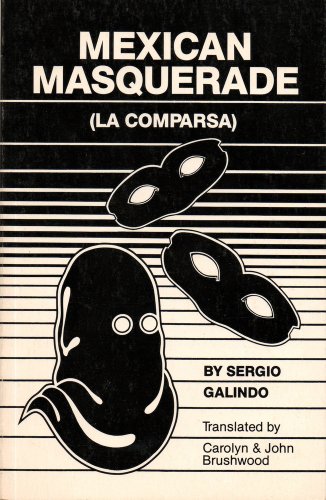
Mexican Masquerade: LA Comparsa
Idioma: Inglés
Publicado por Latin Amer Literary Review Pr, Pittsburgh, Pennsylvania, U.S.A., 1985
ISBN 10: 093548017X ISBN 13: 9780935480177
Librería: Sessions Book Sales, Birmingham, AL, Estados Unidos de America
Calificación del vendedor: 4 de 5 estrellas

EUR 4,92
Envío por EUR 3,78
Se envía dentro de Estados Unidos de AmericaCantidad disponible: 1 disponibles
Añadir al carritoSoft Cover. Condición: VG to Fine. 92 pages. Trade Paperback.
-

Mexican Masquerade/La Comparsa
Idioma: Inglés
Publicado por Latin American Literary Review Press, 1984
ISBN 10: 093548017X ISBN 13: 9780935480177
Librería: zenosbooks, San Francisco, CA, Estados Unidos de America
Calificación del vendedor: 4 de 5 estrellas
Original o primera edición
EUR 17,88
Envío por EUR 5,21
Se envía dentro de Estados Unidos de AmericaCantidad disponible: 1 disponibles
Añadir al carritopaperback. Condición: Very Good in Wrappers. No Jacket. First Edition. Pittsburgh. 1984. Latin American Literary Review Press. 1st American Edition. Very Good in Wrappers. 093548017x. Translated from the Spanish by Carolyn & John Brushwood. 92 pages. paperback. Cover: Tina Matsch. keywords: Latin America Mexico Literature Translated World Literature. DESCRIPTION - The narration is conveyed in fragments of dialogue, interior monologues, and brief narrative sketches. The quest for identity, the role of the individual in a modern society, the ambivalent role of sex as a means of communication as well as degradation are familiar themes which unify the fragments of La comparsa.' - Joseph Sommers in AFTER THE STORM: LANDMARKS OF THE MODERN MEXICAN NOVEL. 'La Comparsa is a fascinating view, often amusing and occasionally eyebrow-raising, of a whole town that has collectively 'let its hair down. The variegated procession of images, incidents, and conversations provides a satisfying characterization of these humorous persons caught up in uninhibited celebration!' - Walter M. Langford in THE MEXICAN NOVEL COMES OF AGE. 'La comparsa looks deeply into the part of his fictional world that Galindo knows most intimately - he captures the customs and attitudes of the people who live in the provincial capital of Veracruz. (Provincial in the selection of themes and characters, Galindo once again cleverly avoids the dangers of writing a regional novel.) The city of Jalapa, as it appears in these pages, freed from moral restraints because of Carnival, allows its inhabitants to behave more or less as they really are rather than as what they seem to be. A brief periodic catharsis, Carnival serves as the law of the three unities (time, place and action in this novel!' - Emmanuel Carballo in La Cultura en Mexico. inventory #5156.
