

Importe total (1 artículo artículos):
Destino del pedido:

9780879940379 - B-17 Flying Fortress (American flight manuals) de Not Available Na (19 resultados)
Ir a los resultados principales
Filtros de búsqueda
Tipo de artículo
- Todos los tipos de productos
- Libros (19)
- Revistas y publicaciones (No hay ningún otro resultado que coincida con este filtro.)
- Cómics (No hay ningún otro resultado que coincida con este filtro.)
- Partituras (No hay ningún otro resultado que coincida con este filtro.)
- Arte, grabados y pósters (No hay ningún otro resultado que coincida con este filtro.)
- Fotografías (No hay ningún otro resultado que coincida con este filtro.)
- Mapas (No hay ningún otro resultado que coincida con este filtro.)
- Manuscritos y coleccionismo de papel (No hay ningún otro resultado que coincida con este filtro.)
Condición Más información
Encuadernación
- Todas
- Tapa dura (No hay ningún otro resultado que coincida con este filtro.)
- Tapa blanda (19)
Más atributos
- Primera edición (No hay ningún otro resultado que coincida con este filtro.)
- Firmado (No hay ningún otro resultado que coincida con este filtro.)
- Sobrecubierta (No hay ningún otro resultado que coincida con este filtro.)
- Con imágenes (4)
- No impresión bajo demanda (19)
Idioma (1)
Gastos de envío gratis
Ubicación del vendedor
Valoración de los vendedores
-
Pilot's Flight Operating Instructions for Army Models B-17F and G British Model Fortress II
Librería: Pheonix Books and Collectibles, Clearfield, PA, Estados Unidos de America
Calificación del vendedor: 5 de 5 estrellas

EUR 4,35
Envío por EUR 3,37
Se envía dentro de Estados Unidos de AmericaCantidad disponible: 1 disponibles
Añadir al carritoSoft cover. Condición: Very Good. 2nd Edition. softcover in overall good shape with general wear. Binding firm and square. clean throughout.
-

Pilot's Flight Operating Instructions for Army Models B-17F and G British Model Fortress II
Librería: HPB-Red, Dallas, TX, Estados Unidos de America
Calificación del vendedor: 5 de 5 estrellas
EUR 8,68
Envío por EUR 3,16
Se envía dentro de Estados Unidos de AmericaCantidad disponible: 1 disponibles
Añadir al carritopaperback. Condición: Acceptable. Connecting readers with great books since 1972. Used textbooks may not include companion materials such as access codes, etc. May have condition issues including wear and notes/highlighting. We ship orders daily and Customer Service is our top priority!
-
Pilot's Flight Operating Instructions for Army Models B-17F and G British Model Fortress II
Librería: HPB-Red, Dallas, TX, Estados Unidos de America
Calificación del vendedor: 5 de 5 estrellas
EUR 8,68
Envío por EUR 3,16
Se envía dentro de Estados Unidos de AmericaCantidad disponible: 1 disponibles
Añadir al carritopaperback. Condición: Good. Connecting readers with great books since 1972! Used textbooks may not include companion materials such as access codes, etc. May have some wear or writing/highlighting. We ship orders daily and Customer Service is our top priority!
-
Pilot's Flight Operating Instructions for Army Models B-17F and G British Model Fortress II
Librería: Visible Voice Books, Cleveland, OH, Estados Unidos de America
Calificación del vendedor: 5 de 5 estrellas
EUR 8,68
Envío por EUR 3,80
Se envía dentro de Estados Unidos de AmericaCantidad disponible: 1 disponibles
Añadir al carritopaperback. Condición: Very Good. Aviation Book Co.
-
Pilot's Flight Operating Instructions for Army Models B-17F and G British Model Fortress II
Librería: Martin Nevers- used & rare books, Oxford, FL, Estados Unidos de America
Miembro de asociación: FABA
Calificación del vendedor: 5 de 5 estrellas
EUR 8,69
Envío por EUR 4,85
Se envía dentro de Estados Unidos de AmericaCantidad disponible: 1 disponibles
Añadir al carritoSoft cover. Condición: Very Good. 2nd Edition. Pictorial front cover. B/W photos scattered through the book. Top corner tip of front cover and first few pages creased a little. Photos of book on request.
-
Pilot's Flight Operating Instructions for Army Models B-17F and G British Model Fortress II
Librería: JIM1024, WEST DES MOINES, IA, Estados Unidos de America
Calificación del vendedor: 1 de 5 estrellas

EUR 8,69
Envío por EUR 6,54
Se envía dentro de Estados Unidos de AmericaCantidad disponible: 1 disponibles
Añadir al carritopaperback. Condición: Very Good. Light wear- sturdy & clean.
-

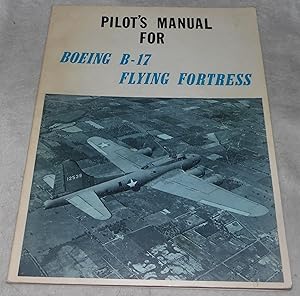
Pilot's Manual For Boeing B-17 Flying Fortress (Aircraft Manuals Series.)
Librería: GLENN DAVID BOOKS, Wyomissing, PA, Estados Unidos de America
Calificación del vendedor: 5 de 5 estrellas
EUR 13,03
Envío por EUR 4,21
Se envía dentro de Estados Unidos de AmericaCantidad disponible: 1 disponibles
Añadir al carritoSoft cover. Condición: Near Fine. Reprint Edition. Reprint of 1943 Govt. Publication edition. This is a Very Bright and Very clean B-17 Flying Fortress Illustrated Over-sized Soft cover Book in Near Fine condition. c1989. Reprint Edition. It is in Very Nice condition both inside and out & looks very, very lightly read. It has a Very bright & very clean cover with very nice edges and spine ends. The book is solid and the pages are tight & unmarked, No names. Very little shelf Wear. Great Illustrations. 109 Pages. All books are securely packaged and Promptly Mailed. #22722-824.
-
PILOT'S FLIGHT OPERATING INSTRUCTIONS FOR ARMY MODELS B-17F AND G, BRITISH MODEL FORTRESS II
Idioma: Inglés
Publicado por Aviation Publications, Appleton, WI, 1989
ISBN 10: 0879940379 ISBN 13: 9780879940379
Librería: Old Army Books, Lexington, KY, Estados Unidos de America
Calificación del vendedor: 5 de 5 estrellas
EUR 13,04
Envío por EUR 4,22
Se envía dentro de Estados Unidos de AmericaCantidad disponible: 1 disponibles
Añadir al carritoSoftcover. Condición: Very Good. Reprint. 109 pp., illus., reprint of AN 01-20EF-1, A.P. No. 2099C, Pilot's Manual for Boeing B-17 Flying Fortress.
-
Pilot's Manual for Boeing B-17 Flying Fortress
Librería: Ageless Pages, Cottonwood, AZ, Estados Unidos de America
Calificación del vendedor: 5 de 5 estrellas
EUR 12,99
Envío por EUR 4,85
Se envía dentro de Estados Unidos de AmericaCantidad disponible: 1 disponibles
Añadir al carritoLarge Softcover. Condición: Very Good. Pilot's Manual for Boeing B-17 Flying Fortress.
-
Pilot's Flight Operating Instructions for Army Models B-17F and G British Model Fortress II
Idioma: Inglés
Publicado por Aviation Publications, Appleton, WI, 1989
ISBN 10: 0879940379 ISBN 13: 9780879940379
Librería: Old Army Books, Lexington, KY, Estados Unidos de America
Calificación del vendedor: 5 de 5 estrellas
EUR 13,91
Envío por EUR 4,22
Se envía dentro de Estados Unidos de AmericaCantidad disponible: 1 disponibles
Añadir al carritoSoftcover. Condición: Very Good. Reprint. Illus. ; 109 pages.
-
Pilot's Flight Operating Instructions for Army Models B-17F and G, British Model Fortress II.
Idioma: Inglés
Publicado por Aviation Publications, n.d. c. 1980., 1980
ISBN 10: 0879940379 ISBN 13: 9780879940379
Librería: Military Books, Washington, DC, Estados Unidos de America
Calificación del vendedor: 5 de 5 estrellas
EUR 17,38
Envío por EUR 6,33
Se envía dentro de Estados Unidos de AmericaCantidad disponible: 1 disponibles
Añadir al carritoPaperback. Condición: Fine. Reprint of 1943. 109p. Photos. Line drawings. Illustrations. Large Wraps. Fine copy. Book.
-

PILOT'S FLIGHT OPERATING INSTRUCTIONS FOR ARMY MODELS B-17F and G, British Model Fortress II
Idioma: Inglés
Publicado por Aviation Publications, Appleton, Wisconsion, 1943
ISBN 10: 0879940379 ISBN 13: 9780879940379
Librería: Frey Fine Books, Rougemont, NC, Estados Unidos de America
Calificación del vendedor: 5 de 5 estrellas
EUR 18,25
Envío por EUR 5,86
Se envía dentro de Estados Unidos de AmericaCantidad disponible: 1 disponibles
Añadir al carritoWraps. Condición: Very Good. Reprint. Reprint. A Very Good copy. 4to., 109 pp., bound in publishers glossy photo illustrated stiff wraps. Spine is darkened, covers are age toned. Text is unmarked.
-
Pilot's Flight Operating Instructions for Army Models B-17F and G British Model Fortress II (American flight manuals)
Idioma: Inglés
Publicado por Aviation Book Co, Appleton, WI, 1989
ISBN 10: 0879940379 ISBN 13: 9780879940379
Librería: Aamstar Bookshop / Hooked On Books, Colorado Springs, CO, Estados Unidos de America
Miembro de asociación: RMABA
Calificación del vendedor: 4 de 5 estrellas

EUR 19,56
Envío por EUR 4,98
Se envía dentro de Estados Unidos de AmericaCantidad disponible: 1 disponibles
Añadir al carritoPaperback. Condición: Near Fine. UNION AVIATION-Near fine tall, thin paperback. Later printing. white w/black lettering Size: 4to - over 9¾" - 12" tall.
-

for army models B-17F and G - british model Fortress II.
Idioma: Inglés
Publicado por Aviation Publications, USA, 1974
ISBN 10: 0879940379 ISBN 13: 9780879940379
Librería: Antiquariat Uwe Berg, Toppenstedt, Alemania
Calificación del vendedor: 5 de 5 estrellas
EUR 18,00
Envío por EUR 18,00
Se envía de Alemania a Estados Unidos de AmericaCantidad disponible: 1 disponibles
Añadir al carritoNachdruck der Ausgabe von 1943, 109 S., illustriert, Okart., 4*. Rücken angegriffen, noch gut erhaltenes Exemplar. 69 Sprache: Englisch.
-
Pilot's Manual for Boeing B-17 Flying Fortress (Aircraft Manuals Series.)
Idioma: Inglés
Publicado por Aviation Publications, Appleton, WI, 1989
ISBN 10: 0879940379 ISBN 13: 9780879940379
Librería: Lawrence Jones Books, Ashmore, QLD, Australia
Calificación del vendedor: 5 de 5 estrellas
EUR 18,47
Envío por EUR 21,09
Se envía de Australia a Estados Unidos de AmericaCantidad disponible: 1 disponibles
Añadir al carritoSoft Cover. Condición: Fine. Reprint. 107pp, num bw ills. Slightest of edge wear to card covers. Reprint of the 1943 'Pilot's Flight Operating Instructions for Army Models B-17F and G, British Model Fortress II'. Size: 4to.
-
Pilot's Flight Operating Instructions for Army Models B-17F and G British Model Fortress II; AN 01-20EF-1, A. O. No. 2099C RESTRICTED FOR OFFICIAL USE ONLY, August 1, 1943
Idioma: Inglés
Publicado por Aviation Publications, Menasha, WI, 1989
ISBN 10: 0879940379 ISBN 13: 9780879940379
Librería: Ground Zero Books, Ltd., Silver Spring, MD, Estados Unidos de America
Calificación del vendedor: 4 de 5 estrellas
EUR 43,45
Envío por EUR 4,22
Se envía dentro de Estados Unidos de AmericaCantidad disponible: 1 disponibles
Añadir al carritoWraps. Condición: Good. Reprint edition of 1943 edition. The format is approximately 8.5 inches by 11 inches. [2],109, [1] pages. Illustration on front cover. Illustrations. Tabular Data. Cover has some wear and soiling. The B-17F variants were the primary versions flying for the Eighth Air Force to face the Germans in 1943 and had standardized the manned Sperry ball turret for ventral defense, also replacing the earlier, 10-panel framed bombardier's nose glazing from the B subtype with an enlarged, nearly frameless Plexiglas bombardier's nose enclosure for improved forward vision. The final production blocks of the B-17F from Douglas' plants did adopt the YB-40's "chin turret", giving them a much-improved forward defense capability. By the time the B-17G appeared, the number of guns had been increased from seven to 13, the designs of the gun stations were finalized, and other adjustments were completed. The B-17G was the final version of the Flying Fortress, incorporating all changes made to its predecessor, the B-17F, and in total, 8,680 were built, the last on 28 July 1945. Many B-17Gs were converted for other missions such as cargo hauling, engine testing, and reconnaissance. Initially designated SB-17G, a number of B-17Gs were also converted for search-and-rescue duties, later to be redesignated B-17H. The Boeing B-17 Flying Fortress is a four-engined heavy bomber developed in the 1930s for the United States Army Air Corps (USAAC). Relatively fast and high-flying for a bomber of its era, the B-17 was used primarily in the European Theater of Operations and dropped more bombs than any other aircraft during World War II. It is the third-most produced bomber of all time, behind the four-engined Consolidated B-24 Liberator and the multirole, twin-engined Junkers Ju 88. It was also employed as a transport, antisubmarine aircraft, drone controller, and search-and-rescue aircraft. In a USAAC competition, Boeing's prototype Model 299/XB-17 outperformed two other entries but crashed, losing the initial 200-bomber contract to the Douglas B-18 Bolo. Still, the Air Corps ordered 13 more B-17s for further evaluation, then introduced it into service in 1938. The B-17 evolved through numerous design advances but from its inception, the USAAC (later, the USAAF) promoted the aircraft as a strategic weapon. It was a relatively fast, high-flying, long-range bomber with heavy defensive armament at the expense of bombload. It also developed a reputation for toughness based upon stories and photos of badly damaged B-17s safely returning to base. The B-17 saw early action in the Pacific War, where it conducted raids against Japanese shipping and airfields. But it was primarily employed by the USAAF in the daylight strategic bombing campaign over Europe, complementing RAF Bomber Command's night-time area bombing of German industrial, military and civilian targets. Of the roughly 1.5 million tons of bombs dropped on Nazi Germany and its occupied territories by U.S. aircraft, over 640 000 tons (42.6%) were dropped from B-17s.
-
Pilot Training Manual for Flying Fortress F-17; RESTRICTED
Librería: Ground Zero Books, Ltd., Silver Spring, MD, Estados Unidos de America
Calificación del vendedor: 4 de 5 estrellas
EUR 43,45
Envío por EUR 4,22
Se envía dentro de Estados Unidos de AmericaCantidad disponible: 1 disponibles
Añadir al carritoComb binding. Condición: Good. The format is approximately 8.5 inches by 11 inches. 100 pages. Illustration on front cover. Illustrations. Tabular Data. Cover has some wear and soiling. The Boeing B-17 Flying Fortress is a four-engined heavy bomber developed in the 1930s for the United States Army Air Corps (USAAC). Relatively fast and high-flying for a bomber of its era, the B-17 was used primarily in the European Theater of Operations and dropped more bombs than any other aircraft during World War II. It is the third-most produced bomber of all time, behind the four-engined Consolidated B-24 Liberator and the multirole, twin-engined Junkers Ju 88. It was also employed as a transport, antisubmarine aircraft, drone controller, and search-and-rescue aircraft. In a USAAC competition, Boeing's prototype Model 299/XB-17 outperformed two other entries but crashed, losing the initial 200-bomber contract to the Douglas B-18 Bolo. Still, the Air Corps ordered 13 more B-17s for further evaluation, then introduced it into service in 1938. The B-17 evolved through numerous design advances but from its inception, the USAAC (later, the USAAF) promoted the aircraft as a strategic weapon. It was a fast, high-flying, long-range bomber with heavy defensive armament at the expense of bombload. It developed a reputation for toughness based upon stories and photos of badly damaged B-17s safely returning to base. The B-17 saw early action in the Pacific War, where it conducted raids against Japanese shipping and airfields. But it was primarily employed by the USAAF in the daylight strategic bombing campaign over Europe. "Pilot Training Manual for the B-17 Flying Fortress", which was issued to B-17 pilots during World War II and was considered to be the "textbook of the B-17". The manual begins with a brief history of the B-17, and then goes on to explain to the pilot the duties and responsibilities of each of his crew members. Following this is a series of topics dealing with the characteristics and operation of the B-17 itself and how the crew should handle various emergency situations. From the Foreword: This manual is the text for your training as a B-17 pilot and airplane commander. The Air Forces' most experienced training and supervisory personnel have collaborated to make it a complete exposition of what your pilot duties are, how each duty will be performed, and why it must be performed in the manner prescribed. The techniques and procedures described in this book are standard and mandatory. In this respect the manual serves the dual purpose of a training checklist and a working handbook. Use it to make sure that you learn everything described herein. Use it to study and review the essential facts concerning everything taught. Such additional self-study and review will not only advance your training, but will alleviate the burden of your already overburdened instructors. This training manual does not replace the Technical Orders for the airplane, which will always be your primary source of information concerning the B-17 so long as you fly it. This is essentially the textbook of the B-17. Used properly, it will enable you to utilize the pertinent Technical Orders to even greater advantage. This appears to be reproduction, due to the white borders on the pages.
-
Pilot's Flight Operating Instructions for Army Models B-17F and G British Model Fortress II
Librería: SHIMEDIA, Brooklyn, NY, Estados Unidos de America
Calificación del vendedor: 5 de 5 estrellas
EUR 86,90
Gastos de envío gratis
Se envía dentro de Estados Unidos de AmericaCantidad disponible: 1 disponibles
Añadir al carritoCondición: New. Satisfaction Guaranteed or your money back.
-
Design Analysis of The Boeing B-17 Flying Fortress
Librería: Ground Zero Books, Ltd., Silver Spring, MD, Estados Unidos de America
Calificación del vendedor: 4 de 5 estrellas
EUR 86,91
Envío por EUR 4,22
Se envía dentro de Estados Unidos de AmericaCantidad disponible: 1 disponibles
Añadir al carritoCondición: Good. Reprint from Aviation, January, 1945. The format is approximately 8 inches by 11 inches. Pages 121-144. Illustrations (some with color) Exploded views. Pages 129-132 is a fold-out. Tabular Data. Cover has wear and soiling. The author was the Vice-President in charge of Engineering at the Boeing Aircraft Company. The Boeing B-17 Flying Fortress is a four-engined heavy bomber developed in the 1930s for the United States Army Air Corps (USAAC). Fast and high-flying for a bomber of its era, the B-17 was used primarily in the European Theater of Operations and dropped more bombs than any other aircraft during World War II. It is the third-most produced bomber of all time, behind the four-engined Consolidated B-24 Liberator and the multirole, twin-engined Junkers Ju 88. It was also employed as a transport, antisubmarine aircraft, drone controller, and search-and-rescue aircraft. In a competition, Boeing's prototype Model 299/XB-17 outperformed two other entries but crashed, losing the initial 200-bomber contract to the Douglas B-18 Bolo. Still, the Air Corps ordered 13 more B-17s for further evaluation, then introduced it into service in 1938. The B-17 evolved through numerous design advances but from its inception, the USAAC (later, the USAAF) promoted the aircraft as a strategic weapon. It was a fast, high-flying, long-range bomber with heavy defensive armament at the expense of bombload. It developed a reputation for toughness based upon stories and photos of badly damaged B-17s safely returning to base. The B-17 saw action in the Pacific War, where it conducted raids against enemy shipping and airfields. Wellwood Edmetson Beall was an aerospace pioneer who had major roles in developing the B 17 Flying Fortress, the B 29 Superfortress and the Boeing 707. As an airplane designer and engineer, he ordered continuous modification in the B 17 Flying Fortress to meet changing battle conditions over Europe in World War II. At the same time, he was developing the B 29 for the long range strategic bombing of Japan. Mr. Beall, who served 30 years with the Boeing Company in Seattle, was that concern's chief engineer from 1939 to 1943, when he was named vice president. He became senior vice president in 1952 and remained in that position until 1964. At the time he became corporate and executive vice president for operations for the Douglas Aircraft Company, in Santa Monica, a division of McDonnell Douglas Corporation. Mr. Beall began his career in the aircraft industry in 1930, when he became an aeronautical engineer at the Boeing School of Aeronautics in Oakland, Calif. Mr. Beall received a B.S. degree at New York University. Four years after he went to the Boeing School, he was hired by Boeing and named Far Eastern manager with responsibility for selling the company's fighter and transport planes to the Chinese Government. He remained in China in 1934 and part of 1935, but returned to this country that year. As a designer he was in charge of design and engineering research for Boeing Model 314 Flying Boats, Stratoliners, Boeing Superfortresses, Stratocruisers, Stratojets and guided missiles. He was the author of various articles for scientific and engineering magazines.Military and Naval Manuals and Regulations. Comb binding, clear plastic front cover and stiff board at the rear.


