

Importe total (1 artículo artículos):
Destino del pedido:

9780822947356 - The Architecture of Evolution: The Science of Form in Twentieth-Century Evolutionary Biology de Tamborini, Marco (23 resultados)
Ir a los resultados principales
Filtros de búsqueda
Tipo de artículo
- Todos los tipos de productos
- Libros (23)
- Revistas y publicaciones (No hay ningún otro resultado que coincida con este filtro.)
- Cómics (No hay ningún otro resultado que coincida con este filtro.)
- Partituras (No hay ningún otro resultado que coincida con este filtro.)
- Arte, grabados y pósters (No hay ningún otro resultado que coincida con este filtro.)
- Fotografías (No hay ningún otro resultado que coincida con este filtro.)
- Mapas (No hay ningún otro resultado que coincida con este filtro.)
- Manuscritos y coleccionismo de papel (No hay ningún otro resultado que coincida con este filtro.)
Condición Más información
- Nuevo (20)
- Como nuevo, Excelente o Muy bueno (3)
- Bueno o Aceptable (No hay ningún otro resultado que coincida con este filtro.)
- Regular o Pobre (No hay ningún otro resultado que coincida con este filtro.)
- Tal como se indica (No hay ningún otro resultado que coincida con este filtro.)
Encuadernación
- Todas
- Tapa dura (22)
- Tapa blanda (No hay ningún otro resultado que coincida con este filtro.)
Más atributos
- Primera edición (No hay ningún otro resultado que coincida con este filtro.)
- Firmado (No hay ningún otro resultado que coincida con este filtro.)
- Sobrecubierta (No hay ningún otro resultado que coincida con este filtro.)
- Con imágenes (11)
- No impresión bajo demanda (23)
Idioma (2)
Precio
- Cualquier precio
- Menos de EUR 20 (No hay ningún otro resultado que coincida con este filtro.)
- EUR 20 a EUR 40
- Más de EUR 40
Gastos de envío gratis
Ubicación del vendedor
Valoración de los vendedores
-

The Architecture of Evolution: The Science of Form in Twentieth-Century Evolutionary Biology
Idioma: Inglés
Publicado por University of Pittsburgh Press 2023-01-17, 2023
ISBN 10: 0822947358 ISBN 13: 9780822947356
Librería: Chiron Media, Wallingford, Reino Unido
Calificación del vendedor: 4 de 5 estrellas

EUR 45,32
Envío por EUR 17,68
Se envía de Reino Unido a Estados Unidos de AmericaCantidad disponible: 2 disponibles
Añadir al carritoHardcover. Condición: New.
-

Architecture of Evolution : The Science of Form in Twentieth-century Evolutionary Biology
Idioma: Inglés
Publicado por University of Pittsburgh Press, 2022
ISBN 10: 0822947358 ISBN 13: 9780822947356
Librería: GreatBookPrices, Columbia, MD, Estados Unidos de America
Calificación del vendedor: 5 de 5 estrellas

EUR 62,19
Envío por EUR 2,23
Se envía dentro de Estados Unidos de AmericaCantidad disponible: Más de 20 disponibles
Añadir al carritoCondición: New.
-
The Architecture of Evolution: The Science of Form in Twentieth-Century Evolutionary Biology
Idioma: Inglés
Publicado por University of Pittsburgh Press, 2022
ISBN 10: 0822947358 ISBN 13: 9780822947356
Librería: California Books, Miami, FL, Estados Unidos de America
Calificación del vendedor: 5 de 5 estrellas
EUR 64,50
Gastos de envío gratis
Se envía dentro de Estados Unidos de AmericaCantidad disponible: Más de 20 disponibles
Añadir al carritoCondición: New.
-

Architecture of Evolution : The Science of Form in Twentieth-century Evolutionary Biology
Idioma: Inglés
Publicado por University of Pittsburgh Press, 2022
ISBN 10: 0822947358 ISBN 13: 9780822947356
Librería: GreatBookPrices, Columbia, MD, Estados Unidos de America
Calificación del vendedor: 5 de 5 estrellas
EUR 65,63
Envío por EUR 2,23
Se envía dentro de Estados Unidos de AmericaCantidad disponible: Más de 20 disponibles
Añadir al carritoCondición: As New. Unread book in perfect condition.
-

The Architecture of Evolution (Hardcover)
Idioma: Inglés
Publicado por University of Pittsburgh Press, Pittsburgh PA, 2024
ISBN 10: 0822947358 ISBN 13: 9780822947356
Librería: Grand Eagle Retail, Bensenville, IL, Estados Unidos de America
Calificación del vendedor: 5 de 5 estrellas
EUR 69,56
Gastos de envío gratis
Se envía dentro de Estados Unidos de AmericaCantidad disponible: 1 disponibles
Añadir al carritoHardcover. Condición: new. Hardcover. In the final decades of the twentieth century, the advent of evolutionary developmental biology (evo-devo) offered a revolutionary new perspective that transformed the classical neo-Darwinian, gene-centered study of evolution. In The Architecture of Evolution, Marco Tamborini demonstrates how this radical innovation was made possible by the largely forgotten study of morphology. Despite the key role morphology played in the development of evolutionary biology since the 1940s, the architecture of organisms was excluded from the Modern Evolutionary Synthesis. And yet, from the beginning of the twentieth century to the 1970s and '80s, morphologists sought to understand how organisms were built and how organismal forms could be generated and controlled. The generation of organic form was, they believed, essential to understanding the mechanisms of evolution. Tamborini explores how the development of evo-devo and the recent organismal turn in biology involved not only the work of morphologists but those outside the biological community with whom they exchanged their data, knowledge, and practices. Together with architects and engineers, they worked to establish a mathematical and theoretical basis for the study of organic form as a mode of construction, developing and reinterpreting important notions that would play a central role in the development of evolutionary developmental biology in the late 1980s. This book sheds light not only on the interdisciplinary basis for many of the key concepts in current developmental biology but also on contributions to the study of organic form outside the English-speaking world. AUTHOR: Marco Tamborini teaches history and philosophy of science at the Technical University of Darmstadt and is a member of the Junge Akademie Mainz at the Academy of Sciences and Literature Mainz, as well as fellow of the Johanna Quandt Young Academy at Goethe. His research focuses on the history and philosophy of biology, technoscience, and architecture from the nineteenth century to the present. In the final decades of the twentieth century, the advent of evolutionary developmental biology (evo-devo) offered a revolutionary new perspective that transformed the classical neo-Darwinian, gene-centered study of evolution. Shipping may be from multiple locations in the US or from the UK, depending on stock availability.
-
The Architecture of Evolution
Idioma: Inglés
Publicado por University of Pittsburgh Press, 2024
ISBN 10: 0822947358 ISBN 13: 9780822947356
Librería: PBShop.store UK, Fairford, GLOS, Reino Unido
Calificación del vendedor: 4 de 5 estrellas
EUR 70,27
Envío por EUR 5,73
Se envía de Reino Unido a Estados Unidos de AmericaCantidad disponible: 2 disponibles
Añadir al carritoHRD. Condición: New. New Book. Shipped from UK. Established seller since 2000.
-
ARCHITECTURE OF EVOLUTION
Idioma: Inglés
Publicado por University of Pittsburgh Press, 2022
ISBN 10: 0822947358 ISBN 13: 9780822947356
Librería: Speedyhen LLC, Hialeah, FL, Estados Unidos de America
Calificación del vendedor: 5 de 5 estrellas
EUR 79,34
Gastos de envío gratis
Se envía dentro de Estados Unidos de AmericaCantidad disponible: 4 disponibles
Añadir al carritoCondición: NEW.
-

The Architecture of Evolution
Idioma: Inglés
Publicado por University of Pittsburgh Press, US, 2024
ISBN 10: 0822947358 ISBN 13: 9780822947356
Librería: Rarewaves.com USA, London, LONDO, Reino Unido
Calificación del vendedor: 5 de 5 estrellas
EUR 82,98
Gastos de envío gratis
Se envía de Reino Unido a Estados Unidos de AmericaCantidad disponible: 1 disponibles
Añadir al carritoHardback. Condición: New. In the final decades of the twentieth century, the advent of evolutionary developmental biology (evo-devo) offered a revolutionary new perspective that transformed the classical neo-Darwinian, gene-centered study of evolution. In _The Architecture of Evolution_, Marco Tamborini demonstrates how this radical innovation was made possible by the largely forgotten study of morphology. Despite the key role morphology played in the development of evolutionary biology since the 1940s, the architecture of organisms was excluded from the Modern Evolutionary Synthesis. And yet, from the beginning of the twentieth century to the 1970s and '80s, morphologists sought to understand how organisms were built and how organismal forms could be generated and controlled. The generation of organic form was, they believed, essential to understanding the mechanisms of evolution. Tamborini explores how the development of evo-devo and the recent organismal turn in biology involved not only the work of morphologists but those outside the biological community with whom they exchanged their data, knowledge, and practices. Together with architects and engineers, they worked to establish a mathematical and theoretical basis for the study of organic form as a mode of construction, developing and reinterpreting important notions that would play a central role in the development of evolutionary developmental biology in the late 1980s. This book sheds light not only on the interdisciplinary basis for many of the key concepts in current developmental biology but also on contributions to the study of organic form outside the English-speaking world.**PRAISE**"Marco Tamborini's book is a much-needed history of morphological thought in the twentieth century. It provides an engaging intellectual journey, leading us through biology, architecture, philosophy, engineering, mathematics, politics, and art. This is a highly original contribution that shows how the science of form emerged from an international and interdisciplinary enterprise." Maurizio Esposito, University of Lisbon, Portugal.
-
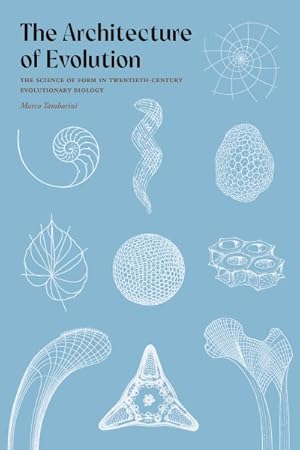
Architecture of Evolution : The Science of Form in Twentieth-century Evolutionary Biology
Idioma: Inglés
Publicado por University of Pittsburgh Press, 2022
ISBN 10: 0822947358 ISBN 13: 9780822947356
Librería: GreatBookPricesUK, Woodford Green, Reino Unido
Calificación del vendedor: 5 de 5 estrellas
EUR 66,24
Envío por EUR 17,12
Se envía de Reino Unido a Estados Unidos de AmericaCantidad disponible: 2 disponibles
Añadir al carritoCondición: New.
-
The Architecture of Evolution: The Science of Form in Twentieth-Century Evolutionary Biology
Idioma: Inglés
Publicado por University of Pittsburgh Press, 2022
ISBN 10: 0822947358 ISBN 13: 9780822947356
Librería: Ria Christie Collections, Uxbridge, Reino Unido
Calificación del vendedor: 5 de 5 estrellas
EUR 73,38
Envío por EUR 13,67
Se envía de Reino Unido a Estados Unidos de AmericaCantidad disponible: 2 disponibles
Añadir al carritoCondición: New. In.
-
Architecture Of Evolution
Idioma: Inglés
Publicado por University of Pittsburgh Press, 2022
ISBN 10: 0822947358 ISBN 13: 9780822947356
Librería: Kennys Bookshop and Art Galleries Ltd., Galway, GY, Irlanda
Calificación del vendedor: 5 de 5 estrellas
EUR 77,61
Envío por EUR 10,50
Se envía de Irlanda a Estados Unidos de AmericaCantidad disponible: Más de 20 disponibles
Añadir al carritoCondición: New.
-

Architecture of Evolution : The Science of Form in Twentieth-century Evolutionary Biology
Idioma: Inglés
Publicado por University of Pittsburgh Press, 2022
ISBN 10: 0822947358 ISBN 13: 9780822947356
Librería: GreatBookPricesUK, Woodford Green, Reino Unido
Calificación del vendedor: 5 de 5 estrellas
EUR 78,85
Envío por EUR 17,12
Se envía de Reino Unido a Estados Unidos de AmericaCantidad disponible: 2 disponibles
Añadir al carritoCondición: As New. Unread book in perfect condition.
-
The The Architecture of Evolution The Science of Form in TwentiethCentury Evolutionary Biology
Librería: Revaluation Books, Exeter, Reino Unido
Calificación del vendedor: 5 de 5 estrellas
EUR 85,22
Envío por EUR 14,26
Se envía de Reino Unido a Estados Unidos de AmericaCantidad disponible: 2 disponibles
Añadir al carritoHardcover. Condición: Brand New. 312 pages. 9.00x6.00x1.30 inches. In Stock.
-
The Architecture of Evolution: The Science of Form in Twentieth-Century Evolutionary Biology
Idioma: Inglés
Publicado por University of Pittsburgh Press, 2022
ISBN 10: 0822947358 ISBN 13: 9780822947356
Librería: THE SAINT BOOKSTORE, Southport, Reino Unido
Calificación del vendedor: 5 de 5 estrellas
EUR 82,69
Envío por EUR 18,27
Se envía de Reino Unido a Estados Unidos de AmericaCantidad disponible: 2 disponibles
Añadir al carritoHardback. Condición: New. New copy - Usually dispatched within 3 working days.
-
Architecture Of Evolution
Idioma: Inglés
Publicado por University of Pittsburgh Press, 2022
ISBN 10: 0822947358 ISBN 13: 9780822947356
Librería: Kennys Bookstore, Olney, MD, Estados Unidos de America
Calificación del vendedor: 4 de 5 estrellas
EUR 95,38
Envío por EUR 8,89
Se envía dentro de Estados Unidos de AmericaCantidad disponible: Más de 20 disponibles
Añadir al carritoCondición: New.
-
TheArchitectureofEvolution Format: Hardback
Publicado por Syracus University Press
ISBN 10: 0822947358 ISBN 13: 9780822947356
Librería: INDOO, Avenel, NJ, Estados Unidos de America
Calificación del vendedor: 5 de 5 estrellas
EUR 44,03
Gastos de envío gratis
Se envía dentro de Estados Unidos de AmericaCantidad disponible: Más de 20 disponibles
Añadir al carritoCondición: New. Brand New.
-
The Architecture of Evolution: The Science of Form in Twentieth-Century Evolutionary Biology
Idioma: Inglés
Publicado por University of Pittsburgh Press, 2024
ISBN 10: 0822947358 ISBN 13: 9780822947356
Librería: Llibreria Hispano Americana, Barcelona, B, España
Calificación del vendedor: 2 de 5 estrellas

EUR 36,00
Envío por EUR 70,00
Se envía de España a Estados Unidos de AmericaCantidad disponible: 1 disponibles
Añadir al carritoEncuadernación de tapa dura. Condición: Muy bien.
-
ARCHITECTURE OF EVOLUTION
Idioma: Inglés
Publicado por University of Pittsburgh Press, 2022
ISBN 10: 0822947358 ISBN 13: 9780822947356
Librería: Speedyhen, Hertfordshire, Reino Unido
Calificación del vendedor: 5 de 5 estrellas
EUR 66,25
Envío por EUR 46,78
Se envía de Reino Unido a Estados Unidos de AmericaCantidad disponible: 2 disponibles
Añadir al carritoCondición: NEW.
-

The Architecture of Evolution: The Science of Form in Twentieth-Century Evolutionary Biology
Librería: moluna, Greven, Alemania
Calificación del vendedor: 4 de 5 estrellas
EUR 80,15
Envío por EUR 48,99
Se envía de Alemania a Estados Unidos de AmericaCantidad disponible: 2 disponibles
Añadir al carritoGebunden. Condición: New. Über den AutorMarco Tamborini teaches history and philosophy of science at the Technical University of Darmstadt and is a member of the Junge Akademie Mainz at the Academy of Sciences and Literature Mainz, as well as fello.
-

The Architecture of Evolution : The Science of Form in Twentieth-Century Evolutionary Biology
Idioma: Inglés
Publicado por University Of Pittsburgh Press Dez 2022, 2022
ISBN 10: 0822947358 ISBN 13: 9780822947356
Librería: AHA-BUCH GmbH, Einbeck, Alemania
Calificación del vendedor: 5 de 5 estrellas
EUR 89,06
Envío por EUR 62,43
Se envía de Alemania a Estados Unidos de AmericaCantidad disponible: 2 disponibles
Añadir al carritoBuch. Condición: Neu. Neuware - In the final decades of the twentieth century, the advent of evolutionary developmental biology (evo-devo) offered a revolutionary new perspective that transformed the classical neo-Darwinian, gene-centered study of evolution. In The Architecture of Evolution, Marco Tamborini demonstrates how this radical innovation was made possible by the largely forgotten study of morphology. Despite the key role morphology played in the development of evolutionary biology since the 1940s, the architecture of organisms was excluded from the Modern Evolutionary Synthesis. And yet, from the beginning of the twentieth century to the 1970s and '80s, morphologists sought to understand how organisms were built and how organismal forms could be generated and controlled. The generation of organic form was, they believed, essential to understanding the mechanisms of evolution. Tamborini explores how the development of evo-devo and the recent organismal turn in biology involved not only the work of morphologists but those outside the biological community with whom they exchanged their data, knowledge, and practices. Together with architects and engineers, they worked to establish a mathematical and theoretical basis for the study of organic form as a mode of construction, developing and reinterpreting important notions that would play a central role in the development of evolutionary developmental biology in the late 1980s. This book sheds light not only on the interdisciplinary basis for many of the key concepts in current developmental biology but also on contributions to the study of organic form outside the English-speaking world.
-
The Architecture of Evolution
Idioma: Inglés
Publicado por University of Pittsburgh Press, US, 2024
ISBN 10: 0822947358 ISBN 13: 9780822947356
Librería: Rarewaves.com UK, London, Reino Unido
Calificación del vendedor: 5 de 5 estrellas
EUR 77,57
Envío por EUR 74,17
Se envía de Reino Unido a Estados Unidos de AmericaCantidad disponible: 1 disponibles
Añadir al carritoHardback. Condición: New. In the final decades of the twentieth century, the advent of evolutionary developmental biology (evo-devo) offered a revolutionary new perspective that transformed the classical neo-Darwinian, gene-centered study of evolution. In _The Architecture of Evolution_, Marco Tamborini demonstrates how this radical innovation was made possible by the largely forgotten study of morphology. Despite the key role morphology played in the development of evolutionary biology since the 1940s, the architecture of organisms was excluded from the Modern Evolutionary Synthesis. And yet, from the beginning of the twentieth century to the 1970s and '80s, morphologists sought to understand how organisms were built and how organismal forms could be generated and controlled. The generation of organic form was, they believed, essential to understanding the mechanisms of evolution. Tamborini explores how the development of evo-devo and the recent organismal turn in biology involved not only the work of morphologists but those outside the biological community with whom they exchanged their data, knowledge, and practices. Together with architects and engineers, they worked to establish a mathematical and theoretical basis for the study of organic form as a mode of construction, developing and reinterpreting important notions that would play a central role in the development of evolutionary developmental biology in the late 1980s. This book sheds light not only on the interdisciplinary basis for many of the key concepts in current developmental biology but also on contributions to the study of organic form outside the English-speaking world.**PRAISE**"Marco Tamborini's book is a much-needed history of morphological thought in the twentieth century. It provides an engaging intellectual journey, leading us through biology, architecture, philosophy, engineering, mathematics, politics, and art. This is a highly original contribution that shows how the science of form emerged from an international and interdisciplinary enterprise." Maurizio Esposito, University of Lisbon, Portugal.
-

The Architecture of Evolution (Hardcover)
Idioma: Inglés
Publicado por University of Pittsburgh Press, Pittsburgh PA, 2024
ISBN 10: 0822947358 ISBN 13: 9780822947356
Librería: AussieBookSeller, Truganina, VIC, Australia
Calificación del vendedor: 5 de 5 estrellas
EUR 126,98
Envío por EUR 31,31
Se envía de Australia a Estados Unidos de AmericaCantidad disponible: 1 disponibles
Añadir al carritoHardcover. Condición: new. Hardcover. In the final decades of the twentieth century, the advent of evolutionary developmental biology (evo-devo) offered a revolutionary new perspective that transformed the classical neo-Darwinian, gene-centered study of evolution. In The Architecture of Evolution, Marco Tamborini demonstrates how this radical innovation was made possible by the largely forgotten study of morphology. Despite the key role morphology played in the development of evolutionary biology since the 1940s, the architecture of organisms was excluded from the Modern Evolutionary Synthesis. And yet, from the beginning of the twentieth century to the 1970s and '80s, morphologists sought to understand how organisms were built and how organismal forms could be generated and controlled. The generation of organic form was, they believed, essential to understanding the mechanisms of evolution. Tamborini explores how the development of evo-devo and the recent organismal turn in biology involved not only the work of morphologists but those outside the biological community with whom they exchanged their data, knowledge, and practices. Together with architects and engineers, they worked to establish a mathematical and theoretical basis for the study of organic form as a mode of construction, developing and reinterpreting important notions that would play a central role in the development of evolutionary developmental biology in the late 1980s. This book sheds light not only on the interdisciplinary basis for many of the key concepts in current developmental biology but also on contributions to the study of organic form outside the English-speaking world. AUTHOR: Marco Tamborini teaches history and philosophy of science at the Technical University of Darmstadt and is a member of the Junge Akademie Mainz at the Academy of Sciences and Literature Mainz, as well as fellow of the Johanna Quandt Young Academy at Goethe. His research focuses on the history and philosophy of biology, technoscience, and architecture from the nineteenth century to the present. In the final decades of the twentieth century, the advent of evolutionary developmental biology (evo-devo) offered a revolutionary new perspective that transformed the classical neo-Darwinian, gene-centered study of evolution. Shipping may be from our Sydney, NSW warehouse or from our UK or US warehouse, depending on stock availability.
-

The Architecture of Evolution | The Science of Form in Twentieth-Century Evolutionary Biology
Idioma: Inglés
Publicado por University of Pittsburgh Press, 2022
ISBN 10: 0822947358 ISBN 13: 9780822947356
Librería: preigu, Osnabrück, Alemania
Calificación del vendedor: 5 de 5 estrellas
EUR 89,35
Envío por EUR 70,00
Se envía de Alemania a Estados Unidos de AmericaCantidad disponible: 1 disponibles
Añadir al carritoBuch. Condición: Neu. The Architecture of Evolution | The Science of Form in Twentieth-Century Evolutionary Biology | Marco Tamborini | Buch | Gebunden | Englisch | 2022 | University of Pittsburgh Press | EAN 9780822947356 | Verantwortliche Person für die EU: Libri GmbH, Europaallee 1, 36244 Bad Hersfeld, gpsr[at]libri[dot]de | Anbieter: preigu.


