

Importe total (1 artículo artículos):
Destino del pedido:

9780816538577 - Transcontinental Dialogues: Activist Alliances with Indigenous Peoples of Canada, Mexico, and Australia (Critical Issues in Indigenous Studies) (13 resultados)
Ir a los resultados principales
Filtros de búsqueda
Tipo de artículo
- Todos los tipos de productos
- Libros (13)
- Revistas y publicaciones (No hay ningún otro resultado que coincida con este filtro.)
- Cómics (No hay ningún otro resultado que coincida con este filtro.)
- Partituras (No hay ningún otro resultado que coincida con este filtro.)
- Arte, grabados y pósters (No hay ningún otro resultado que coincida con este filtro.)
- Fotografías (No hay ningún otro resultado que coincida con este filtro.)
- Mapas (No hay ningún otro resultado que coincida con este filtro.)
- Manuscritos y coleccionismo de papel (No hay ningún otro resultado que coincida con este filtro.)
Condición Más información
- Nuevo (12)
- Como nuevo, Excelente o Muy bueno (No hay ningún otro resultado que coincida con este filtro.)
- Bueno o Aceptable (1)
- Regular o Pobre (No hay ningún otro resultado que coincida con este filtro.)
- Tal como se indica (No hay ningún otro resultado que coincida con este filtro.)
Encuadernación
- Todas
- Tapa dura (No hay ningún otro resultado que coincida con este filtro.)
- Tapa blanda (13)
Más atributos
- Primera edición (No hay ningún otro resultado que coincida con este filtro.)
- Firmado (No hay ningún otro resultado que coincida con este filtro.)
- Sobrecubierta (No hay ningún otro resultado que coincida con este filtro.)
- Con imágenes (2)
- No impresión bajo demanda (13)
Idioma (1)
Gastos de envío gratis
Ubicación del vendedor
Valoración de los vendedores
-
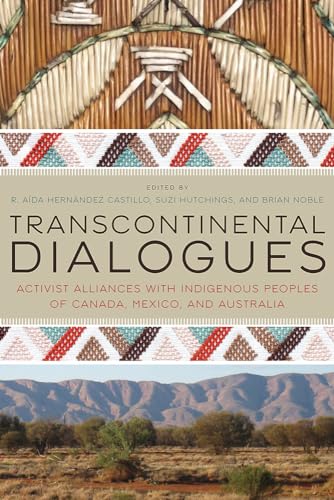
Transcontinental Dialogues: Activist Alliances with Indigenous Peoples of Canada, Mexico, and Australia (Critical Issues in Indigenous Studies)
Libro 12 de 19: Critical Issues in Indigenous StudiesIdioma: Inglés
Publicado por University of Arizona Press, 2019
ISBN 10: 0816538573 ISBN 13: 9780816538577
Librería: Russell Books, Victoria, BC, Canada
Calificación del vendedor: 5 de 5 estrellas

EUR 17,66
Envío por EUR 17,14
Se envía de Canada a Estados Unidos de AmericaCantidad disponible: 1 disponibles
Añadir al carritopaperback. Condición: Very Good. Illustrated.
-

Transcontinental Dialogues
Libro 12 de 19: Critical Issues in Indigenous StudiesIdioma: Inglés
Publicado por University of Arizona Press, US, 2019
ISBN 10: 0816538573 ISBN 13: 9780816538577
Librería: Rarewaves.com USA, London, LONDO, Reino Unido
Calificación del vendedor: 5 de 5 estrellas
EUR 42,13
Gastos de envío gratis
Se envía de Reino Unido a Estados Unidos de AmericaCantidad disponible: 4 disponibles
Añadir al carritoPaperback. Condición: New. Transcontinental Dialogues brings together Indigenous and non-Indigenous anthropologists from Mexico, Canada, and Australia who work at the intersections of Indigenous rights, advocacy, and action research. These engaged anthropologists explore how obligations manifest in differently situated alliances, how they respond to such obligations, and the consequences for anthropological practice and action.This volume presents a set of pieces that do not take the usual political or geographic paradigms as their starting point; instead, the particular dialogues from the margins presented in this book arise from a rejection of the geographic hierarchization of knowledge in which the Global South continues to be the space for fieldwork while the Global North is the place for its systematization and theorization. Instead, contributors in Transcontinental Dialogues delve into the interactions between anthropologists and the people they work with in Canada, Australia, and Mexico. This framework allows the contributors to explore the often unintended but sometimes devastating impacts of government policies (such as land rights legislation or justice initiatives for women) on Indigenous people's lives.Each chapter's author reflects critically on their own work as activist-scholars. They offer examples of the efforts and challenges that anthropologists-Indigenous and non-Indigenous-confront when producing knowledge in alliances with Indigenous peoples. Mi'kmaq land rights, pan-Maya social movements, and Aboriginal title claims in rural and urban areas are just some of the cases that provide useful ground for reflection on and critique of challenges and opportunities for scholars, policy-makers, activists, allies, and community members.This volume is timely and innovative for using the disparate anthropological traditions of three regions to explore how the interactions between anthropologists and Indigenous peoples in supporting Indigenous activism have the potential to transform the production of knowledge within the historical colonial traditions of anthropology.
-
Transcontinental Dialogues (Paperback)
Libro 12 de 19: Critical Issues in Indigenous StudiesIdioma: Inglés
Publicado por University of Arizona Press, Tucson, 2019
ISBN 10: 0816538573 ISBN 13: 9780816538577
Librería: Grand Eagle Retail, Bensenville, IL, Estados Unidos de America
Calificación del vendedor: 5 de 5 estrellas
EUR 42,14
Gastos de envío gratis
Se envía dentro de Estados Unidos de AmericaCantidad disponible: 1 disponibles
Añadir al carritoPaperback. Condición: new. Paperback. Transcontinental Dialogues brings together Indigenous and non-Indigenous anthropologists from Mexico, Canada, and Australia who work at the intersections of Indigenous rights, advocacy, and action research. These engaged anthropologists explore how obligations manifest in differently situated alliances, how they respond to such obligations, and the consequences for anthropological practice and action.This volume presents a set of pieces that do not take the usual political or geographic paradigms as their starting point; instead, the particular dialogues from the margins presented in this book arise from a rejection of the geographic hierarchization of knowledge in which the Global South continues to be the space for fieldwork while the Global North is the place for its systematization and theorization. Instead, contributors in Transcontinental Dialogues delve into the interactions between anthropologists and the people they work with in Canada, Australia, and Mexico. This framework allows the contributors to explore the often unintended but sometimes devastating impacts of government policies (such as land rights legislation or justice initiatives for women) on Indigenous people's lives.Each chapter's author reflects critically on their own work as activist-scholars. They offer examples of the efforts and challenges that anthropologistsIndigenous and non-Indigenousconfront when producing knowledge in alliances with Indigenous peoples. Mi'kmaq land rights, pan-Maya social movements, and Aboriginal title claims in rural and urban areas are just some of the cases that provide useful ground for reflection on and critique of challenges and opportunities for scholars, policy-makers, activists, allies, and community members.This volume is timely and innovative for using the disparate anthropological traditions of three regions to explore how the interactions between anthropologists and Indigenous peoples in supporting Indigenous activism have the potential to transform the production of knowledge within the historical colonial traditions of anthropology. Brings together Indigenous and non-Indigenous anthropologists who work at the intersections of Indigenous rights, advocacy, and action research. These engaged anthropologists explore how obligations manifest in differently situated alliances, how they respond to such obligations, and the consequences for anthropological practice. Shipping may be from multiple locations in the US or from the UK, depending on stock availability.
-
Transcontinental Dialogues: Activist Alliances with Indigenous Peoples of Canada, Mexico, and Australia (eng)
Libro 12 de 19: Critical Issues in Indigenous StudiesIdioma: Inglés
Publicado por University of Arizona Press, 2019
ISBN 10: 0816538573 ISBN 13: 9780816538577
Librería: Brook Bookstore On Demand, Napoli, NA, Italia
Calificación del vendedor: 3 de 5 estrellas

EUR 36,41
Envío por EUR 5,50
Se envía de Italia a Estados Unidos de AmericaCantidad disponible: Más de 20 disponibles
Añadir al carritoCondición: new.
-
Transcontinental Dialogues
Libro 12 de 19: Critical Issues in Indigenous StudiesIdioma: Inglés
Publicado por University of Arizona Press, 2019
ISBN 10: 0816538573 ISBN 13: 9780816538577
Librería: PBShop.store UK, Fairford, GLOS, Reino Unido
Calificación del vendedor: 4 de 5 estrellas

EUR 40,60
Envío por EUR 4,80
Se envía de Reino Unido a Estados Unidos de AmericaCantidad disponible: 15 disponibles
Añadir al carritoPAP. Condición: New. New Book. Shipped from UK. Established seller since 2000.
-
Transcontinental Dialogues Activist Alliances with Indigenous Peoples of Canada, Mexico, and Australia
Libro 12 de 19: Critical Issues in Indigenous StudiesLibrería: Revaluation Books, Exeter, Reino Unido
Calificación del vendedor: 5 de 5 estrellas
EUR 35,88
Envío por EUR 11,54
Se envía de Reino Unido a Estados Unidos de AmericaCantidad disponible: 2 disponibles
Añadir al carritoPaperback. Condición: Brand New. 264 pages. 9.25x6.25x0.75 inches. In Stock.
-
Transcontinental Dialogues: Activist Alliances with Indigenous Peoples of Canada, Mexico, and Australia (Critical Issues in Indigenous Studies)
Libro 12 de 19: Critical Issues in Indigenous StudiesIdioma: Inglés
Publicado por University of Arizona Press, 2019
ISBN 10: 0816538573 ISBN 13: 9780816538577
Librería: Majestic Books, Hounslow, Reino Unido
Calificación del vendedor: 4 de 5 estrellas
EUR 40,61
Envío por EUR 7,50
Se envía de Reino Unido a Estados Unidos de AmericaCantidad disponible: 3 disponibles
Añadir al carritoCondición: New. pp. 280.
-
Transcontinental Dialogues: Activist Alliances with Indigenous Peoples of Canada, Mexico, and Australia
Libro 12 de 19: Critical Issues in Indigenous StudiesIdioma: Inglés
Publicado por University of Arizona Press, 2019
ISBN 10: 0816538573 ISBN 13: 9780816538577
Librería: THE SAINT BOOKSTORE, Southport, Reino Unido
Calificación del vendedor: 5 de 5 estrellas
EUR 32,50
Envío por EUR 16,91
Se envía de Reino Unido a Estados Unidos de AmericaCantidad disponible: Más de 20 disponibles
Añadir al carritoPaperback / softback. Condición: New. New copy - Usually dispatched within 4 working days.
-
Transcontinental Dialogues: Activist Alliances with Indigenous Peoples of Canada, Mexico, and Australia
Libro 12 de 19: Critical Issues in Indigenous StudiesIdioma: Inglés
Publicado por University of Arizona Press, 2019
ISBN 10: 0816538573 ISBN 13: 9780816538577
Librería: Kennys Bookshop and Art Galleries Ltd., Galway, GY, Irlanda
Calificación del vendedor: 5 de 5 estrellas
EUR 39,54
Envío por EUR 10,50
Se envía de Irlanda a Estados Unidos de AmericaCantidad disponible: Más de 20 disponibles
Añadir al carritoCondición: New. 2019. Paperback. . . . . .
-
Transcontinental Dialogues: Activist Alliances with Indigenous Peoples of Canada, Mexico, and Australia (Critical Issues in Indigenous Studies)
Libro 12 de 19: Critical Issues in Indigenous StudiesIdioma: Inglés
Publicado por University of Arizona Press, 2019
ISBN 10: 0816538573 ISBN 13: 9780816538577
Librería: Books Puddle, New York, NY, Estados Unidos de America
Calificación del vendedor: 4 de 5 estrellas
EUR 52,42
Envío por EUR 3,42
Se envía dentro de Estados Unidos de AmericaCantidad disponible: 3 disponibles
Añadir al carritoCondición: New. pp. 280.
-
Transcontinental Dialogues: Activist Alliances with Indigenous Peoples of Canada, Mexico, and Australia
Libro 12 de 19: Critical Issues in Indigenous StudiesIdioma: Inglés
Publicado por University of Arizona Press, 2019
ISBN 10: 0816538573 ISBN 13: 9780816538577
Librería: Kennys Bookstore, Olney, MD, Estados Unidos de America
Calificación del vendedor: 5 de 5 estrellas
EUR 48,11
Envío por EUR 9,01
Se envía dentro de Estados Unidos de AmericaCantidad disponible: Más de 20 disponibles
Añadir al carritoCondición: New. 2019. Paperback. . . . . . Books ship from the US and Ireland.
-
Transcontinental Dialogues (Paperback)
Libro 12 de 19: Critical Issues in Indigenous StudiesIdioma: Inglés
Publicado por University of Arizona Press, Tucson, 2019
ISBN 10: 0816538573 ISBN 13: 9780816538577
Librería: AussieBookSeller, Truganina, VIC, Australia
Calificación del vendedor: 5 de 5 estrellas
EUR 68,62
Envío por EUR 31,73
Se envía de Australia a Estados Unidos de AmericaCantidad disponible: 1 disponibles
Añadir al carritoPaperback. Condición: new. Paperback. Transcontinental Dialogues brings together Indigenous and non-Indigenous anthropologists from Mexico, Canada, and Australia who work at the intersections of Indigenous rights, advocacy, and action research. These engaged anthropologists explore how obligations manifest in differently situated alliances, how they respond to such obligations, and the consequences for anthropological practice and action.This volume presents a set of pieces that do not take the usual political or geographic paradigms as their starting point; instead, the particular dialogues from the margins presented in this book arise from a rejection of the geographic hierarchization of knowledge in which the Global South continues to be the space for fieldwork while the Global North is the place for its systematization and theorization. Instead, contributors in Transcontinental Dialogues delve into the interactions between anthropologists and the people they work with in Canada, Australia, and Mexico. This framework allows the contributors to explore the often unintended but sometimes devastating impacts of government policies (such as land rights legislation or justice initiatives for women) on Indigenous people's lives.Each chapter's author reflects critically on their own work as activist-scholars. They offer examples of the efforts and challenges that anthropologistsIndigenous and non-Indigenousconfront when producing knowledge in alliances with Indigenous peoples. Mi'kmaq land rights, pan-Maya social movements, and Aboriginal title claims in rural and urban areas are just some of the cases that provide useful ground for reflection on and critique of challenges and opportunities for scholars, policy-makers, activists, allies, and community members.This volume is timely and innovative for using the disparate anthropological traditions of three regions to explore how the interactions between anthropologists and Indigenous peoples in supporting Indigenous activism have the potential to transform the production of knowledge within the historical colonial traditions of anthropology. Brings together Indigenous and non-Indigenous anthropologists who work at the intersections of Indigenous rights, advocacy, and action research. These engaged anthropologists explore how obligations manifest in differently situated alliances, how they respond to such obligations, and the consequences for anthropological practice. Shipping may be from our Sydney, NSW warehouse or from our UK or US warehouse, depending on stock availability.
-

Transcontinental Dialogues
Libro 12 de 19: Critical Issues in Indigenous StudiesIdioma: Inglés
Publicado por University of Arizona Press, US, 2019
ISBN 10: 0816538573 ISBN 13: 9780816538577
Librería: Rarewaves.com UK, London, Reino Unido
Calificación del vendedor: 5 de 5 estrellas
EUR 32,51
Envío por EUR 75,02
Se envía de Reino Unido a Estados Unidos de AmericaCantidad disponible: 4 disponibles
Añadir al carritoPaperback. Condición: New. Transcontinental Dialogues brings together Indigenous and non-Indigenous anthropologists from Mexico, Canada, and Australia who work at the intersections of Indigenous rights, advocacy, and action research. These engaged anthropologists explore how obligations manifest in differently situated alliances, how they respond to such obligations, and the consequences for anthropological practice and action.This volume presents a set of pieces that do not take the usual political or geographic paradigms as their starting point; instead, the particular dialogues from the margins presented in this book arise from a rejection of the geographic hierarchization of knowledge in which the Global South continues to be the space for fieldwork while the Global North is the place for its systematization and theorization. Instead, contributors in Transcontinental Dialogues delve into the interactions between anthropologists and the people they work with in Canada, Australia, and Mexico. This framework allows the contributors to explore the often unintended but sometimes devastating impacts of government policies (such as land rights legislation or justice initiatives for women) on Indigenous people's lives.Each chapter's author reflects critically on their own work as activist-scholars. They offer examples of the efforts and challenges that anthropologists-Indigenous and non-Indigenous-confront when producing knowledge in alliances with Indigenous peoples. Mi'kmaq land rights, pan-Maya social movements, and Aboriginal title claims in rural and urban areas are just some of the cases that provide useful ground for reflection on and critique of challenges and opportunities for scholars, policy-makers, activists, allies, and community members.This volume is timely and innovative for using the disparate anthropological traditions of three regions to explore how the interactions between anthropologists and Indigenous peoples in supporting Indigenous activism have the potential to transform the production of knowledge within the historical colonial traditions of anthropology.


