

Importe total (1 artículo artículos):
Destino del pedido:

9780814735343 - The Smart Culture: Society, Intelligence, and Law: 3 (Critical America) de Hayman Jr., Robert L. (19 resultados)
Ir a los resultados principales
Filtros de búsqueda
Tipo de artículo
- Todos los tipos de productos
- Libros (19)
- Revistas y publicaciones (No hay ningún otro resultado que coincida con este filtro.)
- Cómics (No hay ningún otro resultado que coincida con este filtro.)
- Partituras (No hay ningún otro resultado que coincida con este filtro.)
- Arte, grabados y pósters (No hay ningún otro resultado que coincida con este filtro.)
- Fotografías (No hay ningún otro resultado que coincida con este filtro.)
- Mapas (No hay ningún otro resultado que coincida con este filtro.)
- Manuscritos y coleccionismo de papel (No hay ningún otro resultado que coincida con este filtro.)
Condición Más información
- Nuevo (18)
- Como nuevo, Excelente o Muy bueno (No hay ningún otro resultado que coincida con este filtro.)
- Bueno o Aceptable (1)
- Regular o Pobre (No hay ningún otro resultado que coincida con este filtro.)
- Tal como se indica (No hay ningún otro resultado que coincida con este filtro.)
Encuadernación
- Todas
- Tapa dura (No hay ningún otro resultado que coincida con este filtro.)
- Tapa blanda (19)
Más atributos
- Primera edición (No hay ningún otro resultado que coincida con este filtro.)
- Firmado (No hay ningún otro resultado que coincida con este filtro.)
- Sobrecubierta (No hay ningún otro resultado que coincida con este filtro.)
- Con imágenes (7)
- No impresión bajo demanda (15)
Idioma (1)
Gastos de envío gratis
Ubicación del vendedor
Valoración de los vendedores
-

The Smart Culture: Society, Intelligence, and Law (Critical America, 3)
Librería: Wonder Book, Frederick, MD, Estados Unidos de America
Miembro de asociación: ABAA ILAB
Calificación del vendedor: 5 de 5 estrellas

EUR 10,63
Gastos de envío gratis
Se envía dentro de Estados Unidos de AmericaCantidad disponible: 1 disponibles
Añadir al carritoCondición: Very Good. Very Good condition. A copy that may have a few cosmetic defects. May also contain light spine creasing or a few markings such as an owner's name, short gifter's inscription or light stamp.
-
The Smart Culture
Idioma: Inglés
Publicado por New York University Press, 2000
ISBN 10: 0814735347 ISBN 13: 9780814735343
Librería: PBShop.store UK, Fairford, GLOS, Reino Unido
Calificación del vendedor: 5 de 5 estrellas
EUR 33,05
Envío por EUR 5,86
Se envía de Reino Unido a Estados Unidos de AmericaCantidad disponible: 15 disponibles
Añadir al carritoPAP. Condición: New. New Book. Shipped from UK. Established seller since 2000.
-

The Smart Culture
Idioma: Inglés
Publicado por New York University Press, US, 2000
ISBN 10: 0814735347 ISBN 13: 9780814735343
Librería: Rarewaves USA, OSWEGO, IL, Estados Unidos de America
Calificación del vendedor: 5 de 5 estrellas
EUR 42,49
Gastos de envío gratis
Se envía dentro de Estados Unidos de AmericaCantidad disponible: Más de 20 disponibles
Añadir al carritoPaperback. Condición: New. What exactly is intelligence? Is it social achievement? Professional success? Is it common sense? Or the number on an IQ test? Interweaving engaging narratives with dramatic case studies, Robert L. Hayman, Jr., has written a history of intelligence that will forever change the way we think about who is smart and who is not. To give weight to his assertion that intelligence is not simply an inherent characteristic but rather one which reflects the interests and predispositions of those doing the measuring, Hayman traces numerous campaigns to classify human intelligence. His tour takes us through the early craniometric movement, eugenics, the development of the IQ, Spearman's "general" intelligence, and more recent works claiming a genetic basis for intelligence differences. What Hayman uncovers is the maddening irony of intelligence: that "scientific" efforts to reduce intelligence to a single, ordinal quantity have persisted--and at times captured our cultural imagination--not because of their scientific legitimacy, but because of their longstanding political appeal. The belief in a natural intellectual order was pervasive in "scientific" and "political" thought both at the founding of the Republic and throughout its nineteenth-century Reconstruction. And while we are today formally committed to the notion of equality under the law, our culture retains its central belief in the natural inequality of its members. Consequently, Hayman argues, the promise of a genuine equality can be realized only when the mythology of "intelligence" is debunked--only, that is, when we recognize the decisive role of culture in defining intelligence and creating intelligence differences. Only culture can give meaning to the statement that one person-- or one group--is smarter than another. And only culture can provide our motivation for saying it. With a keen wit and a sharp eye, Hayman highlights the inescapable contradictions that arise in a society committed both to liberty and to equality and traces how the resulting tensions manifest themselves in the ways we conceive of identity, community, and merit.
-
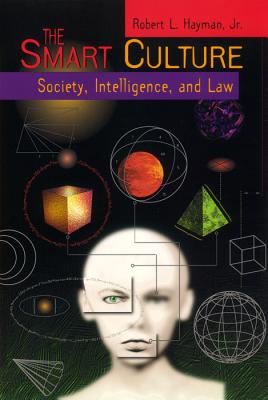
The Smart Culture: Society, Intelligence, and Law (Paperback or Softback)
Idioma: Inglés
Publicado por New York University Press 8/1/2000, 2000
ISBN 10: 0814735347 ISBN 13: 9780814735343
Librería: BargainBookStores, Grand Rapids, MI, Estados Unidos de America
Calificación del vendedor: 5 de 5 estrellas
EUR 45,09
Gastos de envío gratis
Se envía dentro de Estados Unidos de AmericaCantidad disponible: 5 disponibles
Añadir al carritoPaperback or Softback. Condición: New. The Smart Culture: Society, Intelligence, and Law. Book.
-
The Smart Culture: Society, Intelligence, and Law (eng)
Librería: Brook Bookstore On Demand, Napoli, NA, Italia
Calificación del vendedor: 5 de 5 estrellas
EUR 38,57
Envío por EUR 6,80
Se envía de Italia a Estados Unidos de AmericaCantidad disponible: Más de 20 disponibles
Añadir al carritoCondición: new.
-
The Smart Culture
Idioma: Inglés
Publicado por New York University Press, 2000
ISBN 10: 0814735347 ISBN 13: 9780814735343
Librería: Majestic Books, Hounslow, Reino Unido
Calificación del vendedor: 4 de 5 estrellas

EUR 44,21
Envío por EUR 7,59
Se envía de Reino Unido a Estados Unidos de AmericaCantidad disponible: 3 disponibles
Añadir al carritoCondición: New. pp. 414.
-
The Smart Culture: Society, Intelligence and Law (Critical America) (Critical America Series): 3
Idioma: Inglés
Publicado por New York University Press, 2000
ISBN 10: 0814735347 ISBN 13: 9780814735343
Librería: Kennys Bookshop and Art Galleries Ltd., Galway, GY, Irlanda
Calificación del vendedor: 5 de 5 estrellas
EUR 41,89
Envío por EUR 10,50
Se envía de Irlanda a Estados Unidos de AmericaCantidad disponible: Más de 20 disponibles
Añadir al carritoCondición: New. 2000. New Ed. Paperback. . . . . .
-
The Smart Culture: Society, Intelligence, and Law (Critical America, 3)
Librería: Ria Christie Collections, Uxbridge, Reino Unido
Calificación del vendedor: 5 de 5 estrellas
EUR 41,70
Envío por EUR 13,99
Se envía de Reino Unido a Estados Unidos de AmericaCantidad disponible: Más de 20 disponibles
Añadir al carritoCondición: New. In.
-
The Smart Culture: Society, Intelligence, and Law
Idioma: Inglés
Publicado por New York University Press, 2000
ISBN 10: 0814735347 ISBN 13: 9780814735343
Librería: THE SAINT BOOKSTORE, Southport, Reino Unido
Calificación del vendedor: 5 de 5 estrellas
EUR 39,36
Envío por EUR 19,40
Se envía de Reino Unido a Estados Unidos de AmericaCantidad disponible: Más de 20 disponibles
Añadir al carritoPaperback / softback. Condición: New. New copy - Usually dispatched within 4 working days.
-
The Smart Culture: Society, Intelligence and Law (Critical America) (Critical America Series): 3
Idioma: Inglés
Publicado por New York University Press, 2000
ISBN 10: 0814735347 ISBN 13: 9780814735343
Librería: Kennys Bookstore, Olney, MD, Estados Unidos de America
Calificación del vendedor: 5 de 5 estrellas
EUR 52,40
Envío por EUR 9,19
Se envía dentro de Estados Unidos de AmericaCantidad disponible: Más de 20 disponibles
Añadir al carritoCondición: New. 2000. New Ed. Paperback. . . . . . Books ship from the US and Ireland.
-
The Smart Culture
Idioma: Inglés
Publicado por New York University Press NYU Press, 2000
ISBN 10: 0814735347 ISBN 13: 9780814735343
Librería: Books Puddle, New York, NY, Estados Unidos de America
Calificación del vendedor: 4 de 5 estrellas
EUR 58,37
Envío por EUR 3,49
Se envía dentro de Estados Unidos de AmericaCantidad disponible: 3 disponibles
Añadir al carritoCondición: New. pp. 414.
-
The Smart Culture Society, Intelligence, and Law
Librería: Revaluation Books, Exeter, Reino Unido
Calificación del vendedor: 5 de 5 estrellas
EUR 62,33
Envío por EUR 14,60
Se envía de Reino Unido a Estados Unidos de AmericaCantidad disponible: 2 disponibles
Añadir al carritoPaperback. Condición: Brand New. 408 pages. 9.00x6.00x1.00 inches. In Stock.
-

The Smart Culture
Idioma: Inglés
Publicado por New York University Press, US, 2000
ISBN 10: 0814735347 ISBN 13: 9780814735343
Librería: Rarewaves USA United, OSWEGO, IL, Estados Unidos de America
Calificación del vendedor: 5 de 5 estrellas
EUR 44,14
Envío por EUR 43,77
Se envía dentro de Estados Unidos de AmericaCantidad disponible: Más de 20 disponibles
Añadir al carritoPaperback. Condición: New. What exactly is intelligence? Is it social achievement? Professional success? Is it common sense? Or the number on an IQ test? Interweaving engaging narratives with dramatic case studies, Robert L. Hayman, Jr., has written a history of intelligence that will forever change the way we think about who is smart and who is not. To give weight to his assertion that intelligence is not simply an inherent characteristic but rather one which reflects the interests and predispositions of those doing the measuring, Hayman traces numerous campaigns to classify human intelligence. His tour takes us through the early craniometric movement, eugenics, the development of the IQ, Spearman's "general" intelligence, and more recent works claiming a genetic basis for intelligence differences. What Hayman uncovers is the maddening irony of intelligence: that "scientific" efforts to reduce intelligence to a single, ordinal quantity have persisted--and at times captured our cultural imagination--not because of their scientific legitimacy, but because of their longstanding political appeal. The belief in a natural intellectual order was pervasive in "scientific" and "political" thought both at the founding of the Republic and throughout its nineteenth-century Reconstruction. And while we are today formally committed to the notion of equality under the law, our culture retains its central belief in the natural inequality of its members. Consequently, Hayman argues, the promise of a genuine equality can be realized only when the mythology of "intelligence" is debunked--only, that is, when we recognize the decisive role of culture in defining intelligence and creating intelligence differences. Only culture can give meaning to the statement that one person-- or one group--is smarter than another. And only culture can provide our motivation for saying it. With a keen wit and a sharp eye, Hayman highlights the inescapable contradictions that arise in a society committed both to liberty and to equality and traces how the resulting tensions manifest themselves in the ways we conceive of identity, community, and merit.
-
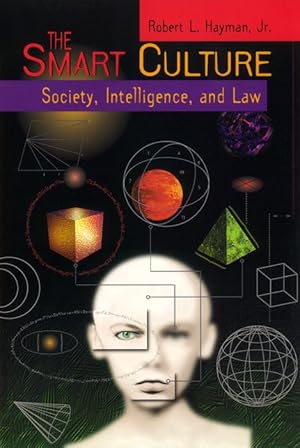
The Smart Culture: Society, Intelligence, and Law
Librería: moluna, Greven, Alemania
Calificación del vendedor: 5 de 5 estrellas
EUR 48,07
Envío por EUR 48,99
Se envía de Alemania a Estados Unidos de AmericaCantidad disponible: Más de 20 disponibles
Añadir al carritoKartoniert / Broschiert. Condición: New. Über den AutorRobert L. Hayman Jr.KlappentextWith a keen wit and a sharp eye, Robert J. Hayman highlights the inescapable contradictions that arise in a society committed to both liberty and to equality .
-

The Smart Culture | Society, Intelligence, and Law
Librería: preigu, Osnabrück, Alemania
Calificación del vendedor: 5 de 5 estrellas
EUR 36,55
Envío por EUR 70,00
Se envía de Alemania a Estados Unidos de AmericaCantidad disponible: 5 disponibles
Añadir al carritoTaschenbuch. Condición: Neu. The Smart Culture | Society, Intelligence, and Law | Robert L. Hayman Jr. | Taschenbuch | Einband - flex.(Paperback) | Englisch | 2000 | NYU Press - IPS | EAN 9780814735343 | Verantwortliche Person für die EU: Mare Nostrum Group B.V., Doelen 72, 4831 GR BREDA, NIEDERLANDE, gpsr[at]mare-nostrum[dot]co[dot]uk | Anbieter: preigu.
-
The Smart Culture Society, Intelligence, and Law
Librería: Revaluation Books, Exeter, Reino Unido
Calificación del vendedor: 5 de 5 estrellas
EUR 39,73
Envío por EUR 14,60
Se envía de Reino Unido a Estados Unidos de AmericaCantidad disponible: 2 disponibles
Añadir al carritoPaperback. Condición: Brand New. 408 pages. 9.00x6.00x1.00 inches. In Stock. This item is printed on demand.
-

The Smart Culture
Idioma: Inglés
Publicado por New York University Press Aug 2000, 2000
ISBN 10: 0814735347 ISBN 13: 9780814735343
Librería: BuchWeltWeit Ludwig Meier e.K., Bergisch Gladbach, Alemania
Calificación del vendedor: 5 de 5 estrellas
EUR 37,45
Envío por EUR 23,00
Se envía de Alemania a Estados Unidos de AmericaCantidad disponible: 2 disponibles
Añadir al carritoTaschenbuch. Condición: Neu. This item is printed on demand - it takes 3-4 days longer - Neuware -What exactly is intelligence Is it social achievement Professional success Is it common sense Or the number on an IQ test Interweaving engaging narratives with dramatic case studies, Robert L. Hayman, Jr., has written a history of intelligence that will forever change the way we think about who is smart and who is not. To give weight to his assertion that intelligence is not simply an inherent characteristic but rather one which reflects the interests and predispositions of those doing the measuring, Hayman traces numerous campaigns to classify human intelligence. His tour takes us through the early craniometric movement, eugenics, the development of the IQ, Spearman's 'general' intelligence, and more recent works claiming a genetic basis for intelligence differences. What Hayman uncovers is the maddening irony of intelligence: that 'scientific' efforts to reduce intelligence to a single, ordinal quantity have persisted--and at times captured our cultural imagination--not because of their scientific legitimacy, but because of their longstanding political appeal. The belief in a natural intellectual order was pervasive in 'scientific' and 'political' thought both at the founding of the Republic and throughout its nineteenth-century Reconstruction. And while we are today formally committed to the notion of equality under the law, our culture retains its central belief in the natural inequality of its members. Consequently, Hayman argues, the promise of a genuine equality can be realized only when the mythology of 'intelligence' is debunked--only, that is, when we recognize the decisive role of culture in defining intelligence and creating intelligence differences. Only culture can give meaning to the statement that one person-- or one group--is smarter than another. And only culture can provide our motivation for saying it. With a keen wit and a sharp eye, Hayman highlights the inescapable contradictions that arise in a society committed both to liberty and to equality and traces how the resulting tensions manifest themselves in the ways we conceive of identity, community, and merit. 414 pp. Englisch.
-
The Smart Culture: Society, Intelligence, and Law
Idioma: Inglés
Publicado por New York University Press, 2000
ISBN 10: 0814735347 ISBN 13: 9780814735343
Librería: THE SAINT BOOKSTORE, Southport, Reino Unido
Calificación del vendedor: 5 de 5 estrellas
EUR 46,70
Envío por EUR 19,40
Se envía de Reino Unido a Estados Unidos de AmericaCantidad disponible: Más de 20 disponibles
Añadir al carritoPaperback / softback. Condición: New. This item is printed on demand. New copy - Usually dispatched within 5-9 working days 586.
-

The Smart Culture : Society, Intelligence, and Law
Idioma: Inglés
Publicado por New York University Press, 2000
ISBN 10: 0814735347 ISBN 13: 9780814735343
Librería: AHA-BUCH GmbH, Einbeck, Alemania
Calificación del vendedor: 5 de 5 estrellas
EUR 43,18
Envío por EUR 62,72
Se envía de Alemania a Estados Unidos de AmericaCantidad disponible: 2 disponibles
Añadir al carritoTaschenbuch. Condición: Neu. nach der Bestellung gedruckt Neuware - Printed after ordering - What exactly is intelligence Is it social achievement Professional success Is it common sense Or the number on an IQ test Interweaving engaging narratives with dramatic case studies, Robert L. Hayman, Jr., has written a history of intelligence that will forever change the way we think about who is smart and who is not. To give weight to his assertion that intelligence is not simply an inherent characteristic but rather one which reflects the interests and predispositions of those doing the measuring, Hayman traces numerous campaigns to classify human intelligence. His tour takes us through the early craniometric movement, eugenics, the development of the IQ, Spearman's 'general' intelligence, and more recent works claiming a genetic basis for intelligence differences. What Hayman uncovers is the maddening irony of intelligence: that 'scientific' efforts to reduce intelligence to a single, ordinal quantity have persisted--and at times captured our cultural imagination--not because of their scientific legitimacy, but because of their longstanding political appeal. The belief in a natural intellectual order was pervasive in 'scientific' and 'political' thought both at the founding of the Republic and throughout its nineteenth-century Reconstruction. And while we are today formally committed to the notion of equality under the law, our culture retains its central belief in the natural inequality of its members. Consequently, Hayman argues, the promise of a genuine equality can be realized only when the mythology of 'intelligence' is debunked--only, that is, when we recognize the decisive role of culture in defining intelligence and creating intelligence differences. Only culture can give meaning to the statement that one person-- or one group--is smarter than another. And only culture can provide our motivation for saying it. With a keen wit and a sharp eye, Hayman highlights the inescapable contradictions that arise in a society committed both to liberty and to equality and traces how the resulting tensions manifest themselves in the ways we conceive of identity, community, and merit.

