

Importe total (1 artículo artículos):
Destino del pedido:

9780804775434 - The Present Alone Is Our Happiness, Second Edition: Conversations with Jeannie Carlier and Arnold I. Davidson (Cultural Memory in the Present) de Hadot, Pierre (33 resultados)
Ir a los resultados principales
Filtros de búsqueda
Tipo de artículo
- Todos los tipos de productos
- Libros (33)
- Revistas y publicaciones (No hay ningún otro resultado que coincida con este filtro.)
- Cómics (No hay ningún otro resultado que coincida con este filtro.)
- Partituras (No hay ningún otro resultado que coincida con este filtro.)
- Arte, grabados y pósters (No hay ningún otro resultado que coincida con este filtro.)
- Fotografías (No hay ningún otro resultado que coincida con este filtro.)
- Mapas (No hay ningún otro resultado que coincida con este filtro.)
- Manuscritos y coleccionismo de papel (No hay ningún otro resultado que coincida con este filtro.)
Condición Más información
- Nuevo (25)
- Como nuevo, Excelente o Muy bueno (4)
- Bueno o Aceptable (3)
- Regular o Pobre (No hay ningún otro resultado que coincida con este filtro.)
- Tal como se indica (1)
Encuadernación
- Todas
- Tapa dura (No hay ningún otro resultado que coincida con este filtro.)
- Tapa blanda (33)
Más atributos
- Primera edición (1)
- Firmado (No hay ningún otro resultado que coincida con este filtro.)
- Sobrecubierta (No hay ningún otro resultado que coincida con este filtro.)
- Con imágenes (14)
- No impresión bajo demanda (31)
Idioma (1)
Gastos de envío gratis
Ubicación del vendedor
Valoración de los vendedores
-
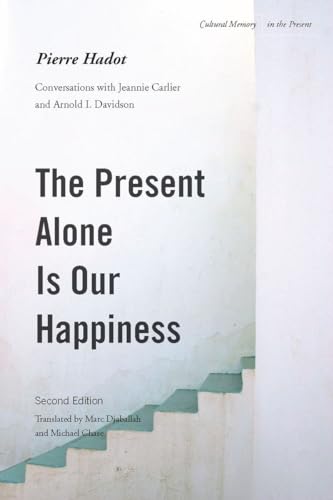
The Present Alone is Our Happiness, Second Edition: Conversations with Jeannie Carlier and Arnold I. Davidson (Cultural Memory in the Present)
Libro 153 de 213: Cultural Memory in the PresentIdioma: Inglés
Publicado por Stanford University Press, 2011
ISBN 10: 0804775435 ISBN 13: 9780804775434
Librería: World of Books (was SecondSale), Montgomery, IL, Estados Unidos de America
Calificación del vendedor: 5 de 5 estrellas

EUR 13,41
Gastos de envío gratis
Se envía dentro de Estados Unidos de AmericaCantidad disponible: 1 disponibles
Añadir al carritoCondición: Good. Item in good condition. Textbooks may not include supplemental items i.e. CDs, access codes etc.
-
The Present Alone is Our Happiness, Second Edition: Conversations with Jeannie Carlier and Arnold I. Davidson (Cultural Memory in the Present)
Libro 153 de 213: Cultural Memory in the PresentIdioma: Inglés
Publicado por Stanford University Press, 2011
ISBN 10: 0804775435 ISBN 13: 9780804775434
Librería: Roundabout Books, Greenfield, MA, Estados Unidos de America
Miembro de asociación: SNEAB
Calificación del vendedor: 4 de 5 estrellas

EUR 13,43
Gastos de envío gratis
Se envía dentro de Estados Unidos de AmericaCantidad disponible: 1 disponibles
Añadir al carritopaperback. Condición: Near Fine. Excellent, unmarked copy with little wear and tight binding. We ship in recyclable American-made mailers. 100% money-back guarantee on all orders.
-
Present Alone Is Our Happiness : Conversations With Jeannie Carlier and Arnold I. Davidson
Libro 153 de 213: Cultural Memory in the PresentIdioma: Inglés
Publicado por Stanford University Press, 2011
ISBN 10: 0804775435 ISBN 13: 9780804775434
Librería: GreatBookPrices, Columbia, MD, Estados Unidos de America
Calificación del vendedor: 5 de 5 estrellas
EUR 22,57
Envío por EUR 2,30
Se envía dentro de Estados Unidos de AmericaCantidad disponible: Más de 20 disponibles
Añadir al carritoCondición: New.
-

The Present Alone Is Our Happiness, Second Edition
Libro 153 de 213: Cultural Memory in the PresentIdioma: Inglés
Publicado por Stanford University Press, US, 2011
ISBN 10: 0804775435 ISBN 13: 9780804775434
Librería: Rarewaves USA, OSWEGO, IL, Estados Unidos de America
Calificación del vendedor: 5 de 5 estrellas
EUR 24,95
Gastos de envío gratis
Se envía dentro de Estados Unidos de AmericaCantidad disponible: Más de 20 disponibles
Añadir al carritoPaperback. Condición: New. Second Edition. One of the most influential historians of ancient philosophy of the past half-century, Pierre Hadot was adept at using ancient philosophers to illuminate the relevance of their ideas to contemporary life. This new edition of The Present Alone is Our Happiness, which has been significantly revised and expanded to include two previously untranslated essays, is an ideal introduction to some of Hadot's more scholarly work. In it, we discover that to be an Epicurean is not merely to think like one; it is to adopt a way of living where limiting desires is the condition for happiness. Being an Aristotelian, similarly, is to choose a life that involves contemplation, and being a Cynic is to follow Diogenes in his refusal of quotidian convention and the mentality of ordinary people. If so many ancient philosophers founded schools, Hadot explains, it was precisely because they were proposing how to live life on a daily basis. We learn here that the history of philosophy has been something more than just that of a discourse. The founding texts of Greek philosophy, after all, were notes taken from oral exercises undertaken in concrete circumstances and contexts, most often a dialogue between students and specific interlocutors who meant to shed light on their students' real existence. The immense contribution of this book, which also traces Hadot's own personal itinerary in a touching manner, is to remind us, through direct language and numerous examples, what the theoretical aspect of philosophy often masks: its vital and existential dimensions.
-
Present Alone Is Our Happiness : Conversations With Jeannie Carlier and Arnold I. Davidson
Libro 153 de 213: Cultural Memory in the PresentIdioma: Inglés
Publicado por Stanford University Press, 2011
ISBN 10: 0804775435 ISBN 13: 9780804775434
Librería: GreatBookPrices, Columbia, MD, Estados Unidos de America
Calificación del vendedor: 5 de 5 estrellas
EUR 23,10
Envío por EUR 2,30
Se envía dentro de Estados Unidos de AmericaCantidad disponible: Más de 20 disponibles
Añadir al carritoCondición: As New. Unread book in perfect condition.
-
The Present Alone is Our Happiness; Conversations with Jeannie Carlier and Arnold I. Davidson
Libro 153 de 213: Cultural Memory in the PresentIdioma: Inglés
Publicado por Stanford University Press, 2011, 2011
ISBN 10: 0804775435 ISBN 13: 9780804775434
Librería: Books on the Web, Winnipeg, MB, Canada
Calificación del vendedor: 5 de 5 estrellas
Original o primera edición
EUR 12,57
Envío por EUR 13,08
Se envía de Canada a Estados Unidos de AmericaCantidad disponible: 1 disponibles
Añadir al carritoAs new! Paper bound, first printing of the second edition, xxi + Pp207. Includes references and short bibliography of Cultural Memory in the Present. Tight and unmarked - a fine copy. 345 grams. We welcome all reasonable offers on our books and also offer local curbside pick-up. All books in stock and available for immediate shipment from Winnipeg, Manitoba.
-
The Present Alone Is Our Happiness, Second Editi - Conversations with Jeannie Carlier and Arnold I. Davidson
Libro 153 de 213: Cultural Memory in the PresentIdioma: Inglés
Publicado por MK - Stanford University Press, 2011
ISBN 10: 0804775435 ISBN 13: 9780804775434
Librería: PBShop.store UK, Fairford, GLOS, Reino Unido
Calificación del vendedor: 4 de 5 estrellas
EUR 22,88
Envío por EUR 4,80
Se envía de Reino Unido a Estados Unidos de AmericaCantidad disponible: 15 disponibles
Añadir al carritoPAP. Condición: New. New Book. Shipped from UK. Established seller since 2000.
-

The Present Alone Is Our Happiness, Second Edition
Libro 153 de 213: Cultural Memory in the PresentIdioma: Inglés
Publicado por Stanford University Press, US, 2011
ISBN 10: 0804775435 ISBN 13: 9780804775434
Librería: Rarewaves.com USA, London, LONDO, Reino Unido
Calificación del vendedor: 5 de 5 estrellas
EUR 29,92
Gastos de envío gratis
Se envía de Reino Unido a Estados Unidos de AmericaCantidad disponible: 1 disponibles
Añadir al carritoPaperback. Condición: New. Second Edition. One of the most influential historians of ancient philosophy of the past half-century, Pierre Hadot was adept at using ancient philosophers to illuminate the relevance of their ideas to contemporary life. This new edition of The Present Alone is Our Happiness, which has been significantly revised and expanded to include two previously untranslated essays, is an ideal introduction to some of Hadot's more scholarly work. In it, we discover that to be an Epicurean is not merely to think like one; it is to adopt a way of living where limiting desires is the condition for happiness. Being an Aristotelian, similarly, is to choose a life that involves contemplation, and being a Cynic is to follow Diogenes in his refusal of quotidian convention and the mentality of ordinary people. If so many ancient philosophers founded schools, Hadot explains, it was precisely because they were proposing how to live life on a daily basis. We learn here that the history of philosophy has been something more than just that of a discourse. The founding texts of Greek philosophy, after all, were notes taken from oral exercises undertaken in concrete circumstances and contexts, most often a dialogue between students and specific interlocutors who meant to shed light on their students' real existence. The immense contribution of this book, which also traces Hadot's own personal itinerary in a touching manner, is to remind us, through direct language and numerous examples, what the theoretical aspect of philosophy often masks: its vital and existential dimensions.
-
The Present Alone Is Our Happiness, Second Edition (Paperback)
Libro 153 de 213: Cultural Memory in the PresentIdioma: Inglés
Publicado por Stanford University Press, Palo Alto, 2011
ISBN 10: 0804775435 ISBN 13: 9780804775434
Librería: Grand Eagle Retail, Bensenville, IL, Estados Unidos de America
Calificación del vendedor: 5 de 5 estrellas
EUR 32,93
Gastos de envío gratis
Se envía dentro de Estados Unidos de AmericaCantidad disponible: 1 disponibles
Añadir al carritoPaperback. Condición: new. Paperback. One of the most influential historians of ancient philosophy of the past half-century, Pierre Hadot was adept at using ancient philosophers to illuminate the relevance of their ideas to contemporary life. This new edition of The Present Alone is Our Happiness, which has been significantly revised and expanded to include two previously untranslated essays, is an ideal introduction to some of Hadot's more scholarly work. In it, we discover that to be an Epicurean is not merely to think like one; it is to adopt a way of living where limiting desires is the condition for happiness. Being an Aristotelian, similarly, is to choose a life that involves contemplation, and being a Cynic is to follow Diogenes in his refusal of quotidian convention and the mentality of ordinary people. If so many ancient philosophers founded schools, Hadot explains, it was precisely because they were proposing how to live life on a daily basis. We learn here that the history of philosophy has been something more than just that of a discourse. The founding texts of Greek philosophy, after all, were notes taken from oral exercises undertaken in concrete circumstances and contexts, most often a dialogue between students and specific interlocutors who meant to shed light on their students' real existence. The immense contribution of this book, which also traces Hadot's own personal itinerary in a touching manner, is to remind us, through direct language and numerous examples, what the theoretical aspect of philosophy often masks: its vital and existential dimensions. In this book of brilliantly erudite and precise discussions, which also serves as an introduction to Pierre Hadot's more scholarly works, Hadot explains that for the Ancients, philosophy was not reducible to the building of a theoretical system: it was above all a choice about how to live one's life. Shipping may be from multiple locations in the US or from the UK, depending on stock availability.
-

The Present Alone Is Our Happiness, Second Edition: Conversations with Jeannie Carlier and Arnold I. Davidson (Paperback or Softback)
Libro 153 de 213: Cultural Memory in the PresentIdioma: Inglés
Publicado por Stanford University Press 2/23/2011, 2011
ISBN 10: 0804775435 ISBN 13: 9780804775434
Librería: BargainBookStores, Grand Rapids, MI, Estados Unidos de America
Calificación del vendedor: 5 de 5 estrellas
EUR 33,47
Gastos de envío gratis
Se envía dentro de Estados Unidos de AmericaCantidad disponible: 5 disponibles
Añadir al carritoPaperback or Softback. Condición: New. The Present Alone Is Our Happiness, Second Edition: Conversations with Jeannie Carlier and Arnold I. Davidson. Book.
-
The Present Alone Is Our Happiness, Second Editi - Conversations with Jeannie Carlier and Arnold I. Davidson (eng)
Libro 153 de 213: Cultural Memory in the PresentIdioma: Inglés
Publicado por Stanford University Press, 2011
ISBN 10: 0804775435 ISBN 13: 9780804775434
Librería: Brook Bookstore On Demand, Napoli, NA, Italia
Calificación del vendedor: 4 de 5 estrellas
EUR 27,76
Envío por EUR 5,50
Se envía de Italia a Estados Unidos de AmericaCantidad disponible: Más de 20 disponibles
Añadir al carritoCondición: new.
-
The Present Alone is Our Happiness
Libro 153 de 213: Cultural Memory in the PresentIdioma: Inglés
Publicado por Stanford University Press, 2011
ISBN 10: 0804775435 ISBN 13: 9780804775434
Librería: Majestic Books, Hounslow, Reino Unido
Calificación del vendedor: 4 de 5 estrellas
EUR 30,30
Envío por EUR 7,50
Se envía de Reino Unido a Estados Unidos de AmericaCantidad disponible: 3 disponibles
Añadir al carritoCondición: New. pp. 240.
-
The Present Alone is Our Happiness, Second Edition: Conversations with Jeannie Carlier and Arnold I. Davidson
Libro 153 de 213: Cultural Memory in the PresentIdioma: Inglés
Publicado por Stanford University Press, 2011
ISBN 10: 0804775435 ISBN 13: 9780804775434
Librería: THE SAINT BOOKSTORE, Southport, Reino Unido
Calificación del vendedor: 5 de 5 estrellas
EUR 22,80
Envío por EUR 16,71
Se envía de Reino Unido a Estados Unidos de AmericaCantidad disponible: Más de 20 disponibles
Añadir al carritoPaperback / softback. Condición: New. New copy - Usually dispatched within 4 working days.
-
The Present Alone is Our Happiness, Second Edition: Conversations with Jeannie Carlier and Arnold I. Davidson (Cultural Memory in the Present)
Libro 153 de 213: Cultural Memory in the PresentIdioma: Inglés
Publicado por Stanford University Press, 2011
ISBN 10: 0804775435 ISBN 13: 9780804775434
Librería: Chiron Media, Wallingford, Reino Unido
Calificación del vendedor: 5 de 5 estrellas
EUR 22,63
Envío por EUR 17,88
Se envía de Reino Unido a Estados Unidos de AmericaCantidad disponible: 2 disponibles
Añadir al carritopaperback. Condición: New.
-
The Present Alone is Our Happiness, Second Edition: Conversations with Jeannie Carlier and Arnold I. Davidson (Cultural Memory in the Present)
Libro 153 de 213: Cultural Memory in the PresentIdioma: Inglés
Publicado por Stanford University Press, 2011
ISBN 10: 0804775435 ISBN 13: 9780804775434
Librería: Ria Christie Collections, Uxbridge, Reino Unido
Calificación del vendedor: 5 de 5 estrellas
EUR 27,34
Envío por EUR 13,83
Se envía de Reino Unido a Estados Unidos de AmericaCantidad disponible: 2 disponibles
Añadir al carritoCondición: New. In.
-
The Present Alone is Our Happiness, Second Edition: Conversations with Jeannie Carlier and Arnold I. Davidson
Libro 153 de 213: Cultural Memory in the PresentIdioma: Inglés
Publicado por Stanford University Press, 2011
ISBN 10: 0804775435 ISBN 13: 9780804775434
Librería: Kennys Bookshop and Art Galleries Ltd., Galway, GY, Irlanda
Calificación del vendedor: 5 de 5 estrellas
EUR 29,99
Envío por EUR 10,50
Se envía de Irlanda a Estados Unidos de AmericaCantidad disponible: Más de 20 disponibles
Añadir al carritoCondición: New. In this book of brilliantly erudite and precise discussions, which also serves as an introduction to Pierre Hadot's more scholarly works, Hadot explains that for the Ancients, philosophy was not reducible to the building of a theoretical system: it was above all a choice about how to live one's life. Translator(s): Djaballah, Marc; Chase, Michael. Series: Cultural Memory in the Present. Num Pages: 240 pages. BIC Classification: HP. Category: (P) Professional & Vocational. Dimension: 5817 x 3887 x 16. Weight in Grams: 336. . 2011. 2nd Revised ed. Paperback. . . . .
-
The Present Alone is Our Happiness
Libro 153 de 213: Cultural Memory in the PresentIdioma: Inglés
Publicado por Stanford University Press, 2011
ISBN 10: 0804775435 ISBN 13: 9780804775434
Librería: Books Puddle, New York, NY, Estados Unidos de America
Calificación del vendedor: 4 de 5 estrellas
EUR 39,57
Envío por EUR 3,48
Se envía dentro de Estados Unidos de AmericaCantidad disponible: 3 disponibles
Añadir al carritoCondición: New. pp. 240 2nd Edition.
-
The Present Alone is Our Happiness, Second Editi Conversations with Jeannie Carlier and Arnold I. Davidson
Libro 153 de 213: Cultural Memory in the PresentLibrería: Revaluation Books, Exeter, Reino Unido
Calificación del vendedor: 5 de 5 estrellas
EUR 31,11
Envío por EUR 11,54
Se envía de Reino Unido a Estados Unidos de AmericaCantidad disponible: 2 disponibles
Añadir al carritoPaperback. Condición: Brand New. 2nd edition. 248 pages. 8.90x6.00x0.70 inches. In Stock.
-
Present Alone Is Our Happiness : Conversations With Jeannie Carlier and Arnold I. Davidson
Libro 153 de 213: Cultural Memory in the PresentIdioma: Inglés
Publicado por Stanford University Press, 2011
ISBN 10: 0804775435 ISBN 13: 9780804775434
Librería: GreatBookPricesUK, Woodford Green, Reino Unido
Calificación del vendedor: 5 de 5 estrellas
EUR 25,58
Envío por EUR 17,31
Se envía de Reino Unido a Estados Unidos de AmericaCantidad disponible: 2 disponibles
Añadir al carritoCondición: New.
-
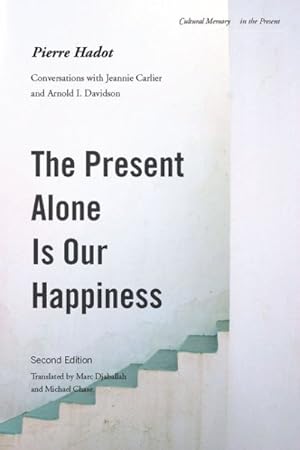
Present Alone Is Our Happiness : Conversations With Jeannie Carlier and Arnold I. Davidson
Libro 153 de 213: Cultural Memory in the PresentIdioma: Inglés
Publicado por Stanford University Press, 2011
ISBN 10: 0804775435 ISBN 13: 9780804775434
Librería: GreatBookPricesUK, Woodford Green, Reino Unido
Calificación del vendedor: 5 de 5 estrellas
EUR 28,10
Envío por EUR 17,31
Se envía de Reino Unido a Estados Unidos de AmericaCantidad disponible: Más de 20 disponibles
Añadir al carritoCondición: As New. Unread book in perfect condition.
-
The Present Alone is Our Happiness, Second Edition: Conversations with Jeannie Carlier and Arnold I. Davidson
Libro 153 de 213: Cultural Memory in the PresentIdioma: Inglés
Publicado por Stanford University Press, 2011
ISBN 10: 0804775435 ISBN 13: 9780804775434
Librería: Kennys Bookstore, Olney, MD, Estados Unidos de America
Calificación del vendedor: 5 de 5 estrellas
EUR 37,14
Envío por EUR 9,16
Se envía dentro de Estados Unidos de AmericaCantidad disponible: Más de 20 disponibles
Añadir al carritoCondición: New. In this book of brilliantly erudite and precise discussions, which also serves as an introduction to Pierre Hadot's more scholarly works, Hadot explains that for the Ancients, philosophy was not reducible to the building of a theoretical system: it was above all a choice about how to live one's life. Translator(s): Djaballah, Marc; Chase, Michael. Series: Cultural Memory in the Present. Num Pages: 240 pages. BIC Classification: HP. Category: (P) Professional & Vocational. Dimension: 5817 x 3887 x 16. Weight in Grams: 336. . 2011. 2nd Revised ed. Paperback. . . . . Books ship from the US and Ireland.
-
The Present Alone is Our Happiness, Second Edition: Conversations with Jeannie Carlier and Arnold I. Davidson (Cultural Memory in the Present)
Libro 153 de 213: Cultural Memory in the PresentIdioma: Inglés
Publicado por Stanford University Press, 2011
ISBN 10: 0804775435 ISBN 13: 9780804775434
Librería: MostlyAcademic, Berrima, NSW, Australia
Calificación del vendedor: 4 de 5 estrellas
EUR 15,68
Envío por EUR 30,47
Se envía de Australia a Estados Unidos de AmericaCantidad disponible: 1 disponibles
Añadir al carritoSoft cover. Condición: As New. In this book of brilliantly erudite and precise discussions, which also serves as an introduction to Pierre Hadot's more scholarly works, Hadot explains that for the Ancients, philosophy was not reducible to the building of a theoretical system: it was above all a choice about how to live one's life.
-
The Present Alone is Our Happiness: Conversations with Jeannie Carlier and Arnold I. Davidson (Cultural Memory in the Present)
Libro 153 de 213: Cultural Memory in the PresentIdioma: Inglés
Publicado por Stanford University Press, United Kingdom, 2011
ISBN 10: 0804775435 ISBN 13: 9780804775434
Librería: Pendleburys - the bookshop in the hills, Llanwrda, Reino Unido
Calificación del vendedor: 5 de 5 estrellas
EUR 34,30
Envío por EUR 13,27
Se envía de Reino Unido a Estados Unidos de AmericaCantidad disponible: 1 disponibles
Añadir al carritoSoft cover. Condición: Very Good. No Jacket. 2nd Edition. paperback, a very good tightly bound copy, address label of a previous owner to the verso of the front cover, the text is clean and unmarked, xxi + 207pp.
-

The Present Alone Is Our Happiness, Second Edition
Libro 153 de 213: Cultural Memory in the PresentIdioma: Inglés
Publicado por Stanford University Press, US, 2011
ISBN 10: 0804775435 ISBN 13: 9780804775434
Librería: Rarewaves USA United, OSWEGO, IL, Estados Unidos de America
Calificación del vendedor: 5 de 5 estrellas
EUR 26,15
Envío por EUR 43,60
Se envía dentro de Estados Unidos de AmericaCantidad disponible: Más de 20 disponibles
Añadir al carritoPaperback. Condición: New. Second Edition. One of the most influential historians of ancient philosophy of the past half-century, Pierre Hadot was adept at using ancient philosophers to illuminate the relevance of their ideas to contemporary life. This new edition of The Present Alone is Our Happiness, which has been significantly revised and expanded to include two previously untranslated essays, is an ideal introduction to some of Hadot's more scholarly work. In it, we discover that to be an Epicurean is not merely to think like one; it is to adopt a way of living where limiting desires is the condition for happiness. Being an Aristotelian, similarly, is to choose a life that involves contemplation, and being a Cynic is to follow Diogenes in his refusal of quotidian convention and the mentality of ordinary people. If so many ancient philosophers founded schools, Hadot explains, it was precisely because they were proposing how to live life on a daily basis. We learn here that the history of philosophy has been something more than just that of a discourse. The founding texts of Greek philosophy, after all, were notes taken from oral exercises undertaken in concrete circumstances and contexts, most often a dialogue between students and specific interlocutors who meant to shed light on their students' real existence. The immense contribution of this book, which also traces Hadot's own personal itinerary in a touching manner, is to remind us, through direct language and numerous examples, what the theoretical aspect of philosophy often masks: its vital and existential dimensions.
-
THE PRESENT ALONE IS OUR HAPPINESS
Libro 153 de 213: Cultural Memory in the PresentIdioma: Inglés
Publicado por Stanford University Press, 2011
ISBN 10: 0804775435 ISBN 13: 9780804775434
Librería: Speedyhen, Hertfordshire, Reino Unido
Calificación del vendedor: 5 de 5 estrellas
EUR 22,73
Envío por EUR 47,32
Se envía de Reino Unido a Estados Unidos de AmericaCantidad disponible: 2 disponibles
Añadir al carritoCondición: NEW.
-

The Present Alone is Our Happiness _ Second Edition
Libro 153 de 213: Cultural Memory in the PresentIdioma: Inglés
Publicado por Stanford University Press, Stanford, California, 2011
ISBN 10: 0804775435 ISBN 13: 9780804775434
Librería: San Francisco Book Company, Paris, Francia
Calificación del vendedor: 5 de 5 estrellas
EUR 30,00
Envío por EUR 45,00
Se envía de Francia a Estados Unidos de AmericaCantidad disponible: 1 disponibles
Añadir al carritoPaperback. Condición: Very good. Paperback Octavo. wraps, 207 pp Standard shipping (no tracking or insurance) / Priority (with tracking) / Custom quote for large or heavy orders.
-

The Present Alone Is Our Happiness, Second Edition: Conversations with Jeannie Carlier and Arnold I. Davidson
Libro 153 de 213: Cultural Memory in the PresentLibrería: moluna, Greven, Alemania
Calificación del vendedor: 4 de 5 estrellas
EUR 29,87
Envío por EUR 48,99
Se envía de Alemania a Estados Unidos de AmericaCantidad disponible: 2 disponibles
Añadir al carritoCondición: New. In this book of brilliantly erudite and precise discussions, which also serves as an introduction to Pierre Hadot s more scholarly works, Hadot explains that for the Ancients, philosophy was not reducible to the building of a theoretical system: it was abov.
-
The Present Alone Is Our Happiness, Second Edition (Paperback)
Libro 153 de 213: Cultural Memory in the PresentIdioma: Inglés
Publicado por Stanford University Press, Palo Alto, 2011
ISBN 10: 0804775435 ISBN 13: 9780804775434
Librería: AussieBookSeller, Truganina, VIC, Australia
Calificación del vendedor: 5 de 5 estrellas
EUR 52,37
Envío por EUR 32,26
Se envía de Australia a Estados Unidos de AmericaCantidad disponible: 1 disponibles
Añadir al carritoPaperback. Condición: new. Paperback. One of the most influential historians of ancient philosophy of the past half-century, Pierre Hadot was adept at using ancient philosophers to illuminate the relevance of their ideas to contemporary life. This new edition of The Present Alone is Our Happiness, which has been significantly revised and expanded to include two previously untranslated essays, is an ideal introduction to some of Hadot's more scholarly work. In it, we discover that to be an Epicurean is not merely to think like one; it is to adopt a way of living where limiting desires is the condition for happiness. Being an Aristotelian, similarly, is to choose a life that involves contemplation, and being a Cynic is to follow Diogenes in his refusal of quotidian convention and the mentality of ordinary people. If so many ancient philosophers founded schools, Hadot explains, it was precisely because they were proposing how to live life on a daily basis. We learn here that the history of philosophy has been something more than just that of a discourse. The founding texts of Greek philosophy, after all, were notes taken from oral exercises undertaken in concrete circumstances and contexts, most often a dialogue between students and specific interlocutors who meant to shed light on their students' real existence. The immense contribution of this book, which also traces Hadot's own personal itinerary in a touching manner, is to remind us, through direct language and numerous examples, what the theoretical aspect of philosophy often masks: its vital and existential dimensions. In this book of brilliantly erudite and precise discussions, which also serves as an introduction to Pierre Hadot's more scholarly works, Hadot explains that for the Ancients, philosophy was not reducible to the building of a theoretical system: it was above all a choice about how to live one's life. Shipping may be from our Sydney, NSW warehouse or from our UK or US warehouse, depending on stock availability.
-

The Present Alone Is Our Happiness, Second Edition : Conversations with Jeannie Carlier and Arnold I. Davidson
Libro 153 de 213: Cultural Memory in the PresentIdioma: Inglés
Publicado por Stanford University Press Feb 2011, 2011
ISBN 10: 0804775435 ISBN 13: 9780804775434
Librería: AHA-BUCH GmbH, Einbeck, Alemania
Calificación del vendedor: 5 de 5 estrellas
EUR 28,27
Envío por EUR 61,72
Se envía de Alemania a Estados Unidos de AmericaCantidad disponible: 1 disponibles
Añadir al carritoTaschenbuch. Condición: Neu. Neuware - In this book of brilliantly erudite and precise discussions, which also serves as an introduction to Pierre Hadot's more scholarly works, Hadot explains that for the Ancients, philosophy was not reducible to the building of a theoretical system: it was above all a choice about how to live one's life.
-

The Present Alone Is Our Happiness, Second Edition
Libro 153 de 213: Cultural Memory in the PresentIdioma: Inglés
Publicado por Stanford University Press, US, 2011
ISBN 10: 0804775435 ISBN 13: 9780804775434
Librería: Rarewaves.com UK, London, Reino Unido
Calificación del vendedor: 5 de 5 estrellas
EUR 26,53
Envío por EUR 75,01
Se envía de Reino Unido a Estados Unidos de AmericaCantidad disponible: 1 disponibles
Añadir al carritoPaperback. Condición: New. Second Edition. One of the most influential historians of ancient philosophy of the past half-century, Pierre Hadot was adept at using ancient philosophers to illuminate the relevance of their ideas to contemporary life. This new edition of The Present Alone is Our Happiness, which has been significantly revised and expanded to include two previously untranslated essays, is an ideal introduction to some of Hadot's more scholarly work. In it, we discover that to be an Epicurean is not merely to think like one; it is to adopt a way of living where limiting desires is the condition for happiness. Being an Aristotelian, similarly, is to choose a life that involves contemplation, and being a Cynic is to follow Diogenes in his refusal of quotidian convention and the mentality of ordinary people. If so many ancient philosophers founded schools, Hadot explains, it was precisely because they were proposing how to live life on a daily basis. We learn here that the history of philosophy has been something more than just that of a discourse. The founding texts of Greek philosophy, after all, were notes taken from oral exercises undertaken in concrete circumstances and contexts, most often a dialogue between students and specific interlocutors who meant to shed light on their students' real existence. The immense contribution of this book, which also traces Hadot's own personal itinerary in a touching manner, is to remind us, through direct language and numerous examples, what the theoretical aspect of philosophy often masks: its vital and existential dimensions.


