

Importe total (1 artículo artículos):
Destino del pedido:

9780750969796 - Dover in the Second World War de Sutton, Derek (11 resultados)
Ir a los resultados principales
Filtros de búsqueda
Tipo de artículo
- Todos los tipos de productos
- Libros (11)
- Revistas y publicaciones (No hay ningún otro resultado que coincida con este filtro.)
- Cómics (No hay ningún otro resultado que coincida con este filtro.)
- Partituras (No hay ningún otro resultado que coincida con este filtro.)
- Arte, grabados y pósters (No hay ningún otro resultado que coincida con este filtro.)
- Fotografías (No hay ningún otro resultado que coincida con este filtro.)
- Mapas (No hay ningún otro resultado que coincida con este filtro.)
- Manuscritos y coleccionismo de papel (No hay ningún otro resultado que coincida con este filtro.)
Condición Más información
- Nuevo (11)
- Como nuevo, Excelente o Muy bueno (No hay ningún otro resultado que coincida con este filtro.)
- Bueno o Aceptable (No hay ningún otro resultado que coincida con este filtro.)
- Regular o Pobre (No hay ningún otro resultado que coincida con este filtro.)
- Tal como se indica (No hay ningún otro resultado que coincida con este filtro.)
Encuadernación
- Todas
- Tapa dura (No hay ningún otro resultado que coincida con este filtro.)
- Tapa blanda (11)
Más atributos
- Primera edición (No hay ningún otro resultado que coincida con este filtro.)
- Firmado (No hay ningún otro resultado que coincida con este filtro.)
- Sobrecubierta (No hay ningún otro resultado que coincida con este filtro.)
- Con imágenes (4)
- No impresión bajo demanda (11)
Idioma (1)
Precio
- Cualquier precio
- Menos de EUR 20
- EUR 20 a EUR 45
- Más de EUR 45 (No hay ningún otro resultado que coincida con este filtro.)
Gastos de envío gratis
Ubicación del vendedor
Valoración de los vendedores
-

Dover in the Second World War
Idioma: Inglés
Publicado por The History Press 2016-06-02, 2016
ISBN 10: 0750969792 ISBN 13: 9780750969796
Librería: Chiron Media, Wallingford, Reino Unido
Calificación del vendedor: 5 de 5 estrellas

EUR 15,08
Envío por EUR 17,85
Se envía de Reino Unido a Estados Unidos de AmericaCantidad disponible: 1 disponibles
Añadir al carritoPaperback. Condición: New.
-
Dover In The Second World War
Librería: Revaluation Books, Exeter, Reino Unido
Calificación del vendedor: 5 de 5 estrellas
EUR 21,44
Envío por EUR 11,52
Se envía de Reino Unido a Estados Unidos de AmericaCantidad disponible: 1 disponibles
Añadir al carritoPaperback. Condición: Brand New. 150 pages. 9.75x6.75x0.50 inches. In Stock.
-
Dover in the Second World War
Librería: Kennys Bookshop and Art Galleries Ltd., Galway, GY, Irlanda
Calificación del vendedor: 5 de 5 estrellas
EUR 22,51
Envío por EUR 10,50
Se envía de Irlanda a Estados Unidos de AmericaCantidad disponible: 1 disponibles
Añadir al carritoCondición: New. Num Pages: 160 pages, 150 black & white illustrations. BIC Classification: 1DBKESK; HBWQ; WQH. Category: (G) General (US: Trade). Dimension: 173 x 248 x 16. Weight in Grams: 422. . 2016. Paperback. . . . .
-

Dover in the Second World War
Idioma: Inglés
Publicado por The History Press Ltd, GB, 2016
ISBN 10: 0750969792 ISBN 13: 9780750969796
Librería: Rarewaves.com USA, London, LONDO, Reino Unido
Calificación del vendedor: 5 de 5 estrellas
EUR 34,16
Gastos de envío gratis
Se envía de Reino Unido a Estados Unidos de AmericaCantidad disponible: 1 disponibles
Añadir al carritoPaperback. Condición: New. This book tells in detail what it was like to live in an English town constantly under siege from enemy guns in the Second World War. Many towns in Britain suffered from enemy action during the 1939-45 war but none endured the almost daily explosions of shells fired from huge German guns on the French coast, some 21 miles away. Not only that for there were regular bombing raids while Luftwaffe pilots machine gunned people in the streets. Many of those who lived in Dover during the bombing and shelling are no longer with us but the authors have captured the memories of more than a score of survivors, some of whom have since died.This fully illustrated book reveals how the military authorities planned to demolish homes on the seafront to provide clear lines of fire to cut down any invaders coming ashore at the port. And how a scheme was developed to evacuate thousands from the depleted population in trainloads of 800 at a time. Those who remained were to be herded into deep shelters in the cliffs and chalk hills so that the defending troops in the ancient Dover Castle and the Napoleonic fortifications on the Western Heights could pour firepower down into the centre of the town. In early 1939 the busy ferry port of Dover had a population of more than 40,000 but with the enemy 21 miles away preparing to invade, the population dwindled in 1940 to an estimated 16,500 and the borough council feared widespread bankruptcy. But while there was an outflow of civilians from the town, hundreds of Royal Navy personnel and soldiers arrived in Dover to hit back at the enemy whose fortifications, on a clear day, could be seen on the cliffs of Calais. Gradually, with the threat of invasion reducing, there was a drift back of many of those who had evacuated the town but, once again, there was a rush to depart in September 1944 when German gunners fired relentlessly on Dover in an effort to use up all their shells before the Canadians fought their way into their heavily fortified gun emplacements on the cliffs of Pas-de-Calais.
-
Dover in the Second World War
Librería: Ria Christie Collections, Uxbridge, Reino Unido
Calificación del vendedor: 5 de 5 estrellas
EUR 21,48
Envío por EUR 13,80
Se envía de Reino Unido a Estados Unidos de AmericaCantidad disponible: 1 disponibles
Añadir al carritoCondición: New. In.
-
Dover in the Second World War
Librería: Kennys Bookstore, Olney, MD, Estados Unidos de America
Calificación del vendedor: 5 de 5 estrellas
EUR 27,13
Envío por EUR 9,16
Se envía dentro de Estados Unidos de AmericaCantidad disponible: 1 disponibles
Añadir al carritoCondición: New. Num Pages: 160 pages, 150 black & white illustrations. BIC Classification: 1DBKESK; HBWQ; WQH. Category: (G) General (US: Trade). Dimension: 173 x 248 x 16. Weight in Grams: 422. . 2016. Paperback. . . . . Books ship from the US and Ireland.
-
Dover in the Second World War
Librería: THE SAINT BOOKSTORE, Southport, Reino Unido
Calificación del vendedor: 5 de 5 estrellas
EUR 22,41
Envío por EUR 18,26
Se envía de Reino Unido a Estados Unidos de AmericaCantidad disponible: 1 disponibles
Añadir al carritoPaperback / softback. Condición: New. New copy - Usually dispatched within 3 working days.
-
Dover In The Second World War
Librería: Revaluation Books, Exeter, Reino Unido
Calificación del vendedor: 5 de 5 estrellas
EUR 38,36
Envío por EUR 11,52
Se envía de Reino Unido a Estados Unidos de AmericaCantidad disponible: 1 disponibles
Añadir al carritoPaperback. Condición: Brand New. 150 pages. 9.75x6.75x0.50 inches. In Stock.
-
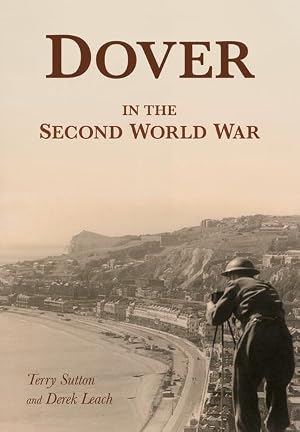
Dover in the Second World War
Librería: moluna, Greven, Alemania
Calificación del vendedor: 5 de 5 estrellas
EUR 24,95
Envío por EUR 48,99
Se envía de Alemania a Estados Unidos de AmericaCantidad disponible: 1 disponibles
Añadir al carritoCondición: New. This book tells in detail what it was like to live in an English town constantly under siege from enemy guns in the Second World War.KlappentextThis book tells in detail what it was like to live in an English town constantly under si.
-

Dover in the Second World War
Idioma: Inglés
Publicado por History Press Jun 2016, 2016
ISBN 10: 0750969792 ISBN 13: 9780750969796
Librería: AHA-BUCH GmbH, Einbeck, Alemania
Calificación del vendedor: 5 de 5 estrellas
EUR 24,57
Envío por EUR 62,27
Se envía de Alemania a Estados Unidos de AmericaCantidad disponible: 1 disponibles
Añadir al carritoTaschenbuch. Condición: Neu. Neuware - This book tells in detail what it was like to live in an English town constantly under siege from enemy guns in the Second World War. Many towns in Britain suffered from enemy action during the 1939-45 war but none endured the almost daily explosions of shells fired from huge German guns on the French coast, some 21 miles away. Not only that for there were regular bombing raids while Luftwaffe pilots machine gunned people in the streets. Many of those who lived in Dover during the bombing and shelling are no longer with us but the authors have captured the memories of more than a score of survivors, some of whom have since died.This fully illustrated book reveals how the military authorities planned to demolish homes on the seafront to provide clear lines of fire to cut down any invaders coming ashore at the port. And how a scheme was developed to evacuate thousands from the depleted population in trainloads of 800 at a time. Those who remained were to be herded into deep shelters in the cliffs and chalk hills so that the defending troops in the ancient Dover Castle and the Napoleonic fortifications on the Western Heights could pour firepower down into the centre of the town.In early 1939 the busy ferry port of Dover had a population of more than 40,000 but with the enemy 21 miles away preparing to invade, the population dwindled in 1940 to an estimated 16,500 and the borough council feared widespread bankruptcy. But while there was an outflow of civilians from the town, hundreds of Royal Navy personnel and soldiers arrived in Dover to hit back at the enemy whose fortifications, on a clear day, could be seen on the cliffs of Calais.Gradually, with the threat of invasion reducing, there was a drift back of many of those who had evacuated the town but, once again, there was a rush to depart in September 1944 when German gunners fi red relentlessly on Dover in an effort to use up all their shells before the Canadians fought their way into their heavily fortified gun emplacements on the cliffs of Pas-de-Calais.
-

Dover in the Second World War
Idioma: Inglés
Publicado por The History Press Ltd, GB, 2016
ISBN 10: 0750969792 ISBN 13: 9780750969796
Librería: Rarewaves.com UK, London, Reino Unido
Calificación del vendedor: 5 de 5 estrellas
EUR 20,92
Envío por EUR 74,89
Se envía de Reino Unido a Estados Unidos de AmericaCantidad disponible: 1 disponibles
Añadir al carritoPaperback. Condición: New. This book tells in detail what it was like to live in an English town constantly under siege from enemy guns in the Second World War. Many towns in Britain suffered from enemy action during the 1939-45 war but none endured the almost daily explosions of shells fired from huge German guns on the French coast, some 21 miles away. Not only that for there were regular bombing raids while Luftwaffe pilots machine gunned people in the streets. Many of those who lived in Dover during the bombing and shelling are no longer with us but the authors have captured the memories of more than a score of survivors, some of whom have since died.This fully illustrated book reveals how the military authorities planned to demolish homes on the seafront to provide clear lines of fire to cut down any invaders coming ashore at the port. And how a scheme was developed to evacuate thousands from the depleted population in trainloads of 800 at a time. Those who remained were to be herded into deep shelters in the cliffs and chalk hills so that the defending troops in the ancient Dover Castle and the Napoleonic fortifications on the Western Heights could pour firepower down into the centre of the town. In early 1939 the busy ferry port of Dover had a population of more than 40,000 but with the enemy 21 miles away preparing to invade, the population dwindled in 1940 to an estimated 16,500 and the borough council feared widespread bankruptcy. But while there was an outflow of civilians from the town, hundreds of Royal Navy personnel and soldiers arrived in Dover to hit back at the enemy whose fortifications, on a clear day, could be seen on the cliffs of Calais. Gradually, with the threat of invasion reducing, there was a drift back of many of those who had evacuated the town but, once again, there was a rush to depart in September 1944 when German gunners fired relentlessly on Dover in an effort to use up all their shells before the Canadians fought their way into their heavily fortified gun emplacements on the cliffs of Pas-de-Calais.
