

Importe total (1 artículo artículos):
Destino del pedido:

9780691210193 - The Development Dilemma: Security, Prosperity, and a Return to History de Bates, Robert H. (7 resultados)
Ir a los resultados principales
Filtros de búsqueda
Tipo de artículo
- Todos los tipos de productos
- Libros (7)
- Revistas y publicaciones (No hay ningún otro resultado que coincida con este filtro.)
- Cómics (No hay ningún otro resultado que coincida con este filtro.)
- Partituras (No hay ningún otro resultado que coincida con este filtro.)
- Arte, grabados y pósters (No hay ningún otro resultado que coincida con este filtro.)
- Fotografías (No hay ningún otro resultado que coincida con este filtro.)
- Mapas (No hay ningún otro resultado que coincida con este filtro.)
- Manuscritos y coleccionismo de papel (No hay ningún otro resultado que coincida con este filtro.)
Condición Más información
- Nuevo (5)
- Como nuevo, Excelente o Muy bueno (No hay ningún otro resultado que coincida con este filtro.)
- Bueno o Aceptable (1)
- Regular o Pobre (1)
- Tal como se indica (No hay ningún otro resultado que coincida con este filtro.)
Encuadernación
- Todas
- Tapa dura (No hay ningún otro resultado que coincida con este filtro.)
- Tapa blanda (7)
Más atributos
- Primera edición (No hay ningún otro resultado que coincida con este filtro.)
- Firmado (No hay ningún otro resultado que coincida con este filtro.)
- Sobrecubierta (No hay ningún otro resultado que coincida con este filtro.)
- Con imágenes (4)
- No impresión bajo demanda (7)
Idioma (1)
Gastos de envío gratis
Ubicación del vendedor
Valoración de los vendedores
-
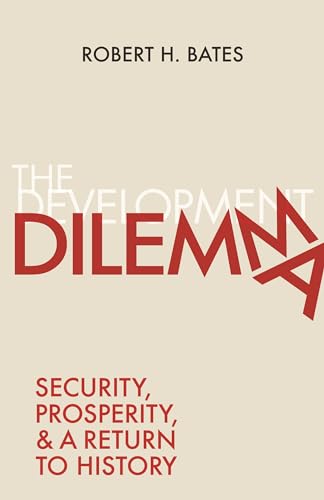
The Development Dilemma: Security, Prosperity, and a Return to History
Idioma: Inglés
Publicado por Princeton University Press (edition ), 2020
ISBN 10: 0691210195 ISBN 13: 9780691210193
Librería: BooksRun, Philadelphia, PA, Estados Unidos de America
Calificación del vendedor: 5 de 5 estrellas

EUR 6,88
Gastos de envío gratis
Se envía dentro de Estados Unidos de AmericaCantidad disponible: 1 disponibles
Añadir al carritoPaperback. Condición: Fair. The item might be beaten up but readable. May contain markings or highlighting, as well as stains, bent corners, or any other major defect, but the text is not obscured in any way.
-
The Development Dilemma: Security, Prosperity, and a Return to History
Idioma: Inglés
Publicado por Princeton University Press, 2020
ISBN 10: 0691210195 ISBN 13: 9780691210193
Librería: Midtown Scholar Bookstore, Harrisburg, PA, Estados Unidos de America
Calificación del vendedor: 5 de 5 estrellas
EUR 5,35
Envío por EUR 5,16
Se envía dentro de Estados Unidos de AmericaCantidad disponible: 1 disponibles
Añadir al carritopaperback. Condición: Very Good. Very Good paperback with light shelfwear - NICE! Standard-sized.
-
The Development Dilemma Security, Prosperity, and a Return to History
Librería: Revaluation Books, Exeter, Reino Unido
Calificación del vendedor: 5 de 5 estrellas
EUR 38,18
Envío por EUR 11,57
Se envía de Reino Unido a Estados Unidos de AmericaCantidad disponible: 2 disponibles
Añadir al carritoPaperback. Condición: Brand New. 188 pages. 8.50x5.50x0.75 inches. In Stock.
-

The Development Dilemma
Idioma: Inglés
Publicado por Princeton University Press, US, 2020
ISBN 10: 0691210195 ISBN 13: 9780691210193
Librería: Rarewaves USA, OSWEGO, IL, Estados Unidos de America
Calificación del vendedor: 5 de 5 estrellas
EUR 51,24
Gastos de envío gratis
Se envía dentro de Estados Unidos de AmericaCantidad disponible: Más de 20 disponibles
Añadir al carritoPaperback. Condición: New. Reassessing the developing world through the lens of Europe's pastToday's developing nations emerged from the rubble of the Second World War. Only a handful of these countries have subsequently attained a level of prosperity and security comparable to that of the advanced industrial world. The implication is clear: those who study the developing world in order to learn how development can be achieved lack the data to do so.In The Development Dilemma, Robert Bates responds to this challenge by turning to history, focusing on England and France. By the end of the eighteenth century, England stood poised to enter "the great transformation." France by contrast verged on state failure, and life and property were insecure. Probing the histories of these countries, Bates uncovers a powerful tension between prosperity and security: both may be necessary for development, he argues, but efforts to achieve the one threaten the achievement of the other. A fundamental tension pervades the political economy of development.Bates also argues that while the creation of a central hierarchy-a state-may be necessary to the achievement of development, it is not sufficient. What matters is how the power of the state is used. France and England teach us that in some settings the seizure and redistribution of wealth-not its safeguarding and fostering-is a winning political strategy. These countries also suggest the features that mark those settings-features that appear in nations throughout the developing world.Returning to the present, Bates applies these insights to the world today. Drawing on fieldwork in Zambia and Kenya, and data from around the globe, he demonstrates how the past can help us to understand the performance of nations in today's developing world.
-

The Development Dilemma: Security, Prosperity, and a Return to History
Idioma: Inglés
Publicado por Princeton University Press, 2020
ISBN 10: 0691210195 ISBN 13: 9780691210193
Librería: moluna, Greven, Alemania
Calificación del vendedor: 5 de 5 estrellas
EUR 32,10
Envío por EUR 48,99
Se envía de Alemania a Estados Unidos de AmericaCantidad disponible: Más de 20 disponibles
Añadir al carritoKartoniert / Broschiert. Condición: New. Über den AutorRobert H. BatesKlappentextrnrnReassessing the developing world through the lens of Europe s pastToday s developing nations emerged from the rubble of the Second World War. Only a handful of these co.
-

The Development Dilemma
Idioma: Inglés
Publicado por Princeton University Press, US, 2020
ISBN 10: 0691210195 ISBN 13: 9780691210193
Librería: Rarewaves USA United, OSWEGO, IL, Estados Unidos de America
Calificación del vendedor: 5 de 5 estrellas
EUR 44,12
Envío por EUR 42,97
Se envía dentro de Estados Unidos de AmericaCantidad disponible: Más de 20 disponibles
Añadir al carritoPaperback. Condición: New. Reassessing the developing world through the lens of Europe's pastToday's developing nations emerged from the rubble of the Second World War. Only a handful of these countries have subsequently attained a level of prosperity and security comparable to that of the advanced industrial world. The implication is clear: those who study the developing world in order to learn how development can be achieved lack the data to do so.In The Development Dilemma, Robert Bates responds to this challenge by turning to history, focusing on England and France. By the end of the eighteenth century, England stood poised to enter "the great transformation." France by contrast verged on state failure, and life and property were insecure. Probing the histories of these countries, Bates uncovers a powerful tension between prosperity and security: both may be necessary for development, he argues, but efforts to achieve the one threaten the achievement of the other. A fundamental tension pervades the political economy of development.Bates also argues that while the creation of a central hierarchy-a state-may be necessary to the achievement of development, it is not sufficient. What matters is how the power of the state is used. France and England teach us that in some settings the seizure and redistribution of wealth-not its safeguarding and fostering-is a winning political strategy. These countries also suggest the features that mark those settings-features that appear in nations throughout the developing world.Returning to the present, Bates applies these insights to the world today. Drawing on fieldwork in Zambia and Kenya, and data from around the globe, he demonstrates how the past can help us to understand the performance of nations in today's developing world.
-

The Development Dilemma : Security, Prosperity, and a Return to History
Idioma: Inglés
Publicado por Princeton University Press Aug 2020, 2020
ISBN 10: 0691210195 ISBN 13: 9780691210193
Librería: AHA-BUCH GmbH, Einbeck, Alemania
Calificación del vendedor: 5 de 5 estrellas
EUR 39,47
Envío por EUR 61,36
Se envía de Alemania a Estados Unidos de AmericaCantidad disponible: 1 disponibles
Añadir al carritoTaschenbuch. Condición: Neu. Neuware - 'In The Development Dilemma, Robert Bates turns to European history and Africa today to make a provocative argument: countries that throw different ethnic groups and regions together end up cutting deals that trade off growth to obtain stability. These kinds of historical comparisons are too rare and why this book is so important.'--Chris Blattman, University of Chicago.
