

Importe total (1 artículo artículos):
Destino del pedido:

9780691167350 - The Development Dilemma: Security, Prosperity, and a Return to History de Bates, Robert H. (26 resultados)
Ir a los resultados principales
Filtros de búsqueda
Tipo de artículo
- Todos los tipos de productos
- Libros (26)
- Revistas y publicaciones (No hay ningún otro resultado que coincida con este filtro.)
- Cómics (No hay ningún otro resultado que coincida con este filtro.)
- Partituras (No hay ningún otro resultado que coincida con este filtro.)
- Arte, grabados y pósters (No hay ningún otro resultado que coincida con este filtro.)
- Fotografías (No hay ningún otro resultado que coincida con este filtro.)
- Mapas (No hay ningún otro resultado que coincida con este filtro.)
- Manuscritos y coleccionismo de papel (No hay ningún otro resultado que coincida con este filtro.)
Condición Más información
- Nuevo (19)
- Como nuevo, Excelente o Muy bueno (2)
- Bueno o Aceptable (5)
- Regular o Pobre (No hay ningún otro resultado que coincida con este filtro.)
- Tal como se indica (No hay ningún otro resultado que coincida con este filtro.)
Encuadernación
- Todas
- Tapa dura (26)
- Tapa blanda (No hay ningún otro resultado que coincida con este filtro.)
Más atributos
- Primera edición (No hay ningún otro resultado que coincida con este filtro.)
- Firmado (No hay ningún otro resultado que coincida con este filtro.)
- Sobrecubierta (2)
- Con imágenes (6)
- No impresión bajo demanda (26)
Idioma (1)
Gastos de envío gratis
Ubicación del vendedor
Valoración de los vendedores
-
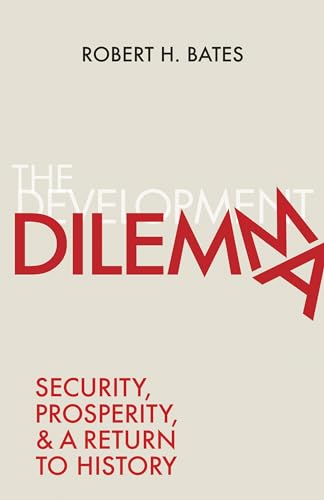
The Development Dilemma: Security, Prosperity, and a Return to History
Idioma: Inglés
Publicado por Princeton University Press (edition Illustrated), 2017
ISBN 10: 0691167354 ISBN 13: 9780691167350
Librería: BooksRun, Philadelphia, PA, Estados Unidos de America
Calificación del vendedor: 5 de 5 estrellas

EUR 5,51
Gastos de envío gratis
Se envía dentro de Estados Unidos de AmericaCantidad disponible: 1 disponibles
Añadir al carritoHardcover. Condición: Very Good. Illustrated. With dust jacket. It's a well-cared-for item that has seen limited use. The item may show minor signs of wear. All the text is legible, with all pages included. It may have slight markings and/or highlighting.
-
The Development Dilemma : Security, Prosperity, and a Return to History
Idioma: Inglés
Publicado por Princeton University Press, 2017
ISBN 10: 0691167354 ISBN 13: 9780691167350
Librería: Better World Books, Mishawaka, IN, Estados Unidos de America
Calificación del vendedor: 5 de 5 estrellas
EUR 6,20
Gastos de envío gratis
Se envía dentro de Estados Unidos de AmericaCantidad disponible: 2 disponibles
Añadir al carritoCondición: Very Good. Pages intact with possible writing/highlighting. Binding strong with minor wear. Dust jackets/supplements may not be included. Stock photo provided. Product includes identifying sticker. Better World Books: Buy Books. Do Good.
-
The Development Dilemma : Security, Prosperity, and a Return to History
Idioma: Inglés
Publicado por Princeton University Press, 2017
ISBN 10: 0691167354 ISBN 13: 9780691167350
Librería: Better World Books, Mishawaka, IN, Estados Unidos de America
Calificación del vendedor: 5 de 5 estrellas
EUR 6,20
Gastos de envío gratis
Se envía dentro de Estados Unidos de AmericaCantidad disponible: 1 disponibles
Añadir al carritoCondición: Very Good. Former library copy. Pages intact with possible writing/highlighting. Binding strong with minor wear. Dust jackets/supplements may not be included. Includes library markings. Stock photo provided. Product includes identifying sticker. Better World Books: Buy Books. Do Good.
-
The Development Dilemma: Security, Prosperity, and a Return to History
Idioma: Inglés
Publicado por Princeton University Press, 2017
ISBN 10: 0691167354 ISBN 13: 9780691167350
Librería: Academybookshop, Long Island City, NY, Estados Unidos de America
Calificación del vendedor: 4 de 5 estrellas

EUR 4,15
Envío por EUR 3,49
Se envía dentro de Estados Unidos de AmericaCantidad disponible: 1 disponibles
Añadir al carritoHardcover. Condición: Very Good. This is a new book that has some damage, which is usually a tear, a scratch, dents or stain on the edge, pages are clean, no missing pages.
-
The Development Dilemma: Security, Prosperity, and a Return to History
Idioma: Inglés
Publicado por Princeton University Press, 2017
ISBN 10: 0691167354 ISBN 13: 9780691167350
Librería: Academybookshop, Long Island City, NY, Estados Unidos de America
Calificación del vendedor: 4 de 5 estrellas
EUR 4,15
Envío por EUR 3,49
Se envía dentro de Estados Unidos de AmericaCantidad disponible: 1 disponibles
Añadir al carritoHardcover. Condición: As New. In fine, clean condition, but WITHOUT THE DUST-COVER, clean pages.
-
The Development Dilemma: Security, Prosperity, and a Return to History
Idioma: Inglés
Publicado por Princeton University Press, 2017
ISBN 10: 0691167354 ISBN 13: 9780691167350
Librería: Academybookshop, Long Island City, NY, Estados Unidos de America
Calificación del vendedor: 4 de 5 estrellas
EUR 4,15
Envío por EUR 3,49
Se envía dentro de Estados Unidos de AmericaCantidad disponible: 1 disponibles
Añadir al carritoHardcover. Condición: As New. In fine, clean condition, but WITHOUT THE DUST-COVER, clean pages.
-
The Development Dilemma: Security, Prosperity, and a Return to History
Idioma: Inglés
Publicado por Princeton University Press, 2017
ISBN 10: 0691167354 ISBN 13: 9780691167350
Librería: Academybookshop, Long Island City, NY, Estados Unidos de America
Calificación del vendedor: 4 de 5 estrellas
EUR 7,40
Envío por EUR 3,49
Se envía dentro de Estados Unidos de AmericaCantidad disponible: 6 disponibles
Añadir al carritoHardcover. Condición: New.
-
The Development Dilemma: Security, Prosperity, and a Return to History
Idioma: Inglés
Publicado por Princeton University Press, 2017
ISBN 10: 0691167354 ISBN 13: 9780691167350
Librería: Book Alley, Pasadena, CA, Estados Unidos de America
Calificación del vendedor: 4 de 5 estrellas
EUR 7,21
Envío por EUR 5,25
Se envía dentro de Estados Unidos de AmericaCantidad disponible: 1 disponibles
Añadir al carritohardcover. Condición: Very Good. Estado de la sobrecubierta: Very Good. A very good hardcover in a very good dust jacket. Used with slight wear but is still in great reading condition. No markings.
-

The Development Dilemma
Idioma: Inglés
Publicado por Princeton University Press, 2017
ISBN 10: 0691167354 ISBN 13: 9780691167350
Librería: eCampus, Lexington, KY, Estados Unidos de America
Calificación del vendedor: 5 de 5 estrellas
EUR 16,63
Envío por EUR 3,49
Se envía dentro de Estados Unidos de AmericaCantidad disponible: 1 disponibles
Añadir al carritoCondición: New.
-
The Development Dilemma
Idioma: Inglés
Publicado por Princeton University Press, 2017
ISBN 10: 0691167354 ISBN 13: 9780691167350
Librería: PBShop.store US, Wood Dale, IL, Estados Unidos de America
Calificación del vendedor: 5 de 5 estrellas
EUR 32,56
Gastos de envío gratis
Se envía dentro de Estados Unidos de AmericaCantidad disponible: 15 disponibles
Añadir al carritoHRD. Condición: New. New Book. Shipped from UK. Established seller since 2000.
-

The Development Dilemma
Idioma: Inglés
Publicado por Princeton University Press, US, 2017
ISBN 10: 0691167354 ISBN 13: 9780691167350
Librería: Rarewaves USA, OSWEGO, IL, Estados Unidos de America
Calificación del vendedor: 5 de 5 estrellas
EUR 33,67
Gastos de envío gratis
Se envía dentro de Estados Unidos de AmericaCantidad disponible: 8 disponibles
Añadir al carritoHardback. Condición: New. Reassessing the developing world through the lens of Europe's past Today's developing nations emerged from the rubble of the Second World War. Only a handful of these countries have subsequently attained a level of prosperity and security comparable to that of the advanced industrial world. The implication is clear: those who study the developing world in order to learn how development can be achieved lack the data to do so. In The Development Dilemma, Robert Bates responds to this challenge by turning to history, focusing on England and France. By the end of the eighteenth century, England stood poised to enter "the great transformation." France by contrast verged on state failure, and life and property were insecure. Probing the histories of these countries, Bates uncovers a powerful tension between prosperity and security: both may be necessary for development, he argues, but efforts to achieve the one threaten the achievement of the other. A fundamental tension pervades the political economy of development. Bates also argues that while the creation of a central hierarchy--a state--may be necessary to the achievement of development, it is not sufficient.What matters is how the power of the state is used. France and England teach us that in some settings the seizure and redistribution of wealth--not its safeguarding and fostering--is a winning political strategy. These countries also suggest the features that mark those settings--features that appear in nations throughout the developing world. Returning to the present, Bates applies these insights to the world today. Drawing on fieldwork in Zambia and Kenya, and data from around the globe, he demonstrates how the past can help us to understand the performance of nations in today's developing world.
-

The Development Dilemma
Idioma: Inglés
Publicado por Princeton University Press, US, 2017
ISBN 10: 0691167354 ISBN 13: 9780691167350
Librería: Rarewaves.com USA, London, LONDO, Reino Unido
Calificación del vendedor: 5 de 5 estrellas
EUR 35,50
Gastos de envío gratis
Se envía de Reino Unido a Estados Unidos de AmericaCantidad disponible: 13 disponibles
Añadir al carritoHardback. Condición: New. Reassessing the developing world through the lens of Europe's past Today's developing nations emerged from the rubble of the Second World War. Only a handful of these countries have subsequently attained a level of prosperity and security comparable to that of the advanced industrial world. The implication is clear: those who study the developing world in order to learn how development can be achieved lack the data to do so. In The Development Dilemma, Robert Bates responds to this challenge by turning to history, focusing on England and France. By the end of the eighteenth century, England stood poised to enter "the great transformation." France by contrast verged on state failure, and life and property were insecure. Probing the histories of these countries, Bates uncovers a powerful tension between prosperity and security: both may be necessary for development, he argues, but efforts to achieve the one threaten the achievement of the other. A fundamental tension pervades the political economy of development. Bates also argues that while the creation of a central hierarchy--a state--may be necessary to the achievement of development, it is not sufficient.What matters is how the power of the state is used. France and England teach us that in some settings the seizure and redistribution of wealth--not its safeguarding and fostering--is a winning political strategy. These countries also suggest the features that mark those settings--features that appear in nations throughout the developing world. Returning to the present, Bates applies these insights to the world today. Drawing on fieldwork in Zambia and Kenya, and data from around the globe, he demonstrates how the past can help us to understand the performance of nations in today's developing world.
-
The Development Dilemma: Security, Prosperity, and a Return to History
Idioma: Inglés
Publicado por Princeton University Press, 2017
ISBN 10: 0691167354 ISBN 13: 9780691167350
Librería: Basi6 International, Irving, TX, Estados Unidos de America
Calificación del vendedor: 5 de 5 estrellas
EUR 38,24
Gastos de envío gratis
Se envía dentro de Estados Unidos de AmericaCantidad disponible: 1 disponibles
Añadir al carritoCondición: Brand New. New. US edition. Expediting shipping for all USA and Europe orders excluding PO Box. Excellent Customer Service.
-
The Development Dilemma - Security, Prosperity, and a Return to History
Idioma: Inglés
Publicado por Princeton University Press, 2017
ISBN 10: 0691167354 ISBN 13: 9780691167350
Librería: PBShop.store UK, Fairford, GLOS, Reino Unido
Calificación del vendedor: 5 de 5 estrellas
EUR 36,10
Envío por EUR 4,82
Se envía de Reino Unido a Estados Unidos de AmericaCantidad disponible: 15 disponibles
Añadir al carritoHRD. Condición: New. New Book. Shipped from UK. Established seller since 2000.
-
The Development Dilemma: Security, Prosperity, and a Return to History (eng)
Idioma: Inglés
Publicado por Princeton University Press, 2017
ISBN 10: 0691167354 ISBN 13: 9780691167350
Librería: Brook Bookstore On Demand, Napoli, NA, Italia
Calificación del vendedor: 3 de 5 estrellas

EUR 33,96
Envío por EUR 8,00
Se envía de Italia a Estados Unidos de AmericaCantidad disponible: Más de 20 disponibles
Añadir al carritoCondición: new.
-

The Development Dilemma (Hardcover)
Idioma: Inglés
Publicado por Princeton University Press, New Jersey, 2017
ISBN 10: 0691167354 ISBN 13: 9780691167350
Librería: Grand Eagle Retail, Bensenville, IL, Estados Unidos de America
Calificación del vendedor: 5 de 5 estrellas
EUR 44,37
Gastos de envío gratis
Se envía dentro de Estados Unidos de AmericaCantidad disponible: 1 disponibles
Añadir al carritoHardcover. Condición: new. Hardcover. Reassessing the developing world through the lens of Europe's past Today's developing nations emerged from the rubble of the Second World War. Only a handful of these countries have subsequently attained a level of prosperity and security comparable to that of the advanced industrial world. The implication is clear: those who study the developing world in order to learn how development can be achieved lack the data to do so. In The Development Dilemma, Robert Bates responds to this challenge by turning to history, focusing on England and France. By the end of the eighteenth century, England stood poised to enter "the great transformation." France by contrast verged on state failure, and life and property were insecure. Probing the histories of these countries, Bates uncovers a powerful tension between prosperity and security: both may be necessary for development, he argues, but efforts to achieve the one threaten the achievement of the other. A fundamental tension pervades the political economy of development. Bates also argues that while the creation of a central hierarchy--a state--may be necessary to the achievement of development, it is not sufficient.What matters is how the power of the state is used. France and England teach us that in some settings the seizure and redistribution of wealth--not its safeguarding and fostering--is a winning political strategy. These countries also suggest the features that mark those settings--features that appear in nations throughout the developing world. Returning to the present, Bates applies these insights to the world today. Drawing on fieldwork in Zambia and Kenya, and data from around the globe, he demonstrates how the past can help us to understand the performance of nations in today's developing world. Reassessing the developing world through the lens of Europe's past Today's developing nations emerged from the rubble of the Second World War. Only a handful of these countries have subsequently attained a level of prosperity and security comparable to that of the advanced industrial world. The implication is clear: those who study the developing Shipping may be from multiple locations in the US or from the UK, depending on stock availability.
-
The Development Dilemma: Security, Prosperity, and a Return to History
Idioma: Inglés
Publicado por Princeton University Press, 2017
ISBN 10: 0691167354 ISBN 13: 9780691167350
Librería: Kennys Bookshop and Art Galleries Ltd., Galway, GY, Irlanda
Calificación del vendedor: 5 de 5 estrellas
EUR 33,07
Envío por EUR 10,50
Se envía de Irlanda a Estados Unidos de AmericaCantidad disponible: Más de 20 disponibles
Añadir al carritoCondición: New. 2017. Hardcover. . . . . .
-
The Development Dilemma Security, Prosperity, and a Return to History
Librería: Revaluation Books, Exeter, Reino Unido
Calificación del vendedor: 5 de 5 estrellas
EUR 38,67
Envío por EUR 11,59
Se envía de Reino Unido a Estados Unidos de AmericaCantidad disponible: 2 disponibles
Añadir al carritoHardcover. Condición: Brand New. 188 pages. 9.00x5.75x0.75 inches. In Stock.
-
The Development Dilemma: Security, Prosperity, and a Return to History
Idioma: Inglés
Publicado por Princeton University Press, 2017
ISBN 10: 0691167354 ISBN 13: 9780691167350
Librería: Kennys Bookstore, Olney, MD, Estados Unidos de America
Calificación del vendedor: 5 de 5 estrellas
EUR 41,11
Envío por EUR 9,19
Se envía dentro de Estados Unidos de AmericaCantidad disponible: Más de 20 disponibles
Añadir al carritoCondición: New. 2017. Hardcover. . . . . . Books ship from the US and Ireland.
-
The Development Dilemma: Security, Prosperity, and a Return to History
Idioma: Inglés
Publicado por Princeton University Press 2017-10-06, 2017
ISBN 10: 0691167354 ISBN 13: 9780691167350
Librería: Chiron Media, Wallingford, Reino Unido
Calificación del vendedor: 5 de 5 estrellas
EUR 33,96
Envío por EUR 17,96
Se envía de Reino Unido a Estados Unidos de AmericaCantidad disponible: Más de 20 disponibles
Añadir al carritoHardcover. Condición: New.
-
The Development Dilemma: Security, Prosperity, and a Return to History
Idioma: Inglés
Publicado por Princeton University Press, 2017
ISBN 10: 0691167354 ISBN 13: 9780691167350
Librería: THE SAINT BOOKSTORE, Southport, Reino Unido
Calificación del vendedor: 5 de 5 estrellas
EUR 36,92
Envío por EUR 16,74
Se envía de Reino Unido a Estados Unidos de AmericaCantidad disponible: Más de 20 disponibles
Añadir al carritoHardback. Condición: New. New copy - Usually dispatched within 4 working days.
-
The Development Dilemma: Security, Prosperity, and a Return to History
Idioma: Inglés
Publicado por Princeton University Press, 2017
ISBN 10: 0691167354 ISBN 13: 9780691167350
Librería: Books Puddle, New York, NY, Estados Unidos de America
Calificación del vendedor: 4 de 5 estrellas
EUR 59,34
Envío por EUR 3,49
Se envía dentro de Estados Unidos de AmericaCantidad disponible: 3 disponibles
Añadir al carritoCondición: New.
-
 Edición internacional
The Development Dilemma: Security, Prosperity, and a Return to History
Idioma: Inglés
Publicado por Princetion University Press, 2017
ISBN 10: 0691167354 ISBN 13: 9780691167350
Librería: UK BOOKS STORE, London, LONDO, Reino Unido
Calificación del vendedor: 5 de 5 estrellas
EUR 63,41
Envío por EUR 3,47
Se envía de Reino Unido a Estados Unidos de AmericaCantidad disponible: 5 disponibles
Añadir al carritoHardcover. Condición: New. Brand New! Fast Delivery This is an International Edition and ship within 24-48 hours. Deliver by FedEx and Dhl, & Aramex, UPS, & USPS and we do accept APO and PO BOX Addresses. Order can be delivered worldwide within 6-10 days and we do have flat rate for up to 2LB. Extra shipping charges will be requested if the Book weight is more than 5 LB. This Item May be shipped from India, United states & United Kingdom. Depending on your location and availability.
-

The Development Dilemma
Idioma: Inglés
Publicado por Princeton University Press, US, 2017
ISBN 10: 0691167354 ISBN 13: 9780691167350
Librería: Rarewaves USA United, OSWEGO, IL, Estados Unidos de America
Calificación del vendedor: 5 de 5 estrellas
EUR 35,34
Envío por EUR 43,76
Se envía dentro de Estados Unidos de AmericaCantidad disponible: 8 disponibles
Añadir al carritoHardback. Condición: New. Reassessing the developing world through the lens of Europe's past Today's developing nations emerged from the rubble of the Second World War. Only a handful of these countries have subsequently attained a level of prosperity and security comparable to that of the advanced industrial world. The implication is clear: those who study the developing world in order to learn how development can be achieved lack the data to do so. In The Development Dilemma, Robert Bates responds to this challenge by turning to history, focusing on England and France. By the end of the eighteenth century, England stood poised to enter "the great transformation." France by contrast verged on state failure, and life and property were insecure. Probing the histories of these countries, Bates uncovers a powerful tension between prosperity and security: both may be necessary for development, he argues, but efforts to achieve the one threaten the achievement of the other. A fundamental tension pervades the political economy of development. Bates also argues that while the creation of a central hierarchy--a state--may be necessary to the achievement of development, it is not sufficient.What matters is how the power of the state is used. France and England teach us that in some settings the seizure and redistribution of wealth--not its safeguarding and fostering--is a winning political strategy. These countries also suggest the features that mark those settings--features that appear in nations throughout the developing world. Returning to the present, Bates applies these insights to the world today. Drawing on fieldwork in Zambia and Kenya, and data from around the globe, he demonstrates how the past can help us to understand the performance of nations in today's developing world.
-
The Development Dilemma (Hardcover)
Idioma: Inglés
Publicado por Princeton University Press, New Jersey, 2017
ISBN 10: 0691167354 ISBN 13: 9780691167350
Librería: AussieBookSeller, Truganina, VIC, Australia
Calificación del vendedor: 5 de 5 estrellas
EUR 67,34
Envío por EUR 32,38
Se envía de Australia a Estados Unidos de AmericaCantidad disponible: 1 disponibles
Añadir al carritoHardcover. Condición: new. Hardcover. Reassessing the developing world through the lens of Europe's past Today's developing nations emerged from the rubble of the Second World War. Only a handful of these countries have subsequently attained a level of prosperity and security comparable to that of the advanced industrial world. The implication is clear: those who study the developing world in order to learn how development can be achieved lack the data to do so. In The Development Dilemma, Robert Bates responds to this challenge by turning to history, focusing on England and France. By the end of the eighteenth century, England stood poised to enter "the great transformation." France by contrast verged on state failure, and life and property were insecure. Probing the histories of these countries, Bates uncovers a powerful tension between prosperity and security: both may be necessary for development, he argues, but efforts to achieve the one threaten the achievement of the other. A fundamental tension pervades the political economy of development. Bates also argues that while the creation of a central hierarchy--a state--may be necessary to the achievement of development, it is not sufficient.What matters is how the power of the state is used. France and England teach us that in some settings the seizure and redistribution of wealth--not its safeguarding and fostering--is a winning political strategy. These countries also suggest the features that mark those settings--features that appear in nations throughout the developing world. Returning to the present, Bates applies these insights to the world today. Drawing on fieldwork in Zambia and Kenya, and data from around the globe, he demonstrates how the past can help us to understand the performance of nations in today's developing world. Reassessing the developing world through the lens of Europe's past Today's developing nations emerged from the rubble of the Second World War. Only a handful of these countries have subsequently attained a level of prosperity and security comparable to that of the advanced industrial world. The implication is clear: those who study the developing Shipping may be from our Sydney, NSW warehouse or from our UK or US warehouse, depending on stock availability.
-

The Development Dilemma
Idioma: Inglés
Publicado por Princeton University Press, US, 2017
ISBN 10: 0691167354 ISBN 13: 9780691167350
Librería: Rarewaves.com UK, London, Reino Unido
Calificación del vendedor: 5 de 5 estrellas
EUR 33,52
Envío por EUR 75,35
Se envía de Reino Unido a Estados Unidos de AmericaCantidad disponible: 13 disponibles
Añadir al carritoHardback. Condición: New. Reassessing the developing world through the lens of Europe's past Today's developing nations emerged from the rubble of the Second World War. Only a handful of these countries have subsequently attained a level of prosperity and security comparable to that of the advanced industrial world. The implication is clear: those who study the developing world in order to learn how development can be achieved lack the data to do so. In The Development Dilemma, Robert Bates responds to this challenge by turning to history, focusing on England and France. By the end of the eighteenth century, England stood poised to enter "the great transformation." France by contrast verged on state failure, and life and property were insecure. Probing the histories of these countries, Bates uncovers a powerful tension between prosperity and security: both may be necessary for development, he argues, but efforts to achieve the one threaten the achievement of the other. A fundamental tension pervades the political economy of development. Bates also argues that while the creation of a central hierarchy--a state--may be necessary to the achievement of development, it is not sufficient.What matters is how the power of the state is used. France and England teach us that in some settings the seizure and redistribution of wealth--not its safeguarding and fostering--is a winning political strategy. These countries also suggest the features that mark those settings--features that appear in nations throughout the developing world. Returning to the present, Bates applies these insights to the world today. Drawing on fieldwork in Zambia and Kenya, and data from around the globe, he demonstrates how the past can help us to understand the performance of nations in today's developing world.


