

Importe total (1 artículo artículos):
Destino del pedido:

9780387707129 - Artificial Gravity: 20 (Space Technology Library, 20) (10 resultados)
Ir a los resultados principales
Filtros de búsqueda
Tipo de artículo
- Todos los tipos de productos
- Libros (10)
- Revistas y publicaciones (No hay ningún otro resultado que coincida con este filtro.)
- Cómics (No hay ningún otro resultado que coincida con este filtro.)
- Partituras (No hay ningún otro resultado que coincida con este filtro.)
- Arte, grabados y pósters (No hay ningún otro resultado que coincida con este filtro.)
- Fotografías (No hay ningún otro resultado que coincida con este filtro.)
- Mapas (No hay ningún otro resultado que coincida con este filtro.)
- Manuscritos y coleccionismo de papel (No hay ningún otro resultado que coincida con este filtro.)
Condición Más información
- Nuevo (7)
- Como nuevo, Excelente o Muy bueno (2)
- Bueno o Aceptable (1)
- Regular o Pobre (No hay ningún otro resultado que coincida con este filtro.)
- Tal como se indica (No hay ningún otro resultado que coincida con este filtro.)
Encuadernación
- Todas
- Tapa dura (10)
- Tapa blanda (No hay ningún otro resultado que coincida con este filtro.)
Más atributos
- Primera edición (No hay ningún otro resultado que coincida con este filtro.)
- Firmado (No hay ningún otro resultado que coincida con este filtro.)
- Sobrecubierta (No hay ningún otro resultado que coincida con este filtro.)
- Con imágenes (5)
- No impresión bajo demanda (7)
Idioma (1)
Precio
- Cualquier precio
- Menos de EUR 20 (No hay ningún otro resultado que coincida con este filtro.)
- EUR 20 a EUR 45 (No hay ningún otro resultado que coincida con este filtro.)
- Más de EUR 45
Gastos de envío gratis
Ubicación del vendedor
Valoración de los vendedores
-

Artificial Gravity (Space Technology Library, 20)
Libro 3 de 20: Space Technology LibraryLibrería: New Legacy Books, Annandale, NJ, Estados Unidos de America
Calificación del vendedor: 5 de 5 estrellas

EUR 126,15
Envío por EUR 2,19
Se envía dentro de Estados Unidos de AmericaCantidad disponible: 1 disponibles
Añadir al carritohardcover. Condición: Good. The cover shows normal wear. The pages show normal wear. Fast shipping and order satisfaction guaranteed. A portion of your purchase benefits Non-Profit Organizations, First Aid and Fire Stations!
-
Artificial Gravity
Libro 3 de 20: Space Technology LibraryLibrería: Romtrade Corp., STERLING HEIGHTS, MI, Estados Unidos de America
Calificación del vendedor: 5 de 5 estrellas
EUR 129,29
Gastos de envío gratis
Se envía dentro de Estados Unidos de AmericaCantidad disponible: 1 disponibles
Añadir al carritoCondición: New. This is a Brand-new US Edition. This Item may be shipped from US or any other country as we have multiple locations worldwide.
-
Artificial Gravity
Libro 3 de 20: Space Technology LibraryLibrería: Basi6 International, Irving, TX, Estados Unidos de America
Calificación del vendedor: 5 de 5 estrellas
EUR 129,29
Gastos de envío gratis
Se envía dentro de Estados Unidos de AmericaCantidad disponible: 1 disponibles
Añadir al carritoCondición: Brand New. New. US edition. Expediting shipping for all USA and Europe orders excluding PO Box. Excellent Customer Service.
-
Artificial Gravity
Libro 3 de 20: Space Technology LibraryLibrería: Buchpark, Trebbin, Alemania
Calificación del vendedor: 5 de 5 estrellas
EUR 69,99
Envío por EUR 105,00
Se envía de Alemania a Estados Unidos de AmericaCantidad disponible: 1 disponibles
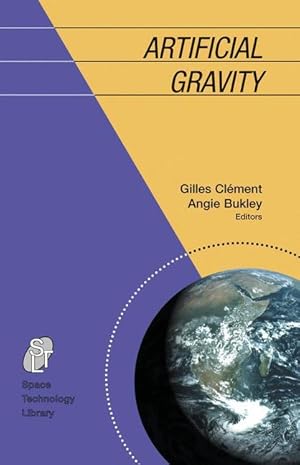
Añadir al carritoCondición: Sehr gut. Zustand: Sehr gut | Seiten: 392 | Sprache: Englisch | Produktart: Bücher | William H. Paloski, Ph. D. Human Adaptation and Countermeasures Office NASA Johnson Space Center Artificial gravity is an old concept, having gotten its start in the late in the 19th century when Konstantin Tsiolkovsky, considered by many to be the father of the Russian space program, realized that the human body might not respond well to the free fall of orbital space flight. To solve this problem, he proposed that space stations be rotated to create centripetal accelerations that might provide inertial loading similar to terrestrial gravitational loading. Einstein later showed in his equivalence principle that acceleration is indeed indistinguishable from gravity. Subsequently, other individuals of note, including scientists like Werner von Braun as well as artists like Arthur C. Clarke and Stanley Kubrick, devised elaborate solutions for spinning vehicles to provide ¿artificial gravity¿ that would offset the untoward physiological consequences of spaceflight. By 1959, concerns about the then-unknown human responses to spaceflight drove NASA to consider the necessity of incorporating artificial gravity in its earliest human space vehicles. Of course, owing in part to the relatively short durations of the planned missions, artificial gravity was not used in the early NASA programs.
-
Artificial Gravity
Libro 3 de 20: Space Technology LibraryLibrería: moluna, Greven, Alemania
Calificación del vendedor: 5 de 5 estrellas
EUR 197,62
Envío por EUR 48,99
Se envía de Alemania a Estados Unidos de AmericaCantidad disponible: Más de 20 disponibles
Añadir al carritoGebunden. Condición: New.
-
Artificial Gravity
Libro 3 de 20: Space Technology LibraryIdioma: Inglés
Publicado por Springer New York, Springer US, 2007
ISBN 10: 0387707123 ISBN 13: 9780387707129
Librería: AHA-BUCH GmbH, Einbeck, Alemania
Calificación del vendedor: 5 de 5 estrellas
EUR 238,64
Envío por EUR 63,76
Se envía de Alemania a Estados Unidos de AmericaCantidad disponible: 1 disponibles
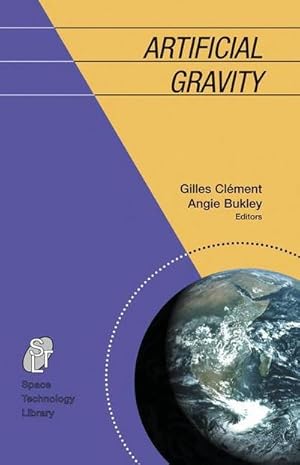
Añadir al carritoBuch. Condición: Neu. Druck auf Anfrage Neuware - Printed after ordering - William H. Paloski, Ph. D. Human Adaptation and Countermeasures Office NASA Johnson Space Center Artificial gravity is an old concept, having gotten its start in the late in the 19th century when Konstantin Tsiolkovsky, considered by many to be the father of the Russian space program, realized that the human body might not respond well to the free fall of orbital space flight. To solve this problem, he proposed that space stations be rotated to create centripetal accelerations that might provide inertial loading similar to terrestrial gravitational loading. Einstein later showed in his equivalence principle that acceleration is indeed indistinguishable from gravity. Subsequently, other individuals of note, including scientists like Werner von Braun as well as artists like Arthur C. Clarke and Stanley Kubrick, devised elaborate solutions for spinning vehicles to provide 'artificial gravity' that would offset the untoward physiological consequences of spaceflight. By 1959, concerns about the then-unknown human responses to spaceflight drove NASA to consider the necessity of incorporating artificial gravity in its earliest human space vehicles. Of course, owing in part to the relatively short durations of the planned missions, artificial gravity was not used in the early NASA programs.
-
ARTIFICIAL GRAVITY(SERIES: SPACE TECHNOLOGY LIBRARY, VOL. 20)
Libro 3 de 20: Space Technology LibraryLibrería: Mispah books, Redhill, SURRE, Reino Unido
Calificación del vendedor: 4 de 5 estrellas

EUR 300,85
Envío por EUR 28,98
Se envía de Reino Unido a Estados Unidos de AmericaCantidad disponible: 1 disponibles
Añadir al carritoCondición: Like New. LIKE NEW. SHIPS FROM MULTIPLE LOCATIONS. book.
-

Artificial Gravity
Libro 3 de 20: Space Technology LibraryIdioma: Inglés
Publicado por Springer New York, Springer US Jul 2007, 2007
ISBN 10: 0387707123 ISBN 13: 9780387707129
Librería: BuchWeltWeit Ludwig Meier e.K., Bergisch Gladbach, Alemania
Calificación del vendedor: 5 de 5 estrellas
EUR 235,39
Envío por EUR 23,00
Se envía de Alemania a Estados Unidos de AmericaCantidad disponible: 2 disponibles
Añadir al carritoBuch. Condición: Neu. This item is printed on demand - it takes 3-4 days longer - Neuware -William H. Paloski, Ph. D. Human Adaptation and Countermeasures Office NASA Johnson Space Center Artificial gravity is an old concept, having gotten its start in the late in the 19th century when Konstantin Tsiolkovsky, considered by many to be the father of the Russian space program, realized that the human body might not respond well to the free fall of orbital space flight. To solve this problem, he proposed that space stations be rotated to create centripetal accelerations that might provide inertial loading similar to terrestrial gravitational loading. Einstein later showed in his equivalence principle that acceleration is indeed indistinguishable from gravity. Subsequently, other individuals of note, including scientists like Werner von Braun as well as artists like Arthur C. Clarke and Stanley Kubrick, devised elaborate solutions for spinning vehicles to provide 'artificial gravity' that would offset the untoward physiological consequences of spaceflight. By 1959, concerns about the then-unknown human responses to spaceflight drove NASA to consider the necessity of incorporating artificial gravity in its earliest human space vehicles. Of course, owing in part to the relatively short durations of the planned missions, artificial gravity was not used in the early NASA programs. 392 pp. Englisch.
-

Artificial Gravity
Libro 3 de 20: Space Technology LibraryLibrería: preigu, Osnabrück, Alemania
Calificación del vendedor: 5 de 5 estrellas
EUR 204,85
Envío por EUR 70,00
Se envía de Alemania a Estados Unidos de AmericaCantidad disponible: 5 disponibles
Añadir al carritoBuch. Condición: Neu. Artificial Gravity | Angeli Bukley (u. a.) | Buch | xxi | Englisch | 2007 | Springer US | EAN 9780387707129 | Verantwortliche Person für die EU: Springer Verlag GmbH, Tiergartenstr. 17, 69121 Heidelberg, juergen[dot]hartmann[at]springer[dot]com | Anbieter: preigu Print on Demand.
-

Artificial Gravity
Libro 3 de 20: Space Technology LibraryIdioma: Inglés
Publicado por Springer New York, Springer US Jul 2007, 2007
ISBN 10: 0387707123 ISBN 13: 9780387707129
Librería: buchversandmimpf2000, Emtmannsberg, BAYE, Alemania
Calificación del vendedor: 5 de 5 estrellas
EUR 235,39
Envío por EUR 60,00
Se envía de Alemania a Estados Unidos de AmericaCantidad disponible: 1 disponibles
Añadir al carritoBuch. Condición: Neu. This item is printed on demand - Print on Demand Titel. Neuware -William H. Paloski, Ph. D. Human Adaptation and Countermeasures Office NASA Johnson Space Center Artificial gravity is an old concept, having gotten its start in the late in the 19th century when Konstantin Tsiolkovsky, considered by many to be the father of the Russian space program, realized that the human body might not respond well to the free fall of orbital space flight. To solve this problem, he proposed that space stations be rotated to create centripetal accelerations that might provide inertial loading similar to terrestrial gravitational loading. Einstein later showed in his equivalence principle that acceleration is indeed indistinguishable from gravity. Subsequently, other individuals of note, including scientists like Werner von Braun as well as artists like Arthur C. Clarke and Stanley Kubrick, devised elaborate solutions for spinning vehicles to provide ¿artificial gravity¿ that would offset the untoward physiological consequences of spaceflight. By 1959, concerns about the then-unknown human responses to spaceflight drove NASA to consider the necessity of incorporating artificial gravity in its earliest human space vehicles. Of course, owing in part to the relatively short durations of the planned missions, artificial gravity was not used in the early NASA programs.Springer-Verlag GmbH, Tiergartenstr. 17, 69121 Heidelberg 392 pp. Englisch.

