

Importe total (1 artículo artículos):
Destino del pedido:

9780367470067 - Evaluating the Brain Disease Model of Addiction (29 resultados)
Ir a los resultados principales
Filtros de búsqueda
Tipo de artículo
- Todos los tipos de productos
- Libros (29)
- Revistas y publicaciones (No hay ningún otro resultado que coincida con este filtro.)
- Cómics (No hay ningún otro resultado que coincida con este filtro.)
- Partituras (No hay ningún otro resultado que coincida con este filtro.)
- Arte, grabados y pósters (No hay ningún otro resultado que coincida con este filtro.)
- Fotografías (No hay ningún otro resultado que coincida con este filtro.)
- Mapas (No hay ningún otro resultado que coincida con este filtro.)
- Manuscritos y coleccionismo de papel (No hay ningún otro resultado que coincida con este filtro.)
Condición Más información
- Nuevo (27)
- Como nuevo, Excelente o Muy bueno (2)
- Bueno o Aceptable (No hay ningún otro resultado que coincida con este filtro.)
- Regular o Pobre (No hay ningún otro resultado que coincida con este filtro.)
- Tal como se indica (No hay ningún otro resultado que coincida con este filtro.)
Encuadernación
- Todas
- Tapa dura (No hay ningún otro resultado que coincida con este filtro.)
- Tapa blanda (29)
Más atributos
- Primera edición (1)
- Firmado (No hay ningún otro resultado que coincida con este filtro.)
- Sobrecubierta (No hay ningún otro resultado que coincida con este filtro.)
- Con imágenes (10)
- No impresión bajo demanda (24)
Idioma (1)
Precio
- Cualquier precio
- Menos de EUR 20 (No hay ningún otro resultado que coincida con este filtro.)
- EUR 20 a EUR 45 (No hay ningún otro resultado que coincida con este filtro.)
- Más de EUR 45
Gastos de envío gratis
Ubicación del vendedor
Valoración de los vendedores
-
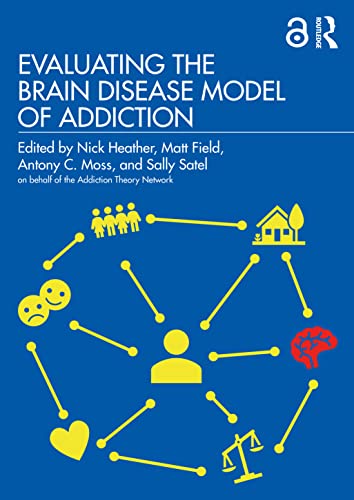
Evaluating the Brain Disease Model of Addiction
Librería: GreatBookPrices, Columbia, MD, Estados Unidos de America
Calificación del vendedor: 5 de 5 estrellas

EUR 96,10
Envío por EUR 2,29
Se envía dentro de Estados Unidos de AmericaCantidad disponible: Más de 20 disponibles
Añadir al carritoCondición: As New. Unread book in perfect condition.
-
Evaluating the Brain Disease Model of Addiction
Librería: GreatBookPrices, Columbia, MD, Estados Unidos de America
Calificación del vendedor: 5 de 5 estrellas
EUR 96,48
Envío por EUR 2,29
Se envía dentro de Estados Unidos de AmericaCantidad disponible: Más de 20 disponibles
Añadir al carritoCondición: New.
-
Evaluating the Brain Disease Model of Addiction
Librería: PBShop.store US, Wood Dale, IL, Estados Unidos de America
Calificación del vendedor: 5 de 5 estrellas
EUR 98,85
Gastos de envío gratis
Se envía dentro de Estados Unidos de AmericaCantidad disponible: 2 disponibles
Añadir al carritoPAP. Condición: New. New Book. Shipped from UK. Established seller since 2000.
-
Evaluating the Brain Disease Model of Addiction
Librería: PBShop.store UK, Fairford, GLOS, Reino Unido
Calificación del vendedor: 5 de 5 estrellas
EUR 90,87
Envío por EUR 8,82
Se envía de Reino Unido a Estados Unidos de AmericaCantidad disponible: 2 disponibles
Añadir al carritoPAP. Condición: New. New Book. Shipped from UK. Established seller since 2000.
-
Evaluating the Brain Disease Model of Addiction
Librería: GreatBookPricesUK, Woodford Green, Reino Unido
Calificación del vendedor: 5 de 5 estrellas
EUR 82,75
Envío por EUR 17,34
Se envía de Reino Unido a Estados Unidos de AmericaCantidad disponible: Más de 20 disponibles
Añadir al carritoCondición: New.
-
Evaluating the Brain Disease Model of Addiction
Librería: Majestic Books, Hounslow, Reino Unido
Calificación del vendedor: 4 de 5 estrellas

EUR 100,26
Envío por EUR 7,51
Se envía de Reino Unido a Estados Unidos de AmericaCantidad disponible: 3 disponibles
Añadir al carritoCondición: New.
-
Evaluating the Brain Disease Model of Addiction
Librería: Chiron Media, Wallingford, Reino Unido
Calificación del vendedor: 5 de 5 estrellas
EUR 92,99
Envío por EUR 17,90
Se envía de Reino Unido a Estados Unidos de AmericaCantidad disponible: 2 disponibles
Añadir al carritoPaperback. Condición: New.
-
Evaluating the Brain Disease Model of Addiction
Librería: Ria Christie Collections, Uxbridge, Reino Unido
Calificación del vendedor: 5 de 5 estrellas
EUR 98,27
Envío por EUR 13,85
Se envía de Reino Unido a Estados Unidos de AmericaCantidad disponible: Más de 20 disponibles
Añadir al carritoCondición: New. In.
-
Evaluating the Brain Disease Model of Addiction
Librería: GreatBookPricesUK, Woodford Green, Reino Unido
Calificación del vendedor: 5 de 5 estrellas
EUR 94,98
Envío por EUR 17,34
Se envía de Reino Unido a Estados Unidos de AmericaCantidad disponible: Más de 20 disponibles
Añadir al carritoCondición: As New. Unread book in perfect condition.
-

Evaluating the Brain Disease Model of Addiction (Paperback)
Idioma: Inglés
Publicado por Taylor & Francis Ltd, London, 2022
ISBN 10: 0367470063 ISBN 13: 9780367470067
Librería: Grand Eagle Retail, Bensenville, IL, Estados Unidos de America
Calificación del vendedor: 5 de 5 estrellas
EUR 116,37
Gastos de envío gratis
Se envía dentro de Estados Unidos de AmericaCantidad disponible: 1 disponibles
Añadir al carritoPaperback. Condición: new. Paperback. This ground-breaking book advances the fundamental debate about the nature of addiction. As well as presenting the case for seeing addiction as a brain disease, it brings together all the most cogent and penetrating critiques of the brain disease model of addiction (BDMA) and the main grounds for being skeptical of BDMA claims. The idea that addiction is a brain disease dominates thinking and practice worldwide. However, the editors of this book argue that our understanding of addiction is undergoing a revolutionary change, from being considered a brain disease to a disorder of voluntary behavior. The resolution of this controversy will determine the future of scientific progress in understanding addiction, together with necessary advances in treatment, prevention, and societal responses to addictive disorders. This volume brings together the various strands of the contemporary debate about whether or not addiction is best regarded as a brain disease. Contributors offer arguments for and against, and reasons for uncertainty; they also propose novel alternatives to both brain disease and moral models of addiction. In addition to reprints of classic articles from the addiction research literature, each section contains original chapters written by authorities on their chosen topic. The editors have assembled a stellar cast of chapter authors from a wide range of disciplines neuroscience, philosophy, psychiatry, psychology, cognitive science, sociology, and law including some of the most brilliant and influential voices in the field of addiction studies today. The result is a landmark volume in the study of addiction which will be essential reading for advanced students and researchers in addiction as well as professionals such as medical practitioners, psychiatrists, psychologists of all varieties, and social workers. This ground-breaking book advances the fundamental debate about the nature of addiction. As well as presenting the case for seeing addiction as a brain disease, it brings together all the most cogent and penetrating critiques of the brain disease model of addiction (BDMA) and the main grounds for being skeptical of BDMA claims. Shipping may be from multiple locations in the US or from the UK, depending on stock availability.
-
Evaluating the Brain Disease Model of Addiction
Librería: Books Puddle, New York, NY, Estados Unidos de America
Calificación del vendedor: 4 de 5 estrellas
EUR 115,26
Envío por EUR 3,47
Se envía dentro de Estados Unidos de AmericaCantidad disponible: 4 disponibles
Añadir al carritoCondición: New. 1st edition NO-PA16APR2015-KAP.
-

Evaluating the Brain Disease Model of Addiction
Idioma: Inglés
Publicado por Taylor and Francis Ltd, GB, 2022
ISBN 10: 0367470063 ISBN 13: 9780367470067
Librería: Rarewaves USA, OSWEGO, IL, Estados Unidos de America
Calificación del vendedor: 5 de 5 estrellas
EUR 120,53
Gastos de envío gratis
Se envía dentro de Estados Unidos de AmericaCantidad disponible: 1 disponibles
Añadir al carritoPaperback. Condición: New. This ground-breaking book advances the fundamental debate about the nature of addiction. As well as presenting the case for seeing addiction as a brain disease, it brings together all the most cogent and penetrating critiques of the brain disease model of addiction (BDMA) and the main grounds for being skeptical of BDMA claims. The idea that addiction is a brain disease dominates thinking and practice worldwide. However, the editors of this book argue that our understanding of addiction is undergoing a revolutionary change, from being considered a brain disease to a disorder of voluntary behavior. The resolution of this controversy will determine the future of scientific progress in understanding addiction, together with necessary advances in treatment, prevention, and societal responses to addictive disorders. This volume brings together the various strands of the contemporary debate about whether or not addiction is best regarded as a brain disease. Contributors offer arguments for and against, and reasons for uncertainty; they also propose novel alternatives to both brain disease and moral models of addiction. In addition to reprints of classic articles from the addiction research literature, each section contains original chapters written by authorities on their chosen topic. The editors have assembled a stellar cast of chapter authors from a wide range of disciplines - neuroscience, philosophy, psychiatry, psychology, cognitive science, sociology, and law - including some of the most brilliant and influential voices in the field of addiction studies today. The result is a landmark volume in the study of addiction which will be essential reading for advanced students and researchers in addiction as well as professionals such as medical practitioners, psychiatrists, psychologists of all varieties, and social workers.
-
Evaluating the Brain Disease Model of Addiction
Librería: Chiron Media, Wallingford, Reino Unido
Calificación del vendedor: 5 de 5 estrellas
EUR 102,02
Envío por EUR 17,90
Se envía de Reino Unido a Estados Unidos de AmericaCantidad disponible: 10 disponibles
Añadir al carritoPF. Condición: New.
-
Evaluating the Brain Disease Model of Addiction
Librería: THE SAINT BOOKSTORE, Southport, Reino Unido
Calificación del vendedor: 5 de 5 estrellas
EUR 98,05
Envío por EUR 23,19
Se envía de Reino Unido a Estados Unidos de AmericaCantidad disponible: 1 disponibles
Añadir al carritoPaperback / softback. Condición: New. New copy - Usually dispatched within 4 working days.
-
Evaluating the Brain Disease Model of Addiction
Librería: Kennys Bookshop and Art Galleries Ltd., Galway, GY, Irlanda
Calificación del vendedor: 5 de 5 estrellas
Original o primera edición
EUR 107,93
Envío por EUR 10,50
Se envía de Irlanda a Estados Unidos de AmericaCantidad disponible: 2 disponibles
Añadir al carritoCondición: New. 2022. 1st Edition. Paperback. . . . . .
-

Evaluating the Brain Disease Model of Addiction
Idioma: Inglés
Publicado por Taylor and Francis Ltd, GB, 2022
ISBN 10: 0367470063 ISBN 13: 9780367470067
Librería: Rarewaves.com USA, London, LONDO, Reino Unido
Calificación del vendedor: 5 de 5 estrellas
EUR 131,14
Gastos de envío gratis
Se envía de Reino Unido a Estados Unidos de AmericaCantidad disponible: 1 disponibles
Añadir al carritoPaperback. Condición: New. This ground-breaking book advances the fundamental debate about the nature of addiction. As well as presenting the case for seeing addiction as a brain disease, it brings together all the most cogent and penetrating critiques of the brain disease model of addiction (BDMA) and the main grounds for being skeptical of BDMA claims. The idea that addiction is a brain disease dominates thinking and practice worldwide. However, the editors of this book argue that our understanding of addiction is undergoing a revolutionary change, from being considered a brain disease to a disorder of voluntary behavior. The resolution of this controversy will determine the future of scientific progress in understanding addiction, together with necessary advances in treatment, prevention, and societal responses to addictive disorders. This volume brings together the various strands of the contemporary debate about whether or not addiction is best regarded as a brain disease. Contributors offer arguments for and against, and reasons for uncertainty; they also propose novel alternatives to both brain disease and moral models of addiction. In addition to reprints of classic articles from the addiction research literature, each section contains original chapters written by authorities on their chosen topic. The editors have assembled a stellar cast of chapter authors from a wide range of disciplines - neuroscience, philosophy, psychiatry, psychology, cognitive science, sociology, and law - including some of the most brilliant and influential voices in the field of addiction studies today. The result is a landmark volume in the study of addiction which will be essential reading for advanced students and researchers in addiction as well as professionals such as medical practitioners, psychiatrists, psychologists of all varieties, and social workers.
-
EVALUATING THE BRAIN DISEASE MODEL
Librería: Speedyhen, Hertfordshire, Reino Unido
Calificación del vendedor: 5 de 5 estrellas
EUR 82,76
Envío por EUR 47,39
Se envía de Reino Unido a Estados Unidos de AmericaCantidad disponible: 2 disponibles
Añadir al carritoCondición: NEW.
-
Evaluating the Brain Disease Model of Addiction
Librería: Kennys Bookstore, Olney, MD, Estados Unidos de America
Calificación del vendedor: 5 de 5 estrellas
EUR 136,52
Envío por EUR 9,13
Se envía dentro de Estados Unidos de AmericaCantidad disponible: 2 disponibles
Añadir al carritoCondición: New. 2022. 1st Edition. Paperback. . . . . . Books ship from the US and Ireland.
-

Evaluating the Brain Disease Model of Addiction
Librería: moluna, Greven, Alemania
Calificación del vendedor: 5 de 5 estrellas
EUR 102,74
Envío por EUR 48,99
Se envía de Alemania a Estados Unidos de AmericaCantidad disponible: 2 disponibles
Añadir al carritoCondición: New. Nick Heather is Emeritus Professor of Alcohol & Other Drug Studies in the Department of Psychology, School of Life Sciences at Northumbria University, UK. A clinical psychologist by training, he is mainly interested in research on tr.
-
Evaluating the Brain Disease Model of Addiction
Librería: preigu, Osnabrück, Alemania
Calificación del vendedor: 5 de 5 estrellas
EUR 89,70
Envío por EUR 70,00
Se envía de Alemania a Estados Unidos de AmericaCantidad disponible: 5 disponibles
Añadir al carritoTaschenbuch. Condición: Neu. Evaluating the Brain Disease Model of Addiction | Nick Heather (u. a.) | Taschenbuch | Einband - flex.(Paperback) | Englisch | 2022 | Routledge | EAN 9780367470067 | Verantwortliche Person für die EU: Libri GmbH, Europaallee 1, 36244 Bad Hersfeld, gpsr[at]libri[dot]de | Anbieter: preigu.
-
Evaluating the Brain Disease Model of Addiction
Librería: Revaluation Books, Exeter, Reino Unido
Calificación del vendedor: 5 de 5 estrellas
EUR 147,85
Envío por EUR 17,34
Se envía de Reino Unido a Estados Unidos de AmericaCantidad disponible: 2 disponibles
Añadir al carritoPaperback. Condición: Brand New. 1st edition. 555 pages. 9.50x6.75x1.25 inches. In Stock.
-

Evaluating the Brain Disease Model of Addiction
Idioma: Inglés
Publicado por Taylor and Francis Ltd, GB, 2022
ISBN 10: 0367470063 ISBN 13: 9780367470067
Librería: Rarewaves USA United, OSWEGO, IL, Estados Unidos de America
Calificación del vendedor: 5 de 5 estrellas
EUR 123,40
Envío por EUR 43,45
Se envía dentro de Estados Unidos de AmericaCantidad disponible: 1 disponibles
Añadir al carritoPaperback. Condición: New. This ground-breaking book advances the fundamental debate about the nature of addiction. As well as presenting the case for seeing addiction as a brain disease, it brings together all the most cogent and penetrating critiques of the brain disease model of addiction (BDMA) and the main grounds for being skeptical of BDMA claims. The idea that addiction is a brain disease dominates thinking and practice worldwide. However, the editors of this book argue that our understanding of addiction is undergoing a revolutionary change, from being considered a brain disease to a disorder of voluntary behavior. The resolution of this controversy will determine the future of scientific progress in understanding addiction, together with necessary advances in treatment, prevention, and societal responses to addictive disorders. This volume brings together the various strands of the contemporary debate about whether or not addiction is best regarded as a brain disease. Contributors offer arguments for and against, and reasons for uncertainty; they also propose novel alternatives to both brain disease and moral models of addiction. In addition to reprints of classic articles from the addiction research literature, each section contains original chapters written by authorities on their chosen topic. The editors have assembled a stellar cast of chapter authors from a wide range of disciplines - neuroscience, philosophy, psychiatry, psychology, cognitive science, sociology, and law - including some of the most brilliant and influential voices in the field of addiction studies today. The result is a landmark volume in the study of addiction which will be essential reading for advanced students and researchers in addiction as well as professionals such as medical practitioners, psychiatrists, psychologists of all varieties, and social workers.
-

Evaluating the Brain Disease Model of Addiction
Idioma: Inglés
Publicado por Taylor and Francis Ltd, GB, 2022
ISBN 10: 0367470063 ISBN 13: 9780367470067
Librería: Rarewaves.com UK, London, Reino Unido
Calificación del vendedor: 5 de 5 estrellas
EUR 123,76
Envío por EUR 75,13
Se envía de Reino Unido a Estados Unidos de AmericaCantidad disponible: 1 disponibles
Añadir al carritoPaperback. Condición: New. This ground-breaking book advances the fundamental debate about the nature of addiction. As well as presenting the case for seeing addiction as a brain disease, it brings together all the most cogent and penetrating critiques of the brain disease model of addiction (BDMA) and the main grounds for being skeptical of BDMA claims. The idea that addiction is a brain disease dominates thinking and practice worldwide. However, the editors of this book argue that our understanding of addiction is undergoing a revolutionary change, from being considered a brain disease to a disorder of voluntary behavior. The resolution of this controversy will determine the future of scientific progress in understanding addiction, together with necessary advances in treatment, prevention, and societal responses to addictive disorders. This volume brings together the various strands of the contemporary debate about whether or not addiction is best regarded as a brain disease. Contributors offer arguments for and against, and reasons for uncertainty; they also propose novel alternatives to both brain disease and moral models of addiction. In addition to reprints of classic articles from the addiction research literature, each section contains original chapters written by authorities on their chosen topic. The editors have assembled a stellar cast of chapter authors from a wide range of disciplines - neuroscience, philosophy, psychiatry, psychology, cognitive science, sociology, and law - including some of the most brilliant and influential voices in the field of addiction studies today. The result is a landmark volume in the study of addiction which will be essential reading for advanced students and researchers in addiction as well as professionals such as medical practitioners, psychiatrists, psychologists of all varieties, and social workers.
-

Evaluating the Brain Disease Model of Addiction (Paperback)
Idioma: Inglés
Publicado por Taylor & Francis Ltd, London, 2022
ISBN 10: 0367470063 ISBN 13: 9780367470067
Librería: AussieBookSeller, Truganina, VIC, Australia
Calificación del vendedor: 5 de 5 estrellas
EUR 174,00
Envío por EUR 32,16
Se envía de Australia a Estados Unidos de AmericaCantidad disponible: 1 disponibles
Añadir al carritoPaperback. Condición: new. Paperback. This ground-breaking book advances the fundamental debate about the nature of addiction. As well as presenting the case for seeing addiction as a brain disease, it brings together all the most cogent and penetrating critiques of the brain disease model of addiction (BDMA) and the main grounds for being skeptical of BDMA claims. The idea that addiction is a brain disease dominates thinking and practice worldwide. However, the editors of this book argue that our understanding of addiction is undergoing a revolutionary change, from being considered a brain disease to a disorder of voluntary behavior. The resolution of this controversy will determine the future of scientific progress in understanding addiction, together with necessary advances in treatment, prevention, and societal responses to addictive disorders. This volume brings together the various strands of the contemporary debate about whether or not addiction is best regarded as a brain disease. Contributors offer arguments for and against, and reasons for uncertainty; they also propose novel alternatives to both brain disease and moral models of addiction. In addition to reprints of classic articles from the addiction research literature, each section contains original chapters written by authorities on their chosen topic. The editors have assembled a stellar cast of chapter authors from a wide range of disciplines neuroscience, philosophy, psychiatry, psychology, cognitive science, sociology, and law including some of the most brilliant and influential voices in the field of addiction studies today. The result is a landmark volume in the study of addiction which will be essential reading for advanced students and researchers in addiction as well as professionals such as medical practitioners, psychiatrists, psychologists of all varieties, and social workers. This ground-breaking book advances the fundamental debate about the nature of addiction. As well as presenting the case for seeing addiction as a brain disease, it brings together all the most cogent and penetrating critiques of the brain disease model of addiction (BDMA) and the main grounds for being skeptical of BDMA claims. Shipping may be from our Sydney, NSW warehouse or from our UK or US warehouse, depending on stock availability.
-
Evaluating the Brain Disease Model of Addiction
Librería: THE SAINT BOOKSTORE, Southport, Reino Unido
Calificación del vendedor: 5 de 5 estrellas
EUR 96,48
Envío por EUR 18,20
Se envía de Reino Unido a Estados Unidos de AmericaCantidad disponible: 5 disponibles
Añadir al carritoPaperback / softback. Condición: New. This item is printed on demand. New copy - Usually dispatched within 5-9 working days.
-

Evaluating the Brain Disease Model of Addiction
Librería: BuchWeltWeit Ludwig Meier e.K., Bergisch Gladbach, Alemania
Calificación del vendedor: 5 de 5 estrellas
EUR 93,00
Envío por EUR 23,00
Se envía de Alemania a Estados Unidos de AmericaCantidad disponible: 2 disponibles
Añadir al carritoTaschenbuch. Condición: Neu. This item is printed on demand - it takes 3-4 days longer - Neuware -This ground-breaking book advances the fundamental debate about the nature of addiction. As well as presenting the case for seeing addiction as a brain disease, it brings together all the most cogent and penetrating critiques of the brain disease model of addiction (BDMA) and the main grounds for being skeptical of BDMA claims. The idea that addiction is a brain disease dominates thinking and practice worldwide. However, the editors of this book argue that our understanding of addiction is undergoing a revolutionary change, from being considered a brain disease to a disorder of voluntary behavior. The resolution of this controversy will determine the future of scientific progress in understanding addiction, together with necessary advances in treatment, prevention, and societal responses to addictive disorders. This volume brings together the various strands of the contemporary debate about whether or not addiction is best regarded as a brain disease. Contributors offer arguments for and against, and reasons for uncertainty; they also propose novel alternatives to both brain disease and moral models of addiction. In addition to reprints of classic articles from the addiction research literature, each section contains original chapters written by authorities on their chosen topic. The editors have assembled a stellar cast of chapter authors from a wide range of disciplines - neuroscience, philosophy, psychiatry, psychology, cognitive science, sociology, and law - including some of the most brilliant and influential voices in the field of addiction studies today. The result is a landmark volume in the study of addiction which will be essential reading for advanced students and researchers in addiction as well as professionals such as medical practitioners, psychiatrists, psychologists of all varieties, and social workers. 574 pp. Englisch.
-
Evaluating the Brain Disease Model of Addiction
Librería: Biblios, Frankfurt am main, HESSE, Alemania
Calificación del vendedor: 4 de 5 estrellas
EUR 117,54
Envío por EUR 9,95
Se envía de Alemania a Estados Unidos de AmericaCantidad disponible: 4 disponibles
Añadir al carritoCondición: New. PRINT ON DEMAND.
-
Evaluating the Brain Disease Model of Addiction
Librería: Revaluation Books, Exeter, Reino Unido
Calificación del vendedor: 5 de 5 estrellas
EUR 114,78
Envío por EUR 17,34
Se envía de Reino Unido a Estados Unidos de AmericaCantidad disponible: 2 disponibles
Añadir al carritoPaperback. Condición: Brand New. 1st edition. 555 pages. 9.50x6.75x1.25 inches. In Stock. This item is printed on demand.
-

Evaluating the Brain Disease Model of Addiction
Librería: AHA-BUCH GmbH, Einbeck, Alemania
Calificación del vendedor: 5 de 5 estrellas
EUR 106,96
Envío por EUR 65,04
Se envía de Alemania a Estados Unidos de AmericaCantidad disponible: 1 disponibles
Añadir al carritoTaschenbuch. Condición: Neu. nach der Bestellung gedruckt Neuware - Printed after ordering - This ground-breaking book advances the fundamental debate about the nature of addiction. As well as presenting the case for seeing addiction as a brain disease, it brings together all the most cogent and penetrating critiques of the brain disease model of addiction (BDMA) and the main grounds for being skeptical of BDMA claims. The idea that addiction is a brain disease dominates thinking and practice worldwide. However, the editors of this book argue that our understanding of addiction is undergoing a revolutionary change, from being considered a brain disease to a disorder of voluntary behavior. The resolution of this controversy will determine the future of scientific progress in understanding addiction, together with necessary advances in treatment, prevention, and societal responses to addictive disorders. This volume brings together the various strands of the contemporary debate about whether or not addiction is best regarded as a brain disease. Contributors offer arguments for and against, and reasons for uncertainty; they also propose novel alternatives to both brain disease and moral models of addiction. In addition to reprints of classic articles from the addiction research literature, each section contains original chapters written by authorities on their chosen topic. The editors have assembled a stellar cast of chapter authors from a wide range of disciplines - neuroscience, philosophy, psychiatry, psychology, cognitive science, sociology, and law - including some of the most brilliant and influential voices in the field of addiction studies today. The result is a landmark volume in the study of addiction which will be essential reading for advanced students and researchers in addiction as well as professionals such as medical practitioners, psychiatrists, psychologists of all varieties, and social workers.


