
Importe total (1 artículo artículos):
Destino del pedido:

9780262039468 - Experiencing the Impossible: The Science of Magic (The MIT Press) de Kuhn, Gustav (28 resultados)
Ir a los resultados principales
Filtros de búsqueda
Tipo de artículo
- Todos los tipos de productos
- Libros (28)
- Revistas y publicaciones (No hay ningún otro resultado que coincida con este filtro.)
- Cómics (No hay ningún otro resultado que coincida con este filtro.)
- Partituras (No hay ningún otro resultado que coincida con este filtro.)
- Arte, grabados y pósters (No hay ningún otro resultado que coincida con este filtro.)
- Fotografías (No hay ningún otro resultado que coincida con este filtro.)
- Mapas (No hay ningún otro resultado que coincida con este filtro.)
- Manuscritos y coleccionismo de papel (No hay ningún otro resultado que coincida con este filtro.)
Condición Más información
- Nuevo (21)
- Como nuevo, Excelente o Muy bueno (4)
- Bueno o Aceptable (2)
- Regular o Pobre (1)
- Tal como se indica (No hay ningún otro resultado que coincida con este filtro.)
Encuadernación
- Todas
- Tapa dura (26)
- Tapa blanda (No hay ningún otro resultado que coincida con este filtro.)
Más atributos
- Primera edición (2)
- Firmado (No hay ningún otro resultado que coincida con este filtro.)
- Sobrecubierta (No hay ningún otro resultado que coincida con este filtro.)
- Con imágenes (10)
- No impresión bajo demanda (28)
Idioma (2)
Gastos de envío gratis
Ubicación del vendedor
Valoración de los vendedores
-
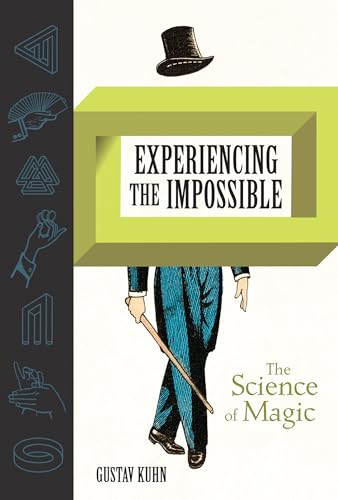
Experiencing the Impossible: The Science of Magic (Mit Press)
Librería: World of Books (was SecondSale), Montgomery, IL, Estados Unidos de America
Calificación del vendedor: 5 de 5 estrellas

EUR 5,43
Gastos de envío gratis
Se envía dentro de Estados Unidos de AmericaCantidad disponible: Más de 20 disponibles
Añadir al carritoCondición: Very Good. Item in very good condition! Textbooks may not include supplemental items i.e. CDs, access codes etc.
-
Experiencing the Impossible: The Science of Magic (Mit Press)
Librería: Indiana Book Company, Marion, IN, Estados Unidos de America
Calificación del vendedor: 5 de 5 estrellas
EUR 3,80
Envío por EUR 2,74
Se envía dentro de Estados Unidos de AmericaCantidad disponible: 1 disponibles
Añadir al carritoCondición: Acceptable. Ships same or next business day with delivery confirmation. Acceptable condition. Contains highlighting. Expedited shipping available.
-

Experiencing the Impossible : The Science of Magic
Librería: GreatBookPrices, Columbia, MD, Estados Unidos de America
Calificación del vendedor: 5 de 5 estrellas
EUR 18,05
Envío por EUR 2,23
Se envía dentro de Estados Unidos de AmericaCantidad disponible: 15 disponibles
Añadir al carritoCondición: New.
-

Experiencing the Impossible (Hardcover)
Idioma: Inglés
Publicado por MIT Press Ltd, Cambridge, Mass., 2019
ISBN 10: 026203946X ISBN 13: 9780262039468
Librería: Grand Eagle Retail, Bensenville, IL, Estados Unidos de America
Calificación del vendedor: 5 de 5 estrellas
EUR 20,35
Gastos de envío gratis
Se envía dentro de Estados Unidos de AmericaCantidad disponible: 1 disponibles
Añadir al carritoHardcover. Condición: new. Hardcover. This thought-provoking tour through the science of magic will make you question what you know about your brain and your reality.A psychologist and magician shows how the scientific study of magic reveals intriguing-and often unsettling-insights into the mysteries of the human mind.What do we see when we watch a magician pull a rabbit out of a hat or read a person's mind? We are captivated by an illusion; we applaud the fact that we have been fooled. Why do we enjoy experiencing what seems clearly impossible, or at least beyond our powers of explanation? In Experiencing the Impossible, Gustav Kuhn examines the psychological processes that underpin our experience of magic.Kuhn, a psychologist and a magician, reveals the intriguing-and often unsettling-insights into the human mind that the scientific study of magic provides. Magic, Kuhn explains, creates a cognitive conflict between what we believe to be true (for example, a rabbit could not be in that hat) and what we experience (a rabbit has just come out of that hat!). Drawing on the latest psychological, neurological, and philosophical research, he suggests that misdirection is at the heart of all magic tricks, and he offers a scientific theory of misdirection. He explores, among other topics, our propensity for magical thinking, the malleability of our perceptual experiences, forgetting and misremembering, free will and mind control, and how magic is applied outside entertainment-the use of illusion in human-computer interaction, politics, warfare, and elsewhere.We may be surprised to learn how little of the world we actually perceive, how little we can trust what we see and remember, and how little we are in charge of our thoughts and actions. Exploring magic, Kuhn illuminates the complex-and almost magical-mechanisms underlying our daily activities. How the scientific study of magic reveals intriguingand often unsettlinginsights into the mysteries of the human mind. Shipping may be from multiple locations in the US or from the UK, depending on stock availability.
-

Experiencing the Impossible : The Science of Magic
Librería: GreatBookPrices, Columbia, MD, Estados Unidos de America
Calificación del vendedor: 5 de 5 estrellas
EUR 18,50
Envío por EUR 2,23
Se envía dentro de Estados Unidos de AmericaCantidad disponible: 15 disponibles
Añadir al carritoCondición: As New. Unread book in perfect condition.
-
Experiencing the Impossible - The Science of Magic (Reference Books (MIT Press))
Librería: Noble Knight Games, Fitchburg, WI, Estados Unidos de America
Calificación del vendedor: 5 de 5 estrellas
EUR 15,64
Envío por EUR 5,02
Se envía dentro de Estados Unidos de AmericaCantidad disponible: 1 disponibles
Añadir al carritoHardcover. Condición: As New. MIT Press Reference Books (MIT Press) Experiencing the Impossible - The Science of Magic (EX/NM)Manufacturer: MIT PressProduct Line: Reference Books (MIT Press)Type: HardcoverCopyright Date: 2019Author: Gustav KuhnPage Count: 296Please review the condition and any condition notes for the exact condition of this item. All pictures are stock photos. The condition of the item you will receive is EX/NM. Our grading system is explained in the terms of sale section of our bookseller page. Please feel free to contact us with any questions. Product Description:This thought-provoking tour through the science of magic will make you question what you know about your brain and your reality.A psychologist and magician shows how the scientific study of magic reveals intriguing, and often unsettling, insights into the mysteries of the human mind.
-
Experiencing the Impossible: The Science of Magic (Mit Press)
Librería: Bellwetherbooks, McKeesport, PA, Estados Unidos de America
Calificación del vendedor: 5 de 5 estrellas
EUR 17,96
Envío por EUR 3,33
Se envía dentro de Estados Unidos de AmericaCantidad disponible: Más de 20 disponibles
Añadir al carritohardcover. Condición: New.
-
Experiencing the Impossible: The Science of Magic (Mit Press)
Librería: Griffin Books, Stamford, CT, Estados Unidos de America
Calificación del vendedor: 5 de 5 estrellas
Original o primera edición
EUR 17,98
Envío por EUR 5,06
Se envía dentro de Estados Unidos de AmericaCantidad disponible: 1 disponibles
Añadir al carritohardcover. Condición: New. First Edition. First edition, first printing. Brand new gift quality hardcover in pictorial boards. Please email for photos. Larger books or sets may require additional shipping charges. Books sent via US Postal.
-

Experiencing the Impossible
Librería: Rarewaves USA, OSWEGO, IL, Estados Unidos de America
Calificación del vendedor: 5 de 5 estrellas
EUR 25,54
Gastos de envío gratis
Se envía dentro de Estados Unidos de AmericaCantidad disponible: Más de 20 disponibles
Añadir al carritoHardback. Condición: New. How the scientific study of magic reveals intriguing-and often unsettling-insights into the mysteries of the human mind.What do we see when we watch a magician pull a rabbit out of a hat or read a person's mind? We are captivated by an illusion; we applaud the fact that we have been fooled. Why do we enjoy experiencing what seems clearly impossible, or at least beyond our powers of explanation? In Experiencing the Impossible, Gustav Kuhn examines the psychological processes that underpin our experience of magic. Kuhn, a psychologist and a magician, reveals the intriguing-and often unsettling-insights into the human mind that the scientific study of magic provides. Magic, Kuhn explains, creates a cognitive conflict between what we believe to be true (for example, a rabbit could not be in that hat) and what we experience (a rabbit has just come out of that hat!). Drawing on the latest psychological, neurological, and philosophical research, he suggests that misdirection is at the heart of all magic tricks, and he offers a scientific theory of misdirection. He explores, among other topics, our propensity for magical thinking, the malleability of our perceptual experiences, forgetting and misremembering, free will and mind control, and how magic is applied outside entertaiment-the use of illusion in human-computer interaction, politics, warfare, and elsewhere. We may be surprised to learn how little of the world we actually perceive, how little we can trust what we see and remember, and how little we are in charge of our thoughts and actions. Exploring magic, Kuhn illuminates the complex-and almost magical-mechanisms underlying our daily activities.
-
Experiencing the Impossible: The Science of Magic
Librería: Massive Bookshop, Greenfield, MA, Estados Unidos de America
Calificación del vendedor: 4 de 5 estrellas

EUR 24,28
Envío por EUR 4,01
Se envía dentro de Estados Unidos de AmericaCantidad disponible: 10 disponibles
Añadir al carritoHardcover. Condición: New.
-
Experiencing the Impossible
Librería: PBShop.store UK, Fairford, GLOS, Reino Unido
Calificación del vendedor: 4 de 5 estrellas
EUR 22,98
Envío por EUR 5,80
Se envía de Reino Unido a Estados Unidos de AmericaCantidad disponible: 10 disponibles
Añadir al carritoHRD. Condición: New. New Book. Shipped from UK. Established seller since 2000.
-
Experiencing the Impossible: The Science of Magic (The MIT Press)
Librería: Books Puddle, New York, NY, Estados Unidos de America
Calificación del vendedor: 4 de 5 estrellas
EUR 25,75
Envío por EUR 3,37
Se envía dentro de Estados Unidos de AmericaCantidad disponible: 3 disponibles
Añadir al carritoCondición: New.
-
Experiencing the Impossible: The Science of Magic
Librería: Russell Books, Victoria, BC, Canada
Calificación del vendedor: 4 de 5 estrellas
EUR 13,02
Envío por EUR 16,86
Se envía de Canada a Estados Unidos de AmericaCantidad disponible: 5 disponibles
Añadir al carritohardcover. Condición: Very Good. Illustrated.
-
Experiencing the Impossible: The Science of Magic (The MIT Press)
Librería: Majestic Books, Hounslow, Reino Unido
Calificación del vendedor: 4 de 5 estrellas
EUR 30,24
Envío por EUR 7,50
Se envía de Reino Unido a Estados Unidos de AmericaCantidad disponible: 3 disponibles
Añadir al carritoCondición: New.
-
Experiencing the Impossible: The Science of Magic (The MIT Press)
Librería: Chiron Media, Wallingford, Reino Unido
Calificación del vendedor: 5 de 5 estrellas
EUR 19,66
Envío por EUR 17,88
Se envía de Reino Unido a Estados Unidos de AmericaCantidad disponible: 10 disponibles
Añadir al carritohardcover. Condición: New.
-
Experiencing the Impossible: The Science of Magic
Librería: Kennys Bookshop and Art Galleries Ltd., Galway, GY, Irlanda
Calificación del vendedor: 5 de 5 estrellas
EUR 26,70
Envío por EUR 10,50
Se envía de Irlanda a Estados Unidos de AmericaCantidad disponible: Más de 20 disponibles
Añadir al carritoCondición: New. 2019. Hardcover. . . . . .
-
Experiencing the Impossible The Science of Magic
Librería: Revaluation Books, Exeter, Reino Unido
Calificación del vendedor: 5 de 5 estrellas
EUR 24,66
Envío por EUR 14,43
Se envía de Reino Unido a Estados Unidos de AmericaCantidad disponible: 1 disponibles
Añadir al carritoHardcover. Condición: Brand New. 1st edition. 276 pages. 9.25x6.25x1.00 inches. In Stock.
-
Experiencing the Impossible: The Science of Magic
Librería: Kennys Bookstore, Olney, MD, Estados Unidos de America
Calificación del vendedor: 4 de 5 estrellas
EUR 32,26
Envío por EUR 8,86
Se envía dentro de Estados Unidos de AmericaCantidad disponible: Más de 20 disponibles
Añadir al carritoCondición: New. 2019. Hardcover. . . . . . Books ship from the US and Ireland.
-
Experiencing the Impossible: The Science of Magic
Librería: THE SAINT BOOKSTORE, Southport, Reino Unido
Calificación del vendedor: 5 de 5 estrellas
EUR 22,98
Envío por EUR 21,07
Se envía de Reino Unido a Estados Unidos de AmericaCantidad disponible: 10 disponibles
Añadir al carritoHardback. Condición: New. New copy - Usually dispatched within 4 working days.
-

Experiencing the Impossible - The Science of Magic
Librería: Hinch Books, Brighton, Reino Unido
Miembro de asociación: IOBA
Calificación del vendedor: 5 de 5 estrellas
Original o primera edición
EUR 17,84
Envío por EUR 27,71
Se envía de Reino Unido a Estados Unidos de AmericaCantidad disponible: 1 disponibles
Añadir al carritoHardcover. Condición: Near Fine. 1st Edition. Excellent clean copy with no inscriptions. The psychological processes that underpin our experience of magic.
-
Experiencing the Impossible: The Science of Magic (The MIT Press)
Librería: Biblios, Frankfurt am main, HESSE, Alemania
Calificación del vendedor: 4 de 5 estrellas
EUR 35,86
Envío por EUR 9,95
Se envía de Alemania a Estados Unidos de AmericaCantidad disponible: 3 disponibles
Añadir al carritoCondición: New.
-
ExperiencingtheImpossible Format: ClothOverBoards
Publicado por Penguin Random House
ISBN 10: 026203946X ISBN 13: 9780262039468
Librería: INDOO, Avenel, NJ, Estados Unidos de America
Calificación del vendedor: 5 de 5 estrellas
EUR 29,66
Gastos de envío gratis
Se envía dentro de Estados Unidos de AmericaCantidad disponible: Más de 20 disponibles
Añadir al carritoCondición: As New. Unread copy in mint condition.
-
ExperiencingtheImpossible Format: ClothOverBoards
Publicado por Penguin Random House
ISBN 10: 026203946X ISBN 13: 9780262039468
Librería: INDOO, Avenel, NJ, Estados Unidos de America
Calificación del vendedor: 5 de 5 estrellas
EUR 29,76
Gastos de envío gratis
Se envía dentro de Estados Unidos de AmericaCantidad disponible: Más de 20 disponibles
Añadir al carritoCondición: New. Brand New.
-
Experiencing the Impossible
Librería: Rarewaves USA United, OSWEGO, IL, Estados Unidos de America
Calificación del vendedor: 5 de 5 estrellas
EUR 27,04
Envío por EUR 42,17
Se envía dentro de Estados Unidos de AmericaCantidad disponible: Más de 20 disponibles
Añadir al carritoHardback. Condición: New. How the scientific study of magic reveals intriguing-and often unsettling-insights into the mysteries of the human mind.What do we see when we watch a magician pull a rabbit out of a hat or read a person's mind? We are captivated by an illusion; we applaud the fact that we have been fooled. Why do we enjoy experiencing what seems clearly impossible, or at least beyond our powers of explanation? In Experiencing the Impossible, Gustav Kuhn examines the psychological processes that underpin our experience of magic. Kuhn, a psychologist and a magician, reveals the intriguing-and often unsettling-insights into the human mind that the scientific study of magic provides. Magic, Kuhn explains, creates a cognitive conflict between what we believe to be true (for example, a rabbit could not be in that hat) and what we experience (a rabbit has just come out of that hat!). Drawing on the latest psychological, neurological, and philosophical research, he suggests that misdirection is at the heart of all magic tricks, and he offers a scientific theory of misdirection. He explores, among other topics, our propensity for magical thinking, the malleability of our perceptual experiences, forgetting and misremembering, free will and mind control, and how magic is applied outside entertaiment-the use of illusion in human-computer interaction, politics, warfare, and elsewhere. We may be surprised to learn how little of the world we actually perceive, how little we can trust what we see and remember, and how little we are in charge of our thoughts and actions. Exploring magic, Kuhn illuminates the complex-and almost magical-mechanisms underlying our daily activities.
-

Experiencing the Impossible (Hardcover)
Idioma: Inglés
Publicado por MIT Press Ltd, Cambridge, Mass., 2019
ISBN 10: 026203946X ISBN 13: 9780262039468
Librería: AussieBookSeller, Truganina, VIC, Australia
Calificación del vendedor: 5 de 5 estrellas
EUR 47,00
Envío por EUR 31,21
Se envía de Australia a Estados Unidos de AmericaCantidad disponible: 1 disponibles
Añadir al carritoHardcover. Condición: new. Hardcover. This thought-provoking tour through the science of magic will make you question what you know about your brain and your reality.A psychologist and magician shows how the scientific study of magic reveals intriguing-and often unsettling-insights into the mysteries of the human mind.What do we see when we watch a magician pull a rabbit out of a hat or read a person's mind? We are captivated by an illusion; we applaud the fact that we have been fooled. Why do we enjoy experiencing what seems clearly impossible, or at least beyond our powers of explanation? In Experiencing the Impossible, Gustav Kuhn examines the psychological processes that underpin our experience of magic.Kuhn, a psychologist and a magician, reveals the intriguing-and often unsettling-insights into the human mind that the scientific study of magic provides. Magic, Kuhn explains, creates a cognitive conflict between what we believe to be true (for example, a rabbit could not be in that hat) and what we experience (a rabbit has just come out of that hat!). Drawing on the latest psychological, neurological, and philosophical research, he suggests that misdirection is at the heart of all magic tricks, and he offers a scientific theory of misdirection. He explores, among other topics, our propensity for magical thinking, the malleability of our perceptual experiences, forgetting and misremembering, free will and mind control, and how magic is applied outside entertainment-the use of illusion in human-computer interaction, politics, warfare, and elsewhere.We may be surprised to learn how little of the world we actually perceive, how little we can trust what we see and remember, and how little we are in charge of our thoughts and actions. Exploring magic, Kuhn illuminates the complex-and almost magical-mechanisms underlying our daily activities. How the scientific study of magic reveals intriguingand often unsettlinginsights into the mysteries of the human mind. Shipping may be from our Sydney, NSW warehouse or from our UK or US warehouse, depending on stock availability.
-

Experiencing the Impossible: The Science of Magic
Librería: moluna, Greven, Alemania
Calificación del vendedor: 4 de 5 estrellas
EUR 28,21
Envío por EUR 48,99
Se envía de Alemania a Estados Unidos de AmericaCantidad disponible: Más de 20 disponibles
Añadir al carritoGebunden. Condición: New. Gustav Kuhn is Reader in Psychology at Goldsmiths, University of London, and a member of the Magic Circle.This thought-provoking tour through the science of magic will make you question what you know about your brain and your reality.
-

Experiencing the Impossible : The Science of Magic
Librería: AHA-BUCH GmbH, Einbeck, Alemania
Calificación del vendedor: 5 de 5 estrellas
EUR 35,15
Envío por EUR 63,02
Se envía de Alemania a Estados Unidos de AmericaCantidad disponible: 1 disponibles
Añadir al carritoBuch. Condición: Neu. Neuware - This thought-provoking tour through the science of magic will make you question what you know about your brain and your reality. A psychologist and magician shows how the scientific study of magic reveals intriguing and often unsettling insights into the mysteries of the human mind. What do we see when we watch a magician pull a rabbit out of a hat or read a person s mind We are captivated by an illusion; we applaud the fact that we have been fooled. Why do we enjoy experiencing what seems clearly impossible, or at least beyond our powers of explanation In Experiencing the Impossible, Gustav Kuhn examines the psychological processes that underpin our experience of magic. Kuhn, a psychologist and a magician, reveals the intriguing and often unsettling insights into the human mind that the scientific study of magic provides. Magic, Kuhn explains, creates a cognitive conflict between what we believe to be true (for example, a rabbit could not be in that hat) and what we experience (a rabbit has just come out of that hat!). Drawing on the latest psychological, neurological, and philosophical research, he suggests that misdirection is at the heart of all magic tricks, and he offers a scientific theory of misdirection. He explores, among other topics, our propensity for magical thinking, the malleability of our perceptual experiences, forgetting and misremembering, free will and mind control, and how magic is applied outside entertainment the use of illusion in human-computer interaction, politics, warfare, and elsewhere. We may be surprised to learn how little of the world we actually perceive, how little we can trust what we see and remember, and how little we are in charge of our thoughts and actions. Exploring magic, Kuhn illuminates the complex and almost magical mechanisms underlying our daily activities.
-

Experiencing the Impossible
Librería: Rarewaves.com UK, London, Reino Unido
Calificación del vendedor: 5 de 5 estrellas
EUR 26,59
Envío por EUR 75,05
Se envía de Reino Unido a Estados Unidos de AmericaCantidad disponible: Más de 20 disponibles
Añadir al carritoHardback. Condición: New. How the scientific study of magic reveals intriguing-and often unsettling-insights into the mysteries of the human mind.What do we see when we watch a magician pull a rabbit out of a hat or read a person's mind? We are captivated by an illusion; we applaud the fact that we have been fooled. Why do we enjoy experiencing what seems clearly impossible, or at least beyond our powers of explanation? In Experiencing the Impossible, Gustav Kuhn examines the psychological processes that underpin our experience of magic. Kuhn, a psychologist and a magician, reveals the intriguing-and often unsettling-insights into the human mind that the scientific study of magic provides. Magic, Kuhn explains, creates a cognitive conflict between what we believe to be true (for example, a rabbit could not be in that hat) and what we experience (a rabbit has just come out of that hat!). Drawing on the latest psychological, neurological, and philosophical research, he suggests that misdirection is at the heart of all magic tricks, and he offers a scientific theory of misdirection. He explores, among other topics, our propensity for magical thinking, the malleability of our perceptual experiences, forgetting and misremembering, free will and mind control, and how magic is applied outside entertaiment-the use of illusion in human-computer interaction, politics, warfare, and elsewhere. We may be surprised to learn how little of the world we actually perceive, how little we can trust what we see and remember, and how little we are in charge of our thoughts and actions. Exploring magic, Kuhn illuminates the complex-and almost magical-mechanisms underlying our daily activities.

