

Importe total (1 artículo artículos):
Destino del pedido:

9780226473970 - Paraliterary: The Making of Bad Readers in Postwar America (Emersion: Emergent Village resources for communities of faith) de Emre, Merve (30 resultados)
Ir a los resultados principales
Filtros de búsqueda
Tipo de artículo
- Todos los tipos de productos
- Libros (30)
- Revistas y publicaciones (No hay ningún otro resultado que coincida con este filtro.)
- Cómics (No hay ningún otro resultado que coincida con este filtro.)
- Partituras (No hay ningún otro resultado que coincida con este filtro.)
- Arte, grabados y pósters (No hay ningún otro resultado que coincida con este filtro.)
- Fotografías (No hay ningún otro resultado que coincida con este filtro.)
- Mapas (No hay ningún otro resultado que coincida con este filtro.)
- Manuscritos y coleccionismo de papel (No hay ningún otro resultado que coincida con este filtro.)
Condición Más información
- Nuevo (26)
- Como nuevo, Excelente o Muy bueno (1)
- Bueno o Aceptable (2)
- Regular o Pobre (No hay ningún otro resultado que coincida con este filtro.)
- Tal como se indica (1)
Encuadernación
- Todas
- Tapa dura (No hay ningún otro resultado que coincida con este filtro.)
- Tapa blanda (29)
Más atributos
- Primera edición (No hay ningún otro resultado que coincida con este filtro.)
- Firmado (No hay ningún otro resultado que coincida con este filtro.)
- Sobrecubierta (No hay ningún otro resultado que coincida con este filtro.)
- Con imágenes (11)
- No impresión bajo demanda (29)
Idioma (2)
Gastos de envío gratis
Ubicación del vendedor
Valoración de los vendedores
-
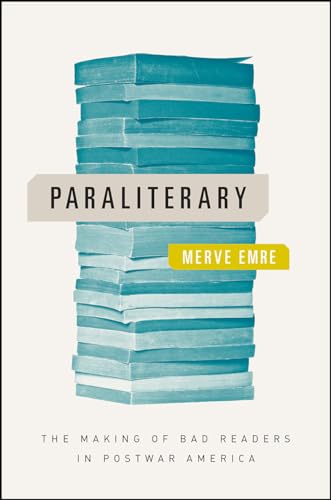
Paraliterary: The Making of Bad Readers in Postwar America
Idioma: Inglés
Publicado por University of Chicago Press, 2017
ISBN 10: 022647397X ISBN 13: 9780226473970
Librería: Gardner's Used Books, Inc., Tulsa, OK, Estados Unidos de America
Calificación del vendedor: 5 de 5 estrellas

EUR 12,38
Envío por EUR 3,88
Se envía dentro de Estados Unidos de AmericaCantidad disponible: 1 disponibles
Añadir al carritopaperback. Condición: Good. Signed. Good condition paperback. Appears to be signed. Minor edgewear and corner rubbing. Tulsa's largest used bookstore. Located on South Mingo Road since 1991. No-hassle return policy if not completely satisfied.
-
Paraliterary: The Making of Bad Readers in Postwar America
Idioma: Inglés
Publicado por University of Chicago Press, 2017
ISBN 10: 022647397X ISBN 13: 9780226473970
Librería: Books-R-Keen, DuBois, PA, Estados Unidos de America
Calificación del vendedor: 4 de 5 estrellas

EUR 14,50
Envío por EUR 3,44
Se envía dentro de Estados Unidos de AmericaCantidad disponible: 1 disponibles
Añadir al carritopaperback. Condición: Very Good. Excellent condition, dust jacket included when applicable, no markings in text.
-
Paraliterary: The Making of Bad Readers in Postwar America
Idioma: Inglés
Publicado por University of Chicago Press, 2017
ISBN 10: 022647397X ISBN 13: 9780226473970
Librería: Browsers' Bookstore, CBA, Albany, OR, Estados Unidos de America
Miembro de asociación: CBA
Calificación del vendedor: 5 de 5 estrellas
EUR 16,20
Envío por EUR 4,52
Se envía dentro de Estados Unidos de AmericaCantidad disponible: 1 disponibles
Añadir al carritopaperback. Condición: Fine. A nice copy. Clean text, solid binding. Appears unread.
-
Paraliterary
Idioma: Inglés
Publicado por University of Chicago Press, 2017
ISBN 10: 022647397X ISBN 13: 9780226473970
Librería: PBShop.store US, Wood Dale, IL, Estados Unidos de America
Calificación del vendedor: 5 de 5 estrellas
EUR 34,96
Gastos de envío gratis
Se envía dentro de Estados Unidos de AmericaCantidad disponible: 2 disponibles
Añadir al carritoPAP. Condición: New. New Book. Shipped from UK. Established seller since 2000.
-
Paraliterary: The Making of Bad Readers in Postwar America (eng)
Idioma: Inglés
Publicado por University of Chicago Press, 2017
ISBN 10: 022647397X ISBN 13: 9780226473970
Librería: Brook Bookstore On Demand, Napoli, NA, Italia
Calificación del vendedor: 3 de 5 estrellas

EUR 28,41
Envío por EUR 5,50
Se envía de Italia a Estados Unidos de AmericaCantidad disponible: Más de 20 disponibles
Añadir al carritoCondición: new.
-
Paraliterary
Idioma: Inglés
Publicado por University of Chicago Press, 2017
ISBN 10: 022647397X ISBN 13: 9780226473970
Librería: PBShop.store UK, Fairford, GLOS, Reino Unido
Calificación del vendedor: 5 de 5 estrellas
EUR 32,28
Envío por EUR 4,81
Se envía de Reino Unido a Estados Unidos de AmericaCantidad disponible: 2 disponibles
Añadir al carritoPAP. Condición: New. New Book. Shipped from UK. Established seller since 2000.
-
PARALITERARY
Idioma: Inglés
Publicado por University of Chicago Press, 2017
ISBN 10: 022647397X ISBN 13: 9780226473970
Librería: Speedyhen LLC, Hialeah, FL, Estados Unidos de America
Calificación del vendedor: 2 de 5 estrellas

EUR 38,46
Gastos de envío gratis
Se envía dentro de Estados Unidos de AmericaCantidad disponible: 4 disponibles
Añadir al carritoCondición: NEW.
-

Paraliterary
Idioma: Inglés
Publicado por The University of Chicago Press, US, 2017
ISBN 10: 022647397X ISBN 13: 9780226473970
Librería: Rarewaves.com USA, London, LONDO, Reino Unido
Calificación del vendedor: 5 de 5 estrellas
EUR 38,61
Gastos de envío gratis
Se envía de Reino Unido a Estados Unidos de AmericaCantidad disponible: 1 disponibles
Añadir al carritoPaperback. Condición: New. Literature departments are staffed by, and tend to be focused on turning out, "good" readers attentive to nuance, aware of history, interested in literary texts as self-contained works. But the vast majority of readers are, to use Merve Emre's tongue-in-cheek term, "bad" readers. They read fiction and poetry to be moved, distracted, instructed, improved, engaged as citizens. How should we think about those readers, and what should we make of the structures, well outside the academy, that generate them? We should, Emre argues, think of such readers not as non-literary but as paraliterary thriving outside the institutions we take as central to the literary world. She traces this phenomenon to the postwar period, when literature played a key role in the rise of American power. At the same time as American universities were producing good readers by the hundreds, many more thousands of bad readers were learning elsewhere to be disciplined public communicators, whether in diplomatic and ambassadorial missions, private and public cultural exchange programs, multinational corporations, or global activist groups.As we grapple with literature's diminished role in the public sphere, Paraliterary suggests a new way to think about literature, its audience, and its potential, one that looks at the civic institutions that have long engaged readers ignored by the academy.
-

Paraliterary
Idioma: Inglés
Publicado por The University of Chicago Press, US, 2017
ISBN 10: 022647397X ISBN 13: 9780226473970
Librería: Rarewaves USA, OSWEGO, IL, Estados Unidos de America
Calificación del vendedor: 5 de 5 estrellas
EUR 40,24
Gastos de envío gratis
Se envía dentro de Estados Unidos de AmericaCantidad disponible: 1 disponibles
Añadir al carritoPaperback. Condición: New. Literature departments are staffed by, and tend to be focused on turning out, "good" readers attentive to nuance, aware of history, interested in literary texts as self-contained works. But the vast majority of readers are, to use Merve Emre's tongue-in-cheek term, "bad" readers. They read fiction and poetry to be moved, distracted, instructed, improved, engaged as citizens. How should we think about those readers, and what should we make of the structures, well outside the academy, that generate them? We should, Emre argues, think of such readers not as non-literary but as paraliterary thriving outside the institutions we take as central to the literary world. She traces this phenomenon to the postwar period, when literature played a key role in the rise of American power. At the same time as American universities were producing good readers by the hundreds, many more thousands of bad readers were learning elsewhere to be disciplined public communicators, whether in diplomatic and ambassadorial missions, private and public cultural exchange programs, multinational corporations, or global activist groups.As we grapple with literature's diminished role in the public sphere, Paraliterary suggests a new way to think about literature, its audience, and its potential, one that looks at the civic institutions that have long engaged readers ignored by the academy.
-

Paraliterary (Paperback)
Idioma: Inglés
Publicado por The University of Chicago Press, Chicago, IL, 2017
ISBN 10: 022647397X ISBN 13: 9780226473970
Librería: Grand Eagle Retail, Bensenville, IL, Estados Unidos de America
Calificación del vendedor: 5 de 5 estrellas
EUR 40,87
Gastos de envío gratis
Se envía dentro de Estados Unidos de AmericaCantidad disponible: 1 disponibles
Añadir al carritoPaperback. Condición: new. Paperback. Literature departments are staffed by, and tend to be focused on turning out, good readersattentive to nuance, aware of history, interested in literary texts as self-contained works. But the vast majority of readers are, to use Merve Emres tongue-in-cheek term, bad readers. They read fiction and poetry to be moved, distracted, instructed, improved, engaged as citizens. How should we think about those readers, and what should we make of the structures, well outside the academy, that generate them? We should, Emre argues, think of such readers not as non-literary but as paraliterarythriving outside the institutions we take as central to the literary world. She traces this phenomenon to the postwar period, when literature played a key role in the rise of American power. At the same time as American universities were producing good readers by the hundreds, many more thousands of bad readers were learning elsewhere to be disciplined public communicators, whether in diplomatic and ambassadorial missions, private and public cultural exchange programs, multinational corporations, or global activist groups. As we grapple with literatures diminished role in the public sphere, Paraliterary suggests a new way to think about literature, its audience, and its potential, one that looks at the civic institutions that have long engaged readers ignored by the academy. You might think that any reader is a good reader (publishers certainly do). Merve Emre's tongue-in-cheek subtitle calls out "bad" readers--the kind whose approach to literature is naive, superficial, therapeutic, or escapist, at least in the eyes of scholars. They are not properly "literary" readers--not by the standards of university literature classrooms through most of the postwar era. Rather, bad readers read novels, stories, and poems for more vulgar reasons: to be instructed, improved, moved, even to feel civically engaged. In this book, Emre suggests that we think of bad readers not as non-literary but as "paraliterary," forged in institutions that have promoted literacy and writing well outside literature departments throughout the postwar period. Emre examines the rise of paraliterary reading and its role in helping readers acclimate to the rise of American power from the years just before World War II through the Cold War. While university literature departments were turning out good readers by the hundreds, other institutions--diplomatic missions, cultural exchange programs, multinational corporations, global activist groups--trained a vastly greater number of bad readers: diplomats, debutantes, tourists, and magazine subscribers. Emre's book explores a series of fascinating questions about American culture during this era: How did women's colleges teach students like Mary McCarthy and Jacqueline Kennedy to read novels? What hopes did idealistic Fulbright Scholars like Alfred Kazin and F. O. Matthiessen, enlisted to teach American Studies in Europe, carry with them? How did American Express become such a touchstone, both for the counterculture and family-oriented readers? The result is an invigorating and original look at the cultural life of reading during America's postwar ascendancy. Shipping may be from multiple locations in the US or from the UK, depending on stock availability.
-
Paraliterary: The Making of Bad Readers in Postwar America
Idioma: Inglés
Publicado por University of Chicago Press, 2018
ISBN 10: 022647397X ISBN 13: 9780226473970
Librería: Kennys Bookshop and Art Galleries Ltd., Galway, GY, Irlanda
Calificación del vendedor: 5 de 5 estrellas
EUR 29,45
Envío por EUR 10,50
Se envía de Irlanda a Estados Unidos de AmericaCantidad disponible: Más de 20 disponibles
Añadir al carritoCondición: New. 2018. Paperback. . . . . .
-
Paraliterary: The Making of Bad Readers in Postwar America
Idioma: Inglés
Publicado por University of Chicago Press, 2017
ISBN 10: 022647397X ISBN 13: 9780226473970
Librería: Majestic Books, Hounslow, Reino Unido
Calificación del vendedor: 4 de 5 estrellas
EUR 35,38
Envío por EUR 7,52
Se envía de Reino Unido a Estados Unidos de AmericaCantidad disponible: 3 disponibles
Añadir al carritoCondición: New. pp. 304.
-
Paraliterary: The Making of Bad Readers in Postwar America
Idioma: Inglés
Publicado por University of Chicago Press, 2017
ISBN 10: 022647397X ISBN 13: 9780226473970
Librería: Kennys Bookstore, Olney, MD, Estados Unidos de America
Calificación del vendedor: 5 de 5 estrellas
EUR 36,06
Envío por EUR 9,04
Se envía dentro de Estados Unidos de AmericaCantidad disponible: Más de 20 disponibles
Añadir al carritoCondición: New. 2018. Paperback. . . . . . Books ship from the US and Ireland.
-
Paraliterary The Making of Bad Readers in Postwar America
Librería: Revaluation Books, Exeter, Reino Unido
Calificación del vendedor: 5 de 5 estrellas
EUR 33,76
Envío por EUR 11,57
Se envía de Reino Unido a Estados Unidos de AmericaCantidad disponible: 2 disponibles
Añadir al carritoPaperback. Condición: Brand New. 286 pages. 9.00x6.00x0.75 inches. In Stock.
-
Paraliterary: The Making of Bad Readers in Postwar America (Emersion: Emergent Village resources for communities of faith)
Idioma: Inglés
Publicado por University of Chicago Press, 2017
ISBN 10: 022647397X ISBN 13: 9780226473970
Librería: Chiron Media, Wallingford, Reino Unido
Calificación del vendedor: 5 de 5 estrellas
EUR 29,87
Envío por EUR 17,92
Se envía de Reino Unido a Estados Unidos de AmericaCantidad disponible: 2 disponibles
Añadir al carritopaperback. Condición: New.
-
Paraliterary: The Making of Bad Readers in Postwar America
Idioma: Inglés
Publicado por University of Chicago Press, 2017
ISBN 10: 022647397X ISBN 13: 9780226473970
Librería: Ria Christie Collections, Uxbridge, Reino Unido
Calificación del vendedor: 5 de 5 estrellas
EUR 34,92
Envío por EUR 13,86
Se envía de Reino Unido a Estados Unidos de AmericaCantidad disponible: 2 disponibles
Añadir al carritoCondición: New. In.
-
Paraliterary Format: Paperback
Publicado por University of Chicago press
ISBN 10: 022647397X ISBN 13: 9780226473970
Librería: INDOO, Avenel, NJ, Estados Unidos de America
Calificación del vendedor: 5 de 5 estrellas
EUR 25,22
Gastos de envío gratis
Se envía dentro de Estados Unidos de AmericaCantidad disponible: Más de 20 disponibles
Añadir al carritoCondición: New. Brand New.
-

Paraliterary: The Making of Bad Readers in Postwar America (Paperback or Softback)
Idioma: Inglés
Publicado por University of Chicago Press 11/16/2017, 2017
ISBN 10: 022647397X ISBN 13: 9780226473970
Librería: BargainBookStores, Grand Rapids, MI, Estados Unidos de America
Calificación del vendedor: 5 de 5 estrellas
EUR 50,00
Gastos de envío gratis
Se envía dentro de Estados Unidos de AmericaCantidad disponible: 5 disponibles
Añadir al carritoPaperback or Softback. Condición: New. Paraliterary: The Making of Bad Readers in Postwar America. Book.
-
Paraliterary: The Making of Bad Readers in Postwar America
Idioma: Inglés
Publicado por University of Chicago Press, 2017
ISBN 10: 022647397X ISBN 13: 9780226473970
Librería: Books Puddle, New York, NY, Estados Unidos de America
Calificación del vendedor: 4 de 5 estrellas
EUR 48,99
Envío por EUR 3,44
Se envía dentro de Estados Unidos de AmericaCantidad disponible: 3 disponibles
Añadir al carritoCondición: New. pp. 304.
-
Paraliterary: The Making of Bad Readers in Postwar America
Idioma: Inglés
Publicado por The University of Chicago Press, 2017
ISBN 10: 022647397X ISBN 13: 9780226473970
Librería: THE SAINT BOOKSTORE, Southport, Reino Unido
Calificación del vendedor: 5 de 5 estrellas
EUR 36,86
Envío por EUR 17,68
Se envía de Reino Unido a Estados Unidos de AmericaCantidad disponible: Más de 20 disponibles
Añadir al carritoPaperback / softback. Condición: New. New copy - Usually dispatched within 4 working days.
-
Paraliterary The Making of Bad Readers in Postwar America
Librería: Revaluation Books, Exeter, Reino Unido
Calificación del vendedor: 5 de 5 estrellas
EUR 46,79
Envío por EUR 11,57
Se envía de Reino Unido a Estados Unidos de AmericaCantidad disponible: 2 disponibles
Añadir al carritoPaperback. Condición: Brand New. 286 pages. 9.00x6.00x0.75 inches. In Stock.
-

Paraliterary: The Making of Bad Readers in Postwar America by Merve Emre
Idioma: Inglés
Publicado por by University of Chicago Press, 2018
ISBN 10: 022647397X ISBN 13: 9780226473970
Librería: Oak Books, Ouyen, VIC, Australia
Calificación del vendedor: 5 de 5 estrellas
EUR 15,82
Envío por EUR 44,79
Se envía de Australia a Estados Unidos de AmericaCantidad disponible: 1 disponibles
Añadir al carritoBook, Paperback. Condición: Used. Paraliterary: The Making of Bad Readers in Postwar America. These are USED books. Please only purchase if you are happy with that. Images & Editions We use stock images and database descriptions based on the ISBN. The image shown may NOT be the actual book cover you will receive. Covers, editions, printings, and publishers may differ. If you need a specific cover, edition, or printing, please contact us before purchasing. What ?Used? Means Because these books are pre-owned: Colouring books may be coloured in Textbooks may have answers filled in, highlighting, notes, or underlining Workbooks may have writing inside Access codes, download codes, CDs, DVDs, or online content are usually missing or already used Books that originally came with toys, inserts, maps, cards, or bonus items will usually NOT include them Pages may be folded, marked, or show normal signs of use If you are buying a book for anything other than reading (e.g. colouring, study use, collecting, gifts, specific covers, bonus items, or digital access), used books may not be suitable. Condition All books are listed as Used ? Good Books are clean and readable but not new Some books may have: Writing, highlighting, or markings Folded pages or minor wear A small warehouse or inventory sticker on the spine Original retailer stickers (we do not remove them) Our Process We purchase books by the pallet and scan thousands at a time. For this reason, we cannot photograph or individually inspect every book. Acknowledgement By purchasing, you acknowledge that: You understand the book is used You accept the condition and limitations described above Stock images and descriptions may not exactly match the item received Thank you for supporting Oak Books and helping give books a second life.
-
PARALITERARY
Idioma: Inglés
Publicado por University of Chicago Press, 2017
ISBN 10: 022647397X ISBN 13: 9780226473970
Librería: Speedyhen, Hertfordshire, Reino Unido
Calificación del vendedor: 5 de 5 estrellas
EUR 29,03
Envío por EUR 47,42
Se envía de Reino Unido a Estados Unidos de AmericaCantidad disponible: 2 disponibles
Añadir al carritoCondición: NEW.
-

Paraliterary
Idioma: Inglés
Publicado por The University of Chicago Press, US, 2017
ISBN 10: 022647397X ISBN 13: 9780226473970
Librería: Rarewaves USA United, OSWEGO, IL, Estados Unidos de America
Calificación del vendedor: 5 de 5 estrellas
EUR 42,16
Envío por EUR 43,07
Se envía dentro de Estados Unidos de AmericaCantidad disponible: 1 disponibles
Añadir al carritoPaperback. Condición: New. Literature departments are staffed by, and tend to be focused on turning out, "good" readers attentive to nuance, aware of history, interested in literary texts as self-contained works. But the vast majority of readers are, to use Merve Emre's tongue-in-cheek term, "bad" readers. They read fiction and poetry to be moved, distracted, instructed, improved, engaged as citizens. How should we think about those readers, and what should we make of the structures, well outside the academy, that generate them? We should, Emre argues, think of such readers not as non-literary but as paraliterary thriving outside the institutions we take as central to the literary world. She traces this phenomenon to the postwar period, when literature played a key role in the rise of American power. At the same time as American universities were producing good readers by the hundreds, many more thousands of bad readers were learning elsewhere to be disciplined public communicators, whether in diplomatic and ambassadorial missions, private and public cultural exchange programs, multinational corporations, or global activist groups.As we grapple with literature's diminished role in the public sphere, Paraliterary suggests a new way to think about literature, its audience, and its potential, one that looks at the civic institutions that have long engaged readers ignored by the academy.
-

Paraliterary
Idioma: Inglés
Publicado por The University of Chicago Press, 2018
ISBN 10: 022647397X ISBN 13: 9780226473970
Librería: moluna, Greven, Alemania
Calificación del vendedor: 5 de 5 estrellas
EUR 36,99
Envío por EUR 48,99
Se envía de Alemania a Estados Unidos de AmericaCantidad disponible: 2 disponibles
Añadir al carritoCondición: New. Über den AutorMerve Emre is the Shapiro-Silverberg Professor of Creative Writing and Criticism at Wesleyan University and the Director of the Shapiro Center for Creative Writing and Criticism. Her books include Paraliterar.
-

Paraliterary (Paperback)
Idioma: Inglés
Publicado por The University of Chicago Press, Chicago, IL, 2017
ISBN 10: 022647397X ISBN 13: 9780226473970
Librería: AussieBookSeller, Truganina, VIC, Australia
Calificación del vendedor: 5 de 5 estrellas
EUR 63,39
Envío por EUR 31,87
Se envía de Australia a Estados Unidos de AmericaCantidad disponible: 1 disponibles
Añadir al carritoPaperback. Condición: new. Paperback. Literature departments are staffed by, and tend to be focused on turning out, good readersattentive to nuance, aware of history, interested in literary texts as self-contained works. But the vast majority of readers are, to use Merve Emres tongue-in-cheek term, bad readers. They read fiction and poetry to be moved, distracted, instructed, improved, engaged as citizens. How should we think about those readers, and what should we make of the structures, well outside the academy, that generate them? We should, Emre argues, think of such readers not as non-literary but as paraliterarythriving outside the institutions we take as central to the literary world. She traces this phenomenon to the postwar period, when literature played a key role in the rise of American power. At the same time as American universities were producing good readers by the hundreds, many more thousands of bad readers were learning elsewhere to be disciplined public communicators, whether in diplomatic and ambassadorial missions, private and public cultural exchange programs, multinational corporations, or global activist groups. As we grapple with literatures diminished role in the public sphere, Paraliterary suggests a new way to think about literature, its audience, and its potential, one that looks at the civic institutions that have long engaged readers ignored by the academy. You might think that any reader is a good reader (publishers certainly do). Merve Emre's tongue-in-cheek subtitle calls out "bad" readers--the kind whose approach to literature is naive, superficial, therapeutic, or escapist, at least in the eyes of scholars. They are not properly "literary" readers--not by the standards of university literature classrooms through most of the postwar era. Rather, bad readers read novels, stories, and poems for more vulgar reasons: to be instructed, improved, moved, even to feel civically engaged. In this book, Emre suggests that we think of bad readers not as non-literary but as "paraliterary," forged in institutions that have promoted literacy and writing well outside literature departments throughout the postwar period. Emre examines the rise of paraliterary reading and its role in helping readers acclimate to the rise of American power from the years just before World War II through the Cold War. While university literature departments were turning out good readers by the hundreds, other institutions--diplomatic missions, cultural exchange programs, multinational corporations, global activist groups--trained a vastly greater number of bad readers: diplomats, debutantes, tourists, and magazine subscribers. Emre's book explores a series of fascinating questions about American culture during this era: How did women's colleges teach students like Mary McCarthy and Jacqueline Kennedy to read novels? What hopes did idealistic Fulbright Scholars like Alfred Kazin and F. O. Matthiessen, enlisted to teach American Studies in Europe, carry with them? How did American Express become such a touchstone, both for the counterculture and family-oriented readers? The result is an invigorating and original look at the cultural life of reading during America's postwar ascendancy. Shipping may be from our Sydney, NSW warehouse or from our UK or US warehouse, depending on stock availability.
-

Paraliterary : The Making of Bad Readers in Postwar America
Idioma: Inglés
Publicado por University Of Chicago Press Nov 2017, 2017
ISBN 10: 022647397X ISBN 13: 9780226473970
Librería: AHA-BUCH GmbH, Einbeck, Alemania
Calificación del vendedor: 5 de 5 estrellas
EUR 37,29
Envío por EUR 62,33
Se envía de Alemania a Estados Unidos de AmericaCantidad disponible: 1 disponibles
Añadir al carritoTaschenbuch. Condición: Neu. Neuware - You might think that any reader is a good reader (publishers certainly do). Merve Emre's tongue-in-cheek subtitle calls out 'bad' readers--the kind whose approach to literature is naive, superficial, therapeutic, or escapist, at least in the eyes of scholars. They are not properly 'literary' readers--not by the standards of university literature classrooms through most of the postwar era. Rather, bad readers read novels, stories, and poems for more vulgar reasons: to be instructed, improved, moved, even to feel civically engaged. In this book, Emre suggests that we think of bad readers not as non-literary but as 'paraliterary,' forged in institutions that have promoted literacy and writing well outside literature departments throughout the postwar period. Emre examines the rise of paraliterary reading and its role in helping readers acclimate to the rise of American power from the years just before World War II through the Cold War. While university literature departments were turning out good readers by the hundreds, other institutions--diplomatic missions, cultural exchange programs, multinational corporations, global activist groups--trained a vastly greater number of bad readers: diplomats, debutantes, tourists, and magazine subscribers. Emre's book explores a series of fascinating questions about American culture during this era: How did women's colleges teach students like Mary McCarthy and Jacqueline Kennedy to read novels What hopes did idealistic Fulbright Scholars like Alfred Kazin and F. O. Matthiessen, enlisted to teach American Studies in Europe, carry with them How did American Express become such a touchstone, both for the counterculture and family-oriented readers The result is an invigorating and original look at the cultural life of reading during America's postwar ascendancy.
-

Paraliterary
Idioma: Inglés
Publicado por The University of Chicago Press, US, 2017
ISBN 10: 022647397X ISBN 13: 9780226473970
Librería: Rarewaves.com UK, London, Reino Unido
Calificación del vendedor: 5 de 5 estrellas
EUR 35,41
Envío por EUR 75,18
Se envía de Reino Unido a Estados Unidos de AmericaCantidad disponible: 1 disponibles
Añadir al carritoPaperback. Condición: New. Literature departments are staffed by, and tend to be focused on turning out, "good" readers attentive to nuance, aware of history, interested in literary texts as self-contained works. But the vast majority of readers are, to use Merve Emre's tongue-in-cheek term, "bad" readers. They read fiction and poetry to be moved, distracted, instructed, improved, engaged as citizens. How should we think about those readers, and what should we make of the structures, well outside the academy, that generate them? We should, Emre argues, think of such readers not as non-literary but as paraliterary thriving outside the institutions we take as central to the literary world. She traces this phenomenon to the postwar period, when literature played a key role in the rise of American power. At the same time as American universities were producing good readers by the hundreds, many more thousands of bad readers were learning elsewhere to be disciplined public communicators, whether in diplomatic and ambassadorial missions, private and public cultural exchange programs, multinational corporations, or global activist groups.As we grapple with literature's diminished role in the public sphere, Paraliterary suggests a new way to think about literature, its audience, and its potential, one that looks at the civic institutions that have long engaged readers ignored by the academy.
-

Paraliterary | The Making of Bad Readers in Postwar America
Idioma: Inglés
Publicado por University of Chicago Press, 2017
ISBN 10: 022647397X ISBN 13: 9780226473970
Librería: preigu, Osnabrück, Alemania
Calificación del vendedor: 5 de 5 estrellas
EUR 42,15
Envío por EUR 70,00
Se envía de Alemania a Estados Unidos de AmericaCantidad disponible: 1 disponibles
Añadir al carritoTaschenbuch. Condición: Neu. Paraliterary | The Making of Bad Readers in Postwar America | Merve Emre | Taschenbuch | Einband - flex.(Paperback) | Englisch | 2017 | University of Chicago Press | EAN 9780226473970 | Verantwortliche Person für die EU: Libri GmbH, Europaallee 1, 36244 Bad Hersfeld, gpsr[at]libri[dot]de | Anbieter: preigu.
-
Paraliterary: The Making of Bad Readers in Postwar America
Idioma: Inglés
Publicado por The University of Chicago Press, 2017
ISBN 10: 022647397X ISBN 13: 9780226473970
Librería: THE SAINT BOOKSTORE, Southport, Reino Unido
Calificación del vendedor: 5 de 5 estrellas
EUR 49,71
Envío por EUR 18,22
Se envía de Reino Unido a Estados Unidos de AmericaCantidad disponible: Más de 20 disponibles
Añadir al carritoPaperback / softback. Condición: New. This item is printed on demand. New copy - Usually dispatched within 5-9 working days.


