

Importe total (1 artículo artículos):
Destino del pedido:

9780199248063 - Human Nature and the Limits of Science de Dupré, John (27 resultados)
Ir a los resultados principales
Filtros de búsqueda
Tipo de artículo
- Todos los tipos de productos
- Libros (27)
- Revistas y publicaciones (No hay ningún otro resultado que coincida con este filtro.)
- Cómics (No hay ningún otro resultado que coincida con este filtro.)
- Partituras (No hay ningún otro resultado que coincida con este filtro.)
- Arte, grabados y pósters (No hay ningún otro resultado que coincida con este filtro.)
- Fotografías (No hay ningún otro resultado que coincida con este filtro.)
- Mapas (No hay ningún otro resultado que coincida con este filtro.)
- Manuscritos y coleccionismo de papel (No hay ningún otro resultado que coincida con este filtro.)
Condición Más información
- Nuevo (22)
- Como nuevo, Excelente o Muy bueno (4)
- Bueno o Aceptable (1)
- Regular o Pobre (No hay ningún otro resultado que coincida con este filtro.)
- Tal como se indica (No hay ningún otro resultado que coincida con este filtro.)
Encuadernación
Más atributos
- Primera edición (1)
- Firmado (No hay ningún otro resultado que coincida con este filtro.)
- Sobrecubierta (2)
- Con imágenes (9)
- No impresión bajo demanda (15)
Idioma (1)
Precio
- Cualquier precio
- Menos de EUR 20 (No hay ningún otro resultado que coincida con este filtro.)
- EUR 20 a EUR 45
- Más de EUR 45
Gastos de envío gratis
Ubicación del vendedor
Valoración de los vendedores
-
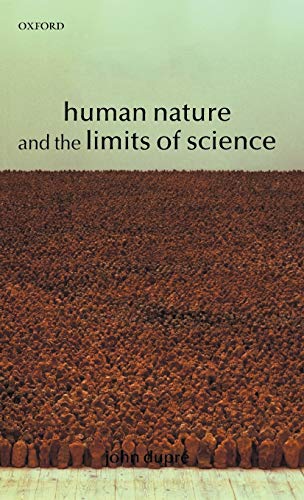
Human Nature and the Limits of Science
Idioma: Inglés
Publicado por Oxford University Press, Incorporated, 2002
ISBN 10: 0199248060 ISBN 13: 9780199248063
Librería: Better World Books, Mishawaka, IN, Estados Unidos de America
Calificación del vendedor: 5 de 5 estrellas

EUR 27,93
Gastos de envío gratis
Se envía dentro de Estados Unidos de AmericaCantidad disponible: 1 disponibles
Añadir al carritoCondición: Good. Pages intact with minimal writing/highlighting. The binding may be loose and creased. Dust jackets/supplements are not included. Stock photo provided. Product includes identifying sticker. Better World Books: Buy Books. Do Good.
-
Human Nature and the Limits of Science
Idioma: Inglés
Publicado por Oxford University Press, 2001
ISBN 10: 0199248060 ISBN 13: 9780199248063
Librería: Moe's Books, Berkeley, CA, Estados Unidos de America
Calificación del vendedor: 4 de 5 estrellas

EUR 27,13
Envío por EUR 5,71
Se envía dentro de Estados Unidos de AmericaCantidad disponible: 1 disponibles
Añadir al carritoHard Cover. Condición: Like New. Estado de la sobrecubierta: Like New. Dust jacket and book are in excellent condition. Inside is clean and unmarked.
-

Human Nature and the Limits of Science
Idioma: Inglés
Publicado por Clarendon Press, Oxford, 2001
ISBN 10: 0199248060 ISBN 13: 9780199248063
Librería: Adelaide Booksellers, Clarence Gardens, SA, Australia
Miembro de asociación: ANZAAB ILAB
Calificación del vendedor: 5 de 5 estrellas
Original o primera edición
EUR 24,93
Envío por EUR 19,75
Se envía de Australia a Estados Unidos de AmericaCantidad disponible: 1 disponibles
Añadir al carritoHardback. Condición: As New. 1st Edition. Octavo Size [approx 15.5 x 22.8cm]. Fine condition in a Near Fine Dustjacket - DJ now protected in our purpose-made clear archival plastic sleeve. An excellent copy. 201 pages. John Dupre warns that our understanding of human nature is being distorted by two faulty and harmful forms of pseudo-scientific thinking. Not just in the academic world but increasingly in everyday life, we find one set of experts seeking to explain the ends at which humans aim in terms of evolutionary theory, and another set of experts using economic models to give rules of how we act to achieve those ends. Dupre charges this unholy alliance ofevolutionary psychologists and rational-choice theorists with scientific imperialism: they use methods and ideas developed for one domain of inquiry in others where they are inappropriate. He demonstrates that these theorists' explanations do not work, and furthermore that if taken seriously their theories tend to have dangerous social and political consequences. A provocative, witty, and persuasive corrective to scientism.
-
Human Nature and the Limits of Science
Idioma: Inglés
Publicado por Oxford University Press, 2002
ISBN 10: 0199248060 ISBN 13: 9780199248063
Librería: THE SAINT BOOKSTORE, Southport, Reino Unido
Calificación del vendedor: 5 de 5 estrellas
EUR 72,84
Envío por EUR 17,24
Se envía de Reino Unido a Estados Unidos de AmericaCantidad disponible: 15 disponibles
Añadir al carritoHardback. Condición: New. New copy - Usually dispatched within 4 working days.
-

Human Nature and the Limits of Science
Idioma: Inglés
Publicado por Oxford University Press, 2002
ISBN 10: 0199248060 ISBN 13: 9780199248063
Librería: GreatBookPrices, Columbia, MD, Estados Unidos de America
Calificación del vendedor: 5 de 5 estrellas
EUR 114,59
Envío por EUR 2,32
Se envía dentro de Estados Unidos de AmericaCantidad disponible: Más de 20 disponibles
Añadir al carritoCondición: New.
-
Human Nature and the Limits of Science
Idioma: Inglés
Publicado por Oxford University Press, 2002
ISBN 10: 0199248060 ISBN 13: 9780199248063
Librería: The Book Spot, Sioux Falls, MN, Estados Unidos de America
Calificación del vendedor: 5 de 5 estrellas
EUR 117,54
Gastos de envío gratis
Se envía dentro de Estados Unidos de AmericaCantidad disponible: 1 disponibles
Añadir al carritoHardcover. Condición: New.
-

Human Nature and the Limits of Science
Idioma: Inglés
Publicado por Oxford University Press, 2002
ISBN 10: 0199248060 ISBN 13: 9780199248063
Librería: GreatBookPrices, Columbia, MD, Estados Unidos de America
Calificación del vendedor: 5 de 5 estrellas
EUR 131,35
Envío por EUR 2,32
Se envía dentro de Estados Unidos de AmericaCantidad disponible: 5 disponibles
Añadir al carritoCondición: As New. Unread book in perfect condition.
-
Human Nature and the Limits of Science
Idioma: Inglés
Publicado por Oxford University Press, 2002
ISBN 10: 0199248060 ISBN 13: 9780199248063
Librería: Ria Christie Collections, Uxbridge, Reino Unido
Calificación del vendedor: 5 de 5 estrellas
EUR 119,76
Envío por EUR 13,88
Se envía de Reino Unido a Estados Unidos de AmericaCantidad disponible: Más de 20 disponibles
Añadir al carritoCondición: New. In.
-
Human Nature and the Limits of Science
Idioma: Inglés
Publicado por Oxford University Press, 2002
ISBN 10: 0199248060 ISBN 13: 9780199248063
Librería: GreatBookPricesUK, Woodford Green, Reino Unido
Calificación del vendedor: 5 de 5 estrellas
EUR 119,75
Envío por EUR 17,38
Se envía de Reino Unido a Estados Unidos de AmericaCantidad disponible: Más de 20 disponibles
Añadir al carritoCondición: New.
-

Human Nature and the Limits of Science
Idioma: Inglés
Publicado por Oxford University Press, GB, 2001
ISBN 10: 0199248060 ISBN 13: 9780199248063
Librería: Rarewaves.com USA, London, LONDO, Reino Unido
Calificación del vendedor: 5 de 5 estrellas
EUR 149,14
Gastos de envío gratis
Se envía de Reino Unido a Estados Unidos de AmericaCantidad disponible: Más de 20 disponibles
Añadir al carritoHardback. Condición: New. John Dupré warns that our understanding of human nature is being distorted by two faulty and harmful forms of pseudo-scientific thinking. Not just in the academic world but increasingly in everyday life, we find one set of experts seeking to explain the ends at which humans aim in terms of evolutionary theory, and another set of experts using economic models to give rules of how we act to achieve those ends. Dupré charges this unholy alliance of evolutionary psychologists and rational-choice theorists with scientific imperialism: they use methods and ideas developed for one domain of inquiry in others where they are inappropriate. He demonstrates that these theorists' explanations do not work, and furthermore that if taken seriously their theories tend to have dangerous social and political consequences. For these reasons, it is important to resist scientism - an exaggerated conception of what science can be expected to do for us. To say this is in no way to be against science - just against bad science. Dupré restores sanity to the study of human nature by pointing the way to a proper understanding of humans in the societies that are our natural and necessary environments. He shows how our distinctively human capacities are shaped by the social contexts in which we are embedded. And he concludes with a bold challenge to one of the intellectual touchstones of modern science: the idea of the universe as causally complete and deterministic. In an impressive rehabilitation of the idea of free human agency, he argues that far from being helpless cogs in a mechanistic universe, humans are rare concentrations of causal power in a largely indeterministic world. Human Nature and the Limits of Science is a provocative, witty, and persuasive corrective to scientism. In its place, Dupré commends a pluralistic approach to science, as the appropriate way to investigate a universe that is not unified in form. Anyone interested in science and human nature will enjoy this book, unless they are its targets.
-
Human Nature and the Limits of Science
Idioma: Inglés
Publicado por Oxford University Press, 2001
ISBN 10: 0199248060 ISBN 13: 9780199248063
Librería: Kennys Bookshop and Art Galleries Ltd., Galway, GY, Irlanda
Calificación del vendedor: 5 de 5 estrellas
EUR 134,14
Envío por EUR 10,50
Se envía de Irlanda a Estados Unidos de AmericaCantidad disponible: Más de 20 disponibles
Añadir al carritoCondición: New. Not just in the academic world but increasingly in everyday life, we find one set of experts seeking to explain the ends at which humans aim in terms of evolutionary theory. Warning that our understanding of human nature is being distorted, the author demonstrates that these theorists' explanations do not work. Num Pages: 212 pages, bibliography, index. BIC Classification: PDA; PSAJ; PSX. Category: (P) Professional & Vocational. Dimension: 221 x 149 x 22. Weight in Grams: 418. . 2001. Hardback. . . . .
-

Human Nature and the Limits of Science
Idioma: Inglés
Publicado por Oxford University Press, 2002
ISBN 10: 0199248060 ISBN 13: 9780199248063
Librería: GreatBookPricesUK, Woodford Green, Reino Unido
Calificación del vendedor: 5 de 5 estrellas
EUR 133,61
Envío por EUR 17,38
Se envía de Reino Unido a Estados Unidos de AmericaCantidad disponible: Más de 20 disponibles
Añadir al carritoCondición: As New. Unread book in perfect condition.
-
Human Nature and the Limits of Science
Idioma: Inglés
Publicado por Oxford University Press, 2002
ISBN 10: 0199248060 ISBN 13: 9780199248063
Librería: Kennys Bookstore, Olney, MD, Estados Unidos de America
Calificación del vendedor: 5 de 5 estrellas
EUR 169,00
Envío por EUR 9,22
Se envía dentro de Estados Unidos de AmericaCantidad disponible: Más de 20 disponibles
Añadir al carritoCondición: New. Not just in the academic world but increasingly in everyday life, we find one set of experts seeking to explain the ends at which humans aim in terms of evolutionary theory. Warning that our understanding of human nature is being distorted, the author demonstrates that these theorists' explanations do not work. Num Pages: 212 pages, bibliography, index. BIC Classification: PDA; PSAJ; PSX. Category: (P) Professional & Vocational. Dimension: 221 x 149 x 22. Weight in Grams: 418. . 2001. Hardback. . . . . Books ship from the US and Ireland.
-

Human Nature and the Limits of Science
Idioma: Inglés
Publicado por Oxford University Press, GB, 2001
ISBN 10: 0199248060 ISBN 13: 9780199248063
Librería: Rarewaves.com UK, London, Reino Unido
Calificación del vendedor: 5 de 5 estrellas
EUR 140,73
Envío por EUR 75,31
Se envía de Reino Unido a Estados Unidos de AmericaCantidad disponible: Más de 20 disponibles
Añadir al carritoHardback. Condición: New. John Dupré warns that our understanding of human nature is being distorted by two faulty and harmful forms of pseudo-scientific thinking. Not just in the academic world but increasingly in everyday life, we find one set of experts seeking to explain the ends at which humans aim in terms of evolutionary theory, and another set of experts using economic models to give rules of how we act to achieve those ends. Dupré charges this unholy alliance of evolutionary psychologists and rational-choice theorists with scientific imperialism: they use methods and ideas developed for one domain of inquiry in others where they are inappropriate. He demonstrates that these theorists' explanations do not work, and furthermore that if taken seriously their theories tend to have dangerous social and political consequences. For these reasons, it is important to resist scientism - an exaggerated conception of what science can be expected to do for us. To say this is in no way to be against science - just against bad science. Dupré restores sanity to the study of human nature by pointing the way to a proper understanding of humans in the societies that are our natural and necessary environments. He shows how our distinctively human capacities are shaped by the social contexts in which we are embedded. And he concludes with a bold challenge to one of the intellectual touchstones of modern science: the idea of the universe as causally complete and deterministic. In an impressive rehabilitation of the idea of free human agency, he argues that far from being helpless cogs in a mechanistic universe, humans are rare concentrations of causal power in a largely indeterministic world. Human Nature and the Limits of Science is a provocative, witty, and persuasive corrective to scientism. In its place, Dupré commends a pluralistic approach to science, as the appropriate way to investigate a universe that is not unified in form. Anyone interested in science and human nature will enjoy this book, unless they are its targets.
-
Human Nature and the Limits of Science
Idioma: Inglés
Publicado por Oxford Univ Pr, Cary, North Carolina, U.S.A., 2002
ISBN 10: 0199248060 ISBN 13: 9780199248063
Librería: BWS BKS, Ferndale, NY, Estados Unidos de America
Calificación del vendedor: 1 de 5 estrellas

EUR 1.786,66
Envío por EUR 2,63
Se envía dentro de Estados Unidos de AmericaCantidad disponible: 2 disponibles
Añadir al carritoHardcover. Condición: New.
-
Human Nature and the Limits of Science (eng)
Idioma: Inglés
Publicado por Oxford University Press, 2002
ISBN 10: 0199248060 ISBN 13: 9780199248063
Librería: Brook Bookstore On Demand, Napoli, NA, Italia
Calificación del vendedor: 5 de 5 estrellas
EUR 56,12
Envío por EUR 5,50
Se envía de Italia a Estados Unidos de AmericaCantidad disponible: Más de 20 disponibles
Añadir al carritoCondición: new. Questo è un articolo print on demand.
-
Human Nature and the Limits of Science
Idioma: Inglés
Publicado por Oxford University Press, 2002
ISBN 10: 0199248060 ISBN 13: 9780199248063
Librería: Majestic Books, Hounslow, Reino Unido
Calificación del vendedor: 4 de 5 estrellas
EUR 84,40
Envío por EUR 7,53
Se envía de Reino Unido a Estados Unidos de AmericaCantidad disponible: 4 disponibles
Añadir al carritoCondición: New. Print on Demand pp. 212 44:B&W 5.5 x 8.5 in or 216 x 140 mm (Demy 8vo) Case Laminate on Creme w/Gloss Lam.
-
Human Nature and the Limits of Science
Idioma: Inglés
Publicado por Oxford University Press OUP, 2002
ISBN 10: 0199248060 ISBN 13: 9780199248063
Librería: Books Puddle, New York, NY, Estados Unidos de America
Calificación del vendedor: 4 de 5 estrellas
EUR 89,42
Envío por EUR 3,50
Se envía dentro de Estados Unidos de AmericaCantidad disponible: 4 disponibles
Añadir al carritoCondición: New. Print on Demand pp. 212.
-
Human Nature and the Limits of Science
Idioma: Inglés
Publicado por Oxford University Press, 2002
ISBN 10: 0199248060 ISBN 13: 9780199248063
Librería: Biblios, Frankfurt am main, HESSE, Alemania
Calificación del vendedor: 4 de 5 estrellas
EUR 83,86
Envío por EUR 9,95
Se envía de Alemania a Estados Unidos de AmericaCantidad disponible: 4 disponibles
Añadir al carritoCondición: New. PRINT ON DEMAND pp. 212.
-

Human Nature and the Limits of Science
Idioma: Inglés
Publicado por Oxford University Press, 2002
ISBN 10: 0199248060 ISBN 13: 9780199248063
Librería: moluna, Greven, Alemania
Calificación del vendedor: 5 de 5 estrellas
EUR 62,70
Envío por EUR 48,99
Se envía de Alemania a Estados Unidos de AmericaCantidad disponible: Más de 20 disponibles
Añadir al carritoEinband - fest (Hardcover). Condición: New. Dieser Artikel ist ein Print on Demand Artikel und wird nach Ihrer Bestellung fuer Sie gedruckt. Not just in the academic world but increasingly in everyday life, we find one set of experts seeking to explain the ends at which humans aim in terms of evolutionary theory. Warning that our understanding of human nature is being distorted, the author demon.
-
Human Nature and the Limits of Science
Idioma: Inglés
Publicado por Oxford University Press, 2001
ISBN 10: 0199248060 ISBN 13: 9780199248063
Librería: PBShop.store US, Wood Dale, IL, Estados Unidos de America
Calificación del vendedor: 5 de 5 estrellas
EUR 127,30
Gastos de envío gratis
Se envía dentro de Estados Unidos de AmericaCantidad disponible: Más de 20 disponibles
Añadir al carritoHRD. Condición: New. New Book. Shipped from UK. THIS BOOK IS PRINTED ON DEMAND. Established seller since 2000.
-
Human Nature and the Limits of Science
Idioma: Inglés
Publicado por Oxford University Press, 2001
ISBN 10: 0199248060 ISBN 13: 9780199248063
Librería: PBShop.store UK, Fairford, GLOS, Reino Unido
Calificación del vendedor: 5 de 5 estrellas
EUR 124,21
Envío por EUR 4,82
Se envía de Reino Unido a Estados Unidos de AmericaCantidad disponible: Más de 20 disponibles
Añadir al carritoHRD. Condición: New. New Book. Delivered from our UK warehouse in 4 to 14 business days. THIS BOOK IS PRINTED ON DEMAND. Established seller since 2000.
-
Human Nature and the Limits of Science
Librería: preigu, Osnabrück, Alemania
Calificación del vendedor: 5 de 5 estrellas
EUR 65,05
Envío por EUR 70,00
Se envía de Alemania a Estados Unidos de AmericaCantidad disponible: 5 disponibles
Añadir al carritoBuch. Condición: Neu. Human Nature and the Limits of Science | John A. Dupre | Buch | Englisch | 2001 | OUP Oxford | EAN 9780199248063 | Verantwortliche Person für die EU: Libri GmbH, Europaallee 1, 36244 Bad Hersfeld, gpsr[at]libri[dot]de | Anbieter: preigu Print on Demand.
-

Human Nature and the Limits of Science
Librería: AHA-BUCH GmbH, Einbeck, Alemania
Calificación del vendedor: 5 de 5 estrellas
EUR 76,12
Envío por EUR 62,18
Se envía de Alemania a Estados Unidos de AmericaCantidad disponible: 1 disponibles
Añadir al carritoBuch. Condición: Neu. nach der Bestellung gedruckt Neuware - Printed after ordering - John Dupré warns that our understanding of human nature is being distorted by two faulty and harmful forms of pseudo-scientific thinking. Not just in the academic world but increasingly in everyday life, we find one set of experts seeking to explain the ends at which humans aim in terms of evolutionary theory, and another set of experts using economic models to give rules of how we act to achieve those ends. Dupré charges this unholy alliance of evolutionary psychologists and rational-choice theorists with scientific imperialism: they use methods and ideas developed for one domain of inquiry in others where they are inappropriate. He demonstrates that these theorists' explanations do not work, and furthermore that if taken seriously their theories tend to have dangerous social and political consequences. For these reasons, it is important to resist scientism - an exaggerated conception of what science can be expected to do for us. To say this is in no way to be against science - just against bad science. Dupré restores sanity to the study of human nature by pointing the way to a proper understanding of humans in the societies that are our natural and necessary environments. He shows how our distinctively human capacities are shaped by the social contexts in which we are embedded. And he concludes with a bold challenge to one of the intellectual touchstones of modern science: the idea of the universe as causally complete and deterministic. In an impressive rehabilitation of the idea of free human agency, he argues that far from being helpless cogs in a mechanistic universe, humans are rare concentrations of causal power in a largely indeterministic world. Human Nature and the Limits of Science is a provocative, witty, and persuasive corrective to scientism. In its place, Dupré commends a pluralistic approach to science, as the appropriate way to investigate a universe that is not unified in form. Anyone interested in science and human nature will enjoy this book, unless they are its targets.
-
Human Nature and the Limits of Science (Hardcover)
Idioma: Inglés
Publicado por Oxford University Press, Oxford, 2001
ISBN 10: 0199248060 ISBN 13: 9780199248063
Librería: AussieBookSeller, Truganina, VIC, Australia
Calificación del vendedor: 5 de 5 estrellas
EUR 121,18
Envío por EUR 32,48
Se envía de Australia a Estados Unidos de AmericaCantidad disponible: 1 disponibles
Añadir al carritoHardcover. Condición: new. Hardcover. John Dupre warns that our understanding of human nature is being distorted by two faulty and harmful forms of pseudo-scientific thinking. Not just in the academic world but increasingly in everyday life, we find one set of experts seeking to explain the ends at which humans aim in terms of evolutionary theory, and another set of experts using economic models to give rules of how we act to achieve those ends. Dupre charges this unholy alliance ofevolutionary psychologists and rational-choice theorists with scientific imperialism: they use methods and ideas developed for one domain of inquiry in others where they are inappropriate. He demonstrates that thesetheorists' explanations do not work, and furthermore that if taken seriously their theories tend to have dangerous social and political consequences. For these reasons, it is important to resist scientism - an exaggerated conception of what science can be expected to do for us. To say this is in no way to be against science - just against bad science. Dupre restores sanity to the study of human nature by pointing the way to a proper understanding of humans in the societiesthat are our natural and necessary environments. He shows how our distinctively human capacities are shaped by the social contexts in which we are embedded. And he concludes with a bold challenge to one of theintellectual touchstones of modern science: the idea of the universe as causally complete and deterministic. In an impressive rehabilitation of the idea of free human agency, he argues that far from being helpless cogs in a mechanistic universe, humans are rare concentrations of causal power in a largely indeterministic world. Human Nature and the Limits of Science is a provocative, witty, and persuasive corrective to scientism. In its place, Dupre commends apluralistic approach to science, as the appropriate way to investigate a universe that is not unified in form. Anyone interested in science and human nature will enjoy this book, unless they are its targets. John Dupre warns that our understanding of human nature is being distorted by two faulty and harmful forms of pseudo-scientific thinking. Dupre demonstrates that the theorists' explanations do not work, and furthermore that if taken seriously their theories tend to have dangerous social and political consequences. This item is printed on demand. Shipping may be from our Sydney, NSW warehouse or from our UK or US warehouse, depending on stock availability.
-
Human Nature and the Limits of Science
Idioma: Inglés
Publicado por Oxford University Press, 2002
ISBN 10: 0199248060 ISBN 13: 9780199248063
Librería: THE SAINT BOOKSTORE, Southport, Reino Unido
Calificación del vendedor: 5 de 5 estrellas
EUR 141,89
Envío por EUR 17,24
Se envía de Reino Unido a Estados Unidos de AmericaCantidad disponible: Más de 20 disponibles
Añadir al carritoHardback. Condición: New. This item is printed on demand. New copy - Usually dispatched within 5-9 working days.
-
Human Nature and the Limits of Science (Hardcover)
Idioma: Inglés
Publicado por Oxford University Press, Oxford, 2001
ISBN 10: 0199248060 ISBN 13: 9780199248063
Librería: CitiRetail, Stevenage, Reino Unido
Calificación del vendedor: 5 de 5 estrellas
EUR 128,88
Envío por EUR 42,87
Se envía de Reino Unido a Estados Unidos de AmericaCantidad disponible: 1 disponibles
Añadir al carritoHardcover. Condición: new. Hardcover. John Dupre warns that our understanding of human nature is being distorted by two faulty and harmful forms of pseudo-scientific thinking. Not just in the academic world but increasingly in everyday life, we find one set of experts seeking to explain the ends at which humans aim in terms of evolutionary theory, and another set of experts using economic models to give rules of how we act to achieve those ends. Dupre charges this unholy alliance ofevolutionary psychologists and rational-choice theorists with scientific imperialism: they use methods and ideas developed for one domain of inquiry in others where they are inappropriate. He demonstrates that thesetheorists' explanations do not work, and furthermore that if taken seriously their theories tend to have dangerous social and political consequences. For these reasons, it is important to resist scientism - an exaggerated conception of what science can be expected to do for us. To say this is in no way to be against science - just against bad science. Dupre restores sanity to the study of human nature by pointing the way to a proper understanding of humans in the societiesthat are our natural and necessary environments. He shows how our distinctively human capacities are shaped by the social contexts in which we are embedded. And he concludes with a bold challenge to one of theintellectual touchstones of modern science: the idea of the universe as causally complete and deterministic. In an impressive rehabilitation of the idea of free human agency, he argues that far from being helpless cogs in a mechanistic universe, humans are rare concentrations of causal power in a largely indeterministic world. Human Nature and the Limits of Science is a provocative, witty, and persuasive corrective to scientism. In its place, Dupre commends apluralistic approach to science, as the appropriate way to investigate a universe that is not unified in form. Anyone interested in science and human nature will enjoy this book, unless they are its targets. John Dupre warns that our understanding of human nature is being distorted by two faulty and harmful forms of pseudo-scientific thinking. Dupre demonstrates that the theorists' explanations do not work, and furthermore that if taken seriously their theories tend to have dangerous social and political consequences. This item is printed on demand. Shipping may be from our UK warehouse or from our Australian or US warehouses, depending on stock availability.


