

Importe total (1 artículo artículos):
Destino del pedido:

9780195074772 - LEVER OF RICHES: TECHNOLOGICAL CREATIVITY & ECON PROGRESS: Technological Creativity and Economic Progress de MOKYR, Joel (32 resultados)
Ir a los resultados principales
Filtros de búsqueda
Tipo de artículo
- Todos los tipos de productos
- Libros (32)
- Revistas y publicaciones (No hay ningún otro resultado que coincida con este filtro.)
- Cómics (No hay ningún otro resultado que coincida con este filtro.)
- Partituras (No hay ningún otro resultado que coincida con este filtro.)
- Arte, grabados y pósters (No hay ningún otro resultado que coincida con este filtro.)
- Fotografías (No hay ningún otro resultado que coincida con este filtro.)
- Mapas (No hay ningún otro resultado que coincida con este filtro.)
- Manuscritos y coleccionismo de papel (No hay ningún otro resultado que coincida con este filtro.)
Condición Más información
- Nuevo (23)
- Como nuevo, Excelente o Muy bueno (2)
- Bueno o Aceptable (6)
- Regular o Pobre (1)
- Tal como se indica (No hay ningún otro resultado que coincida con este filtro.)
Encuadernación
- Todas
- Tapa dura (No hay ningún otro resultado que coincida con este filtro.)
- Tapa blanda (32)
Más atributos
- Primera edición (No hay ningún otro resultado que coincida con este filtro.)
- Firmado (No hay ningún otro resultado que coincida con este filtro.)
- Sobrecubierta (No hay ningún otro resultado que coincida con este filtro.)
- Con imágenes (14)
- No impresión bajo demanda (21)
Idioma (1)
Gastos de envío gratis
Ubicación del vendedor
Valoración de los vendedores
-
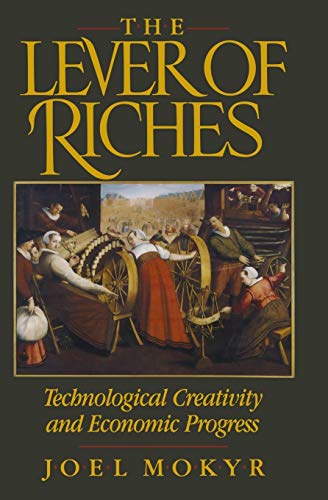
LEVER OF RICHES: TECHNOLOGICAL CREATIVITY & ECON PROGRESS: Technological Creativity and Economic Progress
Idioma: Inglés
Publicado por Oxford University Press, 1992
ISBN 10: 0195074777 ISBN 13: 9780195074772
Librería: WorldofBooks, Goring-By-Sea, WS, Reino Unido
Calificación del vendedor: 5 de 5 estrellas

EUR 10,78
Envío por EUR 6,47
Se envía de Reino Unido a Estados Unidos de AmericaCantidad disponible: 1 disponibles
Añadir al carritoPaperback. Condición: Very Good. The book has been read, but is in excellent condition. Pages are intact and not marred by notes or highlighting. The spine remains undamaged.
-

LEVER OF RICHES: TECHNOLOGICAL CREATIVITY & ECON PROGRESS: Technological Creativity and Economic Progress
Idioma: Inglés
Publicado por Oxford University Press, 1992
ISBN 10: 0195074777 ISBN 13: 9780195074772
Librería: Zoom Books East, Glendale Heights, IL, Estados Unidos de America
Calificación del vendedor: 5 de 5 estrellas
EUR 18,10
Gastos de envío gratis
Se envía dentro de Estados Unidos de AmericaCantidad disponible: 1 disponibles
Añadir al carritoCondición: very_good. Book is in very good condition and may include minimal underlining highlighting. The book can also include "From the library of" labels. May not contain miscellaneous items toys, dvds, etc. . We offer 100% money back guarantee and 24 7 customer service.
-

LEVER OF RICHES: TECHNOLOGICAL CREATIVITY & ECON PROGRESS: Technological Creativity and Economic Progress
Idioma: Inglés
Publicado por Oxford University Press, 1992
ISBN 10: 0195074777 ISBN 13: 9780195074772
Librería: Zoom Books Company, Lynden, WA, Estados Unidos de America
Calificación del vendedor: 5 de 5 estrellas
EUR 18,15
Gastos de envío gratis
Se envía dentro de Estados Unidos de AmericaCantidad disponible: 1 disponibles
Añadir al carritoCondición: very_good. Book is in very good condition and may include minimal underlining highlighting. The book can also include "From the library of" labels. May not contain miscellaneous items toys, dvds, etc. . We offer 100% money back guarantee and 24 7 customer service.
-
The Lever of Riches: Technological Creativity and Economic Progre
Idioma: Inglés
Publicado por Oxford University Press, 1992
ISBN 10: 0195074777 ISBN 13: 9780195074772
Librería: Hawking Books, Edgewood, TX, Estados Unidos de America
Calificación del vendedor: 4 de 5 estrellas

EUR 19,58
Gastos de envío gratis
Se envía dentro de Estados Unidos de AmericaCantidad disponible: 1 disponibles
Añadir al carritoCondición: Very Good. Very Good Condition. Has some wear. Five star seller - Buy with confidence!
-
The Lever of Riches: Technological Creativity and Economic Progress
Idioma: Inglés
Publicado por Oxford University Press, 1992
ISBN 10: 0195074777 ISBN 13: 9780195074772
Librería: Textbooks_Source, Columbia, MO, Estados Unidos de America
Calificación del vendedor: 5 de 5 estrellas
EUR 16,23
Envío por EUR 3,44
Se envía dentro de Estados Unidos de AmericaCantidad disponible: 3 disponibles
Añadir al carritopaperback. Condición: Good. Ships in a BOX from Central Missouri! May not include working access code. Will not include dust jacket. Has used sticker(s) and some writing or highlighting. UPS shipping for most packages, (Priority Mail for AK/HI/APO/PO Boxes).
-
LEVER OF RICHES: TECHNOLOGICAL CREATIVITY & ECON PROGRESS: Technological Creativity and Economic Progress
Idioma: Inglés
Publicado por Oxford University Press, 1992
ISBN 10: 0195074777 ISBN 13: 9780195074772
Librería: Barnes & Nooyen Books, Spring, TX, Estados Unidos de America
Calificación del vendedor: 5 de 5 estrellas
EUR 21,67
Gastos de envío gratis
Se envía dentro de Estados Unidos de AmericaCantidad disponible: 1 disponibles
Añadir al carritopaperback. Condición: New. New Condition, Paperback book,
-

Lever of Riches : Technological Creativity and Economic Progress
Idioma: Inglés
Publicado por Oxford University Press, 1992
ISBN 10: 0195074777 ISBN 13: 9780195074772
Librería: GreatBookPrices, Columbia, MD, Estados Unidos de America
Calificación del vendedor: 5 de 5 estrellas
EUR 19,34
Envío por EUR 2,27
Se envía dentro de Estados Unidos de AmericaCantidad disponible: Más de 20 disponibles
Añadir al carritoCondición: New.
-

Lever of Riches : Technological Creativity and Economic Progress
Idioma: Inglés
Publicado por Oxford University Press, 1992
ISBN 10: 0195074777 ISBN 13: 9780195074772
Librería: GreatBookPrices, Columbia, MD, Estados Unidos de America
Calificación del vendedor: 5 de 5 estrellas
EUR 19,36
Envío por EUR 2,27
Se envía dentro de Estados Unidos de AmericaCantidad disponible: Más de 20 disponibles
Añadir al carritoCondición: As New. Unread book in perfect condition.
-

The Lever of Riches
Idioma: Inglés
Publicado por Oxford University Press Inc, US, 1992
ISBN 10: 0195074777 ISBN 13: 9780195074772
Librería: Rarewaves.com USA, London, LONDO, Reino Unido
Calificación del vendedor: 5 de 5 estrellas
EUR 23,15
Gastos de envío gratis
Se envía de Reino Unido a Estados Unidos de AmericaCantidad disponible: Más de 20 disponibles
Añadir al carritoPaperback. Condición: New. Why are some nations more technically creative than others and why do some highly innovative societies eventually stagnate? In this provocative study of the value and meaning of technological advance, Joel Mokyr considers how past physical and social conditions have influenced the development and reception of new ideas, and shows how these trends can guide future industrial strategies at a time when more countries than ever before are competing for the rewards of technical ingenuity.
-

The Lever of Riches: Technological Creativity and Economic Progress (Paperback or Softback)
Idioma: Inglés
Publicado por Oxford University Press, USA 4/9/1992, 1992
ISBN 10: 0195074777 ISBN 13: 9780195074772
Librería: BargainBookStores, Grand Rapids, MI, Estados Unidos de America
Calificación del vendedor: 5 de 5 estrellas
EUR 30,44
Gastos de envío gratis
Se envía dentro de Estados Unidos de AmericaCantidad disponible: 5 disponibles
Añadir al carritoPaperback or Softback. Condición: New. The Lever of Riches: Technological Creativity and Economic Progress. Book.
-

The Lever of Riches
Idioma: Inglés
Publicado por Oxford University Press Inc, US, 1992
ISBN 10: 0195074777 ISBN 13: 9780195074772
Librería: Rarewaves USA, OSWEGO, IL, Estados Unidos de America
Calificación del vendedor: 5 de 5 estrellas
EUR 34,66
Gastos de envío gratis
Se envía dentro de Estados Unidos de AmericaCantidad disponible: Más de 20 disponibles
Añadir al carritoPaperback. Condición: New. Why are some nations more technically creative than others and why do some highly innovative societies eventually stagnate? In this provocative study of the value and meaning of technological advance, Joel Mokyr considers how past physical and social conditions have influenced the development and reception of new ideas, and shows how these trends can guide future industrial strategies at a time when more countries than ever before are competing for the rewards of technical ingenuity.
-
LEVER OF RICHES: TECHNOLOGICAL CREATIVITY & ECON PROGRESS: Technological Creativity and Economic Progress
Idioma: Inglés
Publicado por Oxford University Press, 1992
ISBN 10: 0195074777 ISBN 13: 9780195074772
Librería: Ria Christie Collections, Uxbridge, Reino Unido
Calificación del vendedor: 5 de 5 estrellas
EUR 20,95
Envío por EUR 13,84
Se envía de Reino Unido a Estados Unidos de AmericaCantidad disponible: Más de 20 disponibles
Añadir al carritoCondición: New. In.
-

The Lever of Riches (Paperback)
Idioma: Inglés
Publicado por Oxford University Press Inc, New York, 1992
ISBN 10: 0195074777 ISBN 13: 9780195074772
Librería: Grand Eagle Retail, Bensenville, IL, Estados Unidos de America
Calificación del vendedor: 5 de 5 estrellas
EUR 35,18
Gastos de envío gratis
Se envía dentro de Estados Unidos de AmericaCantidad disponible: 1 disponibles
Añadir al carritoPaperback. Condición: new. Paperback. In a world of supercomputers, genetic engineering, and fiber optics, technological creativity is ever more the key to economic success. But why are some nations more creative than others, and why do some highly innovative societies--such as ancient China, or Britain in the industrial revolution--pass into stagnation? Beginning with a fascinating, concise history of technological progress, Mokyr sets the background for his analysis by tracing themajor inventions and innovations that have transformed society since ancient Greece and Rome. What emerges from this survey is often surprising: the classical world, for instance, was largely barren ofnew technology, the relatively backward society of medieval Europe bristled with inventions, and the period between the Reformation and the Industrial Revolution was one of slow and unspectacular progress in technology, despite the tumultuous developments associated with the Voyages of Discovery and the Scientific Revolution.What were the causes of technological creativity? Mokyr distinguishes between the relationship of inventors and their physical environment--which determinedtheir willingness to challenge nature--and the social environment, which determined the openness to new ideas. He discusses a long list of such factors, showing how they interact to help or hinder anation's creativity, and then illustrates them by a number of detailed comparative studies, examining the differences between Europe and China, between classical antiquity and medieval Europe, and between Britain and the rest of Europe during the industrial revolution. He examines such aspects as the role of the state (the Chinese gave up a millennium-wide lead in shipping to the Europeans, for example, when an Emperor banned large ocean-going vessels), the impact of science, as well asreligion, politics, and even nutrition. He questions the importance of such commonly-cited factors as the spill-over benefits of war, the abundance of natural resources, life expectancy, and laborcosts. Today, an ever greater number of industrial economies are competing in the global market, locked in a struggle that revolves around technological ingenuity. The Lever of Riches, with its keen analysis derived from a sweeping survey of creativity throughout history, offers telling insights into the question of how Western economies can maintain, and developing nations can unlock, their creative potential. Why are some nations more technically creative than others and why do some highly innovative societies eventually stagnate? In this study of the value and meaning of technological advance, Joel Mokyr considers how past physical and social conditions have influenced the development and reception of new ideas. Shipping may be from multiple locations in the US or from the UK, depending on stock availability.
-

Lever of Riches : Technological Creativity and Economic Progress
Idioma: Inglés
Publicado por Oxford University Press, 1992
ISBN 10: 0195074777 ISBN 13: 9780195074772
Librería: GreatBookPricesUK, Woodford Green, Reino Unido
Calificación del vendedor: 5 de 5 estrellas
EUR 20,50
Envío por EUR 17,34
Se envía de Reino Unido a Estados Unidos de AmericaCantidad disponible: Más de 20 disponibles
Añadir al carritoCondición: New.
-
The Lever of Riches: Technological Creativity and Economic Progress
Idioma: Inglés
Publicado por Oxford University Press, U.S.A., 1992
ISBN 10: 0195074777 ISBN 13: 9780195074772
Librería: Anybook.com, Lincoln, Reino Unido
Calificación del vendedor: 5 de 5 estrellas
EUR 22,74
Envío por EUR 15,49
Se envía de Reino Unido a Estados Unidos de AmericaCantidad disponible: 1 disponibles
Añadir al carritoCondición: Fair. This is an ex-library book and may have the usual library/used-book markings inside.This book has soft covers. In fair condition, suitable as a study copy. Please note the Image in this listing is a stock photo and may not match the covers of the actual item,400grams, ISBN:9780195074772.
-

Lever of Riches : Technological Creativity and Economic Progress
Idioma: Inglés
Publicado por Oxford University Press, 1992
ISBN 10: 0195074777 ISBN 13: 9780195074772
Librería: GreatBookPricesUK, Woodford Green, Reino Unido
Calificación del vendedor: 5 de 5 estrellas
EUR 22,44
Envío por EUR 17,34
Se envía de Reino Unido a Estados Unidos de AmericaCantidad disponible: Más de 20 disponibles
Añadir al carritoCondición: As New. Unread book in perfect condition.
-
Lever of Riches: Technological Creativity and Economic Progress
Librería: Revaluation Books, Exeter, Reino Unido
Calificación del vendedor: 5 de 5 estrellas
EUR 40,49
Envío por EUR 11,56
Se envía de Reino Unido a Estados Unidos de AmericaCantidad disponible: 2 disponibles
Añadir al carritoPaperback. Condición: Brand New. reprint edition. 360 pages. 8.00x5.75x0.50 inches. In Stock.
-
The Lever of Riches: Technological Creativity and Economic Progress
Idioma: Inglés
Publicado por Oxford University Press, 1992
ISBN 10: 0195074777 ISBN 13: 9780195074772
Librería: London Bridge Books, London, Reino Unido
Calificación del vendedor: 5 de 5 estrellas
EUR 18,12
Envío por EUR 52,01
Se envía de Reino Unido a Estados Unidos de AmericaCantidad disponible: 2 disponibles
Añadir al carritoPaperback. Condición: Good.
-
The Lever of Riches: Technological Creativity and Economic Progress
Idioma: Inglés
Publicado por Oxford University Press, 1992
ISBN 10: 0195074777 ISBN 13: 9780195074772
Librería: BennettBooksLtd, Los Angeles, CA, Estados Unidos de America
Calificación del vendedor: 5 de 5 estrellas
EUR 68,82
Envío por EUR 5,99
Se envía dentro de Estados Unidos de AmericaCantidad disponible: 1 disponibles
Añadir al carritopaperback. Condición: New. In shrink wrap. Looks like an interesting title!
-

The Lever of Riches
Idioma: Inglés
Publicado por Oxford University Press Inc, US, 1992
ISBN 10: 0195074777 ISBN 13: 9780195074772
Librería: Rarewaves USA United, OSWEGO, IL, Estados Unidos de America
Calificación del vendedor: 5 de 5 estrellas
EUR 36,22
Envío por EUR 43,06
Se envía dentro de Estados Unidos de AmericaCantidad disponible: Más de 20 disponibles
Añadir al carritoPaperback. Condición: New. Why are some nations more technically creative than others and why do some highly innovative societies eventually stagnate? In this provocative study of the value and meaning of technological advance, Joel Mokyr considers how past physical and social conditions have influenced the development and reception of new ideas, and shows how these trends can guide future industrial strategies at a time when more countries than ever before are competing for the rewards of technical ingenuity.
-

The Lever of Riches
Idioma: Inglés
Publicado por Oxford University Press Inc, US, 1992
ISBN 10: 0195074777 ISBN 13: 9780195074772
Librería: Rarewaves.com UK, London, Reino Unido
Calificación del vendedor: 5 de 5 estrellas
EUR 20,51
Envío por EUR 75,12
Se envía de Reino Unido a Estados Unidos de AmericaCantidad disponible: Más de 20 disponibles
Añadir al carritoPaperback. Condición: New. Why are some nations more technically creative than others and why do some highly innovative societies eventually stagnate? In this provocative study of the value and meaning of technological advance, Joel Mokyr considers how past physical and social conditions have influenced the development and reception of new ideas, and shows how these trends can guide future industrial strategies at a time when more countries than ever before are competing for the rewards of technical ingenuity.
-
The Lever of Riches
Idioma: Inglés
Publicado por Oxford University Press, 1992
ISBN 10: 0195074777 ISBN 13: 9780195074772
Librería: PBShop.store US, Wood Dale, IL, Estados Unidos de America
Calificación del vendedor: 5 de 5 estrellas
EUR 23,64
Gastos de envío gratis
Se envía dentro de Estados Unidos de AmericaCantidad disponible: Más de 20 disponibles
Añadir al carritoPAP. Condición: New. New Book. Shipped from UK. THIS BOOK IS PRINTED ON DEMAND. Established seller since 2000.
-
The Lever of Riches
Idioma: Inglés
Publicado por Oxford University Press, 1992
ISBN 10: 0195074777 ISBN 13: 9780195074772
Librería: PBShop.store UK, Fairford, GLOS, Reino Unido
Calificación del vendedor: 4 de 5 estrellas
EUR 21,40
Envío por EUR 4,81
Se envía de Reino Unido a Estados Unidos de AmericaCantidad disponible: Más de 20 disponibles
Añadir al carritoPAP. Condición: New. New Book. Delivered from our UK warehouse in 4 to 14 business days. THIS BOOK IS PRINTED ON DEMAND. Established seller since 2000.
-
The Lever of Riches: Technological Creativity and Economic Progress (eng)
Idioma: Inglés
Publicado por Oxford University Press, 1992
ISBN 10: 0195074777 ISBN 13: 9780195074772
Librería: Brook Bookstore On Demand, Napoli, NA, Italia
Calificación del vendedor: 4 de 5 estrellas
EUR 23,97
Envío por EUR 5,50
Se envía de Italia a Estados Unidos de AmericaCantidad disponible: Más de 20 disponibles
Añadir al carritoCondición: new. Questo è un articolo print on demand.
-
The Lever of Riches
Idioma: Inglés
Publicado por Oxford University Press, 1992
ISBN 10: 0195074777 ISBN 13: 9780195074772
Librería: Majestic Books, Hounslow, Reino Unido
Calificación del vendedor: 4 de 5 estrellas
EUR 29,37
Envío por EUR 7,51
Se envía de Reino Unido a Estados Unidos de AmericaCantidad disponible: 4 disponibles
Añadir al carritoCondición: New. Print on Demand pp. 368 47 Illus.
-
The Lever of Riches
Idioma: Inglés
Publicado por Oxford University Press OUP, 1992
ISBN 10: 0195074777 ISBN 13: 9780195074772
Librería: Books Puddle, New York, NY, Estados Unidos de America
Calificación del vendedor: 4 de 5 estrellas
EUR 34,66
Envío por EUR 3,44
Se envía dentro de Estados Unidos de AmericaCantidad disponible: 4 disponibles
Añadir al carritoCondición: New. Print on Demand pp. 368.
-
The Lever of Riches
Idioma: Inglés
Publicado por Oxford University Press, 1992
ISBN 10: 0195074777 ISBN 13: 9780195074772
Librería: Biblios, Frankfurt am main, HESSE, Alemania
Calificación del vendedor: 4 de 5 estrellas
EUR 30,28
Envío por EUR 9,95
Se envía de Alemania a Estados Unidos de AmericaCantidad disponible: 4 disponibles
Añadir al carritoCondición: New. PRINT ON DEMAND pp. 368.
-
The Lever of Riches: Technological Creativity and Economic Progress
Idioma: Inglés
Publicado por Oxford University Press Inc, 1992
ISBN 10: 0195074777 ISBN 13: 9780195074772
Librería: THE SAINT BOOKSTORE, Southport, Reino Unido
Calificación del vendedor: 5 de 5 estrellas
EUR 23,34
Envío por EUR 17,88
Se envía de Reino Unido a Estados Unidos de AmericaCantidad disponible: Más de 20 disponibles
Añadir al carritoPaperback / softback. Condición: New. This item is printed on demand. New copy - Usually dispatched within 5-9 working days.
-
The Lever of Riches (Paperback)
Idioma: Inglés
Publicado por Oxford University Press Inc, New York, 1992
ISBN 10: 0195074777 ISBN 13: 9780195074772
Librería: AussieBookSeller, Truganina, VIC, Australia
Calificación del vendedor: 5 de 5 estrellas
EUR 33,45
Envío por EUR 31,87
Se envía de Australia a Estados Unidos de AmericaCantidad disponible: 1 disponibles
Añadir al carritoPaperback. Condición: new. Paperback. In a world of supercomputers, genetic engineering, and fiber optics, technological creativity is ever more the key to economic success. But why are some nations more creative than others, and why do some highly innovative societies--such as ancient China, or Britain in the industrial revolution--pass into stagnation? Beginning with a fascinating, concise history of technological progress, Mokyr sets the background for his analysis by tracing themajor inventions and innovations that have transformed society since ancient Greece and Rome. What emerges from this survey is often surprising: the classical world, for instance, was largely barren ofnew technology, the relatively backward society of medieval Europe bristled with inventions, and the period between the Reformation and the Industrial Revolution was one of slow and unspectacular progress in technology, despite the tumultuous developments associated with the Voyages of Discovery and the Scientific Revolution.What were the causes of technological creativity? Mokyr distinguishes between the relationship of inventors and their physical environment--which determinedtheir willingness to challenge nature--and the social environment, which determined the openness to new ideas. He discusses a long list of such factors, showing how they interact to help or hinder anation's creativity, and then illustrates them by a number of detailed comparative studies, examining the differences between Europe and China, between classical antiquity and medieval Europe, and between Britain and the rest of Europe during the industrial revolution. He examines such aspects as the role of the state (the Chinese gave up a millennium-wide lead in shipping to the Europeans, for example, when an Emperor banned large ocean-going vessels), the impact of science, as well asreligion, politics, and even nutrition. He questions the importance of such commonly-cited factors as the spill-over benefits of war, the abundance of natural resources, life expectancy, and laborcosts. Today, an ever greater number of industrial economies are competing in the global market, locked in a struggle that revolves around technological ingenuity. The Lever of Riches, with its keen analysis derived from a sweeping survey of creativity throughout history, offers telling insights into the question of how Western economies can maintain, and developing nations can unlock, their creative potential. Why are some nations more technically creative than others and why do some highly innovative societies eventually stagnate? In this study of the value and meaning of technological advance, Joel Mokyr considers how past physical and social conditions have influenced the development and reception of new ideas. This item is printed on demand. Shipping may be from our Sydney, NSW warehouse or from our UK or US warehouse, depending on stock availability.
-
The Lever of Riches (Paperback)
Idioma: Inglés
Publicado por Oxford University Press Inc, New York, 1992
ISBN 10: 0195074777 ISBN 13: 9780195074772
Librería: CitiRetail, Stevenage, Reino Unido
Calificación del vendedor: 5 de 5 estrellas
EUR 24,99
Envío por EUR 42,76
Se envía de Reino Unido a Estados Unidos de AmericaCantidad disponible: 1 disponibles
Añadir al carritoPaperback. Condición: new. Paperback. In a world of supercomputers, genetic engineering, and fiber optics, technological creativity is ever more the key to economic success. But why are some nations more creative than others, and why do some highly innovative societies--such as ancient China, or Britain in the industrial revolution--pass into stagnation? Beginning with a fascinating, concise history of technological progress, Mokyr sets the background for his analysis by tracing themajor inventions and innovations that have transformed society since ancient Greece and Rome. What emerges from this survey is often surprising: the classical world, for instance, was largely barren ofnew technology, the relatively backward society of medieval Europe bristled with inventions, and the period between the Reformation and the Industrial Revolution was one of slow and unspectacular progress in technology, despite the tumultuous developments associated with the Voyages of Discovery and the Scientific Revolution.What were the causes of technological creativity? Mokyr distinguishes between the relationship of inventors and their physical environment--which determinedtheir willingness to challenge nature--and the social environment, which determined the openness to new ideas. He discusses a long list of such factors, showing how they interact to help or hinder anation's creativity, and then illustrates them by a number of detailed comparative studies, examining the differences between Europe and China, between classical antiquity and medieval Europe, and between Britain and the rest of Europe during the industrial revolution. He examines such aspects as the role of the state (the Chinese gave up a millennium-wide lead in shipping to the Europeans, for example, when an Emperor banned large ocean-going vessels), the impact of science, as well asreligion, politics, and even nutrition. He questions the importance of such commonly-cited factors as the spill-over benefits of war, the abundance of natural resources, life expectancy, and laborcosts. Today, an ever greater number of industrial economies are competing in the global market, locked in a struggle that revolves around technological ingenuity. The Lever of Riches, with its keen analysis derived from a sweeping survey of creativity throughout history, offers telling insights into the question of how Western economies can maintain, and developing nations can unlock, their creative potential. Why are some nations more technically creative than others and why do some highly innovative societies eventually stagnate? In this study of the value and meaning of technological advance, Joel Mokyr considers how past physical and social conditions have influenced the development and reception of new ideas. This item is printed on demand. Shipping may be from our UK warehouse or from our Australian or US warehouses, depending on stock availability.

