

Importe total (1 artículo artículos):
Destino del pedido:

9780190843861 - Second Age of Computer Science: From ALGOL Genes to Neural Nets de DasGupta, Subrata (23 resultados)
Ir a los resultados principales
Filtros de búsqueda
Tipo de artículo
- Todos los tipos de productos
- Libros (23)
- Revistas y publicaciones (No hay ningún otro resultado que coincida con este filtro.)
- Cómics (No hay ningún otro resultado que coincida con este filtro.)
- Partituras (No hay ningún otro resultado que coincida con este filtro.)
- Arte, grabados y pósters (No hay ningún otro resultado que coincida con este filtro.)
- Fotografías (No hay ningún otro resultado que coincida con este filtro.)
- Mapas (No hay ningún otro resultado que coincida con este filtro.)
- Manuscritos y coleccionismo de papel (No hay ningún otro resultado que coincida con este filtro.)
Condición Más información
- Nuevo (20)
- Como nuevo, Excelente o Muy bueno (2)
- Bueno o Aceptable (1)
- Regular o Pobre (No hay ningún otro resultado que coincida con este filtro.)
- Tal como se indica (No hay ningún otro resultado que coincida con este filtro.)
Encuadernación
- Todas
- Tapa dura (23)
- Tapa blanda (No hay ningún otro resultado que coincida con este filtro.)
Más atributos
- Primera edición (No hay ningún otro resultado que coincida con este filtro.)
- Firmado (No hay ningún otro resultado que coincida con este filtro.)
- Sobrecubierta (No hay ningún otro resultado que coincida con este filtro.)
- Con imágenes (5)
- No impresión bajo demanda (16)
Idioma (1)
Precio
- Cualquier precio
- Menos de EUR 20 (No hay ningún otro resultado que coincida con este filtro.)
- EUR 20 a EUR 45
- Más de EUR 45
Gastos de envío gratis
Ubicación del vendedor
Valoración de los vendedores
-
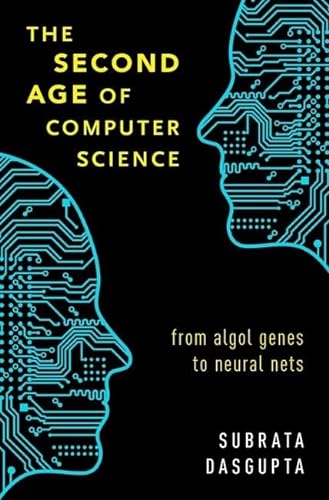
Second Age of Computer Science: From ALGOL Genes to Neural Nets
Librería: ThriftBooks-Dallas, Dallas, TX, Estados Unidos de America
Calificación del vendedor: 5 de 5 estrellas

EUR 44,82
Gastos de envío gratis
Se envía dentro de Estados Unidos de AmericaCantidad disponible: 1 disponibles
Añadir al carritoHardcover. Condición: Good. No Jacket. Former library book; Pages can have notes/highlighting. Spine may show signs of wear. ~ ThriftBooks: Read More, Spend Less.
-
Second Age of Computer Science : From Algol Genes to Neural Nets
Idioma: Inglés
Publicado por Oxford University Press, 2018
ISBN 10: 0190843861 ISBN 13: 9780190843861
Librería: GreatBookPrices, Columbia, MD, Estados Unidos de America
Calificación del vendedor: 5 de 5 estrellas
EUR 47,51
Envío por EUR 2,29
Se envía dentro de Estados Unidos de AmericaCantidad disponible: Más de 20 disponibles
Añadir al carritoCondición: As New. Unread book in perfect condition.
-

The Second Age of Computer Science
Idioma: Inglés
Publicado por Oxford University Press Inc, US, 2018
ISBN 10: 0190843861 ISBN 13: 9780190843861
Librería: Rarewaves.com USA, London, LONDO, Reino Unido
Calificación del vendedor: 5 de 5 estrellas
EUR 56,92
Gastos de envío gratis
Se envía de Reino Unido a Estados Unidos de AmericaCantidad disponible: Más de 20 disponibles
Añadir al carritoHardback. Condición: New. By the end of the 1960s, a new discipline named computer science had come into being. A new scientific paradigm--the 'computational paradigm'--was in place, suggesting that computer science had reached a certain level of maturity. Yet as a science it was still precociously young. New forces, some technological, some socio-economic, some cognitive impinged upon it, the outcome of which was that new kinds of computational problems arose over the next two decades. Indeed, by the beginning of the 1990's the structure of the computational paradigm looked markedly different in many important respects from how it was at the end of the 1960s. Author Subrata Dasgupta named the two decades from 1970 to 1990 as the second age of computer science to distinguish it from the preceding genesis of the science and the age of the Internet/World Wide Web that followed.This book describes the evolution of computer science in this second age in the form of seven overlapping, intermingling, parallel histories that unfold concurrently in the course of the two decades. Certain themes characteristic of this second age thread through this narrative: the desire for a genuine science of computing; the realization that computing is as much a human experience as it is a technological one; the search for a unified theory of intelligence spanning machines and mind; the desire to liberate the computational mind from the shackles of sequentiality; and, most ambitiously, a quest to subvert the very core of the computational paradigm itself. We see how the computer scientists of the second age address these desires and challenges, in what manner they succeed or fail and how, along the way, the shape of computational paradigm was altered.And to complete this history, the author asks and seeks to answer the question of how computer science shows evidence of progress over the course of its second age.
-
Second Age of Computer Science : From Algol Genes to Neural Nets
Idioma: Inglés
Publicado por Oxford University Press, 2018
ISBN 10: 0190843861 ISBN 13: 9780190843861
Librería: GreatBookPrices, Columbia, MD, Estados Unidos de America
Calificación del vendedor: 5 de 5 estrellas
EUR 54,57
Envío por EUR 2,29
Se envía dentro de Estados Unidos de AmericaCantidad disponible: Más de 20 disponibles
Añadir al carritoCondición: New.
-
Second Age of Computer Science
Idioma: Inglés
Publicado por Oxford University Press, 2018
ISBN 10: 0190843861 ISBN 13: 9780190843861
Librería: PBShop.store US, Wood Dale, IL, Estados Unidos de America
Calificación del vendedor: 5 de 5 estrellas
EUR 57,27
Gastos de envío gratis
Se envía dentro de Estados Unidos de AmericaCantidad disponible: 15 disponibles
Añadir al carritoHRD. Condición: New. New Book. Shipped from UK. Established seller since 2000.
-
The Second Age of Computer Science: From Algol Genes to Neural Nets
Idioma: Inglés
Publicado por Oxford University Press, 2018
ISBN 10: 0190843861 ISBN 13: 9780190843861
Librería: Ria Christie Collections, Uxbridge, Reino Unido
Calificación del vendedor: 5 de 5 estrellas
EUR 44,68
Envío por EUR 13,86
Se envía de Reino Unido a Estados Unidos de AmericaCantidad disponible: Más de 20 disponibles
Añadir al carritoCondición: New. In.
-
Second Age of Computer Science
Idioma: Inglés
Publicado por Oxford University Press, 2018
ISBN 10: 0190843861 ISBN 13: 9780190843861
Librería: PBShop.store UK, Fairford, GLOS, Reino Unido
Calificación del vendedor: 5 de 5 estrellas
EUR 53,02
Envío por EUR 5,81
Se envía de Reino Unido a Estados Unidos de AmericaCantidad disponible: 15 disponibles
Añadir al carritoHRD. Condición: New. New Book. Shipped from UK. Established seller since 2000.
-
The Second Age of Computer Science: From Algol Genes to Neural Nets (eng)
Idioma: Inglés
Publicado por Oxford University Press, 2018
ISBN 10: 0190843861 ISBN 13: 9780190843861
Librería: Brook Bookstore On Demand, Napoli, NA, Italia
Calificación del vendedor: 3 de 5 estrellas

EUR 51,86
Envío por EUR 6,80
Se envía de Italia a Estados Unidos de AmericaCantidad disponible: Más de 20 disponibles
Añadir al carritoCondición: new.
-
Second Age of Computer Science : From Algol Genes to Neural Nets
Idioma: Inglés
Publicado por Oxford University Press, 2018
ISBN 10: 0190843861 ISBN 13: 9780190843861
Librería: GreatBookPricesUK, Woodford Green, Reino Unido
Calificación del vendedor: 5 de 5 estrellas
EUR 44,67
Envío por EUR 17,36
Se envía de Reino Unido a Estados Unidos de AmericaCantidad disponible: Más de 20 disponibles
Añadir al carritoCondición: New.
-
Second Age of Computer Science : From Algol Genes to Neural Nets
Idioma: Inglés
Publicado por Oxford University Press, 2018
ISBN 10: 0190843861 ISBN 13: 9780190843861
Librería: GreatBookPricesUK, Woodford Green, Reino Unido
Calificación del vendedor: 5 de 5 estrellas
EUR 48,54
Envío por EUR 17,36
Se envía de Reino Unido a Estados Unidos de AmericaCantidad disponible: Más de 20 disponibles
Añadir al carritoCondición: As New. Unread book in perfect condition.
-
The Second Age of Computer Science: From Algol Genes to Neural Nets
Librería: Revaluation Books, Exeter, Reino Unido
Calificación del vendedor: 5 de 5 estrellas
EUR 54,91
Envío por EUR 14,47
Se envía de Reino Unido a Estados Unidos de AmericaCantidad disponible: 1 disponibles
Añadir al carritoHardcover. Condición: Brand New. 326 pages. 9.50x6.50x1.00 inches. In Stock.
-
The Second Age of Computer Science (Hardcover)
Idioma: Inglés
Publicado por Oxford University Press Inc, New York, 2018
ISBN 10: 0190843861 ISBN 13: 9780190843861
Librería: Grand Eagle Retail, Bensenville, IL, Estados Unidos de America
Calificación del vendedor: 5 de 5 estrellas
EUR 76,09
Gastos de envío gratis
Se envía dentro de Estados Unidos de AmericaCantidad disponible: 1 disponibles
Añadir al carritoHardcover. Condición: new. Hardcover. By the end of the 1960s, a new discipline named computer science had come into being. A new scientific paradigm--the 'computational paradigm'--was in place, suggesting that computer science had reached a certain level of maturity. Yet as a science it was still precociously young. New forces, some technological, some socio-economic, some cognitive impinged upon it, the outcome of which was that new kinds of computational problems arose over the next two decades.Indeed, by the beginning of the 1990's the structure of the computational paradigm looked markedly different in many important respects from how it was at the end of the 1960s. Author Subrata Dasguptanamed the two decades from 1970 to 1990 as the second age of computer science to distinguish it from the preceding genesis of the science and the age of the Internet/World Wide Web that followed.This book describes the evolution of computer science in this second age in the form of seven overlapping, intermingling, parallel histories that unfold concurrently in the course of the two decades. Certain themes characteristic of this second age thread through this narrative:the desire for a genuine science of computing; the realization that computing is as much a human experience as it is a technological one; the search for a unified theory of intelligence spanning machinesand mind; the desire to liberate the computational mind from the shackles of sequentiality; and, most ambitiously, a quest to subvert the very core of the computational paradigm itself. We see how the computer scientists of the second age address these desires and challenges, in what manner they succeed or fail and how, along the way, the shape of computational paradigm was altered.And to complete this history, the author asks and seeks to answer the question of howcomputer science shows evidence of progress over the course of its second age. Between the genesis of computer science in the 1960s and the advent of the World Wide Web around 1990, computer science evolved in significant ways. The author has termed this period the "second age of computer science." This book describes its evolution in the form of several interconnected parallel histories. Shipping may be from multiple locations in the US or from the UK, depending on stock availability.
-
The Second Age of Computer Science: From Algol Genes to Neural Nets
Idioma: Inglés
Publicado por Oxford University Press Inc, 2018
ISBN 10: 0190843861 ISBN 13: 9780190843861
Librería: Kennys Bookshop and Art Galleries Ltd., Galway, GY, Irlanda
Calificación del vendedor: 5 de 5 estrellas
EUR 84,00
Envío por EUR 10,50
Se envía de Irlanda a Estados Unidos de AmericaCantidad disponible: Más de 20 disponibles
Añadir al carritoCondición: New. 2018. Hardcover. . . . . .
-
The Second Age of Computer Science: From Algol Genes to Neural Nets
Librería: Revaluation Books, Exeter, Reino Unido
Calificación del vendedor: 5 de 5 estrellas
EUR 93,66
Envío por EUR 14,47
Se envía de Reino Unido a Estados Unidos de AmericaCantidad disponible: 2 disponibles
Añadir al carritoHardcover. Condición: Brand New. 326 pages. 9.50x6.50x1.00 inches. In Stock.
-
The Second Age of Computer Science: From Algol Genes to Neural Nets
Idioma: Inglés
Publicado por Oxford University Press Inc, 2018
ISBN 10: 0190843861 ISBN 13: 9780190843861
Librería: Kennys Bookstore, Olney, MD, Estados Unidos de America
Calificación del vendedor: 5 de 5 estrellas
EUR 105,52
Envío por EUR 9,11
Se envía dentro de Estados Unidos de AmericaCantidad disponible: Más de 20 disponibles
Añadir al carritoCondición: New. 2018. Hardcover. . . . . . Books ship from the US and Ireland.
-

The Second Age of Computer Science
Idioma: Inglés
Publicado por Oxford University Press Inc, US, 2018
ISBN 10: 0190843861 ISBN 13: 9780190843861
Librería: Rarewaves.com UK, London, Reino Unido
Calificación del vendedor: 5 de 5 estrellas
EUR 47,95
Envío por EUR 75,23
Se envía de Reino Unido a Estados Unidos de AmericaCantidad disponible: Más de 20 disponibles
Añadir al carritoHardback. Condición: New. By the end of the 1960s, a new discipline named computer science had come into being. A new scientific paradigm--the 'computational paradigm'--was in place, suggesting that computer science had reached a certain level of maturity. Yet as a science it was still precociously young. New forces, some technological, some socio-economic, some cognitive impinged upon it, the outcome of which was that new kinds of computational problems arose over the next two decades. Indeed, by the beginning of the 1990's the structure of the computational paradigm looked markedly different in many important respects from how it was at the end of the 1960s. Author Subrata Dasgupta named the two decades from 1970 to 1990 as the second age of computer science to distinguish it from the preceding genesis of the science and the age of the Internet/World Wide Web that followed.This book describes the evolution of computer science in this second age in the form of seven overlapping, intermingling, parallel histories that unfold concurrently in the course of the two decades. Certain themes characteristic of this second age thread through this narrative: the desire for a genuine science of computing; the realization that computing is as much a human experience as it is a technological one; the search for a unified theory of intelligence spanning machines and mind; the desire to liberate the computational mind from the shackles of sequentiality; and, most ambitiously, a quest to subvert the very core of the computational paradigm itself. We see how the computer scientists of the second age address these desires and challenges, in what manner they succeed or fail and how, along the way, the shape of computational paradigm was altered.And to complete this history, the author asks and seeks to answer the question of how computer science shows evidence of progress over the course of its second age.
-
The Second Age of Computer Science: From Algol Genes to Neural Nets
Idioma: Inglés
Publicado por Oxford University Press, 2018
ISBN 10: 0190843861 ISBN 13: 9780190843861
Librería: Majestic Books, Hounslow, Reino Unido
Calificación del vendedor: 4 de 5 estrellas

EUR 62,35
Envío por EUR 7,52
Se envía de Reino Unido a Estados Unidos de AmericaCantidad disponible: 4 disponibles
Añadir al carritoCondición: New. Print on Demand.
-
The Second Age of Computer Science: From Algol Genes to Neural Nets
Idioma: Inglés
Publicado por Oxford University Press, 2018
ISBN 10: 0190843861 ISBN 13: 9780190843861
Librería: Books Puddle, New York, NY, Estados Unidos de America
Calificación del vendedor: 4 de 5 estrellas
EUR 68,52
Envío por EUR 3,46
Se envía dentro de Estados Unidos de AmericaCantidad disponible: 4 disponibles
Añadir al carritoCondición: New. Print on Demand.
-
The Second Age of Computer Science: From Algol Genes to Neural Nets
Idioma: Inglés
Publicado por Oxford University Press Inc, 2018
ISBN 10: 0190843861 ISBN 13: 9780190843861
Librería: THE SAINT BOOKSTORE, Southport, Reino Unido
Calificación del vendedor: 5 de 5 estrellas
EUR 50,60
Envío por EUR 20,69
Se envía de Reino Unido a Estados Unidos de AmericaCantidad disponible: Más de 20 disponibles
Añadir al carritoHardback. Condición: New. This item is printed on demand. New copy - Usually dispatched within 5-9 working days.
-
The Second Age of Computer Science: From Algol Genes to Neural Nets
Idioma: Inglés
Publicado por Oxford University Press, 2018
ISBN 10: 0190843861 ISBN 13: 9780190843861
Librería: Biblios, Frankfurt am main, HESSE, Alemania
Calificación del vendedor: 4 de 5 estrellas
EUR 62,42
Envío por EUR 9,95
Se envía de Alemania a Estados Unidos de AmericaCantidad disponible: 4 disponibles
Añadir al carritoCondición: New. PRINT ON DEMAND.
-
The Second Age of Computer Science (Hardcover)
Idioma: Inglés
Publicado por Oxford University Press Inc, New York, 2018
ISBN 10: 0190843861 ISBN 13: 9780190843861
Librería: CitiRetail, Stevenage, Reino Unido
Calificación del vendedor: 5 de 5 estrellas
EUR 49,45
Envío por EUR 42,82
Se envía de Reino Unido a Estados Unidos de AmericaCantidad disponible: 1 disponibles
Añadir al carritoHardcover. Condición: new. Hardcover. By the end of the 1960s, a new discipline named computer science had come into being. A new scientific paradigm--the 'computational paradigm'--was in place, suggesting that computer science had reached a certain level of maturity. Yet as a science it was still precociously young. New forces, some technological, some socio-economic, some cognitive impinged upon it, the outcome of which was that new kinds of computational problems arose over the next two decades.Indeed, by the beginning of the 1990's the structure of the computational paradigm looked markedly different in many important respects from how it was at the end of the 1960s. Author Subrata Dasguptanamed the two decades from 1970 to 1990 as the second age of computer science to distinguish it from the preceding genesis of the science and the age of the Internet/World Wide Web that followed.This book describes the evolution of computer science in this second age in the form of seven overlapping, intermingling, parallel histories that unfold concurrently in the course of the two decades. Certain themes characteristic of this second age thread through this narrative:the desire for a genuine science of computing; the realization that computing is as much a human experience as it is a technological one; the search for a unified theory of intelligence spanning machinesand mind; the desire to liberate the computational mind from the shackles of sequentiality; and, most ambitiously, a quest to subvert the very core of the computational paradigm itself. We see how the computer scientists of the second age address these desires and challenges, in what manner they succeed or fail and how, along the way, the shape of computational paradigm was altered.And to complete this history, the author asks and seeks to answer the question of howcomputer science shows evidence of progress over the course of its second age. Between the genesis of computer science in the 1960s and the advent of the World Wide Web around 1990, computer science evolved in significant ways. The author has termed this period the "second age of computer science." This book describes its evolution in the form of several interconnected parallel histories. This item is printed on demand. Shipping may be from our UK warehouse or from our Australian or US warehouses, depending on stock availability.
-

Second Age of Computer Science : From ALGOL Genes to Neural Nets
Librería: AHA-BUCH GmbH, Einbeck, Alemania
Calificación del vendedor: 5 de 5 estrellas
EUR 63,91
Envío por EUR 63,50
Se envía de Alemania a Estados Unidos de AmericaCantidad disponible: 2 disponibles
Añadir al carritoBuch. Condición: Neu. nach der Bestellung gedruckt Neuware - Printed after ordering - By the end of the 1960s, a new discipline named computer science had come into being. A new scientific paradigm--the 'computational paradigm'--was in place, suggesting that computer science had reached a certain level of maturity. Yet as a science it was still precociously young. New forces, some technological, some socio-economic, some cognitive impinged upon it, the outcome of which was that new kinds of computational problems arose over the next two decades. Indeed, by the beginning of the 1990's the structure of the computational paradigm looked markedly different in many important respects from how it was at the end of the 1960s. Author Subrata Dasgupta named the two decades from 1970 to 1990 as the second age of computer science to distinguish it from the preceding genesis of the science and the age of the Internet/World Wide Web that followed. This book describes the evolution of computer science in this second age in the form of seven overlapping, intermingling, parallel histories that unfold concurrently in the course of the two decades. Certain themes characteristic of this second age thread through this narrative: the desire for a genuine science of computing; the realization that computing is as much a human experience as it is a technological one; the search for a unified theory of intelligence spanning machines and mind; the desire to liberate the computational mind from the shackles of sequentiality; and, most ambitiously, a quest to subvert the very core of the computational paradigm itself. We see how the computer scientists of the second age address these desires and challenges, in what manner they succeed or fail and how, along the way, the shape of computational paradigm was altered. And to complete this history, the author asks and seeks to answer the question of how computer science shows evidence of progress over the course of its second age.
-

Second Age of Computer Science | From ALGOL Genes to Neural Nets
Librería: preigu, Osnabrück, Alemania
Calificación del vendedor: 5 de 5 estrellas
EUR 73,80
Envío por EUR 70,00
Se envía de Alemania a Estados Unidos de AmericaCantidad disponible: 5 disponibles
Añadir al carritoBuch. Condición: Neu. Second Age of Computer Science | From ALGOL Genes to Neural Nets | Subrata Dasgupta | Buch | Gebunden | Englisch | 2018 | OXFORD UNIV PR | EAN 9780190843861 | Verantwortliche Person für die EU: Libri GmbH, Europaallee 1, 36244 Bad Hersfeld, gpsr[at]libri[dot]de | Anbieter: preigu Print on Demand.


