

Importe total (1 artículo artículos):
Destino del pedido:

chattow windus (6 resultados)
Editorial :
chattow windus
Refinar con la Búsqueda avanzada
Ir a los resultados principales
Filtros de búsqueda
Tipo de artículo
- Todos los tipos de productos
- Libros (6)
- Revistas y publicaciones (No hay ningún otro resultado que coincida con este filtro.)
- Cómics (No hay ningún otro resultado que coincida con este filtro.)
- Partituras (No hay ningún otro resultado que coincida con este filtro.)
- Arte, grabados y pósters (No hay ningún otro resultado que coincida con este filtro.)
- Fotografías (No hay ningún otro resultado que coincida con este filtro.)
- Mapas (No hay ningún otro resultado que coincida con este filtro.)
- Manuscritos y coleccionismo de papel (No hay ningún otro resultado que coincida con este filtro.)
Condición Más información
- Nuevo (No hay ningún otro resultado que coincida con este filtro.)
- Como nuevo, Excelente o Muy bueno (4)
- Bueno o Aceptable (1)
- Regular o Pobre (No hay ningún otro resultado que coincida con este filtro.)
- Tal como se indica (1)
Encuadernación
- Todas
- Tapa dura (6)
- Tapa blanda (No hay ningún otro resultado que coincida con este filtro.)
Más atributos
- Primera edición (5)
- Firmado (No hay ningún otro resultado que coincida con este filtro.)
- Sobrecubierta (4)
- Con imágenes (5)
- No impresión bajo demanda (6)
Idioma (2)
Gastos de envío gratis
- Envío gratis a Estados Unidos de America (No hay ningún otro resultado que coincida con este filtro.)
Ubicación del vendedor
Valoración de los vendedores
-

THE RECONSTRUCTIONIST
Publicado por Chattow & Windus London 2001, 2001
Librería: Hard to Find Books NZ (Internet) Ltd., Dunedin, OTAGO, Nueva Zelanda
Miembro de asociación: IOBA
Calificación del vendedor: 5 de 5 estrellas

Original o primera edición
EUR 9,65
Envío por EUR 17,42
Se envía de Nueva Zelanda a Estados Unidos de AmericaCantidad disponible: 1 disponibles
Añadir al carritofirst edition review copy, green cloth, 218pp, FINE in FINE d/w.
-
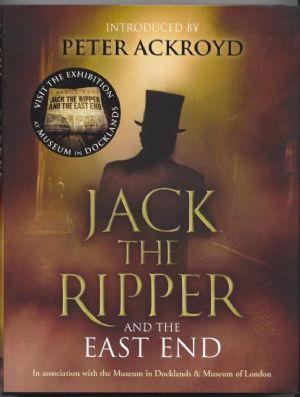
JACK THE RIPPER AND THE EAST END
Librería: Loretta Lay Books, London, Reino Unido
Calificación del vendedor: 5 de 5 estrellas
Original o primera edición
EUR 17,92
Envío por EUR 25,52
Se envía de Reino Unido a Estados Unidos de AmericaCantidad disponible: 1 disponibles
Añadir al carritoHardcover / Hardback. Condición: Fine. Estado de la sobrecubierta: Fine. First edition. Hardback. Intro' by Peter Ackroyd. 'The words 'Jack the Ripper and the East End' conjure up a vision of the darker side of Victorian London - dimly lit alleys, foggy nights, prostitutes, poverty and horrific murder. How does this image square up with the facts? First published to coincide with a major exhibition at the Museum in Docklands, this book examines the Whitechapel Murders from many sides and delves into both the myth and the reality. It is not so much the crimes themselves that are under the microscope here but the intricate landscape of the East End. We discover how Whitechapel became, in the minds of Victorians, the site of disgust, danger and moral desolation. Previously unseen photographs from the Museum of London's collection capture the grim reality of everyday life in the East End. Leading historians throw fascinating new light on the inhabitants of Whitechapel and Spitalfields at the time of the murders. There are insights into prostitution, sexual violnce and policing. The Flower and Dean Street rookery, with its cheap lodging houses, associated with all the Whitechapel murder victims, is set alongside slum clearance. The new model dwellings that catered for respectable artisans and their families are shown actually to have made the situation worse for the poorest, including many who were deserving but unfortunate. The 'Ladies' who volunteered in the many charitable organisations and missions are examined as they fearlessly walked the streets at the time of the murders. An analysis of the area where Mary Jane Kelly was murdered makes use of Booth's famous colour-coded 'Map of Poverty' to uncover the true nature of London's dark ghetto. The shock and revulsion of the Whitechapel murders caused the public to look for a scapegoat. Attention fell on the immigrants in the area. This book discusses the impact on the Victorian East End of the Irish and, in particular, the large number of Jews who were recent arrrivals. Jack the Ripper inhabits the same world as Dr Jekyll and Mr Hyde and Sherlock Holmes: as man becomes beast, the forces of good and evil battle it out. Jack the Ripper's identity and the murders have been re-interpreted by each new generation in film, art and literature. This lavishly illustrated book reveals how they have shaped our reading and vision of the East End.' Profusely illus., Contributors, Notes, Further Reading, and Index. 288pp. 4to. h/back. F. in Nr. F. dw. A heavy book which will require additional postage if shipped overseas.
-
JACK THE RIPPER AND THE EAST END
Idioma: Inglés
Publicado por Chattow & Windus in assoc. with The Museum in Dock, 2008
ISBN 10: 0701182474 ISBN 13: 9780701182472
Librería: Loretta Lay Books, London, Reino Unido
Calificación del vendedor: 5 de 5 estrellas
Original o primera edición
EUR 19,11
Envío por EUR 25,52
Se envía de Reino Unido a Estados Unidos de AmericaCantidad disponible: 1 disponibles
Añadir al carritoHardcover / Hardback. Condición: Fine. Estado de la sobrecubierta: Fine. First edition. Hardback. Intro' by Peter Ackroyd. 'The words 'Jack the Ripper and the East End' conjure up a vision of the darker side of Victorian London - dimly lit alleys, foggy nights, prostitutes, poverty and horrific murder. How does this image square up with the facts? First published to coincide with a major exhibition at the Museum in Docklands, this book examines the Whitechapel Murders from many sides and delves into both the myth and the reality. It is not so much the crimes themselves that are under the microscope here but the intricate landscape of the East End. We discover how Whitechapel became, in the minds of Victorians, the site of disgust, danger and moral desolation. Previously unseen photographs from the Museum of London's collection capture the grim reality of everyday life in the East End. Leading historians throw fascinating new light on the inhabitants of Whitechapel and Spitalfields at the time of the murders. There are insights into prostitution, sexual violnce and policing. The Flower and Dean Street rookery, with its cheap lodging houses, associated with all the Whitechapel murder victims, is set alongside slum clearance. The new model dwellings that catered for respectable artisans and their families are shown actually to have made the situation worse for the poorest, including many who were deserving but unfortunate. The 'Ladies' who volunteered in the many charitable organisations and missions are examined as they fearlessly walked the streets at the time of the murders. An analysis of the area where Mary Jane Kelly was murdered makes use of Booth's famous colour-coded 'Map of Poverty' to uncover the true nature of London's dark ghetto. The shock and revulsion of the Whitechapel murders caused the public to look for a scapegoat. Attention fell on the immigrants in the area. This book discusses the impact on the Victorian East End of the Irish and, in particular, the large number of Jews who were recent arrrivals. Jack the Ripper inhabits the same world as Dr Jekyll and Mr Hyde and Sherlock Holmes: as man becomes beast, the forces of good and evil battle it out. Jack the Ripper's identity and the murders have been re-interpreted by each new generation in film, art and literature. This lavishly illustrated book reveals how they have shaped our reading and vision of the East End.' Profusely illus., Contributors, Notes, Further Reading, and Index. 288pp. 4to. h/back. Includes 4 1.5"x 2" coloured 'portrait' 'photo's of Peter Ackroyd. (see image). V.v. sl. sunned edges o/w Nr. F. in F. protected dw. A heavy book which will require additional postage if shipped overseas.
-

JACK THE RIPPER AND THE EAST END
Idioma: Inglés
Publicado por Chattow & Windus in assoc. with The Museum in Dock, 2008
ISBN 10: 0701182474 ISBN 13: 9780701182472
Librería: Loretta Lay Books, London, Reino Unido
Calificación del vendedor: 5 de 5 estrellas
Original o primera edición
EUR 19,11
Envío por EUR 25,52
Se envía de Reino Unido a Estados Unidos de AmericaCantidad disponible: 2 disponibles
Añadir al carritoHardcover / Hardback. Condición: Fine. Estado de la sobrecubierta: Fine. First edition. Hardback. Intro' by Peter Ackroyd. 'The words 'Jack the Ripper and the East End' conjure up a vision of the darker side of Victorian London - dimly lit alleys, foggy nights, prostitutes, poverty and horrific murder. How does this image square up with the facts? First published to coincide with a major exhibition at the Museum in Docklands, this book examines the Whitechapel Murders from many sides and delves into both the myth and the reality. It is not so much the crimes themselves that are under the microscope here but the intricate landscape of the East End. We discover how Whitechapel became, in the minds of Victorians, the site of disgust, danger and moral desolation. Previously unseen photographs from the Museum of London's collection capture the grim reality of everyday life in the East End. Leading historians throw fascinating new light on the inhabitants of Whitechapel and Spitalfields at the time of the murders. There are insights into prostitution, sexual violnce and policing. The Flower and Dean Street rookery, with its cheap lodging houses, associated with all the Whitechapel murder victims, is set alongside slum clearance. The new model dwellings that catered for respectable artisans and their families are shown actually to have made the situation worse for the poorest, including many who were deserving but unfortunate. The 'Ladies' who volunteered in the many charitable organisations and missions are examined as they fearlessly walked the streets at the time of the murders. An analysis of the area where Mary Jane Kelly was murdered makes use of Booth's famous colour-coded 'Map of Poverty' to uncover the true nature of London's dark ghetto. The shock and revulsion of the Whitechapel murders caused the public to look for a scapegoat. Attention fell on the immigrants in the area. This book discusses the impact on the Victorian East End of the Irish and, in particular, the large number of Jews who were recent arrrivals. Jack the Ripper inhabits the same world as Dr Jekyll and Mr Hyde and Sherlock Holmes: as man becomes beast, the forces of good and evil battle it out. Jack the Ripper's identity and the murders have been re-interpreted by each new generation in film, art and literature. This lavishly illustrated book reveals how they have shaped our reading and vision of the East End.' Profusely Illus. + Map eps, Contributors, Notes, Further Reading, and Index. 288pp. 4to. h/back. F. in F. protected dw. A heavy book which will require additional postage if shipped overseas.
-

Ghetto Tragedies
Idioma: Inglés
Publicado por Chattow And Windus, London, 1897
Librería: Mammy Bears Books, Cedar Creek, QLD, Australia
Calificación del vendedor: 5 de 5 estrellas
EUR 33,76
Envío por EUR 18,47
Se envía de Australia a Estados Unidos de AmericaCantidad disponible: 1 disponibles
Añadir al carritoHardcover. Condición: Good. No Jacket. 2nd Edition. 165x100x20mm+210g . . Chattow And Windus. London. 1897. 2nd Edition. . . : Image is ALWAYS of the ACTUAL BOOK: Book and or Jacket may have names. dedications. marks. tears. foxing. browned pages. creasing and losses unless otherwise noted. . . . . Domestic_tracked_OR_registered_flat_rate_FOR_THIS_ITEM_Within_Australia:_AU$11.20.
-
The Nice and the Good
Idioma: Inglés
Publicado por Chattow & Windus, London, 1968
Librería: Blackbird First Editions, Bolton, Reino Unido
Calificación del vendedor: 4 de 5 estrellas

Original o primera edición
EUR 53,76
Envío por EUR 40,59
Se envía de Reino Unido a Estados Unidos de AmericaCantidad disponible: 1 disponibles
Añadir al carritoHardcover. Condición: Near Fine. 1st Edition. First Edition first impression. Shortlisted for1969 Booker prize, Near Fine with slight marks to edge of textblock, minor creasing and fading to top of spine, in Very Good+ unclipped dustjacket with minor chipping and creasing to top edges.


