
William buckley intro (5 resultados)
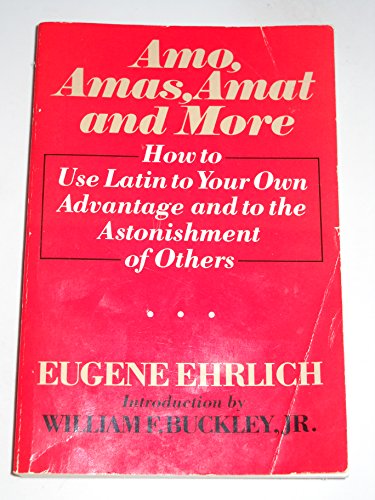
Idioma: Inglés
Editorial: Harper & Row, NY, 1985
Serie: Hudson Group Books, Libro 1 de 1. Libro 1 de 1 - Hudson Group Books
- Tapa dura
Librería: THE OLD LIBRARY SHOP, Bethlehem, PA, Estados Unidos de AmericaTHE OLD LIBRARY SHOP
Contactar con el vendedorVendedor de 5 estrellasCondición: Usado - Bueno
EUR 4,96
Envío por EUR 5,24Se envía dentro de Estados Unidos de AmericaCantidad disponible: 1 disponibles
Hard Cover. Condición: vg-. Estado de la sobrecubierta: vg-. xxii 328 pages; b/w illustrations; text unmarked; foxing to edges; curling / shelf wear to edges of red dj. Hardcover (dj).
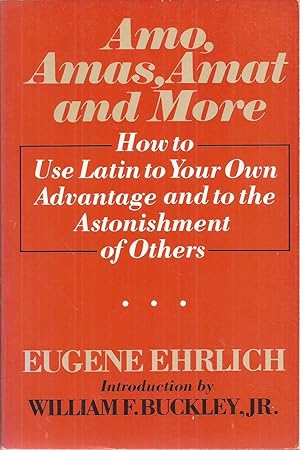
Idioma: Inglés
Editorial: New York: Harper & Row, 1985
Serie: Hudson Group Books, Libro 1 de 1. Libro 1 de 1 - Hudson Group Books
- Tapa blanda
Librería: Auldfarran Books, IOBA, Decatur, GA, Estados Unidos de AmericaAuldfarran Books, IOBA
Contactar con el vendedorVendedor de 5 estrellasMiembro de asociación: IOBA
Condición: Usado - Muy bueno
EUR 8,96
Envío por EUR 5,24Se envía dentro de Estados Unidos de AmericaCantidad disponible: 1 disponibles
Soft cover. Condición: Near Fine. 1985. 328pp. paperback 8vo: Very Good [ some edge foxing; else a nice complete & tight copy] A compendium of Latin phrases, some famous some not, with phonetic pronunciations and definitions in English. Cover praise from John Ciardi and Stuart Flexner.

Editorial: NY McGraw-Hill C1977., 1977
- Tapa dura
- Primera edición
Librería: Ann Wendell, Bookseller, Oroville, CA, Estados Unidos de AmericaAnn Wendell, Bookseller
Contactar con el vendedorVendedor de 5 estrellasCondición: Usado
EUR 10,80
Envío por EUR 3,93Se envía dentro de Estados Unidos de AmericaCantidad disponible: 1 disponibles
vg/vg, dj sm tears/chips. 1st prt edition. Binding is hc.
Editorial: Holt Rinehart Winston, New York, 1978
- Tapa dura
Librería: beat book shop, Boulder, CO, Estados Unidos de Americabeat book shop
Contactar con el vendedorVendedor de 5 estrellasCondición: Usado - Bueno
EUR 17,96
Envío por EUR 5,24Se envía dentro de Estados Unidos de AmericaCantidad disponible: 1 disponibles
Cloth. Condición: Very Good. Estado de la sobrecubierta: Very Good -. Intro By William F. Buckley, Jr. (ilustrador).
 Más imágenes
Idioma: Inglés
Editorial: Alfred A. Knopf, New York, NY, U.S.A., 1968
- Tapa dura
- Primera edición
Librería: The Mortuary Korps, Winnipeg, MB, CanadaThe Mortuary Korps
Contactar con el vendedorVendedor de 1 estrellasCondición: Usado - Bueno
EUR 11,82
Envío por EUR 56,82Se envía de Canada a Estados Unidos de AmericaCantidad disponible: 1 disponibles
Cloth hardcover with smyth-sew. Condición: Very Good+. Estado de la sobrecubierta: Very Good-. y First Edition, stated. First Edition, stated. 364 p; ill. (map). Black cloth hardcover with gilt lettering to spine and blindstamped covers exhibits some minor shelfwear, including bumping to tip and heel of spine, and is slightly sh…aken, but sports illustrated endpapers and a lovely deckled foredge, with a light eraser abrasion to ffep, and a faint impression of what may have been a loose staple sandwiched between the preliminary pages (please see listing images), but is otherwise in Near Fine condition: clean, bright, and tightly bound. The dust jacket has some shelfwear, creases, and some minor chipping to edges, but is otherwise Very Good. From the dust jacket (also see note at bottom of listing): On June 6, 1957, the author of this book was convicted of the brutal murder of a fifteen-year-old girl. For more than eleven years he has lived in the shadow of the electric chair in the Death House of the New Jersey State Prison. Brief Against Death is Edgar Smith's firsthand account of his arrest, interrogation, trial, imprisonment, and 4,000-day battle, through fourteen appeals and thirteen stays of execution, to set aside the verdict and establish his innocence. It is the story of a man without status, with no money, with little formal education, who was connected circumstantially to a horrifying crime, interrogated without counsel by the police for nearly twenty consecutive hours, prosecuted on the basis of an unsigned statement in which he confessed to no crime whatsoever, tried in an atmosphere of inflammatory press coverage and public furor, convicted in the face of strikingly contradictory evidence—and who has found within himself the resources of mind and courage to fight his case through the labyrinthine machinery of the courts. Edgar Smith was twenty-three years old when, on the morning of March 5, 1957, the body of Victoria Zielinski of Mahwah, New Jersey, was found in a sandpit, her skull crushed by a rock, her clothes torn and disheveled in a fashion to suggest sexual assault. That same day Smith was picked up by the police. Strong circumstantial evidence linked him to the crime. But at the trial the coroner's testimony for the prosecution indicated that the time of the murder was at least two hours after Smith had arrived in another town, with his wife and baby, to spend the night with his in-laws. Incredibly, this and other glaring inconsistencies in the prosecution's case failed to save him from conviction. Once the police and the prosecutor's office had settled on Smith as the likely murderer, no legal, logical, or human considerations could halt the seemingly inexorable train of events that closed the doors of the State Prison behind him three months later. In the eleven years of solitary confinement he has undergone since then—nine of them spent in an eight-foot-square windowless cell—Edgar Smith, learning the mazes of law, fighting for his life, has managed almost miraculously to widen his horizons, to educate himself, to initiate and direct the series of legal appeals that have again and again postponed his sentence of electrocution, and to complete, on the eve of his fifteenth appeal, the handwritten manuscript of Brief Against Death. The man himself is remarkable, and he tells his story with a remarkable objectivity that intensifies the reader's response to his ordeal. His book is a unique human document—and one of utmost importance to all who are concerned with the workings of criminal justice in America. [NOTE FROM SELLER: Edgar Smith eventually won his freedom, only to kidnap and attempt to murder another woman. She testified against him and he later died in prison. Evidently, his 'remarkable objectivity' was simply a product of sociopathy.].


