
Importe total (1 artículo artículos):
Destino del pedido:

whidden tom levitt michael (25 resultados)
Ir a los resultados principales
Filtros de búsqueda
Tipo de artículo
- Todos los tipos de productos
- Libros (25)
- Revistas y publicaciones (No hay ningún otro resultado que coincida con este filtro.)
- Cómics (No hay ningún otro resultado que coincida con este filtro.)
- Partituras (No hay ningún otro resultado que coincida con este filtro.)
- Arte, grabados y pósters (No hay ningún otro resultado que coincida con este filtro.)
- Fotografías (No hay ningún otro resultado que coincida con este filtro.)
- Mapas (No hay ningún otro resultado que coincida con este filtro.)
- Manuscritos y coleccionismo de papel (No hay ningún otro resultado que coincida con este filtro.)
Condición Más información
- Nuevo (14)
- Como nuevo, Excelente o Muy bueno (6)
- Bueno o Aceptable (4)
- Regular o Pobre (No hay ningún otro resultado que coincida con este filtro.)
- Tal como se indica (1)
Encuadernación
Más atributos
- Primera edición (No hay ningún otro resultado que coincida con este filtro.)
- Firmado (1)
- Sobrecubierta (5)
- Con imágenes (12)
- No impresión bajo demanda (25)
Idioma (4)
Gastos de envío gratis
Ubicación del vendedor
Valoración de los vendedores
-

THE ART AND SCIENCE OF SAILS. A Guide To Modern Materials, Construction, Aerodynamics, Upkeep, And Use.
Librería: PASCALE'S BOOKS, NORTH READING, MA, Estados Unidos de America
Calificación del vendedor: 5 de 5 estrellas

EUR 22,65
Envío por EUR 4,65
Se envía dentro de Estados Unidos de AmericaCantidad disponible: 1 disponibles
Añadir al carritoHard Cover. Condición: Fine. Estado de la sobrecubierta: Fine. 371 pages, illustrated in b&w. This book "is full of hands-on information, step by step explanations, 114 crisp computer-drawn illustrations and 45 photo makes the accessible to the causual reader." FINE HARDCOVER, FINE DUST JACKET. Dust jacket is protected with a clear plastic acid-free jacket. Size: 8vo - over 7¾" - 9¾" tall.
-
The Art and Science of Sails: A Guide to Modern Materials, Construction, Aerodynamics, Upkeep, and Use
Librería: Autumn Leaves, Allentown, PA, Estados Unidos de America
Calificación del vendedor: 5 de 5 estrellas
EUR 26,14
Envío por EUR 4,23
Se envía dentro de Estados Unidos de AmericaCantidad disponible: 1 disponibles
Añadir al carritoHardcover. Condición: Near Fine. Estado de la sobrecubierta: Fine. Clean and pristine, with a name and a stamping on the front flyleaf, but no signs of use in the text. The excellent jacket is protected by a mylar Brodart cover. Fast shipping worldwide, with tracking number provided. ; 8.80 X 7.20 X 1.40 inches; 371 pages.
-

Art and Science of Sails
Librería: GreatBookPrices, Columbia, MD, Estados Unidos de America
Calificación del vendedor: 5 de 5 estrellas
EUR 29,18
Envío por EUR 2,23
Se envía dentro de Estados Unidos de AmericaCantidad disponible: 15 disponibles
Añadir al carritoCondición: As New. Unread book in perfect condition.
-

Art and Science of Sails
Librería: GreatBookPrices, Columbia, MD, Estados Unidos de America
Calificación del vendedor: 5 de 5 estrellas
EUR 31,05
Envío por EUR 2,23
Se envía dentro de Estados Unidos de AmericaCantidad disponible: 15 disponibles
Añadir al carritoCondición: New.
-

The Art and Science of Sails
Librería: Bay State Book Company, North Smithfield, RI, Estados Unidos de America
Calificación del vendedor: 5 de 5 estrellas
EUR 34,68
Gastos de envío gratis
Se envía dentro de Estados Unidos de AmericaCantidad disponible: 1 disponibles
Añadir al carritoCondición: good. The book is in good condition with all pages and cover intact, including the dust jacket if originally issued. The spine may show light wear. Pages may contain some notes or highlighting, and there might be a "From the library of" label. Boxed set packaging, shrink wrap, or included media like CDs may be missing.
-

The Art and Science of Sails
Idioma: Inglés
Publicado por Seapoint Books and Media LLC, US, 2016
ISBN 10: 0997392002 ISBN 13: 9780997392005
Librería: Rarewaves USA, OSWEGO, IL, Estados Unidos de America
Calificación del vendedor: 5 de 5 estrellas
EUR 40,69
Gastos de envío gratis
Se envía dentro de Estados Unidos de AmericaCantidad disponible: 8 disponibles
Añadir al carritoHardback. Condición: New. This is not your parents' Art and Science of Sails, written by Tom Whidden and Michael Levitt and published in 1990 by St. Martin's Press. The first edition sold more than 20,000 copies. The Second Revised Edition 2016 -- now in its second printing -- is published by North Sails Group, LLC and written by the same duo. What a difference 25 years makes! Today there are one-piece sails made over a 3D mold in the shape they will assume in the wind. Sail plans have radically evolved to fractional rigs, fat-head mains, and non-overlapping jibs. That is true for racing boats as well as cruising. Thus, ninety percent of the text is new, as are almost all of the more than 100 photographs and technical illustrations. The authors focus on circulation as they did in the first edition, but now come at it from a different direction. And for the first time anywhere, they attempt to quantify its effects. Where the wind speeds up and why as it passes over a sail plan, and where it slows down and why. Circulation theory is familiar to aerodynamicists for at least 100 years and is argued about by sailors at least since 1973, when the late Arvel Gentry loosed his theories on the sailing world.Gentry was an aerodynamicist at Boeing by day and a sailor on the weekends. And the theories used to explain why airplanes fly were at odds with the theories of why sailboats sail to weather and what the slot actually does. Whidden, CEO of North Marine Group, which includes North Sails, and Levitt, who has written 14 books, utilize explanations like circulation to answer such diverse questions as: Why fractional rigs, fat-head mains, and non-overlapping jibs have come to predominate. Why and how leech twist can be a sail-trimmer's best friend. Why a yacht designer positions the mast, keel, and rudder to create some weather helm. Why the safe-leeward position is advantageous relative to the entire fleet, not just to the boat you tacked beneath and forward of. Why a mainsail's efficiency is improved with added upper roach, beyond the value of the extra area. Why the miracle of upwind sailing is not that there is so much lift but so little drag. Why, when sailing upwind, the main is always trimmed to a tighter angle than the jib. What a polar diagram tells us or why tacking downwind is almost always faster than sailing directly to a mark.There is also an in-depth look at the wonders of material utilizationnot just materials. Indeed there have been no new fibers accepted into sailmaking for over 20 years. It is how they are used that makes the difference. In the last three chapters, the authors drill down on mainsails, headsails, and downwind asymmetric and symmetric spinnakers. And in this edition for the first time they address downwind aerodynamics. The book celebrates the complexity and beauty of sails in words and pictures and of the whole rarefied sport of sailing.
-

The Art and Science of Sails
Idioma: Inglés
Publicado por Seapoint Books and Media LLC, US, 2016
ISBN 10: 0997392002 ISBN 13: 9780997392005
Librería: Rarewaves.com USA, London, LONDO, Reino Unido
Calificación del vendedor: 5 de 5 estrellas
EUR 43,50
Gastos de envío gratis
Se envía de Reino Unido a Estados Unidos de AmericaCantidad disponible: 8 disponibles
Añadir al carritoHardback. Condición: New. This is not your parents' Art and Science of Sails, written by Tom Whidden and Michael Levitt and published in 1990 by St. Martin's Press. The first edition sold more than 20,000 copies. The Second Revised Edition 2016 -- now in its second printing -- is published by North Sails Group, LLC and written by the same duo. What a difference 25 years makes! Today there are one-piece sails made over a 3D mold in the shape they will assume in the wind. Sail plans have radically evolved to fractional rigs, fat-head mains, and non-overlapping jibs. That is true for racing boats as well as cruising. Thus, ninety percent of the text is new, as are almost all of the more than 100 photographs and technical illustrations. The authors focus on circulation as they did in the first edition, but now come at it from a different direction. And for the first time anywhere, they attempt to quantify its effects. Where the wind speeds up and why as it passes over a sail plan, and where it slows down and why. Circulation theory is familiar to aerodynamicists for at least 100 years and is argued about by sailors at least since 1973, when the late Arvel Gentry loosed his theories on the sailing world.Gentry was an aerodynamicist at Boeing by day and a sailor on the weekends. And the theories used to explain why airplanes fly were at odds with the theories of why sailboats sail to weather and what the slot actually does. Whidden, CEO of North Marine Group, which includes North Sails, and Levitt, who has written 14 books, utilize explanations like circulation to answer such diverse questions as: Why fractional rigs, fat-head mains, and non-overlapping jibs have come to predominate. Why and how leech twist can be a sail-trimmer's best friend. Why a yacht designer positions the mast, keel, and rudder to create some weather helm. Why the safe-leeward position is advantageous relative to the entire fleet, not just to the boat you tacked beneath and forward of. Why a mainsail's efficiency is improved with added upper roach, beyond the value of the extra area. Why the miracle of upwind sailing is not that there is so much lift but so little drag. Why, when sailing upwind, the main is always trimmed to a tighter angle than the jib. What a polar diagram tells us or why tacking downwind is almost always faster than sailing directly to a mark.There is also an in-depth look at the wonders of material utilizationnot just materials. Indeed there have been no new fibers accepted into sailmaking for over 20 years. It is how they are used that makes the difference. In the last three chapters, the authors drill down on mainsails, headsails, and downwind asymmetric and symmetric spinnakers. And in this edition for the first time they address downwind aerodynamics. The book celebrates the complexity and beauty of sails in words and pictures and of the whole rarefied sport of sailing.
-

Fahrrad - Stadtplan Köln 1 : 20 000. Faltkarte mit Beiheft. Innenstadtkarte 1 : 10 000
Librería: medimops, Berlin, Alemania
Calificación del vendedor: 5 de 5 estrellas
EUR 4,46
Envío por EUR 15,00
Se envía de Alemania a Estados Unidos de AmericaCantidad disponible: 1 disponibles
Añadir al carritoCondición: very good. Gut/Very good: Buch bzw. Schutzumschlag mit wenigen Gebrauchsspuren an Einband, Schutzumschlag oder Seiten. / Describes a book or dust jacket that does show some signs of wear on either the binding, dust jacket or pages.
-
The Art and Science of Sails: A Guide to Modern Materials, Construction, Aerodynamics, Upkeep, and Use
Idioma: Inglés
Publicado por Gordonsville, Virginia, U.S.A.: St Martins Pr, 1990
ISBN 10: 0312044178 ISBN 13: 9780312044176
Librería: Rob the Book Man, Vancouver, WA, Estados Unidos de America
Calificación del vendedor: 5 de 5 estrellas
EUR 58,38
Envío por EUR 5,91
Se envía dentro de Estados Unidos de AmericaCantidad disponible: 1 disponibles
Añadir al carritoHardcover. Condición: Fine. Estado de la sobrecubierta: Fine. Hardback in fine condition with fine condition dust jacket.
-
The Art and Science of Sails. A Guide to Modern Materials, Construction, Aerodynamics, Upkeep, and Use. Illustrated by Jay Goebel.
Idioma: Inglés
Publicado por St. Martin's Press, New York,, 1990
ISBN 10: 0312044178 ISBN 13: 9780312044176
Librería: Antiquariat Christoph Wilde, Düsseldorf, Alemania
Calificación del vendedor: 5 de 5 estrellas
EUR 24,00
Envío por EUR 45,00
Se envía de Alemania a Estados Unidos de AmericaCantidad disponible: 1 disponibles
Añadir al carrito2. Auflage. X, 369, (1) S. Orig.-Pappband mit ill. Orig.-Umschlag. - Kopfschnitt gering stockfleckig. Ansonsten gut erhaltenes Exemplar. Innen sauber.
-

L'arte e la scienza delle vele: Guida alla fabbricazione, alla manutenzione, ai nuovi materiali e alla teoria aerodinamica delle vele (i sempre blu - Manuali, tecnica e sport) (Italian Edition)
Librería: libreriauniversitaria.it, Occhiobello, RO, Italia
Calificación del vendedor: 4 de 5 estrellas

EUR 23,75
Envío por EUR 17,95
Se envía de Italia a Estados Unidos de AmericaCantidad disponible: 2 disponibles
Añadir al carritoCondición: NEW.
-
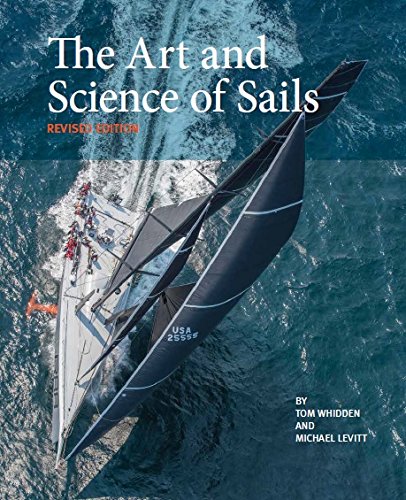
The Art and Science of Sails
Librería: Revaluation Books, Exeter, Reino Unido
Calificación del vendedor: 5 de 5 estrellas
EUR 62,94
Envío por EUR 17,27
Se envía de Reino Unido a Estados Unidos de AmericaCantidad disponible: 1 disponibles
Añadir al carritoHardcover. Condición: Brand New. 2nd edition. 182 pages. 11.25x9.25x1.00 inches. In Stock.
-

L'arte e la scienza delle vele (Fuori collana)
Librería: libreriauniversitaria.it, Occhiobello, RO, Italia
Calificación del vendedor: 4 de 5 estrellas
EUR 26,60
Envío por EUR 17,95
Se envía de Italia a Estados Unidos de AmericaCantidad disponible: 14 disponibles
Añadir al carritoCondición: NEW.
-

L'arte e la scienza della vela
Librería: libreriauniversitaria.it, Occhiobello, RO, Italia
Calificación del vendedor: 4 de 5 estrellas
EUR 26,60
Envío por EUR 17,95
Se envía de Italia a Estados Unidos de AmericaCantidad disponible: 1 disponibles
Añadir al carritoCondición: NEW.
-

The Art and Science of Sails
Idioma: Inglés
Publicado por Seapoint Books and Media LLC, US, 2016
ISBN 10: 0997392002 ISBN 13: 9780997392005
Librería: Rarewaves USA United, OSWEGO, IL, Estados Unidos de America
Calificación del vendedor: 5 de 5 estrellas
EUR 46,16
Envío por EUR 42,30
Se envía dentro de Estados Unidos de AmericaCantidad disponible: 8 disponibles
Añadir al carritoHardback. Condición: New. This is not your parents' Art and Science of Sails, written by Tom Whidden and Michael Levitt and published in 1990 by St. Martin's Press. The first edition sold more than 20,000 copies. The Second Revised Edition 2016 -- now in its second printing -- is published by North Sails Group, LLC and written by the same duo. What a difference 25 years makes! Today there are one-piece sails made over a 3D mold in the shape they will assume in the wind. Sail plans have radically evolved to fractional rigs, fat-head mains, and non-overlapping jibs. That is true for racing boats as well as cruising. Thus, ninety percent of the text is new, as are almost all of the more than 100 photographs and technical illustrations. The authors focus on circulation as they did in the first edition, but now come at it from a different direction. And for the first time anywhere, they attempt to quantify its effects. Where the wind speeds up and why as it passes over a sail plan, and where it slows down and why. Circulation theory is familiar to aerodynamicists for at least 100 years and is argued about by sailors at least since 1973, when the late Arvel Gentry loosed his theories on the sailing world.Gentry was an aerodynamicist at Boeing by day and a sailor on the weekends. And the theories used to explain why airplanes fly were at odds with the theories of why sailboats sail to weather and what the slot actually does. Whidden, CEO of North Marine Group, which includes North Sails, and Levitt, who has written 14 books, utilize explanations like circulation to answer such diverse questions as: Why fractional rigs, fat-head mains, and non-overlapping jibs have come to predominate. Why and how leech twist can be a sail-trimmer's best friend. Why a yacht designer positions the mast, keel, and rudder to create some weather helm. Why the safe-leeward position is advantageous relative to the entire fleet, not just to the boat you tacked beneath and forward of. Why a mainsail's efficiency is improved with added upper roach, beyond the value of the extra area. Why the miracle of upwind sailing is not that there is so much lift but so little drag. Why, when sailing upwind, the main is always trimmed to a tighter angle than the jib. What a polar diagram tells us or why tacking downwind is almost always faster than sailing directly to a mark.There is also an in-depth look at the wonders of material utilizationnot just materials. Indeed there have been no new fibers accepted into sailmaking for over 20 years. It is how they are used that makes the difference. In the last three chapters, the authors drill down on mainsails, headsails, and downwind asymmetric and symmetric spinnakers. And in this edition for the first time they address downwind aerodynamics. The book celebrates the complexity and beauty of sails in words and pictures and of the whole rarefied sport of sailing.
-

Art and Science of Sails
Librería: moluna, Greven, Alemania
Calificación del vendedor: 4 de 5 estrellas
EUR 39,86
Envío por EUR 48,99
Se envía de Alemania a Estados Unidos de AmericaCantidad disponible: Más de 20 disponibles
Añadir al carritoCondición: New. A bible of modern sail handling and selection. It is presented in an oversize format along with four/color photographs.InhaltsverzeichnisIntroduction.
-
The Art and Science of Sails: A Guide to Modern Materials, Construction, Aerodynamics, Upkeep, and Use
Librería: BennettBooksLtd, Los Angeles, CA, Estados Unidos de America
Calificación del vendedor: 5 de 5 estrellas
EUR 88,28
Envío por EUR 5,88
Se envía dentro de Estados Unidos de AmericaCantidad disponible: 1 disponibles
Añadir al carritohardcover. Condición: New. In shrink wrap. Looks like an interesting title!
-

L'arte e la scienza delle vele. Nuova ediz
Librería: Libro Co. Italia Srl, San Casciano Val di Pesa, FI, Italia
Calificación del vendedor: 5 de 5 estrellas
EUR 26,60
Envío por EUR 21,00
Se envía de Italia a Estados Unidos de AmericaCantidad disponible: Más de 20 disponibles
Añadir al carritoRilegato. Condición: new. Traduzione di C. Romano.Roma, 2018; ril., pp. 168, ill.(Transiti Blu. Tecnica. 33). Questo non è "L'arte e la scienza delle vele dei vostri genitori", scritto da Tom Whidden e Michael Levitt e pubblicato nel 1990. Venticinque anni possono fare una grande differenza! Oggi esistono vele realizzate in un unico pannello, modellate sopra stampi tridimensionali, nell'esatta forma definitiva che assumeranno nel vento. I piani velici delle barche, sia da regata che da crociera, si sono radicalmente evoluti verso armi frazionati, rande square-top e fiocchi non sovrapposti. Si parte dalla storia della veleria moderna con Ted Hood e Lowell North, l'artista e lo scienziato, e si giunge ad affrontare la questione della circolazione, come nella prima edizione, ma passando per una strada diversa: tentando, per la prima volta in assoluto, una quantificazione dei suoi effetti. Perché e dove il vento, interagendo con un piano velico, accelera o rallenta. La teoria della circolazione è nota agli studiosi di aerodinamica da almeno un secolo ed è argomento di discussione tra i velisti dal 1973, quando il compianto Arvel Gentry presentò al mondo della nautica le sue teorie. Gentry era ingegnere aerodinamico alla Boeing durante la settimana e velista nei weekend. E le teorie secondo cui un aeroplano può volare contrastavano con quelle secondo le quali una barca può risalire il vento. Whidden e Levitt utilizzano spiegazioni come la circolazione per rispondere a diverse domande: Perché gli armi frazionati, le rande square-top e i fiocchi non sovrapposti hanno finito per predominare. Come e perché lo svergolamento della balumina può rivelarsi il migliore alleato del trimmer. Perché il progettista navale posiziona albero, chiglia e timone in modo tale da generare una tendenza orziera. Perché la "safe-leeward position" è vantaggiosa rispetto a tutta la flotta degli avversari. Perché il miracolo della bolina non consiste nel fatto che ci sia così tanta portanza quanto così poca resistenza. È presente un'analisi approfondita delle meraviglie dell'uso dei materiali nella fabbricazione delle vele, non già solo dei materiali stessi. Gli ultimi tre capitoli costituiscono poi una guida all'utilizzo di rande, vele di prua e spinnaker che permetterà sicuramente ai lettori di ottenere le migliori prestazioni dalle loro barche. Libro.
-

The Art and Science of Sails
Idioma: Inglés
Publicado por Seapoint Books and Media LLC, US, 2016
ISBN 10: 0997392002 ISBN 13: 9780997392005
Librería: Rarewaves.com UK, London, Reino Unido
Calificación del vendedor: 5 de 5 estrellas
EUR 46,16
Envío por EUR 74,84
Se envía de Reino Unido a Estados Unidos de AmericaCantidad disponible: 8 disponibles
Añadir al carritoHardback. Condición: New. This is not your parents' Art and Science of Sails, written by Tom Whidden and Michael Levitt and published in 1990 by St. Martin's Press. The first edition sold more than 20,000 copies. The Second Revised Edition 2016 -- now in its second printing -- is published by North Sails Group, LLC and written by the same duo. What a difference 25 years makes! Today there are one-piece sails made over a 3D mold in the shape they will assume in the wind. Sail plans have radically evolved to fractional rigs, fat-head mains, and non-overlapping jibs. That is true for racing boats as well as cruising. Thus, ninety percent of the text is new, as are almost all of the more than 100 photographs and technical illustrations. The authors focus on circulation as they did in the first edition, but now come at it from a different direction. And for the first time anywhere, they attempt to quantify its effects. Where the wind speeds up and why as it passes over a sail plan, and where it slows down and why. Circulation theory is familiar to aerodynamicists for at least 100 years and is argued about by sailors at least since 1973, when the late Arvel Gentry loosed his theories on the sailing world.Gentry was an aerodynamicist at Boeing by day and a sailor on the weekends. And the theories used to explain why airplanes fly were at odds with the theories of why sailboats sail to weather and what the slot actually does. Whidden, CEO of North Marine Group, which includes North Sails, and Levitt, who has written 14 books, utilize explanations like circulation to answer such diverse questions as: Why fractional rigs, fat-head mains, and non-overlapping jibs have come to predominate. Why and how leech twist can be a sail-trimmer's best friend. Why a yacht designer positions the mast, keel, and rudder to create some weather helm. Why the safe-leeward position is advantageous relative to the entire fleet, not just to the boat you tacked beneath and forward of. Why a mainsail's efficiency is improved with added upper roach, beyond the value of the extra area. Why the miracle of upwind sailing is not that there is so much lift but so little drag. Why, when sailing upwind, the main is always trimmed to a tighter angle than the jib. What a polar diagram tells us or why tacking downwind is almost always faster than sailing directly to a mark.There is also an in-depth look at the wonders of material utilizationnot just materials. Indeed there have been no new fibers accepted into sailmaking for over 20 years. It is how they are used that makes the difference. In the last three chapters, the authors drill down on mainsails, headsails, and downwind asymmetric and symmetric spinnakers. And in this edition for the first time they address downwind aerodynamics. The book celebrates the complexity and beauty of sails in words and pictures and of the whole rarefied sport of sailing.
-
L'arte e la scienza delle vele
Librería: Rarewaves.com USA, London, LONDO, Reino Unido
Calificación del vendedor: 5 de 5 estrellas
EUR 54,73
Gastos de envío gratis
Se envía de Reino Unido a Estados Unidos de AmericaCantidad disponible: 1 disponibles
Añadir al carritoPaperback. Condición: New. Revised - New.
-

The Art and Science Of Sails: A Guide to Modern Materials, Construction, Aerodynamics, Upkeep and Use
Publicado por St. Martin's Press, New York, 1990
Librería: Nightingale Books, Stoughton, MA, Estados Unidos de America
Calificación del vendedor: 5 de 5 estrellas
Ejemplar firmado
EUR 65,35
Envío por EUR 5,08
Se envía dentro de Estados Unidos de AmericaCantidad disponible: 1 disponibles
Añadir al carritoHardcover. Condición: Fine. Estado de la sobrecubierta: Fine. 4th Printing. Illustrated with 114 computer drawings & 45 B&W photographs. SIGNED & INSCRIBED BY TOM WHIDDEN on half-title page. Maritime, Sailing, Signed. Signed by Author(s).
-

Das Segel. Material, Konstruktion, Aerodynamik, Praxis
Idioma: Alemán
ISBN 10: 3768807665 ISBN 13: 9783768807661
Librería: medimops, Berlin, Alemania
Calificación del vendedor: 5 de 5 estrellas
EUR 30,12
Envío por EUR 15,00
Se envía de Alemania a Estados Unidos de AmericaCantidad disponible: 2 disponibles
Añadir al carritoCondición: good. Befriedigend/Good: Durchschnittlich erhaltenes Buch bzw. Schutzumschlag mit Gebrauchsspuren, aber vollständigen Seiten. / Describes the average WORN book or dust jacket that has all the pages present.
-
Das Segel. Material, Konstruktion, Aerodynamik, Praxis [Gebundene Ausgabe] Segeln Segelmacherei Segelmacher Yachtsegeln Segelfläche Segeltuche Aerodynamik Fahrtensegler Regattasegler Segelmacher Polyesterfasern Hightech-Materialien Aramide Kohlefaser Mylarfolien Segelkonstruktion Segelschnitte Großsegel Vorsegel Spinnaker Gennaker Trimm Tom Whidden (Autor), Michael Levitt (Autor) Delius Klasing Vlg GmbH Das Segel Material Konstruktion Aerodynamik Praxis Aramide Kohlefaser Mylarfolien Segeltuche Sailing Segelmacher Segelmacherei Fahrtensegeln Regatta Spinnaker Gennaker Segelschnitte Baumwollsegel Segelmachen Das Standardwerk zu allen Fragen rund um das Segel: Segelfläche, moderne Segeltuche, Aerodynamik und praktische Umsetzung für Fahrten- und Regattasegler. Dieses Buch ist das Standardwerk, welches jeder Segelmacher im Regal stehen hat. Auf dem technischen Stand von 1990 ist es noch lange nicht veraltet. Whidden beginnt ohne lange Ausflüge in hunderte Jahre Segelmacherei in der Überga
Idioma: Alemán
Publicado por Delius Klasing Vlg GmbH, 1998
ISBN 10: 3768807665 ISBN 13: 9783768807661
Librería: BUCHSERVICE / ANTIQUARIAT Lars Lutzer, Wahlstedt, Alemania
Calificación del vendedor: 5 de 5 estrellas
EUR 54,99
Envío por EUR 29,95
Se envía de Alemania a Estados Unidos de AmericaCantidad disponible: 1 disponibles
Añadir al carritoHardcover. Condición: gut. 1998. Das Standardwerk zu allen Fragen rund um das Segel: Segelfläche, moderne Segeltuche, Aerodynamik und praktische Umsetzung für Fahrten- und Regattasegler. Dieses Buch ist das Standardwerk, welches jeder Segelmacher im Regal stehen hat. Auf dem technischen Stand von 1990 ist es noch lange nicht veraltet. Whidden beginnt ohne lange Ausflüge in hunderte Jahre Segelmacherei in der Übergangszeit von Baumwollsegeln zu modernen Kunststoffasern. Anhand der Beispiele von Ted Hood und Lowell North beschreibt er die verschiedenen Herangehensweisen ans Segelmachen. Der eine mit Talent und Intuition, der andere wissenschaftlich, später mit Unterstützung von Computern. Das Computerdesign ist heute die Garantie für genaue Reproduzierbarkeit von schnellen Segelschnitten. Die Autoren informieren umfassend über die Entwicklung von Polyesterfasern aber auch Hightech-Materialien wie Aramide, Kohlefaser und Mylarfolien. Im Kapitel über Segelkonstruktion und -Schnitte wird auf die unterschiedlichen Anforderungen eingegangen, die Regattaeinsatz oder Fahrtensegeln ans Material stellen. Neben Vor- und Großsegel wird auch die Konstruktion von Spinnaker und Gennaker abgehandelt. Besonders gelungen ist der physikalische Teil. Wer sich der Aerodynamik des Segelns wissenschaftlich nähern möchte, dem sei das Werk von C. Marchaj ans Herz gelegt. Whidden versucht dem Leser die Wirkungsweise der Segel bildhaft und ohne viele Formeln anschaulich zu machen und räumt nebenbei mit Legenden wie der "Düse" zwischen Vorsegel und Großsegel auf. Somit kann zur praktischen Anwendung des erworbenen Wissens übergeleitet werden. Whidden gibt viele Tips zum richtigen Trimm und auch Pflege der Segel. Dieses Buch ist für jeden Segler, der wissen will, was seine Segel schneller macht und warum! Das Segel. Material, Konstruktion, Aerodynamik, Praxis [Gebundene Ausgabe] Tom Whidden (Autor), Michael Levitt (Autor) Delius Klasing Vlg GmbH Illustrationen Jay Goebel Übersetzer Hans G Strepp Zusatzinfo 160 Abb. Maße 240 x 170 mm Einbandart gebunden Segeln ISBN-10 3-7688-0766-5 / 3768807665 ISBN-13 978-3-7688-0766-1 / 9783768807661 In deutscher Sprache. 344 pages. 24,6 x 17,4 x 3,4 cm.
-
L'arte e la scienza delle vele
Librería: Rarewaves.com UK, London, Reino Unido
Calificación del vendedor: 5 de 5 estrellas
EUR 50,07
Envío por EUR 74,84
Se envía de Reino Unido a Estados Unidos de AmericaCantidad disponible: 1 disponibles
Añadir al carritoPaperback. Condición: New. Revised - New.
-

Das Segel Material, Konstruktion, Aerodynamik, Praxis.
Idioma: Alemán
Publicado por Bielefeld: Delius Klasing Verlag, 1992
ISBN 10: 3768807665 ISBN 13: 9783768807661
Librería: Antiquariat Wilder - Preise inkl. MwSt., Salzhemmendorf, Alemania
Miembro de asociación: GIAQ
Calificación del vendedor: 5 de 5 estrellas
EUR 90,00
Envío por EUR 50,00
Se envía de Alemania a Estados Unidos de AmericaCantidad disponible: 1 disponibles
Añadir al carritoGebundene Ausgabe. Condición: Sehr gut. 344 S., mit schw/w Fotogr. u. Abb., 25cm x 18cm OPpbd mit farb. ill. OU, dieser mit minimalen Gebrauchsspuren, leichter Abbrieb, geringe Coverbiege, Vorderschnitt ganz wenig lichtrandig, ansonsten sehr guter Zustand. Aufgrund der aktuellen Zoll-Situation ist zur Zeit kein Versand in die USA möglich. Sprache: Deutsch Gewicht in Gramm: 1150.


