

Importe total (1 artículo artículos):
Destino del pedido:

wai yee chen (28 resultados)
Ir a los resultados principales
Filtros de búsqueda
Tipo de artículo
- Todos los tipos de productos
- Libros (28)
- Revistas y publicaciones (No hay ningún otro resultado que coincida con este filtro.)
- Cómics (No hay ningún otro resultado que coincida con este filtro.)
- Partituras (No hay ningún otro resultado que coincida con este filtro.)
- Arte, grabados y pósters (No hay ningún otro resultado que coincida con este filtro.)
- Fotografías (No hay ningún otro resultado que coincida con este filtro.)
- Mapas (No hay ningún otro resultado que coincida con este filtro.)
- Manuscritos y coleccionismo de papel (No hay ningún otro resultado que coincida con este filtro.)
Condición Más información
- Nuevo (23)
- Como nuevo, Excelente o Muy bueno (No hay ningún otro resultado que coincida con este filtro.)
- Bueno o Aceptable (1)
- Regular o Pobre (1)
- Tal como se indica (3)
Encuadernación
Más atributos
- Primera edición (No hay ningún otro resultado que coincida con este filtro.)
- Firmado (No hay ningún otro resultado que coincida con este filtro.)
- Sobrecubierta (No hay ningún otro resultado que coincida con este filtro.)
- Con imágenes (10)
- No impresión bajo demanda (28)
Idioma (1)
Gastos de envío gratis
Ubicación del vendedor
Valoración de los vendedores
-

OptionsWise How to invest sensibly
Librería: ThriftBooks-Dallas, Dallas, TX, Estados Unidos de America
Calificación del vendedor: 5 de 5 estrellas

EUR 8,53
Gastos de envío gratis
Se envía dentro de Estados Unidos de AmericaCantidad disponible: 1 disponibles
Añadir al carritoPaperback. Condición: Very Good. No Jacket. May have limited writing in cover pages. Pages are unmarked. ~ ThriftBooks: Read More, Spend Less.
-

NeuroInvesting: Build a New Investing Brain
Librería: ThriftBooks-Dallas, Dallas, TX, Estados Unidos de America
Calificación del vendedor: 5 de 5 estrellas
EUR 8,63
Gastos de envío gratis
Se envía dentro de Estados Unidos de AmericaCantidad disponible: 1 disponibles
Añadir al carritoHardcover. Condición: Fair. No Jacket. Former library book; Missing dust jacket; Readable copy. Pages may have considerable notes/highlighting. ~ ThriftBooks: Read More, Spend Less.
-
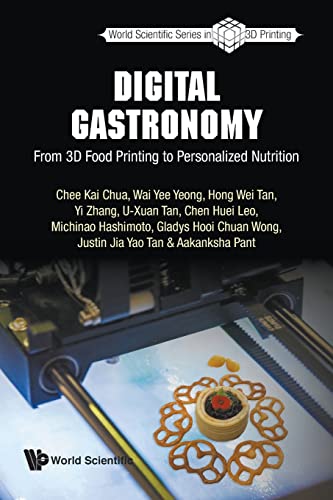
Digital Gastronomy: From 3d Food Printing To Personalized Nutrition
Librería: Romtrade Corp., STERLING HEIGHTS, MI, Estados Unidos de America
Calificación del vendedor: 5 de 5 estrellas
EUR 51,97
Gastos de envío gratis
Se envía dentro de Estados Unidos de AmericaCantidad disponible: 1 disponibles
Añadir al carritoCondición: New. This is a Brand-new US Edition. This Item may be shipped from US or any other country as we have multiple locations worldwide.
-
Digital Gastronomy: From 3d Food Printing To Personalized Nutrition: 4 (World Scientific Series In 3d Printing)
Librería: Books Puddle, New York, NY, Estados Unidos de America
Calificación del vendedor: 4 de 5 estrellas

EUR 59,13
Envío por EUR 3,36
Se envía dentro de Estados Unidos de AmericaCantidad disponible: 1 disponibles
Añadir al carritoCondición: New.
-
Digital Gastronomy: From 3d Food Printing To Personalized Nutrition: 4 (World Scientific Series In 3d Printing)
Librería: Majestic Books, Hounslow, Reino Unido
Calificación del vendedor: 4 de 5 estrellas
EUR 55,13
Envío por EUR 7,46
Se envía de Reino Unido a Estados Unidos de AmericaCantidad disponible: 1 disponibles
Añadir al carritoCondición: New.
-
Digital Gastronomy: From 3d Food Printing To Personalized Nutrition (World Scientific Series In 3d Printing)
Librería: Lucky's Textbooks, Dallas, TX, Estados Unidos de America
Calificación del vendedor: 5 de 5 estrellas
EUR 63,35
Envío por EUR 3,36
Se envía dentro de Estados Unidos de AmericaCantidad disponible: Más de 20 disponibles
Añadir al carritoCondición: New.
-
Digital Gastronomy: From 3d Food Printing To Personalized Nutrition: 4 (World Scientific Series In 3d Printing)
Librería: Biblios, Frankfurt am main, HESSE, Alemania
Calificación del vendedor: 4 de 5 estrellas
EUR 57,51
Envío por EUR 9,95
Se envía de Alemania a Estados Unidos de AmericaCantidad disponible: 1 disponibles
Añadir al carritoCondición: New.
-
Digital Gastronomy: From 3d Food Printing To Personalized Nutrition (World Scientific Series In 3d Printing)
Librería: California Books, Miami, FL, Estados Unidos de America
Calificación del vendedor: 5 de 5 estrellas
EUR 72,03
Gastos de envío gratis
Se envía dentro de Estados Unidos de AmericaCantidad disponible: Más de 20 disponibles
Añadir al carritoCondición: New.
-

Digital Gastronomy: From 3d Food Printing To Personalized Nutrition
Idioma: Inglés
Publicado por World Scientific Publishing Co Pte Ltd, SG, 2022
ISBN 10: 981125740X ISBN 13: 9789811257407
Librería: Rarewaves.com USA, London, LONDO, Reino Unido
Calificación del vendedor: 5 de 5 estrellas
EUR 77,72
Gastos de envío gratis
Se envía de Reino Unido a Estados Unidos de AmericaCantidad disponible: 14 disponibles
Añadir al carritoPaperback. Condición: New. The food industry has seen many changes over the last several decades - new technologies have been introduced into the way we cook, manufacture, and present food products to consumers. Digital gastronomy, which combines new computational abilities such as three-dimensional (3D) printing with traditional food preparation, has allowed consumers to design and manufacture food with personalized shapes, colours, textures, and even nutrition. In addition to the personalization of food, 3D printing of food has other advantages such as promoting automation in food preparation and food sustainability through 3D-printed cell-based meats and alternative proteins. Entire meals can be constructed just by 3D food printing alone.In this textbook, the background, principles, commercial food printers, materials, regulations, business development, as well as the emerging technologies and future outlook of 3D food printing are explored. In terms of 3D-printed materials, four main classes are reviewed: namely, desserts / snacks (comprising dairy products, chocolate, sugars, and dough), fruits / vegetables, meats /alternative proteins, and pharmaceuticals / nutraceuticals.This textbook has been written to offer readers keen to learn more about 3D food printing in terms of concepts, processes, applications, and developments of 3D food printing. No prior knowledge is required. At the end of each chapter, a set of problems offers undergraduate and postgraduate students practice on the main ideas discussed within the chapter. For tertiary-level lecturers and university professors, the topic on 3D food printing can be associated to other subjects in food and nutrition, pharmaceutical and nutraceutical sciences, and food engineering.Related Link(s).
-

Digital Gastronomy: From 3d Food Printing To Personalized Nutrition
Idioma: Inglés
Publicado por World Scientific Publishing Co Pte Ltd, SG, 2022
ISBN 10: 981125740X ISBN 13: 9789811257407
Librería: Rarewaves USA, OSWEGO, IL, Estados Unidos de America
Calificación del vendedor: 5 de 5 estrellas
EUR 81,03
Gastos de envío gratis
Se envía dentro de Estados Unidos de AmericaCantidad disponible: Más de 20 disponibles
Añadir al carritoPaperback. Condición: New. The food industry has seen many changes over the last several decades - new technologies have been introduced into the way we cook, manufacture, and present food products to consumers. Digital gastronomy, which combines new computational abilities such as three-dimensional (3D) printing with traditional food preparation, has allowed consumers to design and manufacture food with personalized shapes, colours, textures, and even nutrition. In addition to the personalization of food, 3D printing of food has other advantages such as promoting automation in food preparation and food sustainability through 3D-printed cell-based meats and alternative proteins. Entire meals can be constructed just by 3D food printing alone.In this textbook, the background, principles, commercial food printers, materials, regulations, business development, as well as the emerging technologies and future outlook of 3D food printing are explored. In terms of 3D-printed materials, four main classes are reviewed: namely, desserts / snacks (comprising dairy products, chocolate, sugars, and dough), fruits / vegetables, meats /alternative proteins, and pharmaceuticals / nutraceuticals.This textbook has been written to offer readers keen to learn more about 3D food printing in terms of concepts, processes, applications, and developments of 3D food printing. No prior knowledge is required. At the end of each chapter, a set of problems offers undergraduate and postgraduate students practice on the main ideas discussed within the chapter. For tertiary-level lecturers and university professors, the topic on 3D food printing can be associated to other subjects in food and nutrition, pharmaceutical and nutraceutical sciences, and food engineering.Related Link(s).
-
Digital Gastronomy: From 3d Food Printing To Personalized Nutrition (World Scientific Series In 3d Printing)
Librería: Ria Christie Collections, Uxbridge, Reino Unido
Calificación del vendedor: 5 de 5 estrellas
EUR 82,27
Envío por EUR 13,75
Se envía de Reino Unido a Estados Unidos de AmericaCantidad disponible: Más de 20 disponibles
Añadir al carritoCondición: New. In.
-
Digital Gastronomy: From 3d Food Printing To Personalized Nutrition: 4 (World Scientific Series In 3d Printing)
Idioma: Inglés
Publicado por World Scientific Publishing Co Pte Ltd, 2023
ISBN 10: 981125740X ISBN 13: 9789811257407
Librería: Revaluation Books, Exeter, Reino Unido
Calificación del vendedor: 5 de 5 estrellas
EUR 95,66
Envío por EUR 14,34
Se envía de Reino Unido a Estados Unidos de AmericaCantidad disponible: 2 disponibles
Añadir al carritoPaperback. Condición: Brand New. 405 pages. 9.25x6.25x1.00 inches. In Stock.
-
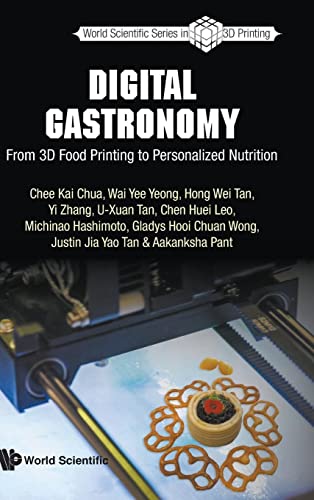
Digital Gastronomy: From 3d Food Printing To Personalized Nutrition: 4 (World Scientific Series In 3d Printing)
Libro 4 de 4: World Scientific Series In 3d PrintingIdioma: Inglés
Publicado por World Scientific Publishing Company, Incorporated, 2022
ISBN 10: 9811255903 ISBN 13: 9789811255908
Librería: Books Puddle, New York, NY, Estados Unidos de America
Calificación del vendedor: 4 de 5 estrellas
EUR 107,72
Envío por EUR 3,36
Se envía dentro de Estados Unidos de AmericaCantidad disponible: 1 disponibles
Añadir al carritoCondición: Used.
-
Digital Gastronomy: From 3d Food Printing To Personalized Nutrition: 4 (World Scientific Series In 3d Printing)
Libro 4 de 4: World Scientific Series In 3d PrintingIdioma: Inglés
Publicado por World Scientific Publishing Company, Incorporated, 2022
ISBN 10: 9811255903 ISBN 13: 9789811255908
Librería: Majestic Books, Hounslow, Reino Unido
Calificación del vendedor: 4 de 5 estrellas
EUR 106,54
Envío por EUR 7,46
Se envía de Reino Unido a Estados Unidos de AmericaCantidad disponible: 1 disponibles
Añadir al carritoCondición: Used.
-
Digital Gastronomy: From 3d Food Printing To Personalized Nutrition (World Scientific Series In 3d Printing)
Libro 4 de 4: World Scientific Series In 3d PrintingLibrería: Lucky's Textbooks, Dallas, TX, Estados Unidos de America
Calificación del vendedor: 5 de 5 estrellas
EUR 117,61
Envío por EUR 3,36
Se envía dentro de Estados Unidos de AmericaCantidad disponible: Más de 20 disponibles
Añadir al carritoCondición: New.
-
Digital Gastronomy: From 3d Food Printing To Personalized Nutrition: 4 (World Scientific Series In 3d Printing)
Libro 4 de 4: World Scientific Series In 3d PrintingIdioma: Inglés
Publicado por World Scientific Publishing Company, Incorporated, 2022
ISBN 10: 9811255903 ISBN 13: 9789811255908
Librería: Biblios, Frankfurt am main, HESSE, Alemania
Calificación del vendedor: 4 de 5 estrellas
EUR 110,65
Envío por EUR 9,95
Se envía de Alemania a Estados Unidos de AmericaCantidad disponible: 1 disponibles
Añadir al carritoCondición: Used.
-
Digital Gastronomy: From 3d Food Printing To Personalized Nutrition (World Scientific Series In 3d Printing)
Libro 4 de 4: World Scientific Series In 3d PrintingLibrería: California Books, Miami, FL, Estados Unidos de America
Calificación del vendedor: 5 de 5 estrellas
EUR 132,77
Gastos de envío gratis
Se envía dentro de Estados Unidos de AmericaCantidad disponible: Más de 20 disponibles
Añadir al carritoCondición: New.
-

Digital Gastronomy: From 3d Food Printing To Personalized Nutrition
Idioma: Inglés
Publicado por World Scientific Publishing Co Pte Ltd, SG, 2022
ISBN 10: 981125740X ISBN 13: 9789811257407
Librería: Rarewaves USA United, OSWEGO, IL, Estados Unidos de America
Calificación del vendedor: 5 de 5 estrellas
EUR 90,35
Envío por EUR 42,13
Se envía dentro de Estados Unidos de AmericaCantidad disponible: Más de 20 disponibles
Añadir al carritoPaperback. Condición: New. The food industry has seen many changes over the last several decades - new technologies have been introduced into the way we cook, manufacture, and present food products to consumers. Digital gastronomy, which combines new computational abilities such as three-dimensional (3D) printing with traditional food preparation, has allowed consumers to design and manufacture food with personalized shapes, colours, textures, and even nutrition. In addition to the personalization of food, 3D printing of food has other advantages such as promoting automation in food preparation and food sustainability through 3D-printed cell-based meats and alternative proteins. Entire meals can be constructed just by 3D food printing alone.In this textbook, the background, principles, commercial food printers, materials, regulations, business development, as well as the emerging technologies and future outlook of 3D food printing are explored. In terms of 3D-printed materials, four main classes are reviewed: namely, desserts / snacks (comprising dairy products, chocolate, sugars, and dough), fruits / vegetables, meats /alternative proteins, and pharmaceuticals / nutraceuticals.This textbook has been written to offer readers keen to learn more about 3D food printing in terms of concepts, processes, applications, and developments of 3D food printing. No prior knowledge is required. At the end of each chapter, a set of problems offers undergraduate and postgraduate students practice on the main ideas discussed within the chapter. For tertiary-level lecturers and university professors, the topic on 3D food printing can be associated to other subjects in food and nutrition, pharmaceutical and nutraceutical sciences, and food engineering.Related Link(s).
-

Digital Gastronomy: From 3d Food Printing To Personalized Nutrition
Libro 4 de 4: World Scientific Series In 3d PrintingIdioma: Inglés
Publicado por World Scientific Publishing Co Pte Ltd, SG, 2022
ISBN 10: 9811255903 ISBN 13: 9789811255908
Librería: Rarewaves USA, OSWEGO, IL, Estados Unidos de America
Calificación del vendedor: 5 de 5 estrellas
EUR 148,95
Gastos de envío gratis
Se envía dentro de Estados Unidos de AmericaCantidad disponible: Más de 20 disponibles
Añadir al carritoHardback. Condición: New. The food industry has seen many changes over the last several decades - new technologies have been introduced into the way we cook, manufacture, and present food products to consumers. Digital gastronomy, which combines new computational abilities such as three-dimensional (3D) printing with traditional food preparation, has allowed consumers to design and manufacture food with personalized shapes, colours, textures, and even nutrition. In addition to the personalization of food, 3D printing of food has other advantages such as promoting automation in food preparation and food sustainability through 3D-printed cell-based meats and alternative proteins. Entire meals can be constructed just by 3D food printing alone.In this textbook, the background, principles, commercial food printers, materials, regulations, business development, as well as the emerging technologies and future outlook of 3D food printing are explored. In terms of 3D-printed materials, four main classes are reviewed: namely, desserts / snacks (comprising dairy products, chocolate, sugars, and dough), fruits / vegetables, meats /alternative proteins, and pharmaceuticals / nutraceuticals.This textbook has been written to offer readers keen to learn more about 3D food printing in terms of concepts, processes, applications, and developments of 3D food printing. No prior knowledge is required. At the end of each chapter, a set of problems offers undergraduate and postgraduate students practice on the main ideas discussed within the chapter. For tertiary-level lecturers and university professors, the topic on 3D food printing can be associated to other subjects in food and nutrition, pharmaceutical and nutraceutical sciences, and food engineering.Related Link(s).
-

Digital Gastronomy: From 3d Food Printing To Personalized Nutrition
Idioma: Inglés
Publicado por World Scientific Publishing Co Pte Ltd, SG, 2022
ISBN 10: 981125740X ISBN 13: 9789811257407
Librería: Rarewaves.com UK, London, Reino Unido
Calificación del vendedor: 5 de 5 estrellas
EUR 72,53
Envío por EUR 74,58
Se envía de Reino Unido a Estados Unidos de AmericaCantidad disponible: 12 disponibles
Añadir al carritoPaperback. Condición: New. The food industry has seen many changes over the last several decades - new technologies have been introduced into the way we cook, manufacture, and present food products to consumers. Digital gastronomy, which combines new computational abilities such as three-dimensional (3D) printing with traditional food preparation, has allowed consumers to design and manufacture food with personalized shapes, colours, textures, and even nutrition. In addition to the personalization of food, 3D printing of food has other advantages such as promoting automation in food preparation and food sustainability through 3D-printed cell-based meats and alternative proteins. Entire meals can be constructed just by 3D food printing alone.In this textbook, the background, principles, commercial food printers, materials, regulations, business development, as well as the emerging technologies and future outlook of 3D food printing are explored. In terms of 3D-printed materials, four main classes are reviewed: namely, desserts / snacks (comprising dairy products, chocolate, sugars, and dough), fruits / vegetables, meats /alternative proteins, and pharmaceuticals / nutraceuticals.This textbook has been written to offer readers keen to learn more about 3D food printing in terms of concepts, processes, applications, and developments of 3D food printing. No prior knowledge is required. At the end of each chapter, a set of problems offers undergraduate and postgraduate students practice on the main ideas discussed within the chapter. For tertiary-level lecturers and university professors, the topic on 3D food printing can be associated to other subjects in food and nutrition, pharmaceutical and nutraceutical sciences, and food engineering.Related Link(s).
-
Digital Gastronomy: From 3d Food Printing To Personalized Nutrition (World Scientific Series In 3d Printing)
Libro 4 de 4: World Scientific Series In 3d PrintingLibrería: Ria Christie Collections, Uxbridge, Reino Unido
Calificación del vendedor: 5 de 5 estrellas
EUR 147,27
Envío por EUR 13,75
Se envía de Reino Unido a Estados Unidos de AmericaCantidad disponible: Más de 20 disponibles
Añadir al carritoCondición: New. In.
-

Innovation in 3D Printing Technology: Manufacturing, Food and Biomedical Engineering; Bioprinting: Principles and Applications; Digital Gastronomy: ... Edition of Rapid Prototyping (5th Edition)
Idioma: Inglés
Publicado por World Scientific Publishing Company, 2022
ISBN 10: 981129948X ISBN 13: 9789811299483
Librería: Ria Christie Collections, Uxbridge, Reino Unido
Calificación del vendedor: 5 de 5 estrellas
EUR 147,37
Envío por EUR 13,75
Se envía de Reino Unido a Estados Unidos de AmericaCantidad disponible: 4 disponibles
Añadir al carritoCondición: New. In.
-

Innovation In 3d Printing Technology: Manufacturing, Food And Biomedical Engineering - Bioprinting: Principles And Applications; Digital Gastronomy: From 3d Food Printing To Personalized Nutrition; 3d Printing And Additive Manufacturing (5th Edition)
Idioma: Inglés
Publicado por World Scientific Publishing Co Pte Ltd, SG, 2022
ISBN 10: 981129948X ISBN 13: 9789811299483
Librería: Rarewaves.com USA, London, LONDO, Reino Unido
Calificación del vendedor: 5 de 5 estrellas
EUR 164,71
Gastos de envío gratis
Se envía de Reino Unido a Estados Unidos de AmericaCantidad disponible: 1 disponibles
Añadir al carritoPaperback. Condición: New. Connecting the Dots: The Synergy of 3D Printing InnovationsThese three books collectively illustrate the versatile and transformative nature of 3D printing technology. Bioprinting: Principles and Applications sets the stage by exploring how 3D printing is revolutionizing healthcare through the creation of biological tissues and organs. Digital Gastronomy extends the discussion to the culinary realm, showcasing the creative and practical applications of 3D printing in food design and production. Finally, 3D Printing and Additive Manufacturing provides a comprehensive overview of the technology's impact across various sectors, highlighting its potential to drive innovation and efficiency in manufacturing.
-

Digital Gastronomy: From 3d Food Printing To Personalized Nutrition
Libro 4 de 4: World Scientific Series In 3d PrintingIdioma: Inglés
Publicado por World Scientific Publishing Co Pte Ltd, SG, 2022
ISBN 10: 9811255903 ISBN 13: 9789811255908
Librería: Rarewaves.com USA, London, LONDO, Reino Unido
Calificación del vendedor: 5 de 5 estrellas
EUR 183,44
Gastos de envío gratis
Se envía de Reino Unido a Estados Unidos de AmericaCantidad disponible: Más de 20 disponibles
Añadir al carritoHardback. Condición: New. The food industry has seen many changes over the last several decades - new technologies have been introduced into the way we cook, manufacture, and present food products to consumers. Digital gastronomy, which combines new computational abilities such as three-dimensional (3D) printing with traditional food preparation, has allowed consumers to design and manufacture food with personalized shapes, colours, textures, and even nutrition. In addition to the personalization of food, 3D printing of food has other advantages such as promoting automation in food preparation and food sustainability through 3D-printed cell-based meats and alternative proteins. Entire meals can be constructed just by 3D food printing alone.In this textbook, the background, principles, commercial food printers, materials, regulations, business development, as well as the emerging technologies and future outlook of 3D food printing are explored. In terms of 3D-printed materials, four main classes are reviewed: namely, desserts / snacks (comprising dairy products, chocolate, sugars, and dough), fruits / vegetables, meats /alternative proteins, and pharmaceuticals / nutraceuticals.This textbook has been written to offer readers keen to learn more about 3D food printing in terms of concepts, processes, applications, and developments of 3D food printing. No prior knowledge is required. At the end of each chapter, a set of problems offers undergraduate and postgraduate students practice on the main ideas discussed within the chapter. For tertiary-level lecturers and university professors, the topic on 3D food printing can be associated to other subjects in food and nutrition, pharmaceutical and nutraceutical sciences, and food engineering.Related Link(s).
-
Digital Gastronomy: From 3d Food Printing To Personalized Nutrition: 4 (World Scientific Series In 3d Printing)
Libro 4 de 4: World Scientific Series In 3d PrintingIdioma: Inglés
Publicado por World Scientific Publishing Co Pte Ltd, 2023
ISBN 10: 9811255903 ISBN 13: 9789811255908
Librería: Revaluation Books, Exeter, Reino Unido
Calificación del vendedor: 5 de 5 estrellas
EUR 176,19
Envío por EUR 14,34
Se envía de Reino Unido a Estados Unidos de AmericaCantidad disponible: 2 disponibles
Añadir al carritoHardcover. Condición: Brand New. 405 pages. 9.50x6.50x1.00 inches. In Stock.
-

Digital Gastronomy: From 3d Food Printing To Personalized Nutrition
Libro 4 de 4: World Scientific Series In 3d PrintingIdioma: Inglés
Publicado por World Scientific Publishing Co Pte Ltd, SG, 2022
ISBN 10: 9811255903 ISBN 13: 9789811255908
Librería: Rarewaves USA United, OSWEGO, IL, Estados Unidos de America
Calificación del vendedor: 5 de 5 estrellas
EUR 165,06
Envío por EUR 42,13
Se envía dentro de Estados Unidos de AmericaCantidad disponible: Más de 20 disponibles
Añadir al carritoHardback. Condición: New. The food industry has seen many changes over the last several decades - new technologies have been introduced into the way we cook, manufacture, and present food products to consumers. Digital gastronomy, which combines new computational abilities such as three-dimensional (3D) printing with traditional food preparation, has allowed consumers to design and manufacture food with personalized shapes, colours, textures, and even nutrition. In addition to the personalization of food, 3D printing of food has other advantages such as promoting automation in food preparation and food sustainability through 3D-printed cell-based meats and alternative proteins. Entire meals can be constructed just by 3D food printing alone.In this textbook, the background, principles, commercial food printers, materials, regulations, business development, as well as the emerging technologies and future outlook of 3D food printing are explored. In terms of 3D-printed materials, four main classes are reviewed: namely, desserts / snacks (comprising dairy products, chocolate, sugars, and dough), fruits / vegetables, meats /alternative proteins, and pharmaceuticals / nutraceuticals.This textbook has been written to offer readers keen to learn more about 3D food printing in terms of concepts, processes, applications, and developments of 3D food printing. No prior knowledge is required. At the end of each chapter, a set of problems offers undergraduate and postgraduate students practice on the main ideas discussed within the chapter. For tertiary-level lecturers and university professors, the topic on 3D food printing can be associated to other subjects in food and nutrition, pharmaceutical and nutraceutical sciences, and food engineering.Related Link(s).
-

Innovation In 3d Printing Technology: Manufacturing, Food And Biomedical Engineering - Bioprinting: Principles And Applications; Digital Gastronomy: From 3d Food Printing To Personalized Nutrition; 3d Printing And Additive Manufacturing (5th Edition)
Idioma: Inglés
Publicado por World Scientific Publishing Co Pte Ltd, SG, 2022
ISBN 10: 981129948X ISBN 13: 9789811299483
Librería: Rarewaves.com UK, London, Reino Unido
Calificación del vendedor: 5 de 5 estrellas
EUR 148,50
Envío por EUR 74,58
Se envía de Reino Unido a Estados Unidos de AmericaCantidad disponible: 1 disponibles
Añadir al carritoPaperback. Condición: New. Connecting the Dots: The Synergy of 3D Printing InnovationsThese three books collectively illustrate the versatile and transformative nature of 3D printing technology. Bioprinting: Principles and Applications sets the stage by exploring how 3D printing is revolutionizing healthcare through the creation of biological tissues and organs. Digital Gastronomy extends the discussion to the culinary realm, showcasing the creative and practical applications of 3D printing in food design and production. Finally, 3D Printing and Additive Manufacturing provides a comprehensive overview of the technology's impact across various sectors, highlighting its potential to drive innovation and efficiency in manufacturing.
-

Digital Gastronomy: From 3d Food Printing To Personalized Nutrition
Libro 4 de 4: World Scientific Series In 3d PrintingIdioma: Inglés
Publicado por World Scientific Publishing Co Pte Ltd, SG, 2022
ISBN 10: 9811255903 ISBN 13: 9789811255908
Librería: Rarewaves.com UK, London, Reino Unido
Calificación del vendedor: 5 de 5 estrellas
EUR 173,05
Envío por EUR 74,58
Se envía de Reino Unido a Estados Unidos de AmericaCantidad disponible: Más de 20 disponibles
Añadir al carritoHardback. Condición: New. The food industry has seen many changes over the last several decades - new technologies have been introduced into the way we cook, manufacture, and present food products to consumers. Digital gastronomy, which combines new computational abilities such as three-dimensional (3D) printing with traditional food preparation, has allowed consumers to design and manufacture food with personalized shapes, colours, textures, and even nutrition. In addition to the personalization of food, 3D printing of food has other advantages such as promoting automation in food preparation and food sustainability through 3D-printed cell-based meats and alternative proteins. Entire meals can be constructed just by 3D food printing alone.In this textbook, the background, principles, commercial food printers, materials, regulations, business development, as well as the emerging technologies and future outlook of 3D food printing are explored. In terms of 3D-printed materials, four main classes are reviewed: namely, desserts / snacks (comprising dairy products, chocolate, sugars, and dough), fruits / vegetables, meats /alternative proteins, and pharmaceuticals / nutraceuticals.This textbook has been written to offer readers keen to learn more about 3D food printing in terms of concepts, processes, applications, and developments of 3D food printing. No prior knowledge is required. At the end of each chapter, a set of problems offers undergraduate and postgraduate students practice on the main ideas discussed within the chapter. For tertiary-level lecturers and university professors, the topic on 3D food printing can be associated to other subjects in food and nutrition, pharmaceutical and nutraceutical sciences, and food engineering.Related Link(s).

