

Importe total (1 artículo artículos):
Destino del pedido:

troeva elena (22 resultados)
Ir a los resultados principales
Filtros de búsqueda
Tipo de artículo
- Todos los tipos de productos
- Libros (22)
- Revistas y publicaciones (No hay ningún otro resultado que coincida con este filtro.)
- Cómics (No hay ningún otro resultado que coincida con este filtro.)
- Partituras (No hay ningún otro resultado que coincida con este filtro.)
- Arte, grabados y pósters (No hay ningún otro resultado que coincida con este filtro.)
- Fotografías (No hay ningún otro resultado que coincida con este filtro.)
- Mapas (No hay ningún otro resultado que coincida con este filtro.)
- Manuscritos y coleccionismo de papel (No hay ningún otro resultado que coincida con este filtro.)
Condición Más información
- Nuevo (19)
- Como nuevo, Excelente o Muy bueno (3)
- Bueno o Aceptable (No hay ningún otro resultado que coincida con este filtro.)
- Regular o Pobre (No hay ningún otro resultado que coincida con este filtro.)
- Tal como se indica (No hay ningún otro resultado que coincida con este filtro.)
Encuadernación
Más atributos
- Primera edición (No hay ningún otro resultado que coincida con este filtro.)
- Firmado (No hay ningún otro resultado que coincida con este filtro.)
- Sobrecubierta (No hay ningún otro resultado que coincida con este filtro.)
- Con imágenes (14)
- No impresión bajo demanda (14)
Idioma (1)
Precio
- Cualquier precio
- Menos de EUR 20 (No hay ningún otro resultado que coincida con este filtro.)
- EUR 20 a EUR 45 (No hay ningún otro resultado que coincida con este filtro.)
- Más de EUR 45
Gastos de envío gratis
Ubicación del vendedor
Valoración de los vendedores
-

Far North : Plant Biodiversity and Ecology of Yakutia
Libro 3 de 17: Plant and VegetationLibrería: GreatBookPrices, Columbia, MD, Estados Unidos de America
Calificación del vendedor: 5 de 5 estrellas

EUR 228,36
Envío por EUR 2,27
Se envía dentro de Estados Unidos de AmericaCantidad disponible: Más de 20 disponibles
Añadir al carritoCondición: New.
-

The Far North:: Plant Biodiversity and Ecology of Yakutia (Plant and Vegetation, 3)
Libro 3 de 17: Plant and VegetationLibrería: California Books, Miami, FL, Estados Unidos de America
Calificación del vendedor: 5 de 5 estrellas
EUR 230,71
Gastos de envío gratis
Se envía dentro de Estados Unidos de AmericaCantidad disponible: Más de 20 disponibles
Añadir al carritoCondición: New.
-

The Far North:: Plant Biodiversity and Ecology of Yakutia (Plant and Vegetation, 3)
Libro 3 de 17: Plant and VegetationLibrería: Ria Christie Collections, Uxbridge, Reino Unido
Calificación del vendedor: 5 de 5 estrellas
EUR 218,80
Envío por EUR 13,79
Se envía de Reino Unido a Estados Unidos de AmericaCantidad disponible: Más de 20 disponibles
Añadir al carritoCondición: New. In.
-
The Far North:: Plant Biodiversity and Ecology of Yakutia (Plant and Vegetation, 3)
Libro 3 de 17: Plant and VegetationLibrería: Ria Christie Collections, Uxbridge, Reino Unido
Calificación del vendedor: 5 de 5 estrellas
EUR 218,80
Envío por EUR 13,79
Se envía de Reino Unido a Estados Unidos de AmericaCantidad disponible: Más de 20 disponibles
Añadir al carritoCondición: New. In.
-

Far North : Plant Biodiversity and Ecology of Yakutia
Libro 3 de 17: Plant and VegetationLibrería: GreatBookPricesUK, Woodford Green, Reino Unido
Calificación del vendedor: 5 de 5 estrellas
EUR 217,07
Envío por EUR 17,26
Se envía de Reino Unido a Estados Unidos de AmericaCantidad disponible: Más de 20 disponibles
Añadir al carritoCondición: New.
-

Far North : Plant Biodiversity and Ecology of Yakutia
Libro 3 de 17: Plant and VegetationLibrería: GreatBookPrices, Columbia, MD, Estados Unidos de America
Calificación del vendedor: 5 de 5 estrellas
EUR 241,72
Envío por EUR 2,27
Se envía dentro de Estados Unidos de AmericaCantidad disponible: Más de 20 disponibles
Añadir al carritoCondición: As New. Unread book in perfect condition.
-

Far North : Plant Biodiversity and Ecology of Yakutia
Libro 3 de 17: Plant and VegetationLibrería: GreatBookPricesUK, Woodford Green, Reino Unido
Calificación del vendedor: 5 de 5 estrellas
EUR 247,75
Envío por EUR 17,26
Se envía de Reino Unido a Estados Unidos de AmericaCantidad disponible: Más de 20 disponibles
Añadir al carritoCondición: As New. Unread book in perfect condition.
-
The Far North: | Plant Biodiversity and Ecology of Yakutia
Libro 3 de 17: Plant and VegetationLibrería: preigu, Osnabrück, Alemania
Calificación del vendedor: 5 de 5 estrellas
EUR 186,70
Envío por EUR 70,00
Se envía de Alemania a Estados Unidos de AmericaCantidad disponible: 5 disponibles
Añadir al carritoTaschenbuch. Condición: Neu. The Far North: | Plant Biodiversity and Ecology of Yakutia | Elena I. Troeva (u. a.) | Taschenbuch | xv | Englisch | 2012 | Springer | EAN 9789400731936 | Verantwortliche Person für die EU: Springer Verlag GmbH, Tiergartenstr. 17, 69121 Heidelberg, juergen[dot]hartmann[at]springer[dot]com | Anbieter: preigu.
-

The Far North:
Libro 3 de 17: Plant and VegetationIdioma: Inglés
Publicado por Springer Netherlands, Springer Netherlands Apr 2010, 2010
ISBN 10: 904813773X ISBN 13: 9789048137732
Librería: buchversandmimpf2000, Emtmannsberg, BAYE, Alemania
Calificación del vendedor: 5 de 5 estrellas
EUR 213,99
Envío por EUR 60,00
Se envía de Alemania a Estados Unidos de AmericaCantidad disponible: 2 disponibles
Añadir al carritoBuch. Condición: Neu. Neuware -Outside Russia very little is known about the terrestrial ecology, vegetation, biogeographical patterns, and biodiversity of the enormously extensive ecosystems of Yakutia, Siberia. These systems are very special in that they function on top of huge layers of permafrost and are exposed to very severe and extreme weather conditions, the range between winter and summer temperatures being more than 100 degrees C. The soils are generally poor, and human use of the vegetation is usually extensive. Main vegetation zones are taiga and tundra, but Yakutia also supports a special land and vegetation form, caused by permafrost, the alas: more or less extensive grasslands around roundish lakes in taiga. All these vegetation types will be described and their ecology and ecophysiological characteristics will be dealt with. Because of the size of Yakutia, covering several climatic zones, and its extreme position on ecological gradients, Yakutia contains very interesting biogeographical patterns, which also will be described. Our analyses are drawn from many years of research in Yakutia and from a vast body of ecological and other literature in Russian publications and in unpublished local reports. The anthropogenic influence on the ecosystems will be dealt with. This includes the main activities of human interference with nature: forestry, extensive reindeer herding, cattle and horse grazing, etc. Also fire and other prominent ecological factors are dealt with. A very important point is also the very high degree of naturalness that is still extant in Yakutiäs main vegetation zones.Springer Verlag GmbH, Tiergartenstr. 17, 69121 Heidelberg 408 pp. Englisch.
-
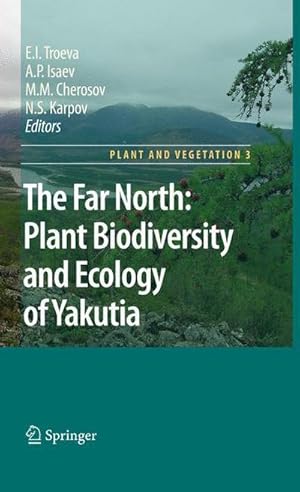
The Far North: : Plant Biodiversity and Ecology of Yakutia
Libro 3 de 17: Plant and VegetationIdioma: Inglés
Publicado por Springer Netherlands, Springer Netherlands, 2010
ISBN 10: 904813773X ISBN 13: 9789048137732
Librería: AHA-BUCH GmbH, Einbeck, Alemania
Calificación del vendedor: 5 de 5 estrellas
EUR 217,46
Envío por EUR 64,25
Se envía de Alemania a Estados Unidos de AmericaCantidad disponible: 1 disponibles
Añadir al carritoBuch. Condición: Neu. Druck auf Anfrage Neuware - Printed after ordering - Outside Russia very little is known about the terrestrial ecology, vegetation, biogeographical patterns, and biodiversity of the enormously extensive ecosystems of Yakutia, Siberia. These systems are very special in that they function on top of huge layers of permafrost and are exposed to very severe and extreme weather conditions, the range between winter and summer temperatures being more than 100 degrees C. The soils are generally poor, and human use of the vegetation is usually extensive. Main vegetation zones are taiga and tundra, but Yakutia also supports a special land and vegetation form, caused by permafrost, the alas: more or less extensive grasslands around roundish lakes in taiga. All these vegetation types will be described and their ecology and ecophysiological characteristics will be dealt with. Because of the size of Yakutia, covering several climatic zones, and its extreme position on ecological gradients, Yakutia contains very interesting biogeographical patterns, which also will be described. Our analyses are drawn from many years of research in Yakutia and from a vast body of ecological and other literature in Russian publications and in unpublished local reports. The anthropogenic influence on the ecosystems will be dealt with. This includes the main activities of human interference with nature: forestry, extensive reindeer herding, cattle and horse grazing, etc. Also fire and other prominent ecological factors are dealt with. A very important point is also the very high degree of naturalness that is still extant in Yakutia's main vegetation zones.
-
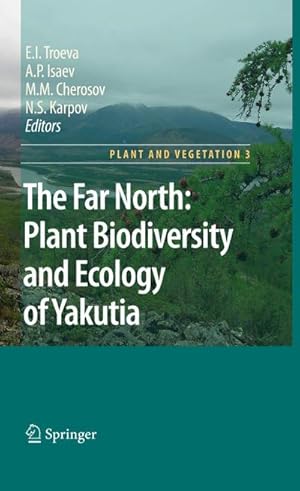
The Far North: : Plant Biodiversity and Ecology of Yakutia
Libro 3 de 17: Plant and VegetationLibrería: AHA-BUCH GmbH, Einbeck, Alemania
Calificación del vendedor: 5 de 5 estrellas
EUR 220,29
Envío por EUR 63,08
Se envía de Alemania a Estados Unidos de AmericaCantidad disponible: 1 disponibles
Añadir al carritoTaschenbuch. Condición: Neu. Druck auf Anfrage Neuware - Printed after ordering - Outside Russia very little is known about the terrestrial ecology, vegetation, biogeographical patterns, and biodiversity of the enormously extensive ecosystems of Yakutia, Siberia. These systems are very special in that they function on top of huge layers of permafrost and are exposed to very severe and extreme weather conditions, the range between winter and summer temperatures being more than 100 degrees C. The soils are generally poor, and human use of the vegetation is usually extensive. Main vegetation zones are taiga and tundra, but Yakutia also supports a special land and vegetation form, caused by permafrost, the alas: more or less extensive grasslands around roundish lakes in taiga. All these vegetation types will be described and their ecology and ecophysiological characteristics will be dealt with. Because of the size of Yakutia, covering several climatic zones, and its extreme position on ecological gradients, Yakutia contains very interesting biogeographical patterns, which also will be described. Our analyses are drawn from many years of research in Yakutia and from a vast body of ecological and other literature in Russian publications and in unpublished local reports. The anthropogenic influence on the ecosystems will be dealt with. This includes the main activities of human interference with nature: forestry, extensive reindeer herding, cattle and horse grazing, etc. Also fire and other prominent ecological factors are dealt with. A very important point is also the very high degree of naturalness that is still extant in Yakutia's main vegetation zones.
-
The Far North:: Plant Biodiversity and Ecology of Yakutia
Libro 3 de 17: Plant and VegetationLibrería: Revaluation Books, Exeter, Reino Unido
Calificación del vendedor: 5 de 5 estrellas
EUR 301,62
Envío por EUR 14,38
Se envía de Reino Unido a Estados Unidos de AmericaCantidad disponible: 2 disponibles
Añadir al carritoPaperback. Condición: Brand New. 2010 edition. 400 pages. 9.25x6.10x0.92 inches. In Stock.
-
The Far North: Plant Biodiversity and Ecology of Yakutia
Libro 3 de 17: Plant and VegetationLibrería: Revaluation Books, Exeter, Reino Unido
Calificación del vendedor: 5 de 5 estrellas
EUR 303,18
Envío por EUR 14,38
Se envía de Reino Unido a Estados Unidos de AmericaCantidad disponible: 2 disponibles
Añadir al carritoHardcover. Condición: Brand New. 1st edition. 390 pages. 9.25x6.25x0.75 inches. In Stock.
-
The Far North:: Plant Biodiversity and Ecology of Yakutia (Plant and Vegetation, 3)
Libro 3 de 17: Plant and VegetationLibrería: Mispah books, Redhill, SURRE, Reino Unido
Calificación del vendedor: 4 de 5 estrellas

EUR 316,46
Envío por EUR 28,77
Se envía de Reino Unido a Estados Unidos de AmericaCantidad disponible: 1 disponibles
Añadir al carritoHardcover. Condición: Like New. Like New. book.
-
The Far North: (eng)
Libro 3 de 17: Plant and VegetationLibrería: Brook Bookstore On Demand, Napoli, NA, Italia
Calificación del vendedor: 4 de 5 estrellas
EUR 166,29
Envío por EUR 6,80
Se envía de Italia a Estados Unidos de AmericaCantidad disponible: Más de 20 disponibles
Añadir al carritoCondición: new. Questo è un articolo print on demand.
-
The Far North: (eng)
Libro 3 de 17: Plant and VegetationLibrería: Brook Bookstore On Demand, Napoli, NA, Italia
Calificación del vendedor: 4 de 5 estrellas
EUR 166,29
Envío por EUR 8,00
Se envía de Italia a Estados Unidos de AmericaCantidad disponible: Más de 20 disponibles
Añadir al carritoCondición: new. Questo è un articolo print on demand.
-
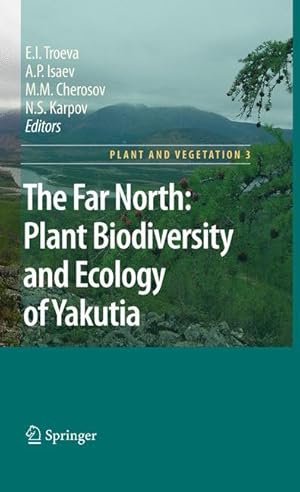
The Far North:
Libro 3 de 17: Plant and VegetationLibrería: moluna, Greven, Alemania
Calificación del vendedor: 4 de 5 estrellas
EUR 180,07
Envío por EUR 48,99
Se envía de Alemania a Estados Unidos de AmericaCantidad disponible: Más de 20 disponibles
Añadir al carritoCondición: New. Dieser Artikel ist ein Print on Demand Artikel und wird nach Ihrer Bestellung fuer Sie gedruckt. Totally unknown area in English speaking/reading worldEcology of areas with extreme climatic conditionsEcology of areas on huge depth of permafrostEcology of a huge area that largely is still very naturalEcology of little-know.
-
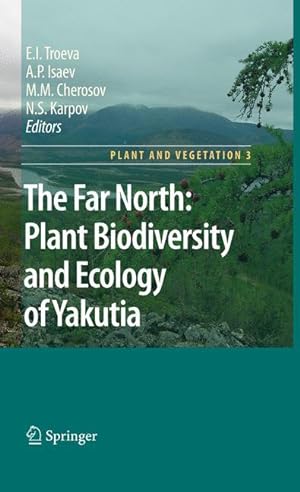
The Far North
Libro 3 de 17: Plant and VegetationLibrería: moluna, Greven, Alemania
Calificación del vendedor: 4 de 5 estrellas
EUR 180,07
Envío por EUR 48,99
Se envía de Alemania a Estados Unidos de AmericaCantidad disponible: Más de 20 disponibles
Añadir al carritoCondición: New. Dieser Artikel ist ein Print on Demand Artikel und wird nach Ihrer Bestellung fuer Sie gedruckt. Totally unknown area in English speaking/reading worldEcology of areas with extreme climatic conditionsEcology of areas on huge depth of permafrostEcology of a huge area that largely is still very naturalEcology of little-know.
-
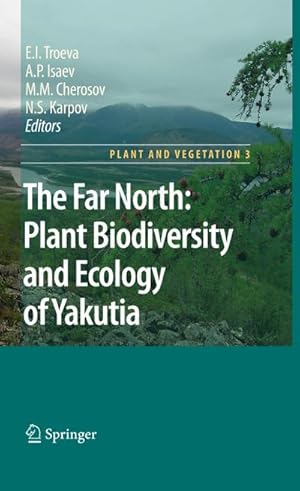
The Far North:
Libro 3 de 17: Plant and VegetationIdioma: Inglés
Publicado por Springer Netherlands Mai 2012, 2012
ISBN 10: 9400731930 ISBN 13: 9789400731936
Librería: BuchWeltWeit Ludwig Meier e.K., Bergisch Gladbach, Alemania
Calificación del vendedor: 5 de 5 estrellas
EUR 213,99
Envío por EUR 23,00
Se envía de Alemania a Estados Unidos de AmericaCantidad disponible: 2 disponibles
Añadir al carritoTaschenbuch. Condición: Neu. This item is printed on demand - it takes 3-4 days longer - Neuware -Outside Russia very little is known about the terrestrial ecology, vegetation, biogeographical patterns, and biodiversity of the enormously extensive ecosystems of Yakutia, Siberia. These systems are very special in that they function on top of huge layers of permafrost and are exposed to very severe and extreme weather conditions, the range between winter and summer temperatures being more than 100 degrees C. The soils are generally poor, and human use of the vegetation is usually extensive. Main vegetation zones are taiga and tundra, but Yakutia also supports a special land and vegetation form, caused by permafrost, the alas: more or less extensive grasslands around roundish lakes in taiga. All these vegetation types will be described and their ecology and ecophysiological characteristics will be dealt with. Because of the size of Yakutia, covering several climatic zones, and its extreme position on ecological gradients, Yakutia contains very interesting biogeographical patterns, which also will be described. Our analyses are drawn from many years of research in Yakutia and from a vast body of ecological and other literature in Russian publications and in unpublished local reports. The anthropogenic influence on the ecosystems will be dealt with. This includes the main activities of human interference with nature: forestry, extensive reindeer herding, cattle and horse grazing, etc. Also fire and other prominent ecological factors are dealt with. A very important point is also the very high degree of naturalness that is still extant in Yakutia's main vegetation zones. 408 pp. Englisch.
-
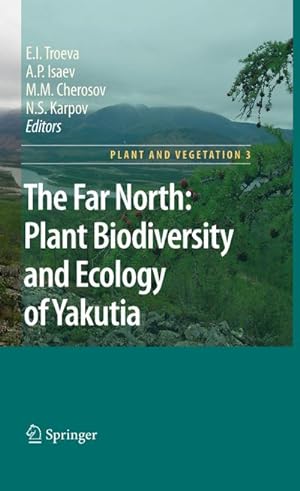
The Far North:
Libro 3 de 17: Plant and VegetationIdioma: Inglés
Publicado por Springer Netherlands, Springer Netherlands Apr 2010, 2010
ISBN 10: 904813773X ISBN 13: 9789048137732
Librería: BuchWeltWeit Ludwig Meier e.K., Bergisch Gladbach, Alemania
Calificación del vendedor: 5 de 5 estrellas
EUR 213,99
Envío por EUR 23,00
Se envía de Alemania a Estados Unidos de AmericaCantidad disponible: 2 disponibles
Añadir al carritoBuch. Condición: Neu. This item is printed on demand - it takes 3-4 days longer - Neuware -Outside Russia very little is known about the terrestrial ecology, vegetation, biogeographical patterns, and biodiversity of the enormously extensive ecosystems of Yakutia, Siberia. These systems are very special in that they function on top of huge layers of permafrost and are exposed to very severe and extreme weather conditions, the range between winter and summer temperatures being more than 100 degrees C. The soils are generally poor, and human use of the vegetation is usually extensive. Main vegetation zones are taiga and tundra, but Yakutia also supports a special land and vegetation form, caused by permafrost, the alas: more or less extensive grasslands around roundish lakes in taiga. All these vegetation types will be described and their ecology and ecophysiological characteristics will be dealt with. Because of the size of Yakutia, covering several climatic zones, and its extreme position on ecological gradients, Yakutia contains very interesting biogeographical patterns, which also will be described. Our analyses are drawn from many years of research in Yakutia and from a vast body of ecological and other literature in Russian publications and in unpublished local reports. The anthropogenic influence on the ecosystems will be dealt with. This includes the main activities of human interference with nature: forestry, extensive reindeer herding, cattle and horse grazing, etc. Also fire and other prominent ecological factors are dealt with. A very important point is also the very high degree of naturalness that is still extant in Yakutia's main vegetation zones. 408 pp. Englisch.
-
The Far North: | Plant Biodiversity and Ecology of Yakutia
Libro 3 de 17: Plant and VegetationLibrería: preigu, Osnabrück, Alemania
Calificación del vendedor: 5 de 5 estrellas
EUR 186,70
Envío por EUR 70,00
Se envía de Alemania a Estados Unidos de AmericaCantidad disponible: 5 disponibles
Añadir al carritoBuch. Condición: Neu. The Far North: | Plant Biodiversity and Ecology of Yakutia | Elena I. Troeva (u. a.) | Buch | xv | Englisch | 2010 | Springer | EAN 9789048137732 | Verantwortliche Person für die EU: Springer Verlag GmbH, Tiergartenstr. 17, 69121 Heidelberg, juergen[dot]hartmann[at]springer[dot]com | Anbieter: preigu Print on Demand.
-

The Far North:
Libro 3 de 17: Plant and VegetationIdioma: Inglés
Publicado por Springer Netherlands, Springer Netherlands Mai 2012, 2012
ISBN 10: 9400731930 ISBN 13: 9789400731936
Librería: buchversandmimpf2000, Emtmannsberg, BAYE, Alemania
Calificación del vendedor: 5 de 5 estrellas
EUR 213,99
Envío por EUR 60,00
Se envía de Alemania a Estados Unidos de AmericaCantidad disponible: 1 disponibles
Añadir al carritoTaschenbuch. Condición: Neu. This item is printed on demand - Print on Demand Titel. Neuware -Outside Russia very little is known about the terrestrial ecology, vegetation, biogeographical patterns, and biodiversity of the enormously extensive ecosystems of Yakutia, Siberia. These systems are very special in that they function on top of huge layers of permafrost and are exposed to very severe and extreme weather conditions, the range between winter and summer temperatures being more than 100 degrees C. The soils are generally poor, and human use of the vegetation is usually extensive. Main vegetation zones are taiga and tundra, but Yakutia also supports a special land and vegetation form, caused by permafrost, the alas: more or less extensive grasslands around roundish lakes in taiga. All these vegetation types will be described and their ecology and ecophysiological characteristics will be dealt with. Because of the size of Yakutia, covering several climatic zones, and its extreme position on ecological gradients, Yakutia contains very interesting biogeographical patterns, which also will be described. Our analyses are drawn from many years of research in Yakutia and from a vast body of ecological and other literature in Russian publications and in unpublished local reports. The anthropogenic influence on the ecosystems will be dealt with. This includes the main activities of human interference with nature: forestry, extensive reindeer herding, cattle and horse grazing, etc. Also fire and other prominent ecological factors are dealt with. A very important point is also the very high degree of naturalness that is still extant in Yakutiäs main vegetation zones.Springer Verlag GmbH, Tiergartenstr. 17, 69121 Heidelberg 408 pp. Englisch.


