
Importe total (1 artículo artículos):
Destino del pedido:

sungkee lee (17 resultados)
Ir a los resultados principales
Filtros de búsqueda
Tipo de artículo
- Todos los tipos de productos
- Libros (17)
- Revistas y publicaciones (No hay ningún otro resultado que coincida con este filtro.)
- Cómics (No hay ningún otro resultado que coincida con este filtro.)
- Partituras (No hay ningún otro resultado que coincida con este filtro.)
- Arte, grabados y pósters (No hay ningún otro resultado que coincida con este filtro.)
- Fotografías (No hay ningún otro resultado que coincida con este filtro.)
- Mapas (No hay ningún otro resultado que coincida con este filtro.)
- Manuscritos y coleccionismo de papel (No hay ningún otro resultado que coincida con este filtro.)
Condición Más información
- Nuevo (14)
- Como nuevo, Excelente o Muy bueno (3)
- Bueno o Aceptable (No hay ningún otro resultado que coincida con este filtro.)
- Regular o Pobre (No hay ningún otro resultado que coincida con este filtro.)
- Tal como se indica (No hay ningún otro resultado que coincida con este filtro.)
Encuadernación
Más atributos
- Primera edición (No hay ningún otro resultado que coincida con este filtro.)
- Firmado (No hay ningún otro resultado que coincida con este filtro.)
- Sobrecubierta (No hay ningún otro resultado que coincida con este filtro.)
- Con imágenes (10)
- No impresión bajo demanda (12)
Idioma (1)
Precio
- Cualquier precio
- Menos de EUR 20 (No hay ningún otro resultado que coincida con este filtro.)
- EUR 20 a EUR 40 (No hay ningún otro resultado que coincida con este filtro.)
- Más de EUR 40
Gastos de envío gratis
- Envío gratis a Estados Unidos de America (No hay ningún otro resultado que coincida con este filtro.)
Ubicación del vendedor
Valoración de los vendedores
-

Genetic Learning for Adaptive Image Segmentation (The Springer International Series in Engineering and Computer Science)
Librería: Lucky's Textbooks, Dallas, TX, Estados Unidos de America
Calificación del vendedor: 5 de 5 estrellas

EUR 155,11
Envío por EUR 3,37
Se envía dentro de Estados Unidos de AmericaCantidad disponible: Más de 20 disponibles
Añadir al carritoCondición: New.
-
Genetic Learning for Adaptive Image Segmentation
Librería: GreatBookPrices, Columbia, MD, Estados Unidos de America
Calificación del vendedor: 5 de 5 estrellas
EUR 156,63
Envío por EUR 2,23
Se envía dentro de Estados Unidos de AmericaCantidad disponible: Más de 20 disponibles
Añadir al carritoCondición: New.
-

Genetic Learning for Adaptive Image Segmentation (The Springer International Series in Engineering and Computer Science, 287)
Librería: Lucky's Textbooks, Dallas, TX, Estados Unidos de America
Calificación del vendedor: 5 de 5 estrellas
EUR 155,50
Envío por EUR 3,37
Se envía dentro de Estados Unidos de AmericaCantidad disponible: Más de 20 disponibles
Añadir al carritoCondición: New.
-
Genetic Learning for Adaptive Image Segmentation (The Springer International Series in Engineering and Computer Science)
Librería: Ria Christie Collections, Uxbridge, Reino Unido
Calificación del vendedor: 5 de 5 estrellas
EUR 159,81
Envío por EUR 13,84
Se envía de Reino Unido a Estados Unidos de AmericaCantidad disponible: Más de 20 disponibles
Añadir al carritoCondición: New. In.
-
Genetic Learning for Adaptive Image Segmentation (The Springer International Series in Engineering and Computer Science, 287)
Librería: Ria Christie Collections, Uxbridge, Reino Unido
Calificación del vendedor: 5 de 5 estrellas
EUR 159,81
Envío por EUR 13,84
Se envía de Reino Unido a Estados Unidos de AmericaCantidad disponible: Más de 20 disponibles
Añadir al carritoCondición: New. In.
-

Genetic Learning for Adaptive Image Segmentation
Librería: GreatBookPricesUK, Woodford Green, Reino Unido
Calificación del vendedor: 5 de 5 estrellas
EUR 160,97
Envío por EUR 17,33
Se envía de Reino Unido a Estados Unidos de AmericaCantidad disponible: Más de 20 disponibles
Añadir al carritoCondición: New.
-
Genetic Learning for Adaptive Image Segmentation
Librería: GreatBookPrices, Columbia, MD, Estados Unidos de America
Calificación del vendedor: 5 de 5 estrellas
EUR 181,83
Envío por EUR 2,23
Se envía dentro de Estados Unidos de AmericaCantidad disponible: Más de 20 disponibles
Añadir al carritoCondición: As New. Unread book in perfect condition.
-

Genetic Learning for Adaptive Image Segmentation
Librería: GreatBookPricesUK, Woodford Green, Reino Unido
Calificación del vendedor: 5 de 5 estrellas
EUR 182,01
Envío por EUR 17,33
Se envía de Reino Unido a Estados Unidos de AmericaCantidad disponible: Más de 20 disponibles
Añadir al carritoCondición: As New. Unread book in perfect condition.
-
Genetic Learning for Adaptive Image Segmentation
Idioma: Inglés
Publicado por Kluwer Academic Publishers, 1994
ISBN 10: 0792394917 ISBN 13: 9780792394914
Librería: Kennys Bookshop and Art Galleries Ltd., Galway, GY, Irlanda
Calificación del vendedor: 5 de 5 estrellas
EUR 202,29
Envío por EUR 10,50
Se envía de Irlanda a Estados Unidos de AmericaCantidad disponible: 15 disponibles
Añadir al carritoCondición: New. Presents the closed-loop image segmentation system that incorporates genetic and other algorithms to adapt the segmentation process to changes in image characteristics caused by variable environmental conditions, such as time of day, time of year and weather. Series: The Springer International Series in Engineering and Computer Science. Num Pages: 271 pages, biography. BIC Classification: UYQV. Category: (P) Professional & Vocational; (UP) Postgraduate, Research & Scholarly. Dimension: 235 x 155 x 17. Weight in Grams: 1310. . 1994. Hardback. . . . .
-

Genetic Learning for Adaptive Image Segmentation
Idioma: Inglés
Publicado por Springer US, Springer US, 1994
ISBN 10: 0792394917 ISBN 13: 9780792394914
Librería: AHA-BUCH GmbH, Einbeck, Alemania
Calificación del vendedor: 5 de 5 estrellas
EUR 168,73
Envío por EUR 63,09
Se envía de Alemania a Estados Unidos de AmericaCantidad disponible: 1 disponibles
Añadir al carritoBuch. Condición: Neu. Druck auf Anfrage Neuware - Printed after ordering - Image segmentation is generally the first task in any automated image understanding application, such as autonomous vehicle navigation, object recognition, photointerpretation, etc. All subsequent tasks, such as feature extraction, object detection, and object recognition, rely heavily on the quality of segmentation. One of the fundamental weaknesses of current image segmentation algorithms is their inability to adapt the segmentation process as real-world changes are reflected in the image. Only after numerous modifications to an algorithm's control parameters can any current image segmentation technique be used to handle the diversity of images encountered in real-world applications. Genetic Learning for Adaptive Image Segmentation presents the first closed-loop image segmentation system that incorporates genetic and other algorithms to adapt the segmentation process to changes in image characteristics caused by variable environmental conditions, such as time of day, time of year, weather, etc. Image segmentation performance is evaluated using multiple measures of segmentation quality. These quality measures include global characteristics of the entire image as well as local features of individual object regions in the image. This adaptive image segmentation system provides continuous adaptation to normal environmental variations, exhibits learning capabilities, and provides robust performance when interacting with a dynamic environment. This research is directed towards adapting the performance of a well known existing segmentation algorithm (Phoenix) across a wide variety of environmental conditions which cause changes in the image characteristics. The book presents a large number of experimental results and compares performance with standard techniques used in computer vision for both consistency and quality of segmentation results. These results demonstrate, (a) the ability to adapt the segmentation performance in both indoor and outdoor color imagery, and (b) that learning from experience can be used to improve the segmentation performance over time.
-
Genetic Learning for Adaptive Image Segmentation (The Springer International Series in Engineering and Computer Science, 287)
Librería: Mispah books, Redhill, SURRE, Reino Unido
Calificación del vendedor: 4 de 5 estrellas

EUR 227,27
Envío por EUR 28,88
Se envía de Reino Unido a Estados Unidos de AmericaCantidad disponible: 1 disponibles
Añadir al carritoPaperback. Condición: Like New. Like New. book.
-
Genetic Learning for Adaptive Image Segmentation
Idioma: Inglés
Publicado por Kluwer Academic Publishers, 1994
ISBN 10: 0792394917 ISBN 13: 9780792394914
Librería: Kennys Bookstore, Olney, MD, Estados Unidos de America
Calificación del vendedor: 4 de 5 estrellas
EUR 247,44
Envío por EUR 8,86
Se envía dentro de Estados Unidos de AmericaCantidad disponible: 15 disponibles
Añadir al carritoCondición: New. Presents the closed-loop image segmentation system that incorporates genetic and other algorithms to adapt the segmentation process to changes in image characteristics caused by variable environmental conditions, such as time of day, time of year and weather. Series: The Springer International Series in Engineering and Computer Science. Num Pages: 271 pages, biography. BIC Classification: UYQV. Category: (P) Professional & Vocational; (UP) Postgraduate, Research & Scholarly. Dimension: 235 x 155 x 17. Weight in Grams: 1310. . 1994. Hardback. . . . . Books ship from the US and Ireland.
-

Genetic Learning for Adaptive Image Segmentation
Librería: BuchWeltWeit Ludwig Meier e.K., Bergisch Gladbach, Alemania
Calificación del vendedor: 5 de 5 estrellas
EUR 160,49
Envío por EUR 23,00
Se envía de Alemania a Estados Unidos de AmericaCantidad disponible: 2 disponibles
Añadir al carritoTaschenbuch. Condición: Neu. This item is printed on demand - it takes 3-4 days longer - Neuware -Image segmentation is generally the first task in any automated image understanding application, such as autonomous vehicle navigation, object recognition, photointerpretation, etc. All subsequent tasks, such as feature extraction, object detection, and object recognition, rely heavily on the quality of segmentation. One of the fundamental weaknesses of current image segmentation algorithms is their inability to adapt the segmentation process as real-world changes are reflected in the image. Only after numerous modifications to an algorithm's control parameters can any current image segmentation technique be used to handle the diversity of images encountered in real-world applications. Genetic Learning for Adaptive Image Segmentation presents the first closed-loop image segmentation system that incorporates genetic and other algorithms to adapt the segmentation process to changes in image characteristics caused by variable environmental conditions, such as time of day, time of year, weather, etc. Image segmentation performance is evaluated using multiple measures of segmentation quality. These quality measures include global characteristics of the entire image as well as local features of individual object regions in the image. This adaptive image segmentation system provides continuous adaptation to normal environmental variations, exhibits learning capabilities, and provides robust performance when interacting with a dynamic environment. This research is directed towards adapting the performance of a well known existing segmentation algorithm (Phoenix) across a wide variety of environmental conditions which cause changes in the image characteristics. The book presents a large number of experimental results and compares performance with standard techniques used in computer vision for both consistency and quality of segmentation results. These results demonstrate, (a) the ability to adapt the segmentation performance in both indoor and outdoor color imagery, and (b) that learning from experience can be used to improve the segmentation performance over time. 296 pp. Englisch.
-

Genetic Learning for Adaptive Image Segmentation
Librería: moluna, Greven, Alemania
Calificación del vendedor: 4 de 5 estrellas
EUR 136,16
Envío por EUR 48,99
Se envía de Alemania a Estados Unidos de AmericaCantidad disponible: Más de 20 disponibles
Añadir al carritoCondición: New. Dieser Artikel ist ein Print on Demand Artikel und wird nach Ihrer Bestellung fuer Sie gedruckt. Image segmentation is generally the first task in any automated image understanding application, such as autonomous vehicle navigation, object recognition, photointerpretation, etc. All subsequent tasks, such as feature extraction, object detection, and .
-
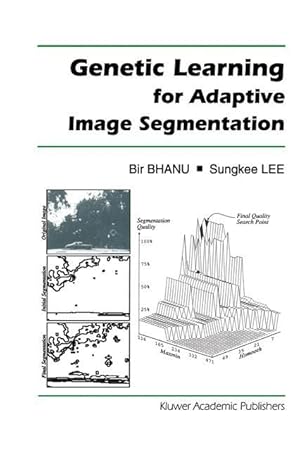
Genetic Learning for Adaptive Image Segmentation
Librería: moluna, Greven, Alemania
Calificación del vendedor: 4 de 5 estrellas
EUR 136,16
Envío por EUR 48,99
Se envía de Alemania a Estados Unidos de AmericaCantidad disponible: Más de 20 disponibles
Añadir al carritoGebunden. Condición: New. Dieser Artikel ist ein Print on Demand Artikel und wird nach Ihrer Bestellung fuer Sie gedruckt. Image segmentation is generally the first task in any automated image understanding application, such as autonomous vehicle navigation, object recognition, photointerpretation, etc. All subsequent tasks, such as feature extraction, object detection, and .
-

Genetic Learning for Adaptive Image Segmentation
Idioma: Inglés
Publicado por Springer US, Springer New York Dez 2012, 2012
ISBN 10: 1461361982 ISBN 13: 9781461361985
Librería: buchversandmimpf2000, Emtmannsberg, BAYE, Alemania
Calificación del vendedor: 5 de 5 estrellas
EUR 160,49
Envío por EUR 60,00
Se envía de Alemania a Estados Unidos de AmericaCantidad disponible: 1 disponibles
Añadir al carritoTaschenbuch. Condición: Neu. This item is printed on demand - Print on Demand Titel. Neuware -Image segmentation is generally the first task in any automated image understanding application, such as autonomous vehicle navigation, object recognition, photointerpretation, etc. All subsequent tasks, such as feature extraction, object detection, and object recognition, rely heavily on the quality of segmentation. One of the fundamental weaknesses of current image segmentation algorithms is their inability to adapt the segmentation process as real-world changes are reflected in the image. Only after numerous modifications to an algorithm's control parameters can any current image segmentation technique be used to handle the diversity of images encountered in real-world applications.Genetic Learning for Adaptive Image Segmentation presents the first closed-loop image segmentation system that incorporates genetic and other algorithms to adapt the segmentation process to changes in image characteristics caused by variable environmental conditions, such as time of day, time of year, weather, etc. Image segmentation performance is evaluated using multiple measures of segmentation quality. These quality measures include global characteristics of the entire image as well as local features of individual object regions in the image.This adaptive image segmentation system provides continuous adaptation to normal environmental variations, exhibits learning capabilities, and provides robust performance when interacting with a dynamic environment. This research is directed towards adapting the performance of a well known existing segmentation algorithm (Phoenix) across a wide variety of environmental conditions which cause changes in the image characteristics. The book presents a large number of experimental results and compares performance with standard techniques used in computer vision for both consistency and quality of segmentation results. These results demonstrate, (a) the ability to adapt the segmentation performance in both indoor and outdoor color imagery, and (b) that learning from experience can be used to improve the segmentation performance over time.Springer Verlag GmbH, Tiergartenstr. 17, 69121 Heidelberg 296 pp. Englisch.
-

Genetic Learning for Adaptive Image Segmentation
Librería: BuchWeltWeit Ludwig Meier e.K., Bergisch Gladbach, Alemania
Calificación del vendedor: 5 de 5 estrellas
EUR 213,95
Envío por EUR 23,00
Se envía de Alemania a Estados Unidos de AmericaCantidad disponible: 2 disponibles
Añadir al carritoBuch. Condición: Neu. This item is printed on demand - it takes 3-4 days longer - Neuware -Image segmentation is generally the first task in any automated image understanding application, such as autonomous vehicle navigation, object recognition, photointerpretation, etc. All subsequent tasks, such as feature extraction, object detection, and object recognition, rely heavily on the quality of segmentation. One of the fundamental weaknesses of current image segmentation algorithms is their inability to adapt the segmentation process as real-world changes are reflected in the image. Only after numerous modifications to an algorithm's control parameters can any current image segmentation technique be used to handle the diversity of images encountered in real-world applications. Genetic Learning for Adaptive Image Segmentation presents the first closed-loop image segmentation system that incorporates genetic and other algorithms to adapt the segmentation process to changes in image characteristics caused by variable environmental conditions, such as time of day, time of year, weather, etc. Image segmentation performance is evaluated using multiple measures of segmentation quality. These quality measures include global characteristics of the entire image as well as local features of individual object regions in the image. This adaptive image segmentation system provides continuous adaptation to normal environmental variations, exhibits learning capabilities, and provides robust performance when interacting with a dynamic environment. This research is directed towards adapting the performance of a well known existing segmentation algorithm (Phoenix) across a wide variety of environmental conditions which cause changes in the image characteristics. The book presents a large number of experimental results and compares performance with standard techniques used in computer vision for both consistency and quality of segmentation results. These results demonstrate, (a) the ability to adapt the segmentation performance in both indoor and outdoor color imagery, and (b) that learning from experience can be used to improve the segmentation performance over time. 300 pp. Englisch.

