

Importe total (1 artículo artículos):
Destino del pedido:

soni ravindra kumar (33 resultados)
Ir a los resultados principales
Filtros de búsqueda
Tipo de artículo
- Todos los tipos de productos
- Libros (33)
- Revistas y publicaciones (No hay ningún otro resultado que coincida con este filtro.)
- Cómics (No hay ningún otro resultado que coincida con este filtro.)
- Partituras (No hay ningún otro resultado que coincida con este filtro.)
- Arte, grabados y pósters (No hay ningún otro resultado que coincida con este filtro.)
- Fotografías (No hay ningún otro resultado que coincida con este filtro.)
- Mapas (No hay ningún otro resultado que coincida con este filtro.)
- Manuscritos y coleccionismo de papel (No hay ningún otro resultado que coincida con este filtro.)
Condición Más información
- Nuevo (29)
- Como nuevo, Excelente o Muy bueno (3)
- Bueno o Aceptable (No hay ningún otro resultado que coincida con este filtro.)
- Regular o Pobre (No hay ningún otro resultado que coincida con este filtro.)
- Tal como se indica (1)
Encuadernación
Más atributos
- Primera edición (No hay ningún otro resultado que coincida con este filtro.)
- Firmado (No hay ningún otro resultado que coincida con este filtro.)
- Sobrecubierta (No hay ningún otro resultado que coincida con este filtro.)
- Con imágenes (18)
- No impresión bajo demanda (23)
Idioma (1)
Gastos de envío gratis
Ubicación del vendedor
Valoración de los vendedores
-

Sudoku puzzle 12
Librería: Ria Christie Collections, Uxbridge, Reino Unido
Calificación del vendedor: 5 de 5 estrellas

EUR 19,29
Envío por EUR 13,81
Se envía de Reino Unido a Estados Unidos de AmericaCantidad disponible: Más de 20 disponibles
Añadir al carritoCondición: New. In.
-

Amazing Puzzle
Librería: Ria Christie Collections, Uxbridge, Reino Unido
Calificación del vendedor: 5 de 5 estrellas
EUR 20,84
Envío por EUR 13,81
Se envía de Reino Unido a Estados Unidos de AmericaCantidad disponible: Más de 20 disponibles
Añadir al carritoCondición: New. In.
-

Cool Puzzle book
Librería: Ria Christie Collections, Uxbridge, Reino Unido
Calificación del vendedor: 5 de 5 estrellas
EUR 20,99
Envío por EUR 13,81
Se envía de Reino Unido a Estados Unidos de AmericaCantidad disponible: Más de 20 disponibles
Añadir al carritoCondición: New. In.
-

Amazing Maze puzzle
Librería: Ria Christie Collections, Uxbridge, Reino Unido
Calificación del vendedor: 5 de 5 estrellas
EUR 21,12
Envío por EUR 13,81
Se envía de Reino Unido a Estados Unidos de AmericaCantidad disponible: Más de 20 disponibles
Añadir al carritoCondición: New. In.
-

Microbial Technology for Sustainable E-waste Management
Librería: Basi6 International, Irving, TX, Estados Unidos de America
Calificación del vendedor: 5 de 5 estrellas
EUR 133,25
Gastos de envío gratis
Se envía dentro de Estados Unidos de AmericaCantidad disponible: 1 disponibles
Añadir al carritoCondición: Brand New. New. US edition. Expediting shipping for all USA and Europe orders excluding PO Box. Excellent Customer Service.
-
Sudoku puzzle 12
Librería: PBShop.store UK, Fairford, GLOS, Reino Unido
Calificación del vendedor: 4 de 5 estrellas

EUR 20,55
Envío por EUR 3,79
Se envía de Reino Unido a Estados Unidos de AmericaCantidad disponible: Más de 20 disponibles
Añadir al carritoPAP. Condición: New. New Book. Delivered from our UK warehouse in 4 to 14 business days. THIS BOOK IS PRINTED ON DEMAND. Established seller since 2000.
-
Amazing Puzzle
Librería: PBShop.store UK, Fairford, GLOS, Reino Unido
Calificación del vendedor: 4 de 5 estrellas
EUR 22,16
Envío por EUR 3,79
Se envía de Reino Unido a Estados Unidos de AmericaCantidad disponible: Más de 20 disponibles
Añadir al carritoPAP. Condición: New. New Book. Delivered from our UK warehouse in 4 to 14 business days. THIS BOOK IS PRINTED ON DEMAND. Established seller since 2000.
-
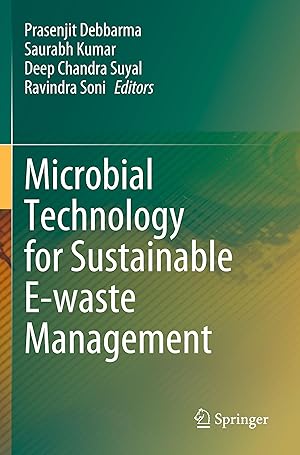
Microbial Technology for Sustainable E-waste Management
Idioma: Inglés
Publicado por Springer, Berlin|Springer International Publishing|Springer, 2024
ISBN 10: 3031256808 ISBN 13: 9783031256806
Librería: moluna, Greven, Alemania
Calificación del vendedor: 4 de 5 estrellas
EUR 144,94
Envío por EUR 48,99
Se envía de Alemania a Estados Unidos de AmericaCantidad disponible: Más de 20 disponibles
Añadir al carritoCondición: New.
-
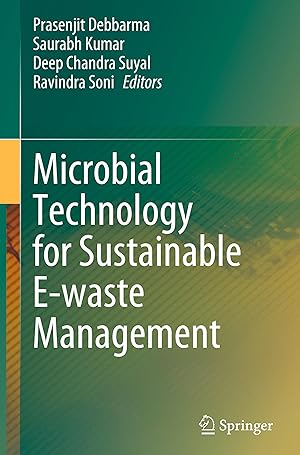
Microbial Technology for Sustainable E-waste Management
Idioma: Inglés
Publicado por Springer, Berlin|Springer International Publishing|Springer, 2023
ISBN 10: 3031256778 ISBN 13: 9783031256776
Librería: moluna, Greven, Alemania
Calificación del vendedor: 4 de 5 estrellas
EUR 144,94
Envío por EUR 48,99
Se envía de Alemania a Estados Unidos de AmericaCantidad disponible: Más de 20 disponibles
Añadir al carritoGebunden. Condición: New.
-
Microbial Technology for Sustainable E-waste Management (Hardcover)
Idioma: Inglés
Publicado por Springer International Publishing AG, Cham, 2023
ISBN 10: 3031256778 ISBN 13: 9783031256776
Librería: Grand Eagle Retail, Bensenville, IL, Estados Unidos de America
Calificación del vendedor: 5 de 5 estrellas
EUR 202,97
Gastos de envío gratis
Se envía dentro de Estados Unidos de AmericaCantidad disponible: 1 disponibles
Añadir al carritoHardcover. Condición: new. Hardcover. This book, besides discussing challenges and opportunities, will reveal the microbe-metal interactions and strategies for e-waste remediation in different ecosystems. It will unveil the recent biotechnological advancement and microbiological approach to sustainable biorecycling of e-waste such as bioleaching for heavy metal extraction, valorization of precious metal, biodegradation of e-plastic, the role of the diverse microbial community in e-waste remediation, genetically engineered microbes for e-waste management, the importance of microbial exopolysaccharides in metal biosorption, next-generation technologies, omics-based technologies etc. It also holds the promise to discuss the conservation, utilization and cataloging indigenous microbes in e-waste-polluted niches and promising hybrid technology for sustainable e-waste management.Revolution in the area of information technology and communication is constantly evolving due to scientific research and development.Concurrently, the production of new electrical and electronic equipment also thus uplifting in this era of revolution. These technological advancements certainly have problematic consequences which is the rise of huge amounts of electronic obsoletes or electronic waste (e-waste). Improper management of both hazardous and nonhazardous substances of e-waste led to a major concern in our digital society and environment. Therefore, a sustainable approach including microbial candidates to tackle e-waste is the need of the hour.Nevertheless, the continuous demand for new-generation gadgets and electronics set this high-tech evolution to a new frontier in the last few years. With this continuing trend of technological development, e-waste is expanding exponentially worldwide. In the year of 2019, the worldwide generation of e-waste was approximately 53.6 Mt, of which only about 17.4% of e-waste was collected and recycled, and the other 82.6% was not even documented. E-waste containsvarious heterogeneous waste complexes such as metals (60%), blends of many polymers (30%) and halogenated compounds, radioactive elements and other pollutants (10%), respectively. The sustainable, efficient, and economic management of e-waste is thus, a challenging task today and in the coming decades. Conventional techniques such as the use of chemicals, incineration and informal ways of e-waste dismantling trigger serious health risks and contamination to the human population and environment, respectively due to the liberation of toxic and hazardous substances from the waste. In this context, bio-candidates especially microorganisms could be sharp-edged biological recycling tools to manage e-waste sustainably. As microbes are omnipresent and diverse in their physiology and functional aspects, they offer a wide range of bioremediation. Shipping may be from multiple locations in the US or from the UK, depending on stock availability.
-
Cool Puzzle book
Librería: PBShop.store UK, Fairford, GLOS, Reino Unido
Calificación del vendedor: 4 de 5 estrellas
EUR 22,30
Envío por EUR 3,79
Se envía de Reino Unido a Estados Unidos de AmericaCantidad disponible: Más de 20 disponibles
Añadir al carritoPAP. Condición: New. New Book. Delivered from our UK warehouse in 4 to 14 business days. THIS BOOK IS PRINTED ON DEMAND. Established seller since 2000.
-
Microbial Technology for Sustainable E-waste Management
Librería: Buchpark, Trebbin, Alemania
Calificación del vendedor: 5 de 5 estrellas
OportunidadEUR 102,19
Envío por EUR 105,00
Se envía de Alemania a Estados Unidos de AmericaCantidad disponible: 2 disponibles
Añadir al carritoCondición: Hervorragend. Zustand: Hervorragend | Seiten: 364 | Sprache: Englisch | Produktart: Bücher | This book, besides discussing challenges and opportunities, will reveal the microbe-metal interactions and strategies for e-waste remediation in different ecosystems. It will unveil the recent biotechnological advancement and microbiological approach to sustainable biorecycling of e-waste such as bioleaching for heavy metal extraction, valorization of precious metal, biodegradation of e-plastic, the role of the diverse microbial community in e-waste remediation, genetically engineered microbes for e-waste management, the importance of microbial exopolysaccharides in metal biosorption, next-generation technologies, omics-based technologies etc. It also holds the promise to discuss the conservation, utilization and cataloging indigenous microbes in e-waste-polluted niches and promising hybrid technology for sustainable e-waste management.Revolution in the area of information technology and communication is constantly evolving due to scientific research and development.Concurrently, the production of new electrical and electronic equipment also thus uplifting in this era of revolution. These technological advancements certainly have problematic consequences which is the rise of huge amounts of electronic obsoletes or electronic waste (e-waste). Improper management of both hazardous and nonhazardous substances of e-waste led to a major concern in our digital society and environment. Therefore, a sustainable approach including microbial candidates to tackle e-waste is the need of the hour.Nevertheless, the continuous demand for new-generation gadgets and electronics set this high-tech evolution to a new frontier in the last few years. With this continuing trend of technological development, e-waste is expanding exponentially worldwide. In the year of 2019, the worldwide generation of e-waste was approximately 53.6 Mt, of which only about 17.4% of e-waste was collected and recycled, and the other 82.6% was not even documented. E-waste containsvarious heterogeneous waste complexes such as metals (60%), blends of many polymers (30%) and halogenated compounds, radioactive elements and other pollutants (10%), respectively. The sustainable, efficient, and economic management of e-waste is thus, a challenging task today and in the coming decades. Conventional techniques such as the use of chemicals, incineration and informal ways of e-waste dismantling trigger serious health risks and contamination to the human population and environment, respectively due to the liberation of toxic and hazardous substances from the waste. In this context, bio-candidates especially microorganisms could be sharp-edged biological recycling tools to manage e-waste sustainably. As microbes are omnipresent and diverse in their physiology and functional aspects, they offer a wide range of bioremediation.
-

Biorationals and Biopesticides
Librería: Rarewaves USA, OSWEGO, IL, Estados Unidos de America
Calificación del vendedor: 5 de 5 estrellas
EUR 223,49
Gastos de envío gratis
Se envía dentro de Estados Unidos de AmericaCantidad disponible: Más de 20 disponibles
Añadir al carritoHardback. Condición: New. Biorationals or biopesticides are pest control agents of biological origin. Biopesticides are emerging alternatives to harmful chemical pest control agents. The book provides essential information on botanical, biological originated insecticidal, herbicidal, fungicidal, nematicidal agents, insect growth hormones, insect pheromones and plant growth regulators. It will help researchers and students to develop new strategies for pest management.
-

Biorationals and Biopesticides : Pest Management
Librería: GreatBookPrices, Columbia, MD, Estados Unidos de America
Calificación del vendedor: 5 de 5 estrellas
EUR 221,12
Envío por EUR 2,30
Se envía dentro de Estados Unidos de AmericaCantidad disponible: 15 disponibles
Añadir al carritoCondición: New.
-

Biorationals and Biopesticides : Pest Management
Librería: GreatBookPrices, Columbia, MD, Estados Unidos de America
Calificación del vendedor: 5 de 5 estrellas
EUR 224,02
Envío por EUR 2,30
Se envía dentro de Estados Unidos de AmericaCantidad disponible: 15 disponibles
Añadir al carritoCondición: As New. Unread book in perfect condition.
-
Biorationals and Biopesticides: Pest Management
Librería: Buchpark, Trebbin, Alemania
Calificación del vendedor: 5 de 5 estrellas
OportunidadEUR 115,34
Envío por EUR 105,00
Se envía de Alemania a Estados Unidos de AmericaCantidad disponible: 1 disponibles
Añadir al carritoCondición: Sehr gut. Zustand: Sehr gut | Seiten: 425 | Sprache: Englisch | Produktart: Bücher | Keine Beschreibung verfügbar.
-

Biorationals and Biopesticides : Pest Management
Librería: GreatBookPricesUK, Woodford Green, Reino Unido
Calificación del vendedor: 5 de 5 estrellas
EUR 210,15
Envío por EUR 17,29
Se envía de Reino Unido a Estados Unidos de AmericaCantidad disponible: Más de 20 disponibles
Añadir al carritoCondición: New.
-

Microbial Technology for Sustainable E-waste Management
Librería: preigu, Osnabrück, Alemania
Calificación del vendedor: 5 de 5 estrellas
EUR 150,30
Envío por EUR 70,00
Se envía de Alemania a Estados Unidos de AmericaCantidad disponible: 5 disponibles
Añadir al carritoTaschenbuch. Condición: Neu. Microbial Technology for Sustainable E-waste Management | Prasenjit Debbarma (u. a.) | Taschenbuch | ix | Englisch | 2024 | Springer | EAN 9783031256806 | Verantwortliche Person für die EU: Springer Verlag GmbH, Tiergartenstr. 17, 69121 Heidelberg, juergen[dot]hartmann[at]springer[dot]com | Anbieter: preigu.
-

Biorationals and Biopesticides
Librería: moluna, Greven, Alemania
Calificación del vendedor: 4 de 5 estrellas
EUR 174,95
Envío por EUR 48,99
Se envía de Alemania a Estados Unidos de AmericaCantidad disponible: Más de 20 disponibles
Añadir al carritoGebunden. Condición: New. M. S. de Oliveira, E. H. de Aguiar Andrade, MPEG, Brazil R. Kumar, GBPUAT D. C. Suyal, Eternal University R. Soni, IGKV, India. Biorationals or biopesticid.
-
Microbial Technology for Sustainable E-waste Management
Idioma: Inglés
Publicado por Springer International Publishing, 2024
ISBN 10: 3031256808 ISBN 13: 9783031256806
Librería: AHA-BUCH GmbH, Einbeck, Alemania
Calificación del vendedor: 5 de 5 estrellas
EUR 171,19
Envío por EUR 62,76
Se envía de Alemania a Estados Unidos de AmericaCantidad disponible: 1 disponibles
Añadir al carritoTaschenbuch. Condición: Neu. Druck auf Anfrage Neuware - Printed after ordering - This book, besides discussing challenges and opportunities, will reveal the microbe-metal interactions and strategies for e-waste remediation in different ecosystems. It will unveil the recent biotechnological advancement and microbiological approach to sustainable biorecycling of e-waste such as bioleaching for heavy metal extraction, valorization of precious metal, biodegradation of e-plastic, the role of the diverse microbial community in e-waste remediation, genetically engineered microbes for e-waste management, the importance of microbial exopolysaccharides in metal biosorption, next-generation technologies, omics-based technologies etc. It also holds the promise to discuss the conservation, utilization and cataloging indigenous microbes in e-waste-polluted niches and promising hybrid technology for sustainable e-waste management.Revolution in the area of information technology and communication is constantly evolving due to scientific research and development.Concurrently, the production of new electrical and electronic equipment also thus uplifting in this era of revolution. These technological advancements certainly have problematic consequences which is the rise of huge amounts of electronic obsoletes or electronic waste (e-waste). Improper management of both hazardous and nonhazardous substances of e-waste led to a major concern in our digital society and environment. Therefore, a sustainable approach including microbial candidates to tackle e-waste is the need of the hour.Nevertheless, the continuous demand for new-generation gadgets and electronics set this high-tech evolution to a new frontier in the last few years. With this continuing trend of technological development, e-waste is expanding exponentially worldwide. In the year of 2019, the worldwide generation of e-waste was approximately 53.6 Mt, of which only about 17.4% of e-waste was collected and recycled, and the other 82.6% was not even documented. E-waste containsvarious heterogeneous waste complexes such as metals (60%), blends of many polymers (30%) and halogenated compounds, radioactive elements and other pollutants (10%), respectively. The sustainable, efficient, and economic management of e-waste is thus, a challenging task today and in the coming decades. Conventional techniques such as the use of chemicals, incineration and informal ways of e-waste dismantling trigger serious health risks and contamination to the human population and environment, respectively due to the liberation of toxic and hazardous substances from the waste. In this context, bio-candidates especially microorganisms could be sharp-edged biological recycling tools to manage e-waste sustainably. As microbes are omnipresent and diverse in their physiology and functional aspects, they offer a wide range of bioremediation.
-
Microbial Technology for Sustainable E-waste Management
Idioma: Inglés
Publicado por Springer International Publishing, 2023
ISBN 10: 3031256778 ISBN 13: 9783031256776
Librería: AHA-BUCH GmbH, Einbeck, Alemania
Calificación del vendedor: 5 de 5 estrellas
EUR 171,19
Envío por EUR 63,89
Se envía de Alemania a Estados Unidos de AmericaCantidad disponible: 1 disponibles
Añadir al carritoBuch. Condición: Neu. Druck auf Anfrage Neuware - Printed after ordering - This book, besides discussing challenges and opportunities, will reveal the microbe-metal interactions and strategies for e-waste remediation in different ecosystems. It will unveil the recent biotechnological advancement and microbiological approach to sustainable biorecycling of e-waste such as bioleaching for heavy metal extraction, valorization of precious metal, biodegradation of e-plastic, the role of the diverse microbial community in e-waste remediation, genetically engineered microbes for e-waste management, the importance of microbial exopolysaccharides in metal biosorption, next-generation technologies, omics-based technologies etc. It also holds the promise to discuss the conservation, utilization and cataloging indigenous microbes in e-waste-polluted niches and promising hybrid technology for sustainable e-waste management.Revolution in the area of information technology and communication is constantly evolving due to scientific research and development.Concurrently, the production of new electrical and electronic equipment also thus uplifting in this era of revolution. These technological advancements certainly have problematic consequences which is the rise of huge amounts of electronic obsoletes or electronic waste (e-waste). Improper management of both hazardous and nonhazardous substances of e-waste led to a major concern in our digital society and environment. Therefore, a sustainable approach including microbial candidates to tackle e-waste is the need of the hour.Nevertheless, the continuous demand for new-generation gadgets and electronics set this high-tech evolution to a new frontier in the last few years. With this continuing trend of technological development, e-waste is expanding exponentially worldwide. In the year of 2019, the worldwide generation of e-waste was approximately 53.6 Mt, of which only about 17.4% of e-waste was collected and recycled, and the other 82.6% was not even documented. E-waste containsvarious heterogeneous waste complexes such as metals (60%), blends of many polymers (30%) and halogenated compounds, radioactive elements and other pollutants (10%), respectively. The sustainable, efficient, and economic management of e-waste is thus, a challenging task today and in the coming decades. Conventional techniques such as the use of chemicals, incineration and informal ways of e-waste dismantling trigger serious health risks and contamination to the human population and environment, respectively due to the liberation of toxic and hazardous substances from the waste. In this context, bio-candidates especially microorganisms could be sharp-edged biological recycling tools to manage e-waste sustainably. As microbes are omnipresent and diverse in their physiology and functional aspects, they offer a wide range of bioremediation.
-

Microbial Technology for Sustainable E-waste Management
Idioma: Inglés
Publicado por Springer International Publishing, Springer Nature Switzerland Mär 2023, 2023
ISBN 10: 3031256778 ISBN 13: 9783031256776
Librería: buchversandmimpf2000, Emtmannsberg, BAYE, Alemania
Calificación del vendedor: 5 de 5 estrellas
EUR 171,19
Envío por EUR 60,00
Se envía de Alemania a Estados Unidos de AmericaCantidad disponible: 2 disponibles
Añadir al carritoBuch. Condición: Neu. Neuware -This book, besides discussing challenges and opportunities, will reveal the microbe-metal interactions and strategies for e-waste remediation in different ecosystems. It will unveil the recent biotechnological advancement and microbiological approach to sustainable biorecycling of e-waste such as bioleaching for heavy metal extraction, valorization of precious metal, biodegradation of e-plastic, the role of the diverse microbial community in e-waste remediation, genetically engineered microbes for e-waste management, the importance of microbial exopolysaccharides in metal biosorption, next-generation technologies, omics-based technologies etc. It also holds the promise to discuss the conservation, utilization and cataloging indigenous microbes in e-waste-polluted niches and promising hybrid technology for sustainable e-waste management.Revolution in the area of information technology and communication is constantly evolving due to scientific research and development.Concurrently, the production of new electrical and electronic equipment also thus uplifting in this era of revolution. These technological advancements certainly have problematic consequences which is the rise of huge amounts of electronic obsoletes or electronic waste (e-waste). Improper management of both hazardous and nonhazardous substances of e-waste led to a major concern in our digital society and environment. Therefore, a sustainable approach including microbial candidates to tackle e-waste is the need of the hour.Nevertheless, the continuous demand for new-generation gadgets and electronics set this high-tech evolution to a new frontier in the last few years. With this continuing trend of technological development, e-waste is expanding exponentially worldwide. In the year of 2019, the worldwide generation of e-waste was approximately 53.6 Mt, of which only about 17.4% of e-waste was collected and recycled, and the other 82.6% was not even documented. E-waste containsvarious heterogeneous waste complexes such as metals (60%), blends of many polymers (30%) and halogenated compounds, radioactive elements and other pollutants (10%), respectively. The sustainable, efficient, and economic management of e-waste is thus, a challenging task today and in the coming decades. Conventional techniques such as the use of chemicals, incineration and informal ways of e-waste dismantling trigger serious health risks and contamination to the human population and environment, respectively due to the liberation of toxic and hazardous substances from the waste. In this context, bio-candidates especially microorganisms could be sharp-edged biological recycling tools to manage e-waste sustainably. As microbes are omnipresent and diverse in their physiology and functional aspects, they offer a wide range of bioremediation.Springer Verlag GmbH, Tiergartenstr. 17, 69121 Heidelberg 364 pp. Englisch.
-

Biorationals and Biopesticides : Pest Management
Librería: GreatBookPricesUK, Woodford Green, Reino Unido
Calificación del vendedor: 5 de 5 estrellas
EUR 227,63
Envío por EUR 17,29
Se envía de Reino Unido a Estados Unidos de AmericaCantidad disponible: Más de 20 disponibles
Añadir al carritoCondición: As New. Unread book in perfect condition.
-

Biorationals and Biopesticides
Librería: Rarewaves USA United, OSWEGO, IL, Estados Unidos de America
Calificación del vendedor: 5 de 5 estrellas
EUR 210,14
Envío por EUR 43,61
Se envía dentro de Estados Unidos de AmericaCantidad disponible: Más de 20 disponibles
Añadir al carritoHardback. Condición: New. Biorationals or biopesticides are pest control agents of biological origin. Biopesticides are emerging alternatives to harmful chemical pest control agents. The book provides essential information on botanical, biological originated insecticidal, herbicidal, fungicidal, nematicidal agents, insect growth hormones, insect pheromones and plant growth regulators. It will help researchers and students to develop new strategies for pest management.
-
Microbial Technology for Sustainable E-waste Management
Librería: Revaluation Books, Exeter, Reino Unido
Calificación del vendedor: 5 de 5 estrellas
EUR 250,74
Envío por EUR 14,41
Se envía de Reino Unido a Estados Unidos de AmericaCantidad disponible: 2 disponibles
Añadir al carritoHardcover. Condición: Brand New. 361 pages. 9.25x6.10x0.94 inches. In Stock.
-

Biorationals and Biopesticides : Pest Management
Librería: AHA-BUCH GmbH, Einbeck, Alemania
Calificación del vendedor: 5 de 5 estrellas
EUR 191,34
Envío por EUR 64,14
Se envía de Alemania a Estados Unidos de AmericaCantidad disponible: 2 disponibles
Añadir al carritoBuch. Condición: Neu. Neuware - Biorationals or biopesticides are pest control agents of biological origin. Biopesticides are emerging alternatives to harmful chemical pest control agents. The book provides essential information on botanical, biological originated insecticidal, herbicidal, fungicidal, nematicidal agents, insect growth hormones, insect pheromones and plant growth regulators. It will help researchers and students to develop new strategies for pest management.
-
Amazing Maze puzzle
Librería: PBShop.store UK, Fairford, GLOS, Reino Unido
Calificación del vendedor: 4 de 5 estrellas
EUR 22,70
Envío por EUR 3,79
Se envía de Reino Unido a Estados Unidos de AmericaCantidad disponible: Más de 20 disponibles
Añadir al carritoPAP. Condición: New. New Book. Delivered from our UK warehouse in 4 to 14 business days. THIS BOOK IS PRINTED ON DEMAND. Established seller since 2000.
-

Microbial Technology for Sustainable E-waste Management (eng)
Librería: Brook Bookstore On Demand, Napoli, NA, Italia
Calificación del vendedor: 4 de 5 estrellas
EUR 134,27
Envío por EUR 6,80
Se envía de Italia a Estados Unidos de AmericaCantidad disponible: Más de 20 disponibles
Añadir al carritoCondición: new. Questo è un articolo print on demand.
-
Microbial Technology for Sustainable E-waste Management (eng)
Librería: Brook Bookstore On Demand, Napoli, NA, Italia
Calificación del vendedor: 4 de 5 estrellas
EUR 134,27
Envío por EUR 8,00
Se envía de Italia a Estados Unidos de AmericaCantidad disponible: Más de 20 disponibles
Añadir al carritoCondición: new. Questo è un articolo print on demand.
-
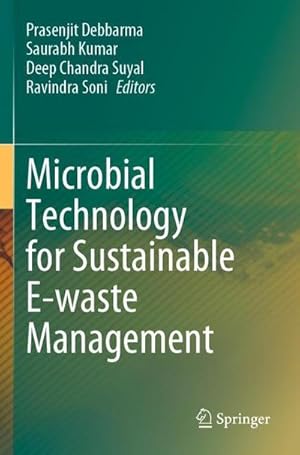
Microbial Technology for Sustainable E-waste Management
Idioma: Inglés
Publicado por Springer International Publishing Mrz 2024, 2024
ISBN 10: 3031256808 ISBN 13: 9783031256806
Librería: BuchWeltWeit Ludwig Meier e.K., Bergisch Gladbach, Alemania
Calificación del vendedor: 5 de 5 estrellas
EUR 171,19
Envío por EUR 23,00
Se envía de Alemania a Estados Unidos de AmericaCantidad disponible: 2 disponibles
Añadir al carritoTaschenbuch. Condición: Neu. This item is printed on demand - it takes 3-4 days longer - Neuware -This book, besides discussing challenges and opportunities, will reveal the microbe-metal interactions and strategies for e-waste remediation in different ecosystems. It will unveil the recent biotechnological advancement and microbiological approach to sustainable biorecycling of e-waste such as bioleaching for heavy metal extraction, valorization of precious metal, biodegradation of e-plastic, the role of the diverse microbial community in e-waste remediation, genetically engineered microbes for e-waste management, the importance of microbial exopolysaccharides in metal biosorption, next-generation technologies, omics-based technologies etc. It also holds the promise to discuss the conservation, utilization and cataloging indigenous microbes in e-waste-polluted niches and promising hybrid technology for sustainable e-waste management.Revolution in the area of information technology and communication is constantly evolving due to scientific research and development.Concurrently, the production of new electrical and electronic equipment also thus uplifting in this era of revolution. These technological advancements certainly have problematic consequences which is the rise of huge amounts of electronic obsoletes or electronic waste (e-waste). Improper management of both hazardous and nonhazardous substances of e-waste led to a major concern in our digital society and environment. Therefore, a sustainable approach including microbial candidates to tackle e-waste is the need of the hour.Nevertheless, the continuous demand for new-generation gadgets and electronics set this high-tech evolution to a new frontier in the last few years. With this continuing trend of technological development, e-waste is expanding exponentially worldwide. In the year of 2019, the worldwide generation of e-waste was approximately 53.6 Mt, of which only about 17.4% of e-waste was collected and recycled, and the other 82.6% was not even documented. E-waste containsvarious heterogeneous waste complexes such as metals (60%), blends of many polymers (30%) and halogenated compounds, radioactive elements and other pollutants (10%), respectively. The sustainable, efficient, and economic management of e-waste is thus, a challenging task today and in the coming decades. Conventional techniques such as the use of chemicals, incineration and informal ways of e-waste dismantling trigger serious health risks and contamination to the human population and environment, respectively due to the liberation of toxic and hazardous substances from the waste. In this context, bio-candidates especially microorganisms could be sharp-edged biological recycling tools to manage e-waste sustainably. As microbes are omnipresent and diverse in their physiology and functional aspects, they offer a wide range of bioremediation. 364 pp. Englisch.


