Importe total (1 artículo artículos):
Destino del pedido:

rev william speer (3 resultados)
Ir a los resultados principales
Filtros de búsqueda
Tipo de artículo
- Todos los tipos de productos
- Libros (3)
- Revistas y publicaciones (No hay ningún otro resultado que coincida con este filtro.)
- Cómics (No hay ningún otro resultado que coincida con este filtro.)
- Partituras (No hay ningún otro resultado que coincida con este filtro.)
- Arte, grabados y pósters (No hay ningún otro resultado que coincida con este filtro.)
- Fotografías (No hay ningún otro resultado que coincida con este filtro.)
- Mapas (No hay ningún otro resultado que coincida con este filtro.)
- Manuscritos y coleccionismo de papel (No hay ningún otro resultado que coincida con este filtro.)
Condición Más información
- Nuevo (2)
- Como nuevo, Excelente o Muy bueno (No hay ningún otro resultado que coincida con este filtro.)
- Bueno o Aceptable (1)
- Regular o Pobre (No hay ningún otro resultado que coincida con este filtro.)
- Tal como se indica (No hay ningún otro resultado que coincida con este filtro.)
Encuadernación
Más atributos
- Primera edición (No hay ningún otro resultado que coincida con este filtro.)
- Firmado (No hay ningún otro resultado que coincida con este filtro.)
- Sobrecubierta (No hay ningún otro resultado que coincida con este filtro.)
- Con imágenes (2)
- No impresión bajo demanda (3)
Idioma (2)
Gastos de envío gratis
- Envío gratis a Estados Unidos de America (No hay ningún otro resultado que coincida con este filtro.)
Ubicación del vendedor
Valoración de los vendedores
-

The Great Revival of 1800
Librería: PBShop.store UK, Fairford, GLOS, Reino Unido
Calificación del vendedor: 4 de 5 estrellas

EUR 16,63
Envío por EUR 3,81
Se envía de Reino Unido a Estados Unidos de AmericaCantidad disponible: 15 disponibles
Añadir al carritoPAP. Condición: New. New Book. Shipped from UK. Established seller since 2000.
-

Great Revival of 1800
Librería: moluna, Greven, Alemania
Calificación del vendedor: 4 de 5 estrellas
EUR 19,77
Envío por EUR 48,99
Se envía de Alemania a Estados Unidos de AmericaCantidad disponible: Más de 20 disponibles
Añadir al carritoCondición: New. KlappentextrnrnThis is a reproduction of the original artefact. Generally these books are created from careful scans of the original. This allows us to preserve the book accurately and present it in the way the author intended. Since the origina.
-
Lectures on ecclesiastical history : to which is added an essay on Christian temperance and self-denial, with some account of the author, by George Skene Keith : Volume I
Publicado por London : London : Printed for J. Johnson, and A. Brown, Aberdeen, by Bye and Law, Clerkenwell, 1800, 1800
Librería: Joseph Valles - Books, Stockbridge, GA, Estados Unidos de America
Calificación del vendedor: 5 de 5 estrellas

EUR 159,72
Envío por EUR 14,60
Se envía dentro de Estados Unidos de AmericaCantidad disponible: 1 disponibles
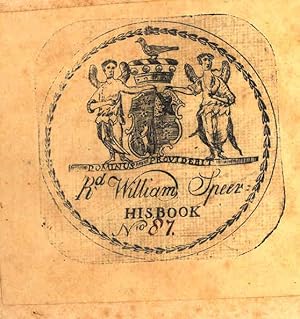
Añadir al carritoHardcover. Condición: Good. No Jacket. Volume 1 of a 2 v. set ; lxxx, 420 pp. ; 22 cm. ; full leather ; red label ; foxing ; front hinge shaken ; tiny fly pressed in margin of advertisement [!] ; "Lectures on Ecclesiastical History (1800), the first part of Campbell's divinity course to be published, was also the most controversial. Campbell intended these particular lectures for the press, no doubt because they concerned the nature and form of the Christian Church, matters that dominated his thought in the last years of his life. The lecture went to press virtually unedited. He traced the means by which a collection of small, independent, and egalitarian congregations were transformed into a multi-layered, hierachical and elitist government that was ultimately subjugated to the Bishop of Rome. His conclusion that early bishops were nothing more than congregational ministersimplicitly challenged the foundation of the Scottish Episcopal Church."--Jeffrey M. Suderman, Orthodoxy and Enlightenment: George Campbell in the Eighteenth Century ; Bookplate of William Speer. ; "The Reverend William Speer was born at Lower Marsh Creek, in York, now Adams county, Pennsylvania. He was graduated at Dickinson College, Carlisle, A. D. 1788. Mr. Speer was regarded with great respect by the people of his congregation. He was a man of highly respectable talents-a sensible, instructive, and evangelical preacher. His method of treating his subjects was sometimes too profound and abstruse for those whose minds were not disciplined to thought. But, by the more intelligent, he was viewed as a very profitable preacher. When among strangers, he was stately and reserved in his manners: but among his intimate acquaintances, he was cheerful and companionable in a high degree. He had a high standing in the judicatories of the church, as a judicious and sagacious counselor."--David Elliot, The life of the Rev. Elisha Macurdy, 1848 ; "The Speer family was of Scotch Presbyterian descent and according to family tradition lived in Ulster for at least 100 years before coming to America. In America they became ardent patriots, providing soldiers for the French and Indian wars and for the Continental Army of General Washington. They were also behind the Whiskey Rebellion which resisted prohibitory taxes on processed farm products. They rejected slavery and were behind the laws making Pennsylvania slave free. They were devout people, firmly believing in the goodness of God and faith in the future. The Speer family motto is : 'Dominus providebit,' or the Lord will provide."--George D. Speer ; "To the memory of the Reverend William Speer, Pastor of the united congregations of Greensburg and Unity. With a mind vigorous and discriminating, richly furnished with literature, he early consecrated himself to the service of Christ. In the pulpit he was profound, instructive and often eloquent. In deliberative assemblies, Pre-eminent; as a pastor, laborious, faithful, firm in maintaining doctrine and discipline; in manners, accomplished, grave and dignified; in friendships, sincere an steadfast. The relations of life he adorned by prudence and strict integrity; in his family, loving and beloved. His piety, consistent in life, triumphant in death. Mark the perfect man, and behold the upright; for the end of that man is peace." --Rev. Wm Brown ; Speer indicates in a handwritten note on the front endpaper that the original price for the set was $7 and that he purchased the set at auction in May of 1813 for $3 ; G. Book.