

Importe total (1 artículo artículos):
Destino del pedido:

recovery services (6 resultados)
Ir a los resultados principales
Filtros de búsqueda
Tipo de artículo
- Todos los tipos de productos
- Libros (6)
- Revistas y publicaciones (No hay ningún otro resultado que coincida con este filtro.)
- Cómics (No hay ningún otro resultado que coincida con este filtro.)
- Partituras (No hay ningún otro resultado que coincida con este filtro.)
- Arte, grabados y pósters (No hay ningún otro resultado que coincida con este filtro.)
- Fotografías (No hay ningún otro resultado que coincida con este filtro.)
- Mapas (No hay ningún otro resultado que coincida con este filtro.)
- Manuscritos y coleccionismo de papel (No hay ningún otro resultado que coincida con este filtro.)
Condición Más información
- Nuevo (3)
- Como nuevo, Excelente o Muy bueno (1)
- Bueno o Aceptable (2)
- Regular o Pobre (No hay ningún otro resultado que coincida con este filtro.)
- Tal como se indica (No hay ningún otro resultado que coincida con este filtro.)
Encuadernación
- Todas
- Tapa dura (No hay ningún otro resultado que coincida con este filtro.)
- Tapa blanda (6)
Más atributos
- Primera edición (No hay ningún otro resultado que coincida con este filtro.)
- Firmado (No hay ningún otro resultado que coincida con este filtro.)
- Sobrecubierta (No hay ningún otro resultado que coincida con este filtro.)
- Con imágenes (3)
- No impresión bajo demanda (6)
Idioma (1)
Gastos de envío gratis
Ubicación del vendedor
Valoración de los vendedores
-
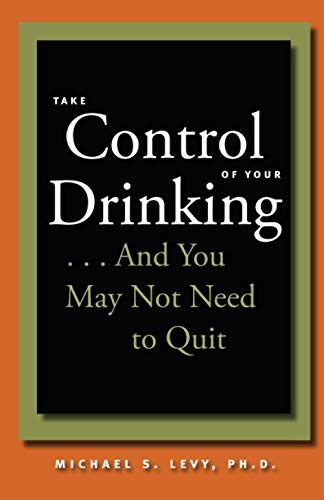
Take Control of Your Drinking.And You May Not Need to Quit (A Johns Hopkins Press Health Book)
Idioma: Inglés
Publicado por Johns Hopkins University Press, United States, Baltimore, MD, 2007
ISBN 10: 0801886686 ISBN 13: 9780801886683
Librería: WorldofBooks, Goring-By-Sea, WS, Reino Unido
Calificación del vendedor: 5 de 5 estrellas

EUR 6,61
Envío por EUR 6,44
Se envía de Reino Unido a Estados Unidos de AmericaCantidad disponible: 2 disponibles
Añadir al carritoPaperback. Condición: Very Good. In a career spent working with people who want to change their drinking habits, Michael S. Levy has found that the routes to behavioral change vary: abstinence is the successful route for many people, while others can moderate their drinking on their own or with professional help. In this book, he helps people take control of their alcohol problems by teaching them how to think about and address their drinking habits. Beginning with a set of self-assessments that reveal whether the reader's use of alcohol is creating problems, Levy explains the causes of problem drinking and why it is so difficult to change. He also offers * guidelines so readers can decide whether to try to moderate their drinking or to choose abstinence* a contract for moderate drinking in which readers decide what they will drink, how often and how much they will drink, and the situations they need to avoid * advice for coping with slip-ups * tools for fighting helplessness and the fear of failure* guidelines for knowing when moderation is not achievable Many people are able to overcome their drinking problems without any formal help; Levy stresses the importance of personal commitment in this effort. For those who are unable to moderate their drinking, he provides comprehensive and compassionate guidelines and resources for abstaining. This book empowers people to tackle their drinking problems and gives them the freedom to do so in a way that fits with their own lifestyles and values. The book has been read, but is in excellent condition. Pages are intact and not marred by notes or highlighting. The spine remains undamaged.
-

LDS Family Services Addiction Recovery Program: Guide to Addiction Recovery and Healing: Written with Support From Church Leaders and Counseling Professionals By Those Who Have Suffered From Addiction and Who Have Experienced the Miracle of Recovery
Idioma: Inglés
Publicado por Church of Jesus Christ of LDS, 2005
ISBN 10: 0536764123 ISBN 13: 9780536764126
Librería: -OnTimeBooks-, Phoenix, AZ, Estados Unidos de America
Calificación del vendedor: 5 de 5 estrellas
EUR 14,38
Gastos de envío gratis
Se envía dentro de Estados Unidos de AmericaCantidad disponible: 2 disponibles
Añadir al carritoCondición: very_good. Gently read. May have name of previous ownership, or ex-library edition. Binding tight; spine straight and smooth, with no creasing; covers clean and crisp. Minimal signs of handling or shelving. 100% GUARANTEE! Shipped with delivery confirmation, if you're not satisfied with purchase please return item for full refund. Ships USPS Media Mail.
-

LDS Family Services Addiction Recovery Program: Guide to Addiction Recovery and Healing: Written with Support From Church Leaders and Counseling Professionals By Those Who Have Suffered From Addiction
Idioma: Inglés
Publicado por Church of Jesus Christ of LDS, 2005
ISBN 10: 0536764123 ISBN 13: 9780536764126
Librería: YESIBOOKSTORE, MIAMI, FL, Estados Unidos de America
Calificación del vendedor: 4 de 5 estrellas

EUR 79,91
Gastos de envío gratis
Se envía dentro de Estados Unidos de AmericaCantidad disponible: 1 disponibles
Añadir al carritospiral_bound. Condición: As New.
-

Healthy, Resilient, and Sustainable Communities After Disasters
Idioma: Inglés
Publicado por National Academies Press, US, 2015
ISBN 10: 0309316197 ISBN 13: 9780309316194
Librería: Rarewaves.com USA, London, LONDO, Reino Unido
Calificación del vendedor: 5 de 5 estrellas
EUR 87,86
Gastos de envío gratis
Se envía de Reino Unido a Estados Unidos de AmericaCantidad disponible: 1 disponibles
Añadir al carritoPaperback. Condición: New. In the devastation that follows a major disaster, there is a need for multiple sectors to unite and devote new resources to support the rebuilding of infrastructure, the provision of health and social services, the restoration of care delivery systems, and other critical recovery needs. In some cases, billions of dollars from public, private and charitable sources are invested to help communities recover. National rhetoric often characterizes these efforts as a "return to normal." But for many American communities, pre-disaster conditions are far from optimal. Large segments of the U.S. population suffer from preventable health problems, experience inequitable access to services, and rely on overburdened health systems. A return to pre-event conditions in such cases may be short-sighted given the high costs - both economic and social - of poor health. Instead, it is important to understand that the disaster recovery process offers a series of unique and valuable opportunities to improve on the status quo. Capitalizing on these opportunities can advance the long-term health, resilience, and sustainability of communities - thereby better preparing them for future challenges.Healthy, Resilient, and Sustainable Communities After Disasters identifies and recommends recovery practices and novel programs most likely to impact overall community public health and contribute to resiliency for future incidents. This book makes the case that disaster recovery should be guided by a healthy community vision, where health considerations are integrated into all aspects of recovery planning before and after a disaster, and funding streams are leveraged in a coordinated manner and applied to health improvement priorities in order to meet human recovery needs and create healthy built and natural environments. The conceptual framework presented in Healthy, Resilient, and Sustainable Communities After Disasters lays the groundwork to achieve this goal and provides operational guidance for multiple sectors involved in community planning and disaster recovery.Healthy, Resilient, and Sustainable Communities After Disasters calls for actions at multiple levels to facilitate recovery strategies that optimize community health. With a shared healthy community vision, strategic planning that prioritizes health, and coordinated implementation, disaster recovery can result in a communities that are healthier, more livable places for current and future generations to grow and thrive - communities that are better prepared for future adversities.
-
LDS Family Services Addiction Recovery Program: Guide to Addiction Recovery and Healing: Written with Support From Church Leaders and Counseling Professionals By Those Who Have Suffered From Addiction and Who Have Experienced the Miracle of Recovery
Idioma: Inglés
Publicado por Church of Jesus Christ of LDS, 2005
ISBN 10: 0536764123 ISBN 13: 9780536764126
Librería: GoldBooks, Denver, CO, Estados Unidos de America
Calificación del vendedor: 5 de 5 estrellas
EUR 85,70
Envío por EUR 3,58
Se envía dentro de Estados Unidos de AmericaCantidad disponible: 1 disponibles
Añadir al carritoCondición: new.
-

Healthy, Resilient, and Sustainable Communities After Disasters
Idioma: Inglés
Publicado por National Academies Press, US, 2015
ISBN 10: 0309316197 ISBN 13: 9780309316194
Librería: Rarewaves.com UK, London, Reino Unido
Calificación del vendedor: 5 de 5 estrellas
EUR 79,44
Envío por EUR 74,72
Se envía de Reino Unido a Estados Unidos de AmericaCantidad disponible: 1 disponibles
Añadir al carritoPaperback. Condición: New. In the devastation that follows a major disaster, there is a need for multiple sectors to unite and devote new resources to support the rebuilding of infrastructure, the provision of health and social services, the restoration of care delivery systems, and other critical recovery needs. In some cases, billions of dollars from public, private and charitable sources are invested to help communities recover. National rhetoric often characterizes these efforts as a "return to normal." But for many American communities, pre-disaster conditions are far from optimal. Large segments of the U.S. population suffer from preventable health problems, experience inequitable access to services, and rely on overburdened health systems. A return to pre-event conditions in such cases may be short-sighted given the high costs - both economic and social - of poor health. Instead, it is important to understand that the disaster recovery process offers a series of unique and valuable opportunities to improve on the status quo. Capitalizing on these opportunities can advance the long-term health, resilience, and sustainability of communities - thereby better preparing them for future challenges.Healthy, Resilient, and Sustainable Communities After Disasters identifies and recommends recovery practices and novel programs most likely to impact overall community public health and contribute to resiliency for future incidents. This book makes the case that disaster recovery should be guided by a healthy community vision, where health considerations are integrated into all aspects of recovery planning before and after a disaster, and funding streams are leveraged in a coordinated manner and applied to health improvement priorities in order to meet human recovery needs and create healthy built and natural environments. The conceptual framework presented in Healthy, Resilient, and Sustainable Communities After Disasters lays the groundwork to achieve this goal and provides operational guidance for multiple sectors involved in community planning and disaster recovery.Healthy, Resilient, and Sustainable Communities After Disasters calls for actions at multiple levels to facilitate recovery strategies that optimize community health. With a shared healthy community vision, strategic planning that prioritizes health, and coordinated implementation, disaster recovery can result in a communities that are healthier, more livable places for current and future generations to grow and thrive - communities that are better prepared for future adversities.

