

Importe total (1 artículo artículos):
Destino del pedido:

marschall melissa (15 resultados)
Ir a los resultados principales
Filtros de búsqueda
Tipo de artículo
- Todos los tipos de productos
- Libros (15)
- Revistas y publicaciones (No hay ningún otro resultado que coincida con este filtro.)
- Cómics (No hay ningún otro resultado que coincida con este filtro.)
- Partituras (No hay ningún otro resultado que coincida con este filtro.)
- Arte, grabados y pósters (No hay ningún otro resultado que coincida con este filtro.)
- Fotografías (No hay ningún otro resultado que coincida con este filtro.)
- Mapas (No hay ningún otro resultado que coincida con este filtro.)
- Manuscritos y coleccionismo de papel (No hay ningún otro resultado que coincida con este filtro.)
Condición Más información
- Nuevo (10)
- Como nuevo, Excelente o Muy bueno (2)
- Bueno o Aceptable (3)
- Regular o Pobre (No hay ningún otro resultado que coincida con este filtro.)
- Tal como se indica (No hay ningún otro resultado que coincida con este filtro.)
Encuadernación
Más atributos
- Primera edición (No hay ningún otro resultado que coincida con este filtro.)
- Firmado (No hay ningún otro resultado que coincida con este filtro.)
- Sobrecubierta (No hay ningún otro resultado que coincida con este filtro.)
- Con imágenes (9)
- No impresión bajo demanda (15)
Idioma (1)
Gastos de envío gratis
Ubicación del vendedor
Valoración de los vendedores
-

Choosing Schools : Consumer Choice and the Quality of American Schools
Idioma: Inglés
Publicado por Princeton University Press, 2000
ISBN 10: 0691050570 ISBN 13: 9780691050577
Librería: Better World Books, Mishawaka, IN, Estados Unidos de America
Calificación del vendedor: 5 de 5 estrellas

EUR 10,20
Gastos de envío gratis
Se envía dentro de Estados Unidos de AmericaCantidad disponible: 1 disponibles
Añadir al carritoCondición: Good. Former library copy. Pages intact with minimal writing/highlighting. The binding may be loose and creased. Dust jackets/supplements are not included. Includes library markings. Stock photo provided. Product includes identifying sticker. Better World Books: Buy Books. Do Good.
-
Choosing Schools
Idioma: Inglés
Publicado por Princeton University Press, 2000
ISBN 10: 0691050570 ISBN 13: 9780691050577
Librería: ThriftBooks-Dallas, Dallas, TX, Estados Unidos de America
Calificación del vendedor: 5 de 5 estrellas
EUR 10,27
Gastos de envío gratis
Se envía dentro de Estados Unidos de AmericaCantidad disponible: 1 disponibles
Añadir al carritoHardcover. Condición: Very Good. No Jacket. Former library book; May have limited writing in cover pages. Pages are unmarked. ~ ThriftBooks: Read More, Spend Less.
-
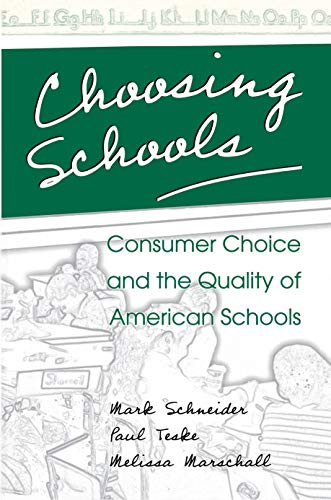
Choosing Schools: Consumer Choice and the Quality of American Schools
Idioma: Inglés
Publicado por Princeton University Press, 2002
ISBN 10: 0691092834 ISBN 13: 9780691092836
Librería: ThriftBooks-Atlanta, AUSTELL, GA, Estados Unidos de America
Calificación del vendedor: 5 de 5 estrellas
EUR 14,46
Gastos de envío gratis
Se envía dentro de Estados Unidos de AmericaCantidad disponible: 1 disponibles
Añadir al carritoPaperback. Condición: Very Good. No Jacket. May have limited writing in cover pages. Pages are unmarked. ~ ThriftBooks: Read More, Spend Less.
-

Choosing Schools : Consumer Choice and the Quality of American Schools
Idioma: Inglés
Publicado por Princeton University Press, 2002
ISBN 10: 0691092834 ISBN 13: 9780691092836
Librería: GreatBookPrices, Columbia, MD, Estados Unidos de America
Calificación del vendedor: 5 de 5 estrellas
EUR 46,94
Envío por EUR 2,30
Se envía dentro de Estados Unidos de AmericaCantidad disponible: Más de 20 disponibles
Añadir al carritoCondición: As New. Unread book in perfect condition.
-

Choosing Schools : Consumer Choice and the Quality of American Schools
Idioma: Inglés
Publicado por Princeton University Press, 2002
ISBN 10: 0691092834 ISBN 13: 9780691092836
Librería: GreatBookPrices, Columbia, MD, Estados Unidos de America
Calificación del vendedor: 5 de 5 estrellas
EUR 48,63
Envío por EUR 2,30
Se envía dentro de Estados Unidos de AmericaCantidad disponible: Más de 20 disponibles
Añadir al carritoCondición: New.
-

Choosing Schools
Idioma: Inglés
Publicado por Princeton University Press, US, 2002
ISBN 10: 0691092834 ISBN 13: 9780691092836
Librería: Rarewaves.com USA, London, LONDO, Reino Unido
Calificación del vendedor: 5 de 5 estrellas
EUR 58,84
Gastos de envío gratis
Se envía de Reino Unido a Estados Unidos de AmericaCantidad disponible: 1 disponibles
Añadir al carritoPaperback. Condición: New. School choice seeks to create a competitive arena in which public schools will attain academic excellence, encourage individual student performance, and achieve social balance. In debating the feasibility of this market approach to improving school systems, analysts have focused primarily on schools as suppliers of education, but an important question remains: Will parents be able to function as "smart consumers" on behalf of their children? Here a highly respected team of social scientists provides extensive empirical evidence on how parents currently do make these choices. Drawn from four different types of school districts in New York City and suburban New Jersey, their findings not only stress the importance of parental decision-making and involvement to school performance but also clarify the issues of school choice in ways that bring much-needed balance to the ongoing debate.The authors analyze what parents value in education, how much they know about schools, how well they can match what they say they want in schools with what their children get, how satisfied they are with their children's schools, and how their involvement in the schools is affected by the opportunity to choose. They discover, most notably, that low-income parents value education as much as, if not more than, high-income parents, but do not have access to the same quality of school information. This problem comes under sensitive, thorough scrutiny as do a host of other important topics, from school performance to segregation to children at risk of being left behind.
-

Choosing Schools
Idioma: Inglés
Publicado por Princeton University Press, US, 2002
ISBN 10: 0691092834 ISBN 13: 9780691092836
Librería: Rarewaves USA, OSWEGO, IL, Estados Unidos de America
Calificación del vendedor: 5 de 5 estrellas
EUR 58,90
Gastos de envío gratis
Se envía dentro de Estados Unidos de AmericaCantidad disponible: Más de 20 disponibles
Añadir al carritoPaperback. Condición: New. School choice seeks to create a competitive arena in which public schools will attain academic excellence, encourage individual student performance, and achieve social balance. In debating the feasibility of this market approach to improving school systems, analysts have focused primarily on schools as suppliers of education, but an important question remains: Will parents be able to function as "smart consumers" on behalf of their children? Here a highly respected team of social scientists provides extensive empirical evidence on how parents currently do make these choices. Drawn from four different types of school districts in New York City and suburban New Jersey, their findings not only stress the importance of parental decision-making and involvement to school performance but also clarify the issues of school choice in ways that bring much-needed balance to the ongoing debate.The authors analyze what parents value in education, how much they know about schools, how well they can match what they say they want in schools with what their children get, how satisfied they are with their children's schools, and how their involvement in the schools is affected by the opportunity to choose. They discover, most notably, that low-income parents value education as much as, if not more than, high-income parents, but do not have access to the same quality of school information. This problem comes under sensitive, thorough scrutiny as do a host of other important topics, from school performance to segregation to children at risk of being left behind.
-

Choosing Schools : Consumer Choice and the Quality of American Schools
Idioma: Inglés
Publicado por Princeton University Press, 2002
ISBN 10: 0691092834 ISBN 13: 9780691092836
Librería: GreatBookPricesUK, Woodford Green, Reino Unido
Calificación del vendedor: 5 de 5 estrellas
EUR 43,29
Envío por EUR 17,25
Se envía de Reino Unido a Estados Unidos de AmericaCantidad disponible: Más de 20 disponibles
Añadir al carritoCondición: New.
-

Choosing Schools : Consumer Choice and the Quality of American Schools
Idioma: Inglés
Publicado por Princeton University Press, 2002
ISBN 10: 0691092834 ISBN 13: 9780691092836
Librería: GreatBookPricesUK, Woodford Green, Reino Unido
Calificación del vendedor: 5 de 5 estrellas
EUR 49,08
Envío por EUR 17,25
Se envía de Reino Unido a Estados Unidos de AmericaCantidad disponible: Más de 20 disponibles
Añadir al carritoCondición: As New. Unread book in perfect condition.
-
Choosing Schools Consumer Choice and the Quality of American Schools
Librería: Revaluation Books, Exeter, Reino Unido
Calificación del vendedor: 5 de 5 estrellas
EUR 57,08
Envío por EUR 11,50
Se envía de Reino Unido a Estados Unidos de AmericaCantidad disponible: 1 disponibles
Añadir al carritoPaperback. Condición: Brand New. 336 pages. 9.00x6.00x0.75 inches. In Stock.
-
Choosing Schools
Idioma: Inglés
Publicado por Princeton University Press, 2000
ISBN 10: 0691050570 ISBN 13: 9780691050577
Librería: SHIMEDIA, Brooklyn, NY, Estados Unidos de America
Calificación del vendedor: 5 de 5 estrellas
EUR 89,90
Gastos de envío gratis
Se envía dentro de Estados Unidos de AmericaCantidad disponible: 1 disponibles
Añadir al carritoCondición: New. Satisfaction Guaranteed or your money back.
-
Choosing Schools Consumer Choice and the Quality of American Schools
Librería: Revaluation Books, Exeter, Reino Unido
Calificación del vendedor: 5 de 5 estrellas
EUR 84,30
Envío por EUR 11,50
Se envía de Reino Unido a Estados Unidos de AmericaCantidad disponible: 2 disponibles
Añadir al carritoPaperback. Condición: Brand New. 336 pages. 9.00x6.00x0.75 inches. In Stock.
-

Choosing Schools
Idioma: Inglés
Publicado por Princeton University Press, US, 2002
ISBN 10: 0691092834 ISBN 13: 9780691092836
Librería: Rarewaves USA United, OSWEGO, IL, Estados Unidos de America
Calificación del vendedor: 5 de 5 estrellas
EUR 59,45
Envío por EUR 43,65
Se envía dentro de Estados Unidos de AmericaCantidad disponible: Más de 20 disponibles
Añadir al carritoPaperback. Condición: New. School choice seeks to create a competitive arena in which public schools will attain academic excellence, encourage individual student performance, and achieve social balance. In debating the feasibility of this market approach to improving school systems, analysts have focused primarily on schools as suppliers of education, but an important question remains: Will parents be able to function as "smart consumers" on behalf of their children? Here a highly respected team of social scientists provides extensive empirical evidence on how parents currently do make these choices. Drawn from four different types of school districts in New York City and suburban New Jersey, their findings not only stress the importance of parental decision-making and involvement to school performance but also clarify the issues of school choice in ways that bring much-needed balance to the ongoing debate.The authors analyze what parents value in education, how much they know about schools, how well they can match what they say they want in schools with what their children get, how satisfied they are with their children's schools, and how their involvement in the schools is affected by the opportunity to choose. They discover, most notably, that low-income parents value education as much as, if not more than, high-income parents, but do not have access to the same quality of school information. This problem comes under sensitive, thorough scrutiny as do a host of other important topics, from school performance to segregation to children at risk of being left behind.
-

Choosing Schools
Idioma: Inglés
Publicado por Princeton University Press, 2002
ISBN 10: 0691092834 ISBN 13: 9780691092836
Librería: moluna, Greven, Alemania
Calificación del vendedor: 4 de 5 estrellas

EUR 55,01
Envío por EUR 48,99
Se envía de Alemania a Estados Unidos de AmericaCantidad disponible: 1 disponibles
Añadir al carritoCondición: New. School choice seeks to create a competitive arena in which public schools will attain academic excellence, encourage student performance, and achieve social balance. This book analyses what parents value in education, how much they know about schools, and h.
-

Choosing Schools
Idioma: Inglés
Publicado por Princeton University Press, US, 2002
ISBN 10: 0691092834 ISBN 13: 9780691092836
Librería: Rarewaves.com UK, London, Reino Unido
Calificación del vendedor: 5 de 5 estrellas
EUR 53,29
Envío por EUR 74,73
Se envía de Reino Unido a Estados Unidos de AmericaCantidad disponible: 1 disponibles
Añadir al carritoPaperback. Condición: New. School choice seeks to create a competitive arena in which public schools will attain academic excellence, encourage individual student performance, and achieve social balance. In debating the feasibility of this market approach to improving school systems, analysts have focused primarily on schools as suppliers of education, but an important question remains: Will parents be able to function as "smart consumers" on behalf of their children? Here a highly respected team of social scientists provides extensive empirical evidence on how parents currently do make these choices. Drawn from four different types of school districts in New York City and suburban New Jersey, their findings not only stress the importance of parental decision-making and involvement to school performance but also clarify the issues of school choice in ways that bring much-needed balance to the ongoing debate.The authors analyze what parents value in education, how much they know about schools, how well they can match what they say they want in schools with what their children get, how satisfied they are with their children's schools, and how their involvement in the schools is affected by the opportunity to choose. They discover, most notably, that low-income parents value education as much as, if not more than, high-income parents, but do not have access to the same quality of school information. This problem comes under sensitive, thorough scrutiny as do a host of other important topics, from school performance to segregation to children at risk of being left behind.

