

Importe total (1 artículo artículos):
Destino del pedido:

linz barbara editor (2 resultados)
Ir a los resultados principales
Filtros de búsqueda
Tipo de artículo
- Todos los tipos de productos
- Libros (2)
- Revistas y publicaciones (No hay ningún otro resultado que coincida con este filtro.)
- Cómics (No hay ningún otro resultado que coincida con este filtro.)
- Partituras (No hay ningún otro resultado que coincida con este filtro.)
- Arte, grabados y pósters (No hay ningún otro resultado que coincida con este filtro.)
- Fotografías (No hay ningún otro resultado que coincida con este filtro.)
- Mapas (No hay ningún otro resultado que coincida con este filtro.)
- Manuscritos y coleccionismo de papel (No hay ningún otro resultado que coincida con este filtro.)
Condición Más información
- Nuevo (2)
- Como nuevo, Excelente o Muy bueno (No hay ningún otro resultado que coincida con este filtro.)
- Bueno o Aceptable (No hay ningún otro resultado que coincida con este filtro.)
- Regular o Pobre (No hay ningún otro resultado que coincida con este filtro.)
- Tal como se indica (No hay ningún otro resultado que coincida con este filtro.)
Encuadernación
Más atributos
- Primera edición (1)
- Firmado (No hay ningún otro resultado que coincida con este filtro.)
- Sobrecubierta (1)
- Con imágenes (No hay ningún otro resultado que coincida con este filtro.)
- No impresión bajo demanda (2)
Idioma (1)
Precio
- Cualquier precio
- Menos de EUR 20 (No hay ningún otro resultado que coincida con este filtro.)
- EUR 20 a EUR 45
- Más de EUR 45
Gastos de envío gratis
- Envío gratis a Estados Unidos de America (No hay ningún otro resultado que coincida con este filtro.)
Ubicación del vendedor
Valoración de los vendedores
-

Wood / Holz / Bois
Librería: Revaluation Books, Exeter, Reino Unido
Calificación del vendedor: 5 de 5 estrellas

EUR 41,50
Envío por EUR 14,50
Se envía de Reino Unido a Estados Unidos de AmericaCantidad disponible: 1 disponibles
Añadir al carritoPaperback. Condición: Brand New. multilingual edition. 287 pages. 9.00x7.00x1.00 inches. In Stock.
-
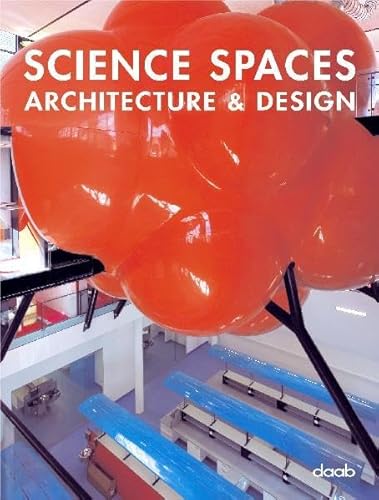
Science Spaces: Architecture and Design
Librería: Rose's Books IOBA, Harwich Port, MA, Estados Unidos de America
Miembro de asociación: IOBA
Calificación del vendedor: 1 de 5 estrellas

Original o primera edición
EUR 71,17
Envío por EUR 5,18
Se envía dentro de Estados Unidos de AmericaCantidad disponible: 1 disponibles
Añadir al carritoHardcover. Condición: New. Estado de la sobrecubierta: New. First Edition. Daab, 2007. First Edition according to publisher's press release. Multilingual, English, German, Spanish, French, and Italian. Hard cover, 237 pp. From publisher's press release: "SCIENCE SPACES ARCHITECTURE & DESIGN presents the most spectacular creations in the field of science, research and education of contemporary architects amongst them famous names such as Ateliers Jean Nouvel, Foster + Partners, Zaha Hadid Architects, Herzog & Meuron and OMA. Their designs include research institutes, technology centers, laboratory buildings, as well as large libraries and university buildings that have been commissioned with a focus upon aesthetic quality, and at large expense. Documented with plenty of concepts, these buildings are far from being bland functional buildings but represent science as something it really is: they are innovative in shape and colour, groundbreaking and sensational. In interior and exterior design, the represented architects often tie up to a building's function: At the new Institute of Cell and Molecular Science in London for example, there are four cell body like fixtures that are used as meeting, conference and lecture rooms. The shape of the National Space Centre in Leicester immediately reminds one of a space ship. The Stata Center for Computer, Information and Intelligence Sciences in Cambridge, USA, designed by Frank O. Gehry Partners, also has a complex and dynamic exterior to represent information technology. Communication and transparency are important factors when designing such buildings. Generous forums often reminding one of the classic atrium not only demonstrate a bond to tradition, but also the progress of science and the window to other disciplines and to society: its flexibility and ability to develop. Aesthetic appealing solutions have to be found even for extreme climatic demands and for specialist equipment such as that used in laboratories moveable walls, lamellae systems and similar elements open a wide range of variations. This way these buildings fulfill their function even within details that have been created by using original styles." New in publishers shrink wrap.

