
Importe total (1 artículo artículos):
Destino del pedido:

hewish tim (15 resultados)
Ir a los resultados principales
Filtros de búsqueda
Tipo de artículo
- Todos los tipos de productos
- Libros (15)
- Revistas y publicaciones (No hay ningún otro resultado que coincida con este filtro.)
- Cómics (No hay ningún otro resultado que coincida con este filtro.)
- Partituras (No hay ningún otro resultado que coincida con este filtro.)
- Arte, grabados y pósters (No hay ningún otro resultado que coincida con este filtro.)
- Fotografías (No hay ningún otro resultado que coincida con este filtro.)
- Mapas (No hay ningún otro resultado que coincida con este filtro.)
- Manuscritos y coleccionismo de papel (No hay ningún otro resultado que coincida con este filtro.)
Condición Más información
- Nuevo (11)
- Como nuevo, Excelente o Muy bueno (2)
- Bueno o Aceptable (2)
- Regular o Pobre (No hay ningún otro resultado que coincida con este filtro.)
- Tal como se indica (No hay ningún otro resultado que coincida con este filtro.)
Encuadernación
- Todas
- Tapa dura (No hay ningún otro resultado que coincida con este filtro.)
- Tapa blanda (15)
Más atributos
- Primera edición (No hay ningún otro resultado que coincida con este filtro.)
- Firmado (No hay ningún otro resultado que coincida con este filtro.)
- Sobrecubierta (No hay ningún otro resultado que coincida con este filtro.)
- Con imágenes (8)
- No impresión bajo demanda (15)
Idioma (1)
Precio
- Cualquier precio
- Menos de EUR 20
- EUR 20 a EUR 45
- Más de EUR 45 (No hay ningún otro resultado que coincida con este filtro.)
Gastos de envío gratis
Ubicación del vendedor
Valoración de los vendedores
-
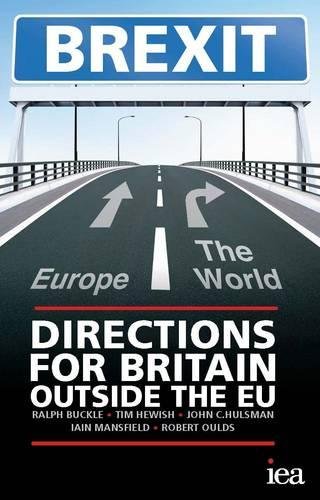
Brexit: Directions for Britain Outside the EU (Hobart Paperbacks)
Idioma: Inglés
Publicado por Institute of Economic Affairs 17/02/2015, 2015
ISBN 10: 0255366817 ISBN 13: 9780255366816
Librería: AwesomeBooks, Wallingford, Reino Unido
Calificación del vendedor: 5 de 5 estrellas

EUR 4,29
Envío por EUR 5,75
Se envía de Reino Unido a Estados Unidos de AmericaCantidad disponible: 1 disponibles
Añadir al carritoCondición: Very Good. This book is in very good condition and will be shipped within 24 hours of ordering. The cover may have some limited signs of wear but the pages are clean, intact and the spine remains undamaged. This book has clearly been well maintained and looked after thus far. Money back guarantee if you are not satisfied. See all our books here, order more than 1 book and get discounted shipping. .
-
Brexit: Directions for Britain Outside the EU (Hobart Paperbacks)
Idioma: Inglés
Publicado por Institute of Economic Affairs 17/02/2015, 2015
ISBN 10: 0255366817 ISBN 13: 9780255366816
Librería: Bahamut Media, Reading, Reino Unido
Calificación del vendedor: 5 de 5 estrellas
EUR 4,22
Envío por EUR 8,05
Se envía de Reino Unido a Estados Unidos de AmericaCantidad disponible: 1 disponibles
Añadir al carritoCondición: Very Good. Shipped within 24 hours from our UK warehouse. Clean, undamaged book with no damage to pages and minimal wear to the cover. Spine still tight, in very good condition. Remember if you are not happy, you are covered by our 100% money back guarantee.
-

Brexit : Directions for Britain Outside the Eu
Librería: GreatBookPrices, Columbia, MD, Estados Unidos de America
Calificación del vendedor: 5 de 5 estrellas
EUR 14,89
Envío por EUR 2,27
Se envía dentro de Estados Unidos de AmericaCantidad disponible: 5 disponibles
Añadir al carritoCondición: As New. Unread book in perfect condition.
-

Brexit: Directions for Britain Outside the EU: 2015
Idioma: Inglés
Publicado por Institute of Economic Affairs, 2015
ISBN 10: 0255366817 ISBN 13: 9780255366816
Librería: Bill & Ben Books, Faringdon, Reino Unido
Calificación del vendedor: 5 de 5 estrellas
EUR 6,18
Envío por EUR 11,65
Se envía de Reino Unido a Estados Unidos de AmericaCantidad disponible: 1 disponibles
Añadir al carritoPaperback. Condición: New. During 2013-14, the IEA ran a competition to find the best blueprint for Britain outside the EU, with the objective of securing a free and prosperous economy should it choose to leave. The IEA does not have a position on whether Britain should leave the EU. However, it is part of their educational mission to promote a wider understanding of the importance of a free economy and the institutions that are necessary for a free economy. They therefore regarded it as important to promote debate on the best way to achieve this in the event of the British people choosing to leave the EU: that was the main purpose of the competition. To provide a longer-lasting contribution to this debate, the IEA decided to publish this monograph examining the various options using, in the main, entries to the British Exit ('Brexit') competition. There was a wide range of possible approaches suggested by entrants to that competition.Some proposed that Britain should promote free trade and openness through the unilateral removal of trade and other barriers to economic activity; others proposed maintaining formal relationships with European countries through the European Free Trade Association and/or the European Economic Area; still other entrants took the view that Britain should seek to form economic and political alliances and partnerships with countries outside Europe - for example with the Commonwealth or the --Anglosphere - normally with a view to that being a gateway to free trade with as much of the world as would be willing. The winner was Foreign Office diplomat Iain Mansfield, who received most of the publicity at the end of the competition. However, in understanding how Britain can be free and prosperous in the event that it leaves the EU, it is worthwhile considering a range of other approaches to 'Brexit'. It is only through determining the best destiny for Britain outside the EU that the correct decision will be taken about whether to leave the EU and, if so, how. This book therefore brings together Iain Mansfield's submission with edited versions of two other entries.One of those, by Robert Oulds, proposes that the UK remains a member of the European Economic Area and rejoins the European Free Trade Association; another, by Ralph Buckle and Tim Hewish, proposes that Britain pursues free trade through the route of the Commonwealth and the Anglosphere. The final contribution, by John Hulsman, was not an entry to the competition but re-examines an approach to promoting free trade first proposed in his IEA monograph published in 2001, The World Turned Rightside Up. This involved the development of a global free-trade association. Overall, this book is an important contribution to the debate about how Britain should leave the EU, should it choose to do so. It distils clearly the different options and the advantages and disadvantages of alternative approaches with reference to the objective of promoting a free and prosperous economy. The authors have different views about how to achieve the same objective. It is hoped that, by presenting those different views in this volume, the debate will move beyond 'Britain - in or out?' to a debate about something just as important: 'If Britain should leave, how should it leave?'.
-

Brexit : Directions for Britain Outside the Eu
Librería: GreatBookPrices, Columbia, MD, Estados Unidos de America
Calificación del vendedor: 5 de 5 estrellas
EUR 15,98
Envío por EUR 2,27
Se envía dentro de Estados Unidos de AmericaCantidad disponible: 5 disponibles
Añadir al carritoCondición: New.
-
Brexit 2015: Directions for Britain Outside the EU (Hobart Paperbacks)
Librería: Majestic Books, Hounslow, Reino Unido
Calificación del vendedor: 4 de 5 estrellas

EUR 12,02
Envío por EUR 7,49
Se envía de Reino Unido a Estados Unidos de AmericaCantidad disponible: 1 disponibles
Añadir al carritoCondición: New. pp. 96.
-
Brexit 2015: Directions for Britain Outside the EU (Hobart Paperbacks)
Librería: Books Puddle, New York, NY, Estados Unidos de America
Calificación del vendedor: 4 de 5 estrellas
EUR 16,24
Envío por EUR 3,43
Se envía dentro de Estados Unidos de AmericaCantidad disponible: 1 disponibles
Añadir al carritoCondición: New. pp. 96.
-

Brexit
Idioma: Inglés
Publicado por Institute of Economic Affairs, GB, 2015
ISBN 10: 0255366817 ISBN 13: 9780255366816
Librería: Rarewaves.com USA, London, LONDO, Reino Unido
Calificación del vendedor: 5 de 5 estrellas
EUR 20,39
Gastos de envío gratis
Se envía de Reino Unido a Estados Unidos de AmericaCantidad disponible: 3 disponibles
Añadir al carritoPaperback. Condición: New. During 2013-14, the IEA ran a competition to find the best blueprint for Britain outside the EU, with the objective of securing a free and prosperous economy should it choose to leave. The IEA does not have a position on whether Britain should leave the EU. However, it is part of their educational mission to promote a wider understanding of the importance of a free economy and the institutions that are necessary for a free economy. They therefore regarded it as important to promote debate on the best way to achieve this in the event of the British people choosing to leave the EU: that was the main purpose of the competition. To provide a longer-lasting contribution to this debate, the IEA decided to publish this monograph examining the various options using, in the main, entries to the British Exit ('Brexit') competition. There was a wide range of possible approaches suggested by entrants to that competition.Some proposed that Britain should promote free trade and openness through the unilateral removal of trade and other barriers to economic activity; others proposed maintaining formal relationships with European countries through the European Free Trade Association and/or the European Economic Area; still other entrants took the view that Britain should seek to form economic and political alliances and partnerships with countries outside Europe - for example with the Commonwealth or the --Anglosphere - normally with a view to that being a gateway to free trade with as much of the world as would be willing.The winner was Foreign Office diplomat Iain Mansfield, who received most of the publicity at the end of the competition. However, in understanding how Britain can be free and prosperous in the event that it leaves the EU, it is worthwhile considering a range of other approaches to 'Brexit'. It is only through determining the best destiny for Britain outside the EU that the correct decision will be taken about whether to leave the EU and, if so, how. This book therefore brings together Iain Mansfield's submission with edited versions of two other entries.One of those, by Robert Oulds, proposes that the UK remains a member of the European Economic Area and rejoins the European Free Trade Association; another, by Ralph Buckle and Tim Hewish, proposes that Britain pursues free trade through the route of the Commonwealth and the Anglosphere. The final contribution, by John Hulsman, was not an entry to the competition but re-examines an approach to promoting free trade first proposed in his IEA monograph published in 2001, The World Turned Rightside Up. This involved the development of a global free-trade association.Overall, this book is an important contribution to the debate about how Britain should leave the EU, should it choose to do so. It distils clearly the different options and the advantages and disadvantages of alternative approaches with reference to the objective of promoting a free and prosperous economy. The authors have different vi.
-
Brexit 2015: Directions for Britain Outside the EU (Hobart Paperbacks)
Librería: Biblios, Frankfurt am main, HESSE, Alemania
Calificación del vendedor: 4 de 5 estrellas
EUR 12,73
Envío por EUR 9,95
Se envía de Alemania a Estados Unidos de AmericaCantidad disponible: 1 disponibles
Añadir al carritoCondición: New. pp. 96.
-
Brexit: Directions for Britain Outside the EU (Hobart Paperbacks)
Idioma: Inglés
Publicado por Institute of Economic Affairs 2015-02-17, 2015
ISBN 10: 0255366817 ISBN 13: 9780255366816
Librería: Chiron Media, Wallingford, Reino Unido
Calificación del vendedor: 4 de 5 estrellas
EUR 14,57
Envío por EUR 17,86
Se envía de Reino Unido a Estados Unidos de AmericaCantidad disponible: 5 disponibles
Añadir al carritoPaperback. Condición: New.
-

Brexit : Directions for Britain Outside the Eu
Librería: GreatBookPricesUK, Woodford Green, Reino Unido
Calificación del vendedor: 5 de 5 estrellas
EUR 16,36
Envío por EUR 17,29
Se envía de Reino Unido a Estados Unidos de AmericaCantidad disponible: 5 disponibles
Añadir al carritoCondición: New.
-
Brexit 2015: Directions for Britain Outside the EU (Hobart Paperback)
Librería: Ria Christie Collections, Uxbridge, Reino Unido
Calificación del vendedor: 5 de 5 estrellas
EUR 20,34
Envío por EUR 13,81
Se envía de Reino Unido a Estados Unidos de AmericaCantidad disponible: 10 disponibles
Añadir al carritoCondición: New. In.
-

Brexit : Directions for Britain Outside the Eu
Librería: GreatBookPricesUK, Woodford Green, Reino Unido
Calificación del vendedor: 5 de 5 estrellas
EUR 18,67
Envío por EUR 17,29
Se envía de Reino Unido a Estados Unidos de AmericaCantidad disponible: 5 disponibles
Añadir al carritoCondición: As New. Unread book in perfect condition.
-

Brexit
Idioma: Inglés
Publicado por Institute of Economic Affairs, 2015
ISBN 10: 0255366817 ISBN 13: 9780255366816
Librería: moluna, Greven, Alemania
Calificación del vendedor: 4 de 5 estrellas
EUR 21,33
Envío por EUR 48,99
Se envía de Alemania a Estados Unidos de AmericaCantidad disponible: Más de 20 disponibles
Añadir al carritoCondición: New. During 2013-14, the IEA ran a competition ( BREXIT ) to find the best blueprint for Britain outside the EU, with the objective of securing a free and prosperous economy should it choose to leave. This book brings together Iain Mansfield s winning submission.
-

Brexit
Idioma: Inglés
Publicado por Institute of Economic Affairs, GB, 2015
ISBN 10: 0255366817 ISBN 13: 9780255366816
Librería: Rarewaves.com UK, London, Reino Unido
Calificación del vendedor: 5 de 5 estrellas
EUR 17,99
Envío por EUR 74,94
Se envía de Reino Unido a Estados Unidos de AmericaCantidad disponible: 3 disponibles
Añadir al carritoPaperback. Condición: New. During 2013-14, the IEA ran a competition to find the best blueprint for Britain outside the EU, with the objective of securing a free and prosperous economy should it choose to leave. The IEA does not have a position on whether Britain should leave the EU. However, it is part of their educational mission to promote a wider understanding of the importance of a free economy and the institutions that are necessary for a free economy. They therefore regarded it as important to promote debate on the best way to achieve this in the event of the British people choosing to leave the EU: that was the main purpose of the competition. To provide a longer-lasting contribution to this debate, the IEA decided to publish this monograph examining the various options using, in the main, entries to the British Exit ('Brexit') competition. There was a wide range of possible approaches suggested by entrants to that competition.Some proposed that Britain should promote free trade and openness through the unilateral removal of trade and other barriers to economic activity; others proposed maintaining formal relationships with European countries through the European Free Trade Association and/or the European Economic Area; still other entrants took the view that Britain should seek to form economic and political alliances and partnerships with countries outside Europe - for example with the Commonwealth or the --Anglosphere - normally with a view to that being a gateway to free trade with as much of the world as would be willing.The winner was Foreign Office diplomat Iain Mansfield, who received most of the publicity at the end of the competition. However, in understanding how Britain can be free and prosperous in the event that it leaves the EU, it is worthwhile considering a range of other approaches to 'Brexit'. It is only through determining the best destiny for Britain outside the EU that the correct decision will be taken about whether to leave the EU and, if so, how. This book therefore brings together Iain Mansfield's submission with edited versions of two other entries.One of those, by Robert Oulds, proposes that the UK remains a member of the European Economic Area and rejoins the European Free Trade Association; another, by Ralph Buckle and Tim Hewish, proposes that Britain pursues free trade through the route of the Commonwealth and the Anglosphere. The final contribution, by John Hulsman, was not an entry to the competition but re-examines an approach to promoting free trade first proposed in his IEA monograph published in 2001, The World Turned Rightside Up. This involved the development of a global free-trade association.Overall, this book is an important contribution to the debate about how Britain should leave the EU, should it choose to do so. It distils clearly the different options and the advantages and disadvantages of alternative approaches with reference to the objective of promoting a free and prosperous economy. The authors have different vi.

