

Importe total (1 artículo artículos):
Destino del pedido:

frei rasch bodo (21 resultados)
Ir a los resultados principales
Filtros de búsqueda
Tipo de artículo
- Todos los tipos de productos
- Libros (21)
- Revistas y publicaciones (No hay ningún otro resultado que coincida con este filtro.)
- Cómics (No hay ningún otro resultado que coincida con este filtro.)
- Partituras (No hay ningún otro resultado que coincida con este filtro.)
- Arte, grabados y pósters (No hay ningún otro resultado que coincida con este filtro.)
- Fotografías (No hay ningún otro resultado que coincida con este filtro.)
- Mapas (No hay ningún otro resultado que coincida con este filtro.)
- Manuscritos y coleccionismo de papel (No hay ningún otro resultado que coincida con este filtro.)
Condición Más información
- Nuevo (12)
- Como nuevo, Excelente o Muy bueno (4)
- Bueno o Aceptable (3)
- Regular o Pobre (No hay ningún otro resultado que coincida con este filtro.)
- Tal como se indica (2)
Encuadernación
- Todas
- Tapa dura (20)
- Tapa blanda (No hay ningún otro resultado que coincida con este filtro.)
Más atributos
- Primera edición (No hay ningún otro resultado que coincida con este filtro.)
- Firmado (No hay ningún otro resultado que coincida con este filtro.)
- Sobrecubierta (4)
- Con imágenes (12)
- No impresión bajo demanda (21)
Idioma (2)
Precio
- Cualquier precio
- Menos de EUR 20 (No hay ningún otro resultado que coincida con este filtro.)
- EUR 20 a EUR 40
- Más de EUR 40
Gastos de envío gratis
Ubicación del vendedor
Valoración de los vendedores
-

Frei Otto, Bodo Rasch : Finding Form : Towards an Architecture of the Minimal
Librería: GreatBookPrices, Columbia, MD, Estados Unidos de America
Calificación del vendedor: 5 de 5 estrellas

EUR 34,85
Envío por EUR 2,23
Se envía dentro de Estados Unidos de AmericaCantidad disponible: 15 disponibles
Añadir al carritoCondición: As New. Unread book in perfect condition.
-

Finding Form Format: Hardcover
Librería: INDOO, Avenel, NJ, Estados Unidos de America
Calificación del vendedor: 5 de 5 estrellas
EUR 37,21
Gastos de envío gratis
Se envía dentro de Estados Unidos de AmericaCantidad disponible: Más de 20 disponibles
Añadir al carritoCondición: New.
-

Frei Otto, Bodo Rasch : Finding Form : Towards an Architecture of the Minimal
Librería: GreatBookPrices, Columbia, MD, Estados Unidos de America
Calificación del vendedor: 5 de 5 estrellas
EUR 34,94
Envío por EUR 2,23
Se envía dentro de Estados Unidos de AmericaCantidad disponible: 15 disponibles
Añadir al carritoCondición: New.
-
Finding Form: Towards an Architecture of the Minimal
Librería: Reader's Corner, Inc., Raleigh, NC, Estados Unidos de America
Calificación del vendedor: 5 de 5 estrellas
EUR 33,90
Envío por EUR 4,64
Se envía dentro de Estados Unidos de AmericaCantidad disponible: 1 disponibles
Añadir al carritoHardcover. Condición: Fine. Estado de la sobrecubierta: Fine. 3rd Edition. This is a fine hardcover 3rd edition copy in a fine DJ, black spine.
-
Finding Form : Towards an Architecture of the Minimal
Idioma: Inglés
Publicado por Edition Axel Menges GmbH, 1996
ISBN 10: 3930698668 ISBN 13: 9783930698660
Librería: Better World Books Ltd, Dunfermline, Reino Unido
Calificación del vendedor: 5 de 5 estrellas
EUR 37,74
Envío por EUR 5,75
Se envía de Reino Unido a Estados Unidos de AmericaCantidad disponible: 1 disponibles
Añadir al carritoCondición: Good. Former library copy. Pages intact with minimal writing/highlighting. The binding may be loose and creased. Dust jackets/supplements are not included. Includes library markings. Stock photo provided. Product includes identifying sticker. Better World Books: Buy Books. Do Good.
-
Finding Form : Towards an Architecture of the Minimal
Idioma: Inglés
Publicado por Edition Axel Menges GmbH, 1996
ISBN 10: 3930698668 ISBN 13: 9783930698660
Librería: Better World Books Ltd, Dunfermline, Reino Unido
Calificación del vendedor: 5 de 5 estrellas
EUR 37,74
Envío por EUR 5,75
Se envía de Reino Unido a Estados Unidos de AmericaCantidad disponible: 8 disponibles
Añadir al carritoCondición: Very Good. Former library copy. Pages intact with possible writing/highlighting. Binding strong with minor wear. Dust jackets/supplements may not be included. Includes library markings. Stock photo provided. Product includes identifying sticker. Better World Books: Buy Books. Do Good.
-

Finding Form
Idioma: Inglés
Publicado por Edition Axel Menges, DE, 1996
ISBN 10: 3930698668 ISBN 13: 9783930698660
Librería: Rarewaves USA, OSWEGO, IL, Estados Unidos de America
Calificación del vendedor: 5 de 5 estrellas
EUR 49,01
Gastos de envío gratis
Se envía dentro de Estados Unidos de AmericaCantidad disponible: 8 disponibles
Añadir al carritoHardback. Condición: New. 2019 Edition "Primeval architecture is an architecture of necessity. Nothing is there to excess, no matter whether stone, clay, reeds or wood, animal skins or hair are used. It is minimal. It can be very beautiful even amidst poverty and is good in the ethical sense. Good architecture seems to be more important than beautiful architecture. Beautiful architecture is not necessarily good. Only buildings that are at the same time ethically good and aesthetically beautiful are worth preserving. We have too many buildings that have become useless and yet we still need new buildings, from pole to pole, in the cold and in the heat. Mans present areas of settlement are the new ecological system in which technology is indispensable, even in hot and cold areas. . Our age requires buildings that are lighter, more energy-saving, more mobile and more adaptable, in brief more natural, without disregarding the need for safety and security. This logically leads to the further development of light constructions, to the building of tents, shells, awnings and air-supported membranes. It also leads to a new mobility and changeability. A new understanding of nature is forming under one aspect of high performance form (also called classical form), which unites aesthetic and ethical viewpoints. Tomorrows architecture will again be minimal architecture, an architecture of the self-education and self-optimization processes suggested by human beings." (Frei Otto and Bodo Rasch in their foreword of this book) In 1992 the Bavarian branch of the Deutscher Werkbund awarded its first prize to Frei Otto, undoubtedly the most successful and many-sided protagonist of modern light construction, and with it a request to nominate a meritorious person to whom the prize could be passed on, and to design a joint exhibition with that person. Frei Otto chose his pupil Bodo Rasch, who had realized Ottos theories particularly in other cultures. The publication produced on this occasion provides information about scientific fundamentals and the working methods the two architects developed from these, which are characterized by "finding" not by "making". This is supposed to produce buildings that could not be more beautiful and can scarcely be improved in terms of materials and loadbearing capacity.
-

Finding Form
Idioma: Inglés
Publicado por Edition Axel Menges, DE, 1996
ISBN 10: 3930698668 ISBN 13: 9783930698660
Librería: Rarewaves.com USA, London, LONDO, Reino Unido
Calificación del vendedor: 5 de 5 estrellas
EUR 56,10
Gastos de envío gratis
Se envía de Reino Unido a Estados Unidos de AmericaCantidad disponible: 8 disponibles
Añadir al carritoHardback. Condición: New. 2019 Edition "Primeval architecture is an architecture of necessity. Nothing is there to excess, no matter whether stone, clay, reeds or wood, animal skins or hair are used. It is minimal. It can be very beautiful even amidst poverty and is good in the ethical sense. Good architecture seems to be more important than beautiful architecture. Beautiful architecture is not necessarily good. Only buildings that are at the same time ethically good and aesthetically beautiful are worth preserving. We have too many buildings that have become useless and yet we still need new buildings, from pole to pole, in the cold and in the heat. Mans present areas of settlement are the new ecological system in which technology is indispensable, even in hot and cold areas. . Our age requires buildings that are lighter, more energy-saving, more mobile and more adaptable, in brief more natural, without disregarding the need for safety and security. This logically leads to the further development of light constructions, to the building of tents, shells, awnings and air-supported membranes. It also leads to a new mobility and changeability. A new understanding of nature is forming under one aspect of high performance form (also called classical form), which unites aesthetic and ethical viewpoints. Tomorrows architecture will again be minimal architecture, an architecture of the self-education and self-optimization processes suggested by human beings." (Frei Otto and Bodo Rasch in their foreword of this book) In 1992 the Bavarian branch of the Deutscher Werkbund awarded its first prize to Frei Otto, undoubtedly the most successful and many-sided protagonist of modern light construction, and with it a request to nominate a meritorious person to whom the prize could be passed on, and to design a joint exhibition with that person. Frei Otto chose his pupil Bodo Rasch, who had realized Ottos theories particularly in other cultures. The publication produced on this occasion provides information about scientific fundamentals and the working methods the two architects developed from these, which are characterized by "finding" not by "making". This is supposed to produce buildings that could not be more beautiful and can scarcely be improved in terms of materials and loadbearing capacity.
-
Finding Form: Towards an Architecture of the Minimal
Idioma: Inglés
Publicado por Edition Axel Menges Publishing, 1996
ISBN 10: 3930698668 ISBN 13: 9783930698660
Librería: Salish Sea Books, Bellingham, WA, Estados Unidos de America
Calificación del vendedor: 5 de 5 estrellas
EUR 65,14
Envío por EUR 4,21
Se envía dentro de Estados Unidos de AmericaCantidad disponible: 1 disponibles
Añadir al carritoCondición: Very Good. Very Good in a Good dust jacket; Hardcover; 2001 printing; Dust jacket is moderately shelfworn and edgeworn with one edge-scuff, but is overall good and intact, and has not been price-clipped (Now fitted with a new, Brodart jacket protector); Light wear to the boards; Unblemished textblock edges; Small sticker to the last endpaper, otherwise the endpapers and all text pages are clean and unmarked; The binding is excellent with a straight spine; This book will be shipped in a sturdy cardboard box with foam padding; Medium-Large Format (Quatro, 9.75" - 10.75" tall); 2.4 lbs; Black dust jacket with title in white lettering; 1996, Edition Axel Menges Publishing; 240 pages; "Finding Form: Towards an Architecture of the Minimal," by Frei Otto & Bodo Rasch.
-

Finding Form
Idioma: Inglés
Publicado por Edition Axel Menges, DE, 1996
ISBN 10: 3930698668 ISBN 13: 9783930698660
Librería: Rarewaves USA United, OSWEGO, IL, Estados Unidos de America
Calificación del vendedor: 5 de 5 estrellas
EUR 50,55
Envío por EUR 42,19
Se envía dentro de Estados Unidos de AmericaCantidad disponible: 8 disponibles
Añadir al carritoHardback. Condición: New. 2019 Edition "Primeval architecture is an architecture of necessity. Nothing is there to excess, no matter whether stone, clay, reeds or wood, animal skins or hair are used. It is minimal. It can be very beautiful even amidst poverty and is good in the ethical sense. Good architecture seems to be more important than beautiful architecture. Beautiful architecture is not necessarily good. Only buildings that are at the same time ethically good and aesthetically beautiful are worth preserving. We have too many buildings that have become useless and yet we still need new buildings, from pole to pole, in the cold and in the heat. Mans present areas of settlement are the new ecological system in which technology is indispensable, even in hot and cold areas. . Our age requires buildings that are lighter, more energy-saving, more mobile and more adaptable, in brief more natural, without disregarding the need for safety and security. This logically leads to the further development of light constructions, to the building of tents, shells, awnings and air-supported membranes. It also leads to a new mobility and changeability. A new understanding of nature is forming under one aspect of high performance form (also called classical form), which unites aesthetic and ethical viewpoints. Tomorrows architecture will again be minimal architecture, an architecture of the self-education and self-optimization processes suggested by human beings." (Frei Otto and Bodo Rasch in their foreword of this book) In 1992 the Bavarian branch of the Deutscher Werkbund awarded its first prize to Frei Otto, undoubtedly the most successful and many-sided protagonist of modern light construction, and with it a request to nominate a meritorious person to whom the prize could be passed on, and to design a joint exhibition with that person. Frei Otto chose his pupil Bodo Rasch, who had realized Ottos theories particularly in other cultures. The publication produced on this occasion provides information about scientific fundamentals and the working methods the two architects developed from these, which are characterized by "finding" not by "making". This is supposed to produce buildings that could not be more beautiful and can scarcely be improved in terms of materials and loadbearing capacity.
-
Frei Otto /Rasch, Bodo: Finding Form
Librería: moluna, Greven, Alemania
Calificación del vendedor: 4 de 5 estrellas

EUR 49,00
Envío por EUR 48,99
Se envía de Alemania a Estados Unidos de AmericaCantidad disponible: Más de 20 disponibles
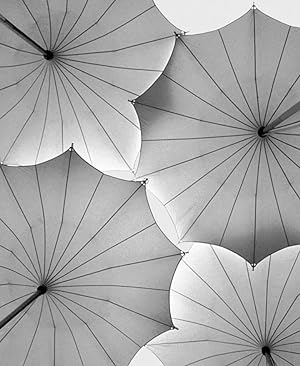
Añadir al carritoCondición: New. Primeval architecture is an architecture of necessity.Nothing is there to excess, no matter whetherstone, clay, reeds or wood, animal skins orhair are used. It is minimal. It can be very beautifuleven amidst poverty and is good in t.
-
Finding Form: Towards an Architecture of the Minimal
Librería: BennettBooksLtd, Los Angeles, CA, Estados Unidos de America
Calificación del vendedor: 5 de 5 estrellas
EUR 96,11
Envío por EUR 5,86
Se envía dentro de Estados Unidos de AmericaCantidad disponible: 1 disponibles
Añadir al carritohardcover. Condición: New. In shrink wrap. Looks like an interesting title!
-
Frei Otto, Bodo Rasch: Finding Form : Towards an Architecture of the Minimal
Librería: Revaluation Books, Exeter, Reino Unido
Calificación del vendedor: 5 de 5 estrellas
EUR 88,51
Envío por EUR 17,25
Se envía de Reino Unido a Estados Unidos de AmericaCantidad disponible: 1 disponibles
Añadir al carritoHardcover. Condición: Brand New. 240 pages. 10.00x9.00x0.75 inches. In Stock.
-

EUR 58,00
Envío por EUR 48,99
Se envía de Alemania a Estados Unidos de AmericaCantidad disponible: Más de 20 disponibles
Añadir al carritoCondición: New. Frei Paul Otto, geboren 1925, war ein deutscher Architekt. Er entwarf das legendaere Dach des Muenchner Olympiastadions. Posthum wurde er mit dem Pritzker Preis geehrt. Frei Otto verstarb im Maerz 2015. Die Urarchitektur ist eine Architektur der Notwendigk.
-

Frei Otto, Bodo Rasch: Finding Form | Towards an Architecture of the Minimal, Catalogue to the Exhibition Munich 1992
Librería: preigu, Osnabrück, Alemania
Calificación del vendedor: 5 de 5 estrellas
EUR 49,00
Envío por EUR 70,00
Se envía de Alemania a Estados Unidos de AmericaCantidad disponible: 2 disponibles
Añadir al carritoBuch. Condición: Neu. Frei Otto, Bodo Rasch: Finding Form | Towards an Architecture of the Minimal, Catalogue to the Exhibition Munich 1992 | Frei/Rasch, Bodo/Pfafferodt, Gerd et al Otto | Buch | 240 S. | Englisch | 2018 | Edition Axel Menges | EAN 9783930698660 | Verantwortliche Person für die EU: Edition Axel Menges, Esslingerstr. 24, 70736 Fellbach, axelmenges[at]aol[dot]com | Anbieter: preigu.
-

Finding Form
Idioma: Inglés
Publicado por Edition Axel Menges, DE, 1996
ISBN 10: 3930698668 ISBN 13: 9783930698660
Librería: Rarewaves.com UK, London, Reino Unido
Calificación del vendedor: 5 de 5 estrellas
EUR 51,31
Envío por EUR 74,75
Se envía de Reino Unido a Estados Unidos de AmericaCantidad disponible: 8 disponibles
Añadir al carritoHardback. Condición: New. 2019 Edition "Primeval architecture is an architecture of necessity. Nothing is there to excess, no matter whether stone, clay, reeds or wood, animal skins or hair are used. It is minimal. It can be very beautiful even amidst poverty and is good in the ethical sense. Good architecture seems to be more important than beautiful architecture. Beautiful architecture is not necessarily good. Only buildings that are at the same time ethically good and aesthetically beautiful are worth preserving. We have too many buildings that have become useless and yet we still need new buildings, from pole to pole, in the cold and in the heat. Mans present areas of settlement are the new ecological system in which technology is indispensable, even in hot and cold areas. . Our age requires buildings that are lighter, more energy-saving, more mobile and more adaptable, in brief more natural, without disregarding the need for safety and security. This logically leads to the further development of light constructions, to the building of tents, shells, awnings and air-supported membranes. It also leads to a new mobility and changeability. A new understanding of nature is forming under one aspect of high performance form (also called classical form), which unites aesthetic and ethical viewpoints. Tomorrows architecture will again be minimal architecture, an architecture of the self-education and self-optimization processes suggested by human beings." (Frei Otto and Bodo Rasch in their foreword of this book) In 1992 the Bavarian branch of the Deutscher Werkbund awarded its first prize to Frei Otto, undoubtedly the most successful and many-sided protagonist of modern light construction, and with it a request to nominate a meritorious person to whom the prize could be passed on, and to design a joint exhibition with that person. Frei Otto chose his pupil Bodo Rasch, who had realized Ottos theories particularly in other cultures. The publication produced on this occasion provides information about scientific fundamentals and the working methods the two architects developed from these, which are characterized by "finding" not by "making". This is supposed to produce buildings that could not be more beautiful and can scarcely be improved in terms of materials and loadbearing capacity.
-

Gestalt finden | Auf dem Weg zu einer Baukunst des Minimalen
Librería: preigu, Osnabrück, Alemania
Calificación del vendedor: 5 de 5 estrellas
EUR 58,00
Envío por EUR 70,00
Se envía de Alemania a Estados Unidos de AmericaCantidad disponible: 2 disponibles
Añadir al carritoBuch. Condición: Neu. Gestalt finden | Auf dem Weg zu einer Baukunst des Minimalen | Otto/Rasch, Bodo Frei | Buch | 240 S. | Deutsch | 1995 | Edition Axel Menges | EAN 9783930698653 | Verantwortliche Person für die EU: Edition Axel Menges, Esslingerstr. 24, 70736 Fellbach, axelmenges[at]aol[dot]com | Anbieter: preigu.
-

Gestalt finden. Auf dem Weg zu einer Baukunst des Minimalen. Katalog, wissenschaftliche Beiträge und Bibliographie bearbeitet von Sabine Schanz.
Idioma: Inglés
Publicado por Edition Axel Menges, o. O.,, 1995
ISBN 10: 393069865X ISBN 13: 9783930698653
Librería: Antiquariat Christoph Wilde, Düsseldorf, Alemania
Calificación del vendedor: 5 de 5 estrellas
EUR 100,00
Envío por EUR 45,00
Se envía de Alemania a Estados Unidos de AmericaCantidad disponible: 1 disponibles
Añadir al carrito239, (1) S. Orig.-Leinenband mit ill. Orig.-Umschlag. - Umschlag etwas gerändert und am Rücken leicht verfärbt. Ansonsten sehr gut erhaltenes Exemplar. Innen absolut sauber. - Publikation zur Ausstellung in der Villa Stuck, München, anläßlich der Preisverleihung des Deutschen Werkbundes Bayern 1992 an Frei Otto und Bodo Rasch.
-

Finding Form.
Publicado por Editions Axel Menges 1995, 1995
Librería: Librairie Vignes Online, Paris, Francia
Miembro de asociación: ILAB
Calificación del vendedor: 5 de 5 estrellas
EUR 50,00
Envío por EUR 38,00
Se envía de Francia a Estados Unidos de AmericaCantidad disponible: 1 disponibles
Añadir al carritoCondición: Très bon état. in-4, cartonnage éditeur, jaquette, 237 pp., nombreuses reproductions en noir et en couleurs. TEXTE EN ANGLAIS. En très bon état.
-
Gestalt finden. Auf dem Weg zu einer Baukunst des Minimalen. Herausgeber: Deutscher Werkbund Bayern.
Publicado por Edition Axel Menges,., oO (München),, 1995
Librería: Antiquariat Bibliomania, Köln, NRW, Alemania
Calificación del vendedor: 5 de 5 estrellas
OportunidadEUR 54,00
Envío por EUR 13,50
Se envía de Alemania a Estados Unidos de AmericaCantidad disponible: 1 disponibles
Añadir al carrito239 (1) Seiten mit sehr vielen Abbildungen, Orig.-Leinen mit Orig.-Umschlag, 4°. Kommentar: * Ausstellung in der Villa Stuck, München, anläßlich der Preisverleihung des Deutschen Werkbundes Bayern 1992 an Frei Otto und Bodo Rasch.
-
Gestalt finden. - Auf dem Weg zu einer Baukunst des Minimalen
Publicado por Edition Axel Menges, 1995
Librería: Buch- und Kunsthandlung Wilms Am Markt Wilms e.K., Bad Bergzabern, Alemania
Calificación del vendedor: 5 de 5 estrellas
EUR 96,00
Envío por EUR 30,00
Se envía de Alemania a Estados Unidos de AmericaCantidad disponible: 1 disponibles
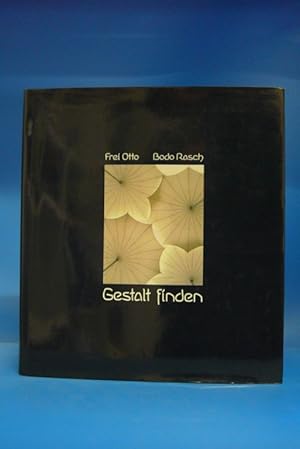
Añadir al carritoLeinen. Condición: Sehr gut. Estado de la sobrecubierta: Sehr gut. Ausstellung in der Villa Stuck, München, anläßlich der Preisverleihung des Deutschen Werkbundes Bayern 1992 an Frei Otto und Bodo Rasch. Katalog, wissenschaftliche Beiträge und Bibliographie bearbeitet von Sabine Schanz. Inhalt: Notizen zum Werkbundpreis/Gestalt finden - auf dem Weg zur Baukunst des Minimalen/Natürliche KOnstruktionen, ein Thema für die Zukunft/Experimente/Zeltkonstruktionen/Netzkonstruktionen/Pneuma tische Konstruktionen/Hängekonstruktionen/Bogen, Gewölbe, Schalen/Verzweigte Konstruktionen/Energie- und Umwelttechnik/Wandelbare Konstruktionen/Schirme/Mekka und Medina u.a. Schönes, sauberes Exemplar. Reich bebildert. - Einband: Leinen gebunden mit Schutzumschlag - Buchseiten: ca. 239.


