Importe total (1 artículo artículos):
Destino del pedido:

cowell ian (22 resultados)
Ir a los resultados principales
Filtros de búsqueda
Tipo de artículo
- Todos los tipos de productos
- Libros (22)
- Revistas y publicaciones (No hay ningún otro resultado que coincida con este filtro.)
- Cómics (No hay ningún otro resultado que coincida con este filtro.)
- Partituras (No hay ningún otro resultado que coincida con este filtro.)
- Arte, grabados y pósters (No hay ningún otro resultado que coincida con este filtro.)
- Fotografías (No hay ningún otro resultado que coincida con este filtro.)
- Mapas (No hay ningún otro resultado que coincida con este filtro.)
- Manuscritos y coleccionismo de papel (No hay ningún otro resultado que coincida con este filtro.)
Condición Más información
- Nuevo (18)
- Como nuevo, Excelente o Muy bueno (2)
- Bueno o Aceptable (2)
- Regular o Pobre (No hay ningún otro resultado que coincida con este filtro.)
- Tal como se indica (No hay ningún otro resultado que coincida con este filtro.)
Encuadernación
Más atributos
- Primera edición (2)
- Firmado (No hay ningún otro resultado que coincida con este filtro.)
- Sobrecubierta (No hay ningún otro resultado que coincida con este filtro.)
- Con imágenes (9)
- No impresión bajo demanda (16)
Idioma (2)
Gastos de envío gratis
- Envío gratis a Estados Unidos de America (No hay ningún otro resultado que coincida con este filtro.)
Ubicación del vendedor
Valoración de los vendedores
-

cDNA Library Protocols (Methods in Molecular Biology)
Librería: Red's Corner LLC, Tucker, GA, Estados Unidos de America
Calificación del vendedor: 5 de 5 estrellas

EUR 18,43
Envío por EUR 3,41
Se envía dentro de Estados Unidos de AmericaCantidad disponible: 1 disponibles
Añadir al carritopaperback. Condición: Fine. All orders ship by next business day! This is a used book. Grade 4 out of 5 points. Book may have wear due to handling. Has no markings on pages. May not include extra materials like access codes, CDs, accessories, etc. We are a small company and very thankful for your business!
-

Human Resource Management: A Caribbean Perspective
Idioma: Inglés
Publicado por Canoe Press, University of the West Indies, 1995
ISBN 10: 9768125160 ISBN 13: 9789768125163
Librería: Black Rock Books, St Michael, Barbados
Calificación del vendedor: 4 de 5 estrellas

Original o primera edición
EUR 15,79
Envío por EUR 6,81
Se envía de Barbados a Estados Unidos de AmericaCantidad disponible: 1 disponibles
Añadir al carritoSoft cover. Condición: Good. 1st Edition. 40 short (6-10 pp) essays. Light wear.
-

cDNA Library Protocols (Methods in Molecular Biology, 69)
Librería: Ria Christie Collections, Uxbridge, Reino Unido
Calificación del vendedor: 5 de 5 estrellas
EUR 161,81
Envío por EUR 13,76
Se envía de Reino Unido a Estados Unidos de AmericaCantidad disponible: Más de 20 disponibles
Añadir al carritoCondición: New. In.
-
cDNA Library Protocols (Methods in Molecular Biology)
Librería: Ria Christie Collections, Uxbridge, Reino Unido
Calificación del vendedor: 5 de 5 estrellas
EUR 161,81
Envío por EUR 13,76
Se envía de Reino Unido a Estados Unidos de AmericaCantidad disponible: Más de 20 disponibles
Añadir al carritoCondición: New. In.
-

cDNA Library Protocols
Librería: moluna, Greven, Alemania
Calificación del vendedor: 4 de 5 estrellas
EUR 136,16
Envío por EUR 48,99
Se envía de Alemania a Estados Unidos de AmericaCantidad disponible: Más de 20 disponibles
Añadir al carritoCondición: New.
-
cDNA Library Protocols
Librería: Books Puddle, New York, NY, Estados Unidos de America
Calificación del vendedor: 4 de 5 estrellas
EUR 194,23
Envío por EUR 3,40
Se envía dentro de Estados Unidos de AmericaCantidad disponible: 4 disponibles
Añadir al carritoCondición: New. pp. 332.
-
cDNA Library Protocols: 69 (Methods in Molecular Biology, 69)
Librería: Kennys Bookshop and Art Galleries Ltd., Galway, GY, Irlanda
Calificación del vendedor: 5 de 5 estrellas
EUR 193,52
Envío por EUR 10,50
Se envía de Irlanda a Estados Unidos de AmericaCantidad disponible: 15 disponibles
Añadir al carritoCondición: New. Editor(s): Cowell, Ian G.; Austin, Caroline A. Series: Methods in Molecular Biology. Num Pages: 321 pages, 28 black & white illustrations, biography. BIC Classification: MJCM; PSF. Category: (P) Professional & Vocational. Dimension: 230 x 153 x 18. Weight in Grams: 486. . 2013. Softcover reprint of the original 1st ed. 1997. Paperback. . . . .
-
cDNA Library Protocols
Librería: preigu, Osnabrück, Alemania
Calificación del vendedor: 5 de 5 estrellas
EUR 140,00
Envío por EUR 70,00
Se envía de Alemania a Estados Unidos de AmericaCantidad disponible: 5 disponibles
Añadir al carritoTaschenbuch. Condición: Neu. cDNA Library Protocols | Ian G. Cowell (u. a.) | Taschenbuch | x | Englisch | 2013 | Humana | EAN 9781489940506 | Verantwortliche Person für die EU: Humana Press in Springer Science + Business Media, Heidelberger Platz 3, 14197 Berlin, juergen[dot]hartmann[at]springer[dot]com | Anbieter: preigu.
-
CDNA Library Protocols
Librería: Kennys Bookshop and Art Galleries Ltd., Galway, GY, Irlanda
Calificación del vendedor: 5 de 5 estrellas
EUR 199,03
Envío por EUR 10,50
Se envía de Irlanda a Estados Unidos de AmericaCantidad disponible: 15 disponibles
Añadir al carritoCondición: New. Techniques for the creation of cDNA libraries are presented here in a format appropriate for both expert researchers and newcomers to the field. The book includes covers such topics as the strategies applied to the creation of a cDNA library and RNA considerations to the research process. Editor(s): Cowell, Ian G.; Austin, Caroline A. Series: Methods in Molecular Biology. Num Pages: 321 pages, 28 black & white illustrations, biography. BIC Classification: PSAK; PSB; PSD; PSF. Category: (P) Professional & Vocational; (UP) Postgraduate, Research & Scholarly; (UU) Undergraduate. Dimension: 235 x 155 x 19. Weight in Grams: 1430. . 1996. Hardback. . . . .
-

Cdna Library Protocols
Librería: moluna, Greven, Alemania
Calificación del vendedor: 5 de 5 estrellas
EUR 178,14
Envío por EUR 48,99
Se envía de Alemania a Estados Unidos de AmericaCantidad disponible: Más de 20 disponibles
Añadir al carritoGebunden. Condición: New.
-
cDNA Library Protocols (Methods in Molecular Biology)
Librería: Revaluation Books, Exeter, Reino Unido
Calificación del vendedor: 5 de 5 estrellas
EUR 229,17
Envío por EUR 11,48
Se envía de Reino Unido a Estados Unidos de AmericaCantidad disponible: 2 disponibles
Añadir al carritoPaperback. Condición: Brand New. 332 pages. 9.10x6.00x0.70 inches. In Stock.
-
cDNA Library Protocols: 69 (Methods in Molecular Biology, 69)
Librería: Kennys Bookstore, Olney, MD, Estados Unidos de America
Calificación del vendedor: 5 de 5 estrellas
EUR 241,99
Envío por EUR 8,94
Se envía dentro de Estados Unidos de AmericaCantidad disponible: 15 disponibles
Añadir al carritoCondición: New. Editor(s): Cowell, Ian G.; Austin, Caroline A. Series: Methods in Molecular Biology. Num Pages: 321 pages, 28 black & white illustrations, biography. BIC Classification: MJCM; PSF. Category: (P) Professional & Vocational. Dimension: 230 x 153 x 18. Weight in Grams: 486. . 2013. Softcover reprint of the original 1st ed. 1997. Paperback. . . . . Books ship from the US and Ireland.
-
CDNA Library Protocols
Librería: Kennys Bookstore, Olney, MD, Estados Unidos de America
Calificación del vendedor: 5 de 5 estrellas
EUR 248,91
Envío por EUR 8,94
Se envía dentro de Estados Unidos de AmericaCantidad disponible: 15 disponibles
Añadir al carritoCondición: New. Techniques for the creation of cDNA libraries are presented here in a format appropriate for both expert researchers and newcomers to the field. The book includes covers such topics as the strategies applied to the creation of a cDNA library and RNA considerations to the research process. Editor(s): Cowell, Ian G.; Austin, Caroline A. Series: Methods in Molecular Biology. Num Pages: 321 pages, 28 black & white illustrations, biography. BIC Classification: PSAK; PSB; PSD; PSF. Category: (P) Professional & Vocational; (UP) Postgraduate, Research & Scholarly; (UU) Undergraduate. Dimension: 235 x 155 x 19. Weight in Grams: 1430. . 1996. Hardback. . . . . Books ship from the US and Ireland.
-

Cdna Library Protocols
Librería: AHA-BUCH GmbH, Einbeck, Alemania
Calificación del vendedor: 5 de 5 estrellas
EUR 247,94
Envío por EUR 63,54
Se envía de Alemania a Estados Unidos de AmericaCantidad disponible: 2 disponibles
Añadir al carritoBuch. Condición: Neu. Neuware - The first libraries of complementary DNA (cDNA) clones were con structed in the mid-to-late 1970s using RNA-dependent DNA polymerase (reverse transcriptase) to convert poly A\* mRNA into double-stranded cDNA suitable for insertion into prokaryotic vectors. Since then cDNA technology has become a fundamental tool for the molecular biologist and at the same time some very significant advances have occurred in the methods for con structing and screening cDNA libraries. It is not the aim of cDNA Library Protocols to give a comprehensive review of all cDNA library-based methodologies; instead we present a series of up-to-date protocols that together should give a good grounding of proce dures associated with the construction and use of cDNA libraries. In deciding what to include, we endeavored to combine up-to-date versions of some of the most widely used protocols with some very usefiil newer techniques. cDNA Library Protocols should therefore be especially useful to the investigator who is new to the use of cDNA libraries, but should also be of value to the more experienced worker. Chapters 1-5 concentrate on cDNA library construction and manipula tion, Chapters 6 and 7 describe means of cloning difficult-to-obtain ends of cDNAs, Chapters 8-18 give various approaches to the screening of cDNA libraries, and the remaining chapters present methods of analysis of cDNA clones including details of how to analyze cDNA sequence data and how to make use of the wealth of cDNA data emerging from the human genome project.
-
cDNA Library Protocols (Methods in Molecular Biology (69))
Librería: Mispah books, Redhill, SURRE, Reino Unido
Calificación del vendedor: 4 de 5 estrellas
EUR 318,21
Envío por EUR 28,71
Se envía de Reino Unido a Estados Unidos de AmericaCantidad disponible: 1 disponibles
Añadir al carritoHardcover. Condición: Like New. LIKE NEW. SHIPS FROM MULTIPLE LOCATIONS. book.
-
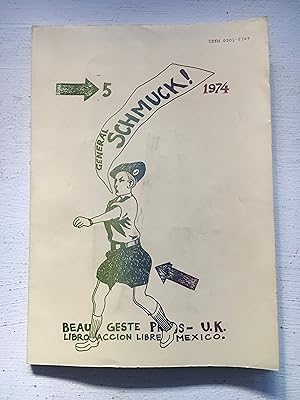
General Schmuck # 5
Publicado por Beau Geste Press, 1974
Librería: Aeon Bookstore, New York, NY, Estados Unidos de America
Calificación del vendedor: 5 de 5 estrellas
Original o primera edición
EUR 350,97
Envío por EUR 4,26
Se envía dentro de Estados Unidos de AmericaCantidad disponible: 1 disponibles
Añadir al carritoSoft cover. Condición: Very Good. 1st Edition. Stunning publication featuring a wide variety of contributors with varying methods of color printing and inserts, which are all present. Some indenting to the wraps from the card inserts in front and back. Some minor rubbing to covers and some corner wear, as well as a crease to the bottom of one page towards the back but otherwise a lovely copy, now in mylar.
-
cDNA Library Protocols (eng)
Librería: Brook Bookstore On Demand, Napoli, NA, Italia
Calificación del vendedor: 4 de 5 estrellas
EUR 126,26
Envío por EUR 5,50
Se envía de Italia a Estados Unidos de AmericaCantidad disponible: Más de 20 disponibles
Añadir al carritoCondición: new. Questo è un articolo print on demand.
-

cDNA Library Protocols
Librería: BuchWeltWeit Ludwig Meier e.K., Bergisch Gladbach, Alemania
Calificación del vendedor: 5 de 5 estrellas
EUR 106,95
Envío por EUR 23,00
Se envía de Alemania a Estados Unidos de AmericaCantidad disponible: 2 disponibles
Añadir al carritoTaschenbuch. Condición: Neu. This item is printed on demand - it takes 3-4 days longer - Neuware -The first libraries of complementary DNA (cDNA) clones were con structed in the mid-to-late 1970s using RNA-dependent DNA polymerase (reverse transcriptase) to convert poly A\* mRNA into double-stranded cDNA suitable for insertion into prokaryotic vectors. Since then cDNA technology has become a fundamental tool for the molecular biologist and at the same time some very significant advances have occurred in the methods for con structing and screening cDNA libraries. It is not the aim of cDNA Library Protocols to give a comprehensive review of all cDNA library-based methodologies; instead we present a series of up-to-date protocols that together should give a good grounding of proce dures associated with the construction and use of cDNA libraries. In deciding what to include, we endeavored to combine up-to-date versions of some of the most widely used protocols with some very usefiil newer techniques. cDNA Library Protocols should therefore be especially useful to the investigator who is new to the use of cDNA libraries, but should also be of value to the more experienced worker. Chapters 1-5 concentrate on cDNA library construction and manipula tion, Chapters 6 and 7 describe means of cloning difficult-to-obtain ends of cDNAs, Chapters 8-18 give various approaches to the screening of cDNA libraries, and the remaining chapters present methods of analysis of cDNA clones including details of how to analyze cDNA sequence data and how to make use of the wealth of cDNA data emerging from the human genome project. 332 pp. Englisch.
-
cDNA Library Protocols
Librería: Majestic Books, Hounslow, Reino Unido
Calificación del vendedor: 4 de 5 estrellas
EUR 204,91
Envío por EUR 7,47
Se envía de Reino Unido a Estados Unidos de AmericaCantidad disponible: 4 disponibles
Añadir al carritoCondición: New. Print on Demand pp. 332 23:B&W 6 x 9 in or 229 x 152 mm Perfect Bound on White w/Gloss Lam.
-
cDNA Library Protocols
Librería: Biblios, Frankfurt am main, HESSE, Alemania
Calificación del vendedor: 4 de 5 estrellas
EUR 208,45
Envío por EUR 9,95
Se envía de Alemania a Estados Unidos de AmericaCantidad disponible: 4 disponibles
Añadir al carritoCondición: New. PRINT ON DEMAND pp. 332.
-

cDNA Library Protocols
Idioma: Inglés
Publicado por Humana Press, Humana Press Aug 2013, 2013
ISBN 10: 1489940502 ISBN 13: 9781489940506
Librería: buchversandmimpf2000, Emtmannsberg, BAYE, Alemania
Calificación del vendedor: 5 de 5 estrellas
EUR 160,49
Envío por EUR 60,00
Se envía de Alemania a Estados Unidos de AmericaCantidad disponible: 1 disponibles
Añadir al carritoTaschenbuch. Condición: Neu. This item is printed on demand - Print on Demand Titel. Neuware -The first libraries of complementary DNA (cDNA) clones were con structed in the mid-to-late 1970s using RNA-dependent DNA polymerase (reverse transcriptase) to convert poly A\* mRNA into double-stranded cDNA suitable for insertion into prokaryotic vectors. Since then cDNA technology has become a fundamental tool for the molecular biologist and at the same time some very significant advances have occurred in the methods for con structing and screening cDNA libraries. It is not the aim of cDNA Library Protocols to give a comprehensive review of all cDNA library-based methodologies; instead we present a series of up-to-date protocols that together should give a good grounding of proce dures associated with the construction and use of cDNA libraries. In deciding what to include, we endeavored to combine up-to-date versions of some of the most widely used protocols with some very usefiil newer techniques. cDNA Library Protocols should therefore be especially useful to the investigator who is new to the use of cDNA libraries, but should also be of value to the more experienced worker. Chapters 1¿5 concentrate on cDNA library construction and manipula tion, Chapters 6 and 7 describe means of cloning difficult-to-obtain ends of cDNAs, Chapters 8-18 give various approaches to the screening of cDNA libraries, and the remaining chapters present methods of analysis of cDNA clones including details of how to analyze cDNA sequence data and how to make use of the wealth of cDNA data emerging from the human genome project.Humana Press in Springer Science + Business Media, Heidelberger Platz 3, 14197 Berlin 332 pp. Englisch.
-

cDNA Library Protocols
Librería: AHA-BUCH GmbH, Einbeck, Alemania
Calificación del vendedor: 5 de 5 estrellas
EUR 168,73
Envío por EUR 62,41
Se envía de Alemania a Estados Unidos de AmericaCantidad disponible: 1 disponibles
Añadir al carritoTaschenbuch. Condición: Neu. nach der Bestellung gedruckt Neuware - Printed after ordering - The first libraries of complementary DNA (cDNA) clones were con structed in the mid-to-late 1970s using RNA-dependent DNA polymerase (reverse transcriptase) to convert poly A\* mRNA into double-stranded cDNA suitable for insertion into prokaryotic vectors. Since then cDNA technology has become a fundamental tool for the molecular biologist and at the same time some very significant advances have occurred in the methods for con structing and screening cDNA libraries. It is not the aim of cDNA Library Protocols to give a comprehensive review of all cDNA library-based methodologies; instead we present a series of up-to-date protocols that together should give a good grounding of proce dures associated with the construction and use of cDNA libraries. In deciding what to include, we endeavored to combine up-to-date versions of some of the most widely used protocols with some very usefiil newer techniques. cDNA Library Protocols should therefore be especially useful to the investigator who is new to the use of cDNA libraries, but should also be of value to the more experienced worker. Chapters 1-5 concentrate on cDNA library construction and manipula tion, Chapters 6 and 7 describe means of cloning difficult-to-obtain ends of cDNAs, Chapters 8-18 give various approaches to the screening of cDNA libraries, and the remaining chapters present methods of analysis of cDNA clones including details of how to analyze cDNA sequence data and how to make use of the wealth of cDNA data emerging from the human genome project.