

Importe total (1 artículo artículos):
Destino del pedido:

barber tim changizi mark (21 resultados)
Ir a los resultados principales
Filtros de búsqueda
Tipo de artículo
- Todos los tipos de productos
- Libros (21)
- Revistas y publicaciones (No hay ningún otro resultado que coincida con este filtro.)
- Cómics (No hay ningún otro resultado que coincida con este filtro.)
- Partituras (No hay ningún otro resultado que coincida con este filtro.)
- Arte, grabados y pósters (No hay ningún otro resultado que coincida con este filtro.)
- Fotografías (No hay ningún otro resultado que coincida con este filtro.)
- Mapas (No hay ningún otro resultado que coincida con este filtro.)
- Manuscritos y coleccionismo de papel (No hay ningún otro resultado que coincida con este filtro.)
Condición Más información
- Nuevo (11)
- Como nuevo, Excelente o Muy bueno (4)
- Bueno o Aceptable (6)
- Regular o Pobre (No hay ningún otro resultado que coincida con este filtro.)
- Tal como se indica (No hay ningún otro resultado que coincida con este filtro.)
Encuadernación
- Todas
- Tapa dura (No hay ningún otro resultado que coincida con este filtro.)
- Tapa blanda (21)
Más atributos
- Primera edición (No hay ningún otro resultado que coincida con este filtro.)
- Firmado (No hay ningún otro resultado que coincida con este filtro.)
- Sobrecubierta (No hay ningún otro resultado que coincida con este filtro.)
- Con imágenes (11)
- No impresión bajo demanda (21)
Idioma (2)
Precio
- Cualquier precio
- Menos de EUR 20
- EUR 20 a EUR 40
- Más de EUR 40 (No hay ningún otro resultado que coincida con este filtro.)
Gastos de envío gratis
Ubicación del vendedor
Valoración de los vendedores
-

Expressly Human: Decoding the Language of Emotion
Librería: Greenworld Books, Arlington, TX, Estados Unidos de America
Calificación del vendedor: 5 de 5 estrellas

EUR 5,28
Gastos de envío gratis
Se envía dentro de Estados Unidos de AmericaCantidad disponible: 1 disponibles
Añadir al carritoCondición: good. Fast Free Shipping â" Good condition. It may show normal signs of use, such as light writing, highlighting, or library markings, but all pages are intact and the book is fully readable. A solid, complete copy that's ready to enjoy.
-
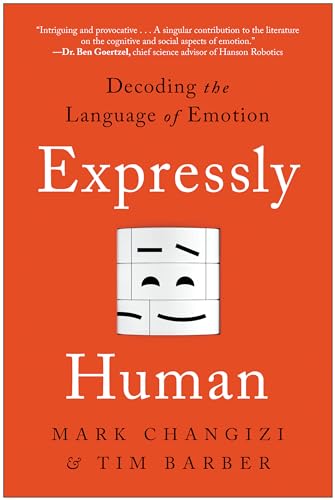
Expressly Human: Decoding the Language of Emotion
Librería: Half Price Books Inc., Dallas, TX, Estados Unidos de America
Calificación del vendedor: 5 de 5 estrellas
EUR 2,45
Envío por EUR 2,96
Se envía dentro de Estados Unidos de AmericaCantidad disponible: 1 disponibles
Añadir al carritopaperback. Condición: Very Good. Connecting readers with great books since 1972! Used books may not include companion materials, and may have some shelf wear or limited writing. We ship orders daily and Customer Service is our top priority!
-
Expressly Human: Decoding the Language of Emotion
Librería: Bellwetherbooks, McKeesport, PA, Estados Unidos de America
Calificación del vendedor: 4 de 5 estrellas

EUR 2,15
Envío por EUR 3,35
Se envía dentro de Estados Unidos de AmericaCantidad disponible: 1 disponibles
Añadir al carritopaperback. Condición: Very Good. Very Good Condition - May show some limited signs of wear and may have a remainder mark. Pages and dust cover are intact and not marred by notes or highlighting.
-
Expressly Human: Decoding the Language of Emotion
Librería: ThriftBooks-Atlanta, AUSTELL, GA, Estados Unidos de America
Calificación del vendedor: 5 de 5 estrellas
EUR 5,93
Gastos de envío gratis
Se envía dentro de Estados Unidos de AmericaCantidad disponible: 1 disponibles
Añadir al carritoPaperback. Condición: As New. No Jacket. Pages are clean and are not marred by notes or folds of any kind. ~ ThriftBooks: Read More, Spend Less.
-
Expressly Human: Decoding the Language of Emotion
Librería: ThriftBooks-Atlanta, AUSTELL, GA, Estados Unidos de America
Calificación del vendedor: 5 de 5 estrellas
EUR 5,93
Gastos de envío gratis
Se envía dentro de Estados Unidos de AmericaCantidad disponible: 1 disponibles
Añadir al carritoPaperback. Condición: Good. No Jacket. Former library book; Pages can have notes/highlighting. Spine may show signs of wear. ~ ThriftBooks: Read More, Spend Less.
-
Expressly Human : Decoding the Language of Emotion
Librería: Better World Books, Mishawaka, IN, Estados Unidos de America
Calificación del vendedor: 5 de 5 estrellas
EUR 6,00
Gastos de envío gratis
Se envía dentro de Estados Unidos de AmericaCantidad disponible: 1 disponibles
Añadir al carritoCondición: Very Good. Pages intact with possible writing/highlighting. Binding strong with minor wear. Dust jackets/supplements may not be included. Stock photo provided. Product includes identifying sticker. Better World Books: Buy Books. Do Good.
-
Expressly Human: Decoding the Language of Emotion
Librería: HPB-Movies, Dallas, TX, Estados Unidos de America
Calificación del vendedor: 4 de 5 estrellas
EUR 3,48
Envío por EUR 3,18
Se envía dentro de Estados Unidos de AmericaCantidad disponible: 1 disponibles
Añadir al carritopaperback. Condición: Very Good. Connecting readers with great books since 1972! Used books may not include companion materials, and may have some shelf wear or limited writing. We ship orders daily and Customer Service is our top priority!
-
Expressly Human: Decoding the Language of Emotion
Librería: Orion Tech, Kingwood, TX, Estados Unidos de America
Calificación del vendedor: 5 de 5 estrellas
EUR 13,75
Gastos de envío gratis
Se envía dentro de Estados Unidos de AmericaCantidad disponible: 10 disponibles
Añadir al carritopaperback. Condición: New.
-
Expressly Human: Decoding the Language of Emotion
Librería: Your Online Bookstore, Houston, TX, Estados Unidos de America
Calificación del vendedor: 5 de 5 estrellas
EUR 13,75
Gastos de envío gratis
Se envía dentro de Estados Unidos de AmericaCantidad disponible: 2 disponibles
Añadir al carritopaperback. Condición: New.
-
Expressly Human : Decoding the Language of Emotion
Librería: GreatBookPrices, Columbia, MD, Estados Unidos de America
Calificación del vendedor: 5 de 5 estrellas
EUR 11,46
Envío por EUR 2,24
Se envía dentro de Estados Unidos de AmericaCantidad disponible: 15 disponibles
Añadir al carritoCondición: New.
-

Expressly Human
Librería: Rarewaves USA, OSWEGO, IL, Estados Unidos de America
Calificación del vendedor: 5 de 5 estrellas
EUR 14,47
Gastos de envío gratis
Se envía dentro de Estados Unidos de AmericaCantidad disponible: 10 disponibles
Añadir al carritoPaperback. Condición: New. Good communication, conventional wisdom suggests, is calm, logical, rational. Emotions, we're told, just get in the way. But what if this is backwards? What if those emotional overtones are the main messages we're sending to one another, and all that logical language is just window dressing?Over billions of years of evolution, animals have become increasingly sophisticated and increasingly sentient. In the process, they evolved emotions, which helped improve their odds of survival in complex situations. These emotions were, at first, purely internal. But at some point, social animals began expressing their emotions, in increasingly dramatic ways. These emotional expressions could accurately reflect internal emotions (smiling to express happiness)-or they could be quite different (smiling to cover up that you're actually furious, but can't tell your boss that). Why did once-stone-faced animals evolve to be so emotionally expressive-to be us? The answer, as evolutionary neurobiologist Mark Changizi and mathematician Tim Barber reveal, is that emotional expressions are our first and most important language-one that allows us, as social animals, to engage in highly sophisticated communications and negotiations. Expressly Human introduces an original theory that explains, from first principles, how the broad range of emotional expressions evolved, and provides a Rosetta Stone for human communication. It will revolutionize the way you see every social interaction, from deciding who gets the last slice of pizza to multimillion-dollar business negotiations, and change your definition of what makes us human.
-
Expressly Human : Decoding the Language of Emotion
Librería: GreatBookPrices, Columbia, MD, Estados Unidos de America
Calificación del vendedor: 5 de 5 estrellas
EUR 12,62
Envío por EUR 2,24
Se envía dentro de Estados Unidos de AmericaCantidad disponible: 15 disponibles
Añadir al carritoCondición: As New. Unread book in perfect condition.
-

Expressly Human
Librería: Rarewaves.com USA, London, LONDO, Reino Unido
Calificación del vendedor: 5 de 5 estrellas
EUR 18,34
Gastos de envío gratis
Se envía de Reino Unido a Estados Unidos de AmericaCantidad disponible: 2 disponibles
Añadir al carritoPaperback. Condición: New. Good communication, conventional wisdom suggests, is calm, logical, rational. Emotions, we're told, just get in the way. But what if this is backwards? What if those emotional overtones are the main messages we're sending to one another, and all that logical language is just window dressing?Over billions of years of evolution, animals have become increasingly sophisticated and increasingly sentient. In the process, they evolved emotions, which helped improve their odds of survival in complex situations. These emotions were, at first, purely internal. But at some point, social animals began expressing their emotions, in increasingly dramatic ways. These emotional expressions could accurately reflect internal emotions (smiling to express happiness)-or they could be quite different (smiling to cover up that you're actually furious, but can't tell your boss that). Why did once-stone-faced animals evolve to be so emotionally expressive-to be us? The answer, as evolutionary neurobiologist Mark Changizi and mathematician Tim Barber reveal, is that emotional expressions are our first and most important language-one that allows us, as social animals, to engage in highly sophisticated communications and negotiations. Expressly Human introduces an original theory that explains, from first principles, how the broad range of emotional expressions evolved, and provides a Rosetta Stone for human communication. It will revolutionize the way you see every social interaction, from deciding who gets the last slice of pizza to multimillion-dollar business negotiations, and change your definition of what makes us human.
-
Expressly Human: Decoding the Language of Emotion
Librería: Revaluation Books, Exeter, Reino Unido
Calificación del vendedor: 5 de 5 estrellas
EUR 15,13
Envío por EUR 11,50
Se envía de Reino Unido a Estados Unidos de AmericaCantidad disponible: 2 disponibles
Añadir al carritoPaperback. Condición: Brand New. 228 pages. 9.00x6.00x0.75 inches. In Stock.
-
Expressly Human: Decoding the Language of Emotion
Librería: Revaluation Books, Exeter, Reino Unido
Calificación del vendedor: 5 de 5 estrellas
EUR 19,15
Envío por EUR 11,50
Se envía de Reino Unido a Estados Unidos de AmericaCantidad disponible: 2 disponibles
Añadir al carritoPaperback. Condición: Brand New. 228 pages. 9.00x6.00x0.75 inches. In Stock.
-

Expressly Human : Decoding the Language of Emotion
Librería: GreatBookPricesUK, Woodford Green, Reino Unido
Calificación del vendedor: 5 de 5 estrellas
EUR 16,62
Envío por EUR 17,24
Se envía de Reino Unido a Estados Unidos de AmericaCantidad disponible: 2 disponibles
Añadir al carritoCondición: New.
-

Expressly Human : Decoding the Language of Emotion
Librería: GreatBookPricesUK, Woodford Green, Reino Unido
Calificación del vendedor: 5 de 5 estrellas
EUR 19,13
Envío por EUR 17,24
Se envía de Reino Unido a Estados Unidos de AmericaCantidad disponible: 2 disponibles
Añadir al carritoCondición: As New. Unread book in perfect condition.
-

Expressly Human
Librería: Rarewaves USA United, OSWEGO, IL, Estados Unidos de America
Calificación del vendedor: 5 de 5 estrellas
EUR 16,61
Envío por EUR 42,35
Se envía dentro de Estados Unidos de AmericaCantidad disponible: 10 disponibles
Añadir al carritoPaperback. Condición: New. Good communication, conventional wisdom suggests, is calm, logical, rational. Emotions, we're told, just get in the way. But what if this is backwards? What if those emotional overtones are the main messages we're sending to one another, and all that logical language is just window dressing?Over billions of years of evolution, animals have become increasingly sophisticated and increasingly sentient. In the process, they evolved emotions, which helped improve their odds of survival in complex situations. These emotions were, at first, purely internal. But at some point, social animals began expressing their emotions, in increasingly dramatic ways. These emotional expressions could accurately reflect internal emotions (smiling to express happiness)-or they could be quite different (smiling to cover up that you're actually furious, but can't tell your boss that). Why did once-stone-faced animals evolve to be so emotionally expressive-to be us? The answer, as evolutionary neurobiologist Mark Changizi and mathematician Tim Barber reveal, is that emotional expressions are our first and most important language-one that allows us, as social animals, to engage in highly sophisticated communications and negotiations. Expressly Human introduces an original theory that explains, from first principles, how the broad range of emotional expressions evolved, and provides a Rosetta Stone for human communication. It will revolutionize the way you see every social interaction, from deciding who gets the last slice of pizza to multimillion-dollar business negotiations, and change your definition of what makes us human.
-
Expressly Human
Publicado por Benbella, 2022
Librería: Anywhere Out of the World, Manchester, Reino Unido
Calificación del vendedor: 5 de 5 estrellas
EUR 11,84
Envío por EUR 28,74
Se envía de Reino Unido a Estados Unidos de AmericaCantidad disponible: 1 disponibles
Añadir al carritoSoft cover. Condición: As New. Paperback. Like new.
-

Expressly Human: Decoding the Language of Emotion
Librería: moluna, Greven, Alemania
Calificación del vendedor: 4 de 5 estrellas
EUR 23,03
Envío por EUR 48,99
Se envía de Alemania a Estados Unidos de AmericaCantidad disponible: 3 disponibles
Añadir al carritoCondición: New.
-

Expressly Human
Librería: Rarewaves.com UK, London, Reino Unido
Calificación del vendedor: 5 de 5 estrellas
EUR 16,63
Envío por EUR 74,72
Se envía de Reino Unido a Estados Unidos de AmericaCantidad disponible: 2 disponibles
Añadir al carritoPaperback. Condición: New. Good communication, conventional wisdom suggests, is calm, logical, rational. Emotions, we're told, just get in the way. But what if this is backwards? What if those emotional overtones are the main messages we're sending to one another, and all that logical language is just window dressing?Over billions of years of evolution, animals have become increasingly sophisticated and increasingly sentient. In the process, they evolved emotions, which helped improve their odds of survival in complex situations. These emotions were, at first, purely internal. But at some point, social animals began expressing their emotions, in increasingly dramatic ways. These emotional expressions could accurately reflect internal emotions (smiling to express happiness)-or they could be quite different (smiling to cover up that you're actually furious, but can't tell your boss that). Why did once-stone-faced animals evolve to be so emotionally expressive-to be us? The answer, as evolutionary neurobiologist Mark Changizi and mathematician Tim Barber reveal, is that emotional expressions are our first and most important language-one that allows us, as social animals, to engage in highly sophisticated communications and negotiations. Expressly Human introduces an original theory that explains, from first principles, how the broad range of emotional expressions evolved, and provides a Rosetta Stone for human communication. It will revolutionize the way you see every social interaction, from deciding who gets the last slice of pizza to multimillion-dollar business negotiations, and change your definition of what makes us human.


