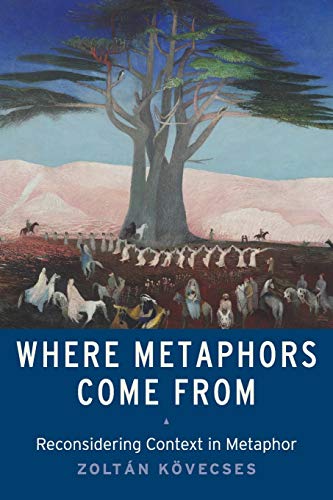
Where Metaphors Come From: Reconsidering Context in Metaphor
Kövecses, Zoltán
ISBN 10: 0190656719 ISBN 13: 9780190656713
Editorial: Oxford University Press, 2016
Nuevos
Encuadernación de tapa blanda
Librería:
Ria Christie Collections, Uxbridge, Reino Unido
Calificación del vendedor: 5 de 5 estrellas

Vendedor de AbeBooks desde 25 de marzo de 2015
Este artículo en concreto ya no está disponible.
Descripción
Descripción:
In. N° de ref. del artículo ria9780190656713_new
Sinopsis:
In Where Metaphors Come From, Zoltán Kövecses proposes a metaphorical grounding that augments and refines conceptual metaphor theory according to which conceptual metaphors are based on our bodily experience. While this is certainly true in many cases of metaphor, the role of the body in metaphor creation can and should be reinterpreted, and, consequently, the body can be seen as just one of the several contexts from which metaphors can emerge (including the situational, discourse, and conceptual-cognitive contexts) - although perhaps the dominant or crucial one.
Kövecses is a leader in CMT, and his argument in this book is more in line with what has been discovered about the nature of human cognition in recent years; namely, that human cognition is grounded in experience in multiple ways - embodiment, in a strict sense, being just one of them (see Barsalou, 2008; Gibbs, 2006; Pecher and Zwaan, 2005). In light of the present work, this is because cognition, including metaphorical cognition, is grounded in not only the body, but also in the situations in which people act and lead their lives, the discourses in which they are engaged at any time in communicating and interacting with each other, and the conceptual knowledge they have accumulated about the world in the course of their experience of it.
Acerca del autor:
Zoltán Kövecses is Professor of Linguistics in the Department of American Studies at Eötvös Loránd University.
"Sobre este título" puede pertenecer a otra edición de este libro.
Detalles bibliográficos
Título: Where Metaphors Come From: Reconsidering ...
Editorial: Oxford University Press
Año de publicación: 2016
Encuadernación: Encuadernación de tapa blanda
Condición: New
Los mejores resultados en AbeBooks

Imagen de archivo
Where Metaphors Come from; Reconsidering Context in Metaphor
Publicado por
Oxford University Press, Oxford, Etc., 2017
ISBN 10: 0190656719
ISBN 13: 9780190656713
Antiguo o usado
Tapa blanda
Librería: Hackenberg Booksellers ABAA, El Cerrito, CA, Estados Unidos de America
Calificación del vendedor: 4 de 5 estrellas

xiii, 215p., original stiff printed wrappers. Nº de ref. del artículo: 053914
Comprar usado
EUR 17,59
EUR 5,98 shipping
Se envía dentro de Estados Unidos de America
Se envía dentro de Estados Unidos de America
Cantidad disponible: 1 disponibles
Imagen del vendedor
Where Metaphors Come from : Reconsidering Context in Metaphor
Publicado por
Oxford University Press, 2016
ISBN 10: 0190656719
ISBN 13: 9780190656713
Nuevo
Tapa blanda
Librería: GreatBookPricesUK, Woodford Green, Reino Unido
Calificación del vendedor: 5 de 5 estrellas
Condición: New. Nº de ref. del artículo: 28190602-n
Comprar nuevo
EUR 45,79
EUR 17,14 shipping
Se envía de Reino Unido a Estados Unidos de America
Se envía de Reino Unido a Estados Unidos de America
Cantidad disponible: Más de 20 disponibles
Imagen de archivo
Where Metaphors Come from
Impresión bajo demandaLibrería: PBShop.store UK, Fairford, GLOS, Reino Unido
Calificación del vendedor: 5 de 5 estrellas
PAP. Condición: New. New Book. Delivered from our UK warehouse in 4 to 14 business days. THIS BOOK IS PRINTED ON DEMAND. Established seller since 2000. Nº de ref. del artículo: L0-9780190656713
Comprar nuevo
EUR 45,80
EUR 4,75 shipping
Se envía de Reino Unido a Estados Unidos de America
Se envía de Reino Unido a Estados Unidos de America
Cantidad disponible: Más de 20 disponibles
Imagen del vendedor
Where Metaphors Come from : Reconsidering Context in Metaphor
Publicado por
Oxford University Press, 2016
ISBN 10: 0190656719
ISBN 13: 9780190656713
Nuevo
Tapa blanda
Librería: GreatBookPrices, Columbia, MD, Estados Unidos de America
Calificación del vendedor: 5 de 5 estrellas
Condición: New. Nº de ref. del artículo: 28190602-n
Comprar nuevo
EUR 45,97
EUR 2,25 shipping
Se envía dentro de Estados Unidos de America
Se envía dentro de Estados Unidos de America
Cantidad disponible: Más de 20 disponibles
Imagen del vendedor
Where Metaphors Come from : Reconsidering Context in Metaphor
Publicado por
Oxford University Press, 2016
ISBN 10: 0190656719
ISBN 13: 9780190656713
Antiguo o usado
Tapa blanda
Librería: GreatBookPrices, Columbia, MD, Estados Unidos de America
Calificación del vendedor: 5 de 5 estrellas
Condición: As New. Unread book in perfect condition. Nº de ref. del artículo: 28190602
Comprar usado
EUR 47,65
EUR 2,25 shipping
Se envía dentro de Estados Unidos de America
Se envía dentro de Estados Unidos de America
Cantidad disponible: 5 disponibles
Imagen de archivo
Where Metaphors Come from
Impresión bajo demandaLibrería: PBShop.store US, Wood Dale, IL, Estados Unidos de America
Calificación del vendedor: 5 de 5 estrellas
PAP. Condición: New. New Book. Shipped from UK. THIS BOOK IS PRINTED ON DEMAND. Established seller since 2000. Nº de ref. del artículo: L0-9780190656713
Comprar nuevo
EUR 48,30
Gastos de envío gratis
Se envía dentro de Estados Unidos de America
Se envía dentro de Estados Unidos de America
Cantidad disponible: Más de 20 disponibles
Imagen del vendedor
Where Metaphors Come from : Reconsidering Context in Metaphor
Publicado por
Oxford University Press, 2016
ISBN 10: 0190656719
ISBN 13: 9780190656713
Antiguo o usado
Tapa blanda
Librería: GreatBookPricesUK, Woodford Green, Reino Unido
Calificación del vendedor: 5 de 5 estrellas
Condición: As New. Unread book in perfect condition. Nº de ref. del artículo: 28190602
Comprar usado
EUR 50,28
EUR 17,14 shipping
Se envía de Reino Unido a Estados Unidos de America
Se envía de Reino Unido a Estados Unidos de America
Cantidad disponible: Más de 20 disponibles
Imagen del vendedor
Where Metaphors Come From
Publicado por
Oxford University Press Inc, US, 2017
ISBN 10: 0190656719
ISBN 13: 9780190656713
Nuevo
Paperback
Librería: Rarewaves.com UK, London, Reino Unido
Calificación del vendedor: 5 de 5 estrellas
Paperback. Condición: New. In Where Metaphors Come From, Zoltán Kövecses proposes a metaphorical grounding that augments and refines conceptual metaphor theory according to which conceptual metaphors are based on our bodily experience. While this is certainly true in many cases of metaphor, the role of the body in metaphor creation can and should be reinterpreted, and, consequently, the body can be seen as just one of the several contexts from which metaphors can emerge (including the situational, discourse, and conceptual-cognitive contexts) - although perhaps the dominant or crucial one.Kövecses is a leader in CMT, and his argument in this book is more in line with what has been discovered about the nature of human cognition in recent years; namely, that human cognition is grounded in experience in multiple ways - embodiment, in a strict sense, being just one of them (see Barsalou, 2008; Gibbs, 2006; Pecher and Zwaan, 2005). In light of the present work, this is because cognition, including metaphorical cognition, is grounded in not only the body, but also in the situations in which people act and lead their lives, the discourses in which they are engaged at any time in communicating and interacting with each other, and the conceptual knowledge they have accumulated about the world in the course of their experience of it. Nº de ref. del artículo: LU-9780190656713
Comprar nuevo
EUR 50,48
EUR 74,26 shipping
Se envía de Reino Unido a Estados Unidos de America
Se envía de Reino Unido a Estados Unidos de America
Cantidad disponible: Más de 20 disponibles
Imagen de archivo
Where Metaphors Come From (Paperback)
Publicado por
Oxford University Press Inc, New York, 2017
ISBN 10: 0190656719
ISBN 13: 9780190656713
Nuevo
Paperback
Librería: CitiRetail, Stevenage, Reino Unido
Calificación del vendedor: 5 de 5 estrellas
Paperback. Condición: new. Paperback. In Where Metaphors Come From, Zoltan Koevecses proposes a metaphorical grounding that augments and refines conceptual metaphor theory according to which conceptual metaphors are based on our bodily experience. While this is certainly true in many cases of metaphor, the role of the body in metaphor creation can and should be reinterpreted, and, consequently, the body can be seen as just one of the several contexts from which metaphors can emerge(including the situational, discourse, and conceptual-cognitive contexts) - although perhaps the dominant or crucial one.Koevecses is a leader in CMT, and his argument in this book is more in line withwhat has been discovered about the nature of human cognition in recent years; namely, that human cognition is grounded in experience in multiple ways - embodiment, in a strict sense, being just one of them (see Barsalou, 2008; Gibbs, 2006; Pecher and Zwaan, 2005). In light of the present work, this is because cognition, including metaphorical cognition, is grounded in not only the body, but also in the situations in which people act and lead their lives, the discourses in which they are engagedat any time in communicating and interacting with each other, and the conceptual knowledge they have accumulated about the world in the course of their experience of it. Koevecses recasts CMT as a contextual theory of metaphor, expanding and refining it to account for the ways in which many verbal metaphors are tied to context. This item is printed on demand. Shipping may be from our UK warehouse or from our Australian or US warehouses, depending on stock availability. Nº de ref. del artículo: 9780190656713
Comprar nuevo
EUR 51,17
EUR 42,27 shipping
Se envía de Reino Unido a Estados Unidos de America
Se envía de Reino Unido a Estados Unidos de America
Cantidad disponible: 1 disponibles
Imagen de archivo
Where Metaphors Come From: Reconsidering Context in Metaphor
Publicado por
Oxford University Press Inc, 2016
ISBN 10: 0190656719
ISBN 13: 9780190656713
Nuevo
Paperback / softback
Librería: THE SAINT BOOKSTORE, Southport, Reino Unido
Calificación del vendedor: 5 de 5 estrellas
Paperback / softback. Condición: New. This item is printed on demand. New copy - Usually dispatched within 5-9 working days. Nº de ref. del artículo: C9780190656713
Comprar nuevo
EUR 52,03
EUR 16,17 shipping
Se envía de Reino Unido a Estados Unidos de America
Se envía de Reino Unido a Estados Unidos de America
Cantidad disponible: Más de 20 disponibles