
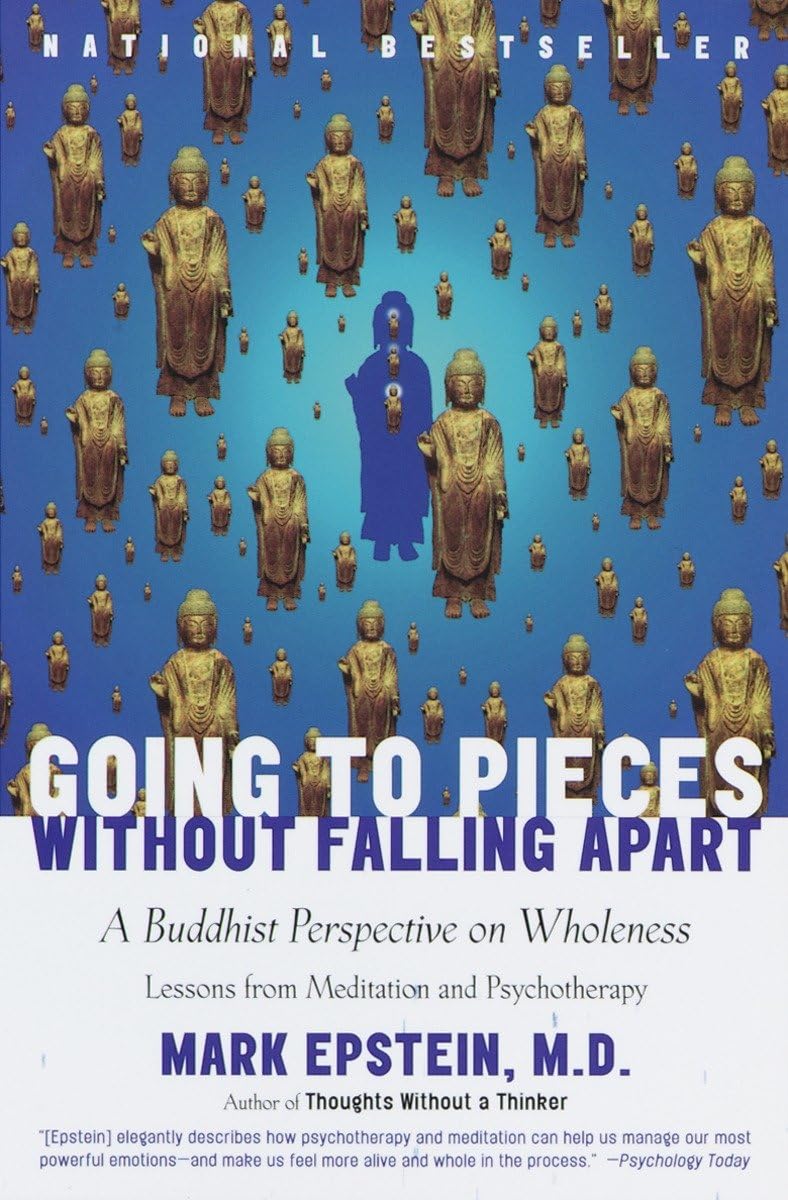

Going to Pieces without Falling Apart: A Buddhist Perspective on Wholeness
Epstein M.D., Mark
ISBN 10: 0767902351 ISBN 13: 9780767902359
Editorial: Harmony, 1999
Usado
Encuadernación de tapa blanda
Librería:
Dream Books Co., Denver, CO, Estados Unidos de America
Calificación del vendedor: 5 de 5 estrellas

Vendedor de AbeBooks desde 23 de noviembre de 2023
Este artículo en concreto ya no está disponible.
Descripción
Descripción:
Gently used with minimal wear on the corners and cover. A few pages may contain light highlighting or writing, but the text remains fully legible. Dust jacket may be missing, and supplemental materials like CDs or codes may not be included. May be ex-library with library markings. Ships promptly! N° de ref. del artículo DBV.0767902351.G
Sinopsis:
An intimate guide to self-acceptance and discovery that offers a Buddhist perspective on wholeness within the framework of a Western understanding of self.
For decades, Western psychology has promised fulfillment through building and strengthening the ego. We are taught that the ideal is a strong, individuated self, constructed and reinforced over a lifetime. But Buddhist psychiatrist Mark Epstein has found a different way.
Going to Pieces Without Falling Apart shows us that happiness doesn't come from any kind of acquisitiveness, be it material or psychological. Happiness comes from letting go. Weaving together the accumulated wisdom of his two worlds--Buddhism and Western psychotherapy—Epstein shows how "the happiness that we seek depends on our ability to balance the ego's need to do with our inherent capacity to be." He encourages us to relax the ever-vigilant mind in order to experience the freedom that comes only from relinquishing control.
Drawing on events in his own life and stories from his patients, Going to Pieces Without Falling Apart teaches us that only by letting go can we start on the path to a more peaceful and spiritually satisfying life.
Acerca del autor: Mark Epstein, M.D., is a psychiatrist in private practice and the author of Thoughts Without a Thinker. He is a contributing editor to Tricycle: The Buddhist Review and clinical assistant professor of psychology at New York University. He lives in New York City.
"Sobre este título" puede pertenecer a otra edición de este libro.
Detalles bibliográficos
Título: Going to Pieces without Falling Apart: A ...
Editorial: Harmony
Año de publicación: 1999
Encuadernación: Encuadernación de tapa blanda
Condición: good