
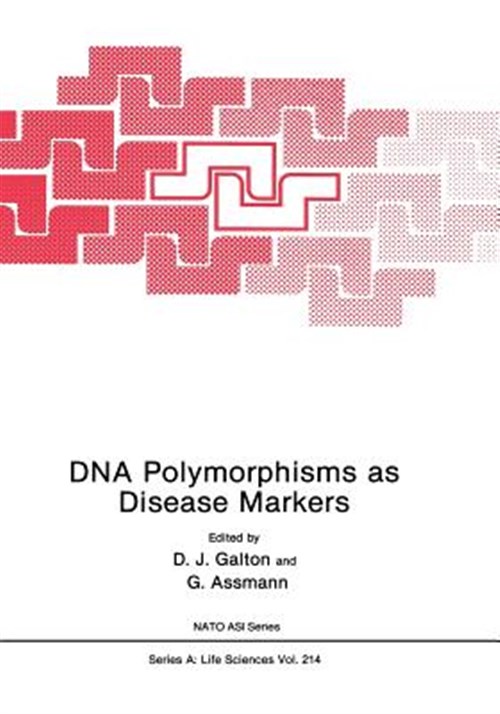
DNA Polymorphisms As Disease Markers
Galton, D. J. (EDT); Assmann, G. (EDT)
ISBN 10: 1461366402 ISBN 13: 9781461366409
Editorial: Springer, 2012
Usado
Encuadernación de tapa blanda
Librería:
GreatBookPrices, Columbia, MD, Estados Unidos de America
Calificación del vendedor: 5 de 5 estrellas

Vendedor de AbeBooks desde 6 de abril de 2009
Este artículo en concreto ya no está disponible.
Descripción
Descripción:
Unread book in perfect condition. N° de ref. del artículo 19916248
Sinopsis:
The purpose of this workshop was to assess the value of DNA polymorphisms for the prediction, diagnosis or elucidation of aetiology for common metabolic diseases such as diabetes, hyperlipidaemia and atherosclerosis. The advent of recombinant DNA techniques has produced an explosion in knowledge of restriction site polymorphisms and hypervariable sequences around candidate genes for such common metabolic diseases as atherosclerosis, hyperlipidaemia and diabetes mellitus. These diseases are the major causes of morbidity and mortality in Western societies today. Since 1983 it has become apparent that there is much more variation in the frequency and sites of these DNA polymorphisms in human populations than was initially appreciated and that the majority of these DNA polymorphisms are only linkage markers for the disease. Consequently it was considered timely for laboratories involved in the mapping of these DNA mutations to meet together to discuss the implications of their studies. The main issues are whether such DNA polymorphisms will lead to an identification of major aetiological loci and which are the best techniques to achieve this? What is the cause of the differences in frequencies of such polymorphisms amongst world populations? Are such studies best conducted in homogeneous populations or in pedigrees? Are haplotypes, though more laborious to construct, a better way to proceed than analysis of single site polymorphisms? What are the consensus polymorphic sites that relate to the common metabolic diseases of diabetes, atherosclerosis and the hyperlipidaemias? The real need now to discuss the theoretical background behind the
Reseña del editor: The purpose of this workshop was to assess the value of DNA polymorphisms for the prediction, diagnosis or elucidation of aetiology for common metabolic diseases such as diabetes, hyperlipidaemia and atherosclerosis. The advent of recombinant DNA techniques has produced an explosion in knowledge of restriction site polymorphisms and hypervariable sequences around candidate genes for such common metabolic diseases as atherosclerosis, hyperlipidaemia and diabetes mellitus. These diseases are the major causes of morbidity and mortality in Western societies today. Since 1983 it has become apparent that there is much more variation in the frequency and sites of these DNA polymorphisms in human populations than was initially appreciated and that the majority of these DNA polymorphisms are only linkage markers for the disease. Consequently it was considered timely for laboratories involved in the mapping of these DNA mutations to meet together to discuss the implications of their studies. The main issues are whether such DNA polymorphisms will lead to an identification of major aetiological loci and which are the best techniques to achieve this? What is the cause of the differences in frequencies of such polymorphisms amongst world populations? Are such studies best conducted in homogeneous populations or in pedigrees? Are haplotypes, though more laborious to construct, a better way to proceed than analysis of single site polymorphisms? What are the consensus polymorphic sites that relate to the common metabolic diseases of diabetes, atherosclerosis and the hyperlipidaemias? The real need now to discuss the theoretical background behind the
"Sobre este título" puede pertenecer a otra edición de este libro.
Detalles bibliográficos
Título: DNA Polymorphisms As Disease Markers
Editorial: Springer
Año de publicación: 2012
Encuadernación: Encuadernación de tapa blanda
Condición: As New