
Artículos relacionados a Production-Grade AI Architecture: Integrating Python...
Production-Grade AI Architecture: Integrating Python Deep Learning Systems with a Node.js Backend: 2 (The Full-Stack AI Systems Series) - Tapa blanda
Libro 1 de 2: The Full-Stack AI Systems Series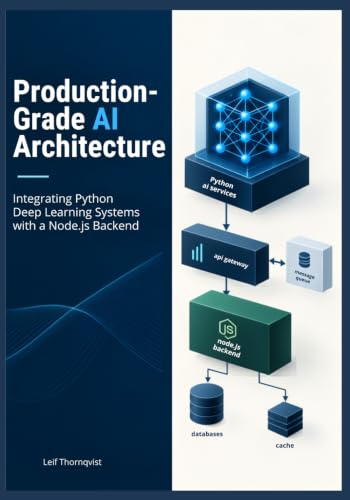
Sinopsis
How do you turn powerful Python deep learning models into reliable production systems?
Building an AI model is only half the challenge. The real engineering work begins when that model must serve real users, handle unpredictable traffic, communicate with a web application, and remain secure, observable, and resilient.
Production-Grade AI Architecture provides a practical architectural guide to integrating Python deep learning systems with a Node.js backend. It explores the critical boundary between machine learning infrastructure and application engineering, showing how the two ecosystems can work together without creating fragile or difficult-to-maintain systems.
Inside, you’ll explore:
- REST, gRPC, Protobuf, and message queues for reliable AI communication
- Node.js API gateways for validation, routing, aggregation, and rate limiting
- Redis and BullMQ for asynchronous deep learning workloads
- FastAPI and Flask services for exposing Python models to Node.js
- Semantic caching and distributed state management to reduce unnecessary computation
- Circuit breakers, fallbacks, retries, and graceful degradation for resilient AI systems
- mTLS, PII protection, RBAC, and auditing across AI service boundaries
- OpenTelemetry, Grafana, and Datadog for full-stack observability
- Docker, GitHub Actions, integration testing, and shadow deployments for production delivery
Move beyond model prototypes and start engineering AI systems designed for production.
"Sinopsis" puede pertenecer a otra edición de este libro.
Resultados de la búsqueda para Production-Grade AI Architecture: Integrating Python...

Imagen de archivo
Production-Grade AI Architecture (Paperback)
Impresión bajo demandaLibrería: Grand Eagle Retail, Bensenville, IL, Estados Unidos de America
Calificación del vendedor: 5 de 5 estrellas

Paperback. Condición: new. Paperback. How do you turn powerful Python deep learning models into reliable production systems?Building an AI model is only half the challenge. The real engineering work begins when that model must serve real users, handle unpredictable traffic, communicate with a web application, and remain secure, observable, and resilient.Production-Grade AI Architecture provides a practical architectural guide to integrating Python deep learning systems with a Node.js backend. It explores the critical boundary between machine learning infrastructure and application engineering, showing how the two ecosystems can work together without creating fragile or difficult-to-maintain systems.Inside, you'll explore: REST, gRPC, Protobuf, and message queues for reliable AI communicationNode.js API gateways for validation, routing, aggregation, and rate limitingRedis and BullMQ for asynchronous deep learning workloadsFastAPI and Flask services for exposing Python models to Node.jsSemantic caching and distributed state management to reduce unnecessary computationCircuit breakers, fallbacks, retries, and graceful degradation for resilient AI systemsmTLS, PII protection, RBAC, and auditing across AI service boundariesOpenTelemetry, Grafana, and Datadog for full-stack observabilityDocker, GitHub Actions, integration testing, and shadow deployments for production deliveryWhether you're designing an AI API, deploying deep learning inference, or building a hybrid Python-Node.js architecture, this book gives you a structured way to think about the systems surrounding your models. Move beyond model prototypes and start engineering AI systems designed for production. This item is printed on demand. Shipping may be from multiple locations in the US or from the UK, depending on stock availability. Nº de ref. del artículo: 9798172777097
Comprar nuevo
EUR 21,63
Gastos de envío gratis
Se envía dentro de Estados Unidos de America
Se envía dentro de Estados Unidos de America
Cantidad disponible: 1 disponibles
Imagen de archivo
Production-Grade AI Architecture
Impresión bajo demandaLibrería: PBShop.store US, Wood Dale, IL, Estados Unidos de America
Calificación del vendedor: 5 de 5 estrellas
PAP. Condición: New. New Book. Shipped from UK. THIS BOOK IS PRINTED ON DEMAND. Established seller since 2000. Nº de ref. del artículo: L0-9798172777097
Comprar nuevo
EUR 21,64
Gastos de envío gratis
Se envía dentro de Estados Unidos de America
Se envía dentro de Estados Unidos de America
Cantidad disponible: Más de 20 disponibles
Imagen de archivo
Production-Grade AI Architecture: Integrating Python Deep Learning Systems with a Node.js Backend (The Full-Stack AI Systems Series)
Impresión bajo demandaLibrería: California Books, Miami, FL, Estados Unidos de America
Calificación del vendedor: 5 de 5 estrellas
Condición: New. Print on Demand. Nº de ref. del artículo: I-9798172777097
Comprar nuevo
EUR 20,56
Envío por EUR 2,72
Se envía dentro de Estados Unidos de America
Se envía dentro de Estados Unidos de America
Cantidad disponible: Más de 20 disponibles
Imagen de archivo
Production-Grade AI Architecture
Impresión bajo demandaLibrería: PBShop.store UK, Fairford, GLOS, Reino Unido
Calificación del vendedor: 5 de 5 estrellas
PAP. Condición: New. New Book. Delivered from our UK warehouse in 4 to 14 business days. THIS BOOK IS PRINTED ON DEMAND. Established seller since 2000. Nº de ref. del artículo: L0-9798172777097
Comprar nuevo
EUR 19,19
Envío por EUR 4,99
Se envía de Reino Unido a Estados Unidos de America
Se envía de Reino Unido a Estados Unidos de America
Cantidad disponible: Más de 20 disponibles
Imagen de archivo
Production-Grade AI Architecture : Integrating Python Deep Learning Systems with a Node.js Backend
Publicado por
Amazon Digital Services LLC - Kdp Sep 2026, 2026
ISBN 13: 9798172777097
Nuevo
Taschenbuch
Librería: AHA-BUCH GmbH, Einbeck, Alemania
Calificación del vendedor: 5 de 5 estrellas
Taschenbuch. Condición: Neu. Neuware - How do you turn powerful Python deep learning models into reliable production systems Building an AI model is only half the challenge. The real engineering work begins when that model must serve real users, handle unpredictable traffic, communicate with a web application, and remain secure, observable, and resilient.Production-Grade AI Architecture provides a practical architectural guide to integrating Python deep learning systems with a Node.js backend. It explores the critical boundary between machine learning infrastructure and application engineering, showing how the two ecosystems can work together without creating fragile or difficult-to-maintain systems.Inside, you'll explore: - REST, gRPC, Protobuf, and message queues for reliable AI communication- Node.js API gateways for validation, routing, aggregation, and rate limiting- Redis and BullMQ for asynchronous deep learning workloads- FastAPI and Flask services for exposing Python models to Node.js- Semantic caching and distributed state management to reduce unnecessary computation- Circuit breakers, fallbacks, retries, and graceful degradation for resilient AI systems- mTLS, PII protection, RBAC, and auditing across AI service boundaries- OpenTelemetry, Grafana, and Datadog for full-stack observability- Docker, GitHub Actions, integration testing, and shadow deployments for production deliveryWhether you're designing an AI API, deploying deep learning inference, or building a hybrid Python-Node.js architecture, this book gives you a structured way to think about the systems surrounding your models. Move beyond model prototypes and start engineering AI systems designed for production. Nº de ref. del artículo: 9798172777097
Comprar nuevo
EUR 32,48
Envío por EUR 35,00
Se envía de Alemania a Estados Unidos de America
Se envía de Alemania a Estados Unidos de America
Cantidad disponible: 2 disponibles
Imagen de archivo
Production-Grade AI Architecture (Paperback)
Impresión bajo demandaLibrería: CitiRetail, Stevenage, Reino Unido
Calificación del vendedor: 5 de 5 estrellas
Paperback. Condición: new. Paperback. How do you turn powerful Python deep learning models into reliable production systems?Building an AI model is only half the challenge. The real engineering work begins when that model must serve real users, handle unpredictable traffic, communicate with a web application, and remain secure, observable, and resilient.Production-Grade AI Architecture provides a practical architectural guide to integrating Python deep learning systems with a Node.js backend. It explores the critical boundary between machine learning infrastructure and application engineering, showing how the two ecosystems can work together without creating fragile or difficult-to-maintain systems.Inside, you'll explore: REST, gRPC, Protobuf, and message queues for reliable AI communicationNode.js API gateways for validation, routing, aggregation, and rate limitingRedis and BullMQ for asynchronous deep learning workloadsFastAPI and Flask services for exposing Python models to Node.jsSemantic caching and distributed state management to reduce unnecessary computationCircuit breakers, fallbacks, retries, and graceful degradation for resilient AI systemsmTLS, PII protection, RBAC, and auditing across AI service boundariesOpenTelemetry, Grafana, and Datadog for full-stack observabilityDocker, GitHub Actions, integration testing, and shadow deployments for production deliveryWhether you're designing an AI API, deploying deep learning inference, or building a hybrid Python-Node.js architecture, this book gives you a structured way to think about the systems surrounding your models. Move beyond model prototypes and start engineering AI systems designed for production. This item is printed on demand. Shipping may be from our UK warehouse or from our Australian or US warehouses, depending on stock availability. Nº de ref. del artículo: 9798172777097
Comprar nuevo
EUR 23,45
Envío por EUR 44,36
Se envía de Reino Unido a Estados Unidos de America
Se envía de Reino Unido a Estados Unidos de America
Cantidad disponible: 1 disponibles