
Artículos relacionados a Passibility: At the Limits of the Constructivist Metaphor:...
Passibility: At the Limits of the Constructivist Metaphor: 3 (Classics in Science Education, 3) - Tapa dura
Sinopsis
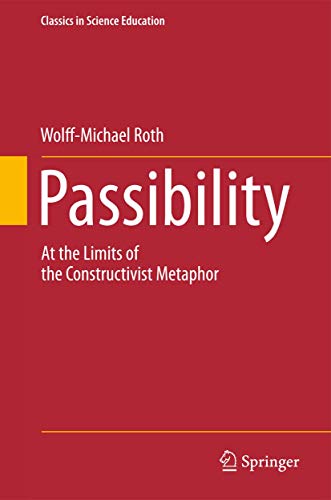
This book argues that the ’constructivist metaphor’ has become a self-appointed overriding concept that suppresses other modes of thinking about knowing and learning science. Yet there are questions about knowledge that constructivism cannot properly answer, such as how a cognitive structure can intentionally develop a formation that is more complex than itself; how a learner can aim at a learning objective that is, by definition, itself unknown; how we learn through pain, suffering, love or passion; and the role emotion and crises play in knowing and learning.
In support of the hypothesis that passibility underlies cognition, readers are provided with a collation of empirical studies and phenomenological analyses of knowing and learning science-in schools, scientific laboratories and everyday life-all of which defy a constructivist explanation. The author argues that ’passibility’ constitutes an essential factor in the development of consciousness, with a range of essential experiences that cannot be brought into the linguistic realm. His exploration is guided by concepts such as ’otherness’, passion, passivity and undecidability, and concludes by resituating the construction metaphor to accord it its proper place in a more comprehensive theory of learning.
"Sinopsis" puede pertenecer a otra edición de este libro.
Acerca del autor
Charlotte y Peter Fiell son dos autoridades en historia, teoría y crítica del diseño y han escrito más de sesenta libros sobre la materia, muchos de los cuales se han convertido en éxitos de ventas. También han impartido conferencias y cursos como profesores invitados, han comisariado exposiciones y asesorado a fabricantes, museos, salas de subastas y grandes coleccionistas privados de todo el mundo. Los Fiell han escrito numerosos libros para TASCHEN, entre los que se incluyen 1000 Chairs, Diseño del siglo XX, El diseño industrial de la A a la Z, Scandinavian Design y Diseño del siglo XXI.
De la contraportada
This book argues that the constructivist metaphor has become a self-appointed overriding concept that suppresses other modes of thinking about knowing and learning science. Yet there are questions about knowledge that constructivism cannot properly answer, such as how a cognitive structure can intentionally develop a formation that is more complex than itself; how a learner can aim at a learning objective that is, by definition, itself unknown; how we learn through pain, suffering, love or passion; and the role emotion and crises play in knowing and learning.
In support of the hypothesis that passibility underlies cognition, readers are provided with a collation of empirical studies and phenomenological analyses of knowing and learning science in schools, scientific laboratories and everyday life all of which defy a constructivist explanation. The author argues that passibility constitutes an essential factor in the development of consciousness, with a range of essential experiences that cannot be brought into the linguistic realm. His exploration is guided by concepts such as otherness , passion, passivity and undecidability, and concludes by resituating the construction metaphor to accord it its proper place in a more comprehensive theory of learning.
"Sobre este título" puede pertenecer a otra edición de este libro.
Otras ediciones populares con el mismo título

Resultados de la búsqueda para Passibility: At the Limits of the Constructivist Metaphor:...

Imagen del vendedor
Passibility: At the Limits of the Constructivist Metaphor (Classics in Science Education)
Librería: Bowman Books, Wooster, OH, Estados Unidos de America
Calificación del vendedor: 5 de 5 estrellas

Hardcover. Condición: Fine. Estado de la sobrecubierta: None issued. Clean, tight hardcover with unmarked interior and text; as new. ix, 280pp. With list of references and index. Nº de ref. del artículo: 008129
Comprar usado
EUR 81,37
Gastos de envío gratis
Se envía dentro de Estados Unidos de America
Se envía dentro de Estados Unidos de America
Cantidad disponible: 1 disponibles
Imagen de archivo
Passibility (eng)
Impresión bajo demandaLibrería: Brook Bookstore On Demand, Napoli, NA, Italia
Calificación del vendedor: 5 de 5 estrellas
Condición: new. Questo è un articolo print on demand. Nº de ref. del artículo: 10d9f45ec7449993c1af84d6351ab87c
Comprar nuevo
EUR 118,26
Envío por EUR 6,80
Se envía de Italia a Estados Unidos de America
Se envía de Italia a Estados Unidos de America
Cantidad disponible: Más de 20 disponibles
Imagen de archivo
Passibility
Impresión bajo demandaLibrería: Basi6 International, Irving, TX, Estados Unidos de America
Calificación del vendedor: 5 de 5 estrellas
Condición: Brand New. New. US edition. Print on demand title. Delivery takes 20-25 days. Excellent Customer Service. Nº de ref. del artículo: POD-151088
Comprar nuevo
EUR 131,59
Gastos de envío gratis
Se envía dentro de Estados Unidos de America
Se envía dentro de Estados Unidos de America
Cantidad disponible: 10 disponibles
Imagen de archivo
Passibility: At the Limits of the Constructivist Metaphor (Classics in Science Education, 3)
Librería: Ria Christie Collections, Uxbridge, Reino Unido
Calificación del vendedor: 5 de 5 estrellas
Condición: New. In. Nº de ref. del artículo: ria9789400719071_new
Comprar nuevo
EUR 141,05
Envío por EUR 13,98
Se envía de Reino Unido a Estados Unidos de America
Se envía de Reino Unido a Estados Unidos de America
Cantidad disponible: Más de 20 disponibles
Imagen del vendedor
Passibility
Publicado por
Springer Netherlands, Springer Aug 2011, 2011
ISBN 10: 9400719078
ISBN 13: 9789400719071
Nuevo
Tapa dura
Librería: BuchWeltWeit Ludwig Meier e.K., Bergisch Gladbach, Alemania
Calificación del vendedor: 5 de 5 estrellas
Buch. Condición: Neu. This item is printed on demand - it takes 3-4 days longer - Neuware -This book argues that the 'constructivist metaphor' has become a self-appointed overriding concept that suppresses other modes of thinking about knowing and learning science. Yet there are questions about knowledge that constructivism cannot properly answer, such as how a cognitive structure can intentionally develop a formation that is more complex than itself; how a learner can aim at a learning objective that is, by definition, itself unknown; how we learn through pain, suffering, love or passion; and the role emotion and crises play in knowing and learning.In support of the hypothesis that passibility underlies cognition, readers are provided with a collation of empirical studies and phenomenological analyses of knowing and learning science-in schools, scientific laboratories and everyday life-all of which defy a constructivist explanation. The author argues that 'passibility' constitutes an essential factor in the development of consciousness, with a range of essential experiences that cannot be brought into the linguistic realm. His exploration is guided by concepts such as 'otherness', passion, passivity and undecidability, and concludes by resituating the construction metaphor to accord it its proper place in a more comprehensive theory of learning. 296 pp. Englisch. Nº de ref. del artículo: 9789400719071
Comprar nuevo
EUR 149,79
Envío por EUR 23,00
Se envía de Alemania a Estados Unidos de America
Se envía de Alemania a Estados Unidos de America
Cantidad disponible: 2 disponibles
Imagen del vendedor
Passibility
Impresión bajo demandaLibrería: moluna, Greven, Alemania
Calificación del vendedor: 5 de 5 estrellas
Gebunden. Condición: New. Dieser Artikel ist ein Print on Demand Artikel und wird nach Ihrer Bestellung fuer Sie gedruckt. Radically new, empirically based epistemology in science/technology-related knowing and learning Integrative treatment of emotion, motivation, and the passions in a comprehensive theory First/third person perspectives on critical aspects of. Nº de ref. del artículo: 5825718
Comprar nuevo
EUR 127,40
Envío por EUR 48,99
Se envía de Alemania a Estados Unidos de America
Se envía de Alemania a Estados Unidos de America
Cantidad disponible: Más de 20 disponibles
Imagen de archivo
Passibility
Librería: Books Puddle, New York, NY, Estados Unidos de America
Calificación del vendedor: 4 de 5 estrellas

Condición: New. pp. 296 Index. Nº de ref. del artículo: 264346973
Comprar nuevo
EUR 202,50
Envío por EUR 3,50
Se envía dentro de Estados Unidos de America
Se envía dentro de Estados Unidos de America
Cantidad disponible: 4 disponibles
Imagen del vendedor
Passibility
Publicado por
Springer Netherlands, Springer Aug 2011, 2011
ISBN 10: 9400719078
ISBN 13: 9789400719071
Nuevo
Tapa dura
Librería: buchversandmimpf2000, Emtmannsberg, BAYE, Alemania
Calificación del vendedor: 5 de 5 estrellas
Buch. Condición: Neu. This item is printed on demand - Print on Demand Titel. Neuware -This book argues that the ¿constructivist metaphor¿ has become a self-appointed overriding concept that suppresses other modes of thinking about knowing and learning science. Yet there are questions about knowledge that constructivism cannot properly answer, such as how a cognitive structure can intentionally develop a formation that is more complex than itself; how a learner can aim at a learning objective that is, by definition, itself unknown; how we learn through pain, suffering, love or passion; and the role emotion and crises play in knowing and learning.In support of the hypothesis that passibility underlies cognition, readers are provided with a collation of empirical studies and phenomenological analyses of knowing and learning science¿in schools, scientific laboratories and everyday life¿all of which defy a constructivist explanation. The author argues that ¿passibility¿ constitutes an essential factor in the development of consciousness, with a range of essential experiences that cannot be brought into the linguistic realm. His exploration is guided by concepts such as ¿otherness¿, passion, passivity and undecidability, and concludes by resituating the construction metaphor to accord it its proper place in a more comprehensive theory of learning.Springer-Verlag GmbH, Tiergartenstr. 17, 69121 Heidelberg 296 pp. Englisch. Nº de ref. del artículo: 9789400719071
Comprar nuevo
EUR 149,79
Envío por EUR 60,00
Se envía de Alemania a Estados Unidos de America
Se envía de Alemania a Estados Unidos de America
Cantidad disponible: 1 disponibles
Imagen de archivo
Passibility
Impresión bajo demandaLibrería: Majestic Books, Hounslow, Reino Unido
Calificación del vendedor: 4 de 5 estrellas
Condición: New. Print on Demand pp. 296. Nº de ref. del artículo: 3533698
Comprar nuevo
EUR 210,54
Envío por EUR 7,58
Se envía de Reino Unido a Estados Unidos de America
Se envía de Reino Unido a Estados Unidos de America
Cantidad disponible: 4 disponibles
Imagen del vendedor
Passibility : At the Limits of the Constructivist Metaphor
Publicado por
Springer Netherlands, Springer Aug 2011, 2011
ISBN 10: 9400719078
ISBN 13: 9789400719071
Nuevo
Tapa dura
Librería: AHA-BUCH GmbH, Einbeck, Alemania
Calificación del vendedor: 5 de 5 estrellas
Buch. Condición: Neu. Neuware - This book argues that the 'constructivist metaphor' has become a self-appointed overriding concept that suppresses other modes of thinking about knowing and learning science. Yet there are questions about knowledge that constructivism cannot properly answer, such as how a cognitive structure can intentionally develop a formation that is more complex than itself; how a learner can aim at a learning objective that is, by definition, itself unknown; how we learn through pain, suffering, love or passion; and the role emotion and crises play in knowing and learning.In support of the hypothesis that passibility underlies cognition, readers are provided with a collation of empirical studies and phenomenological analyses of knowing and learning science-in schools, scientific laboratories and everyday life-all of which defy a constructivist explanation. The author argues that 'passibility' constitutes an essential factor in the development of consciousness, with a range of essential experiences that cannot be brought into the linguistic realm. His exploration is guided by concepts such as 'otherness', passion, passivity and undecidability, and concludes by resituating the construction metaphor to accord it its proper place in a more comprehensive theory of learning. Nº de ref. del artículo: 9789400719071
Comprar nuevo
EUR 157,86
Envío por EUR 63,06
Se envía de Alemania a Estados Unidos de America
Se envía de Alemania a Estados Unidos de America
Cantidad disponible: 1 disponibles